Switzerland · Canton de Berne
Where to Stay in Bern, Canton de Berne
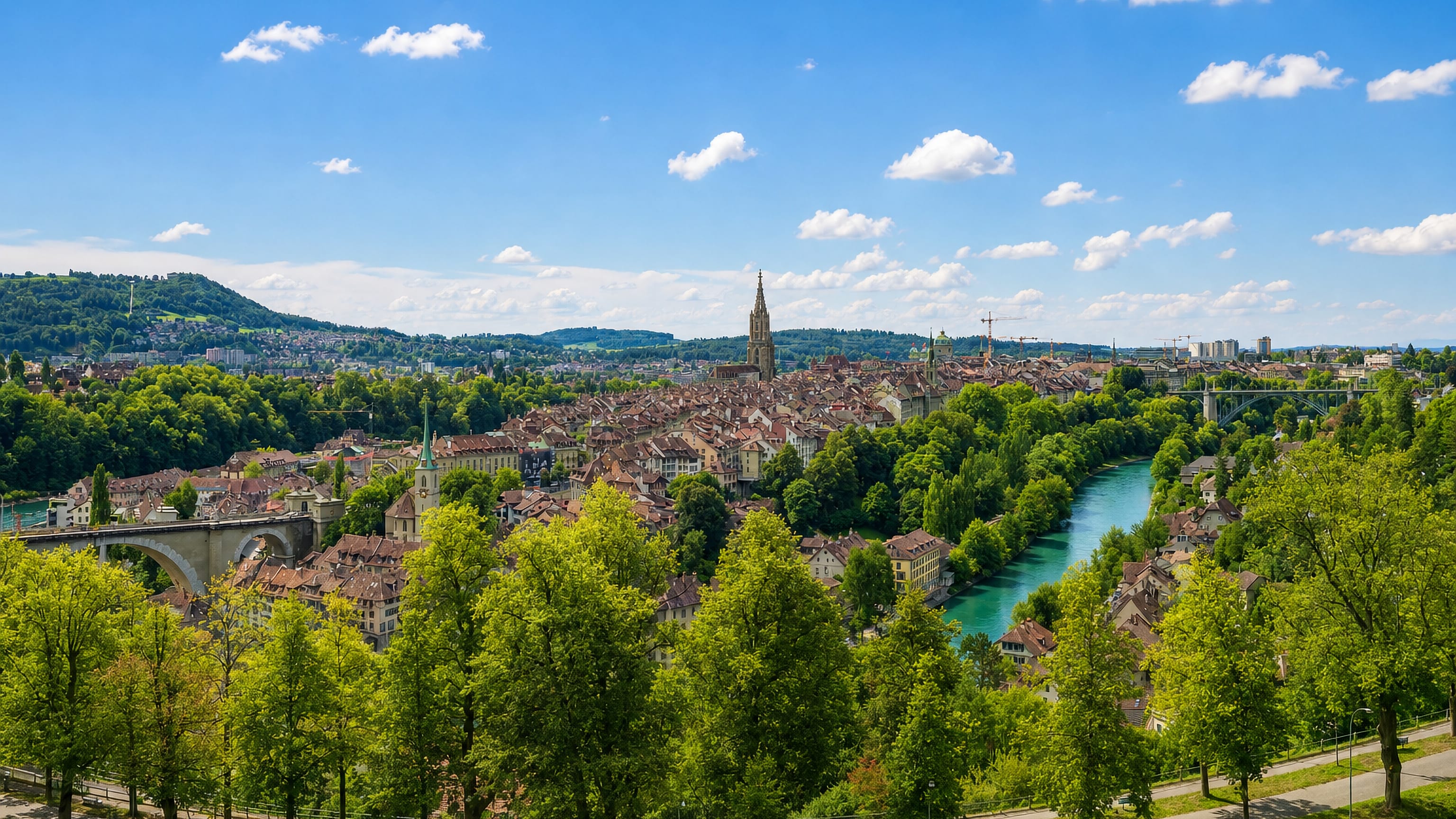
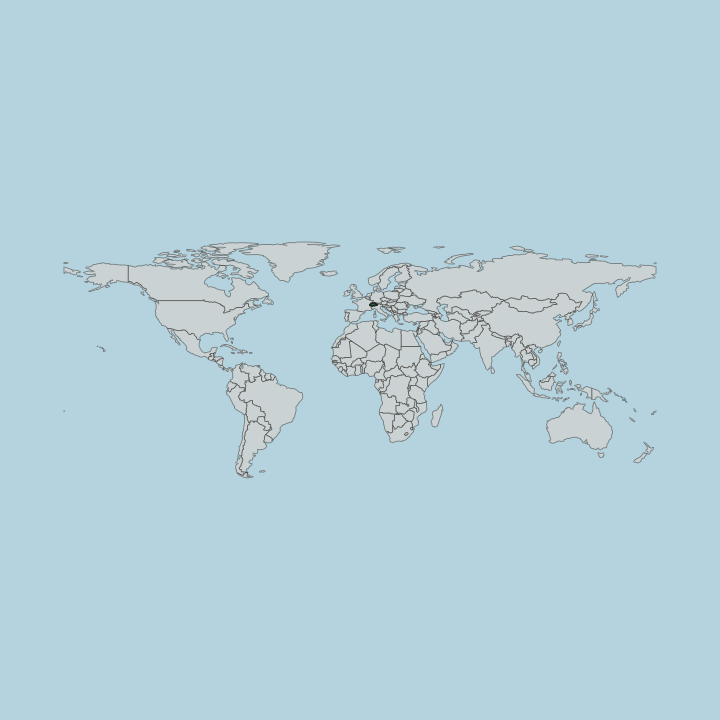
Arcades run for kilometres through the old town of Bern, federal seat of Switzerland in Canton de Berne, founded above a bend of the Aare in 1191.
Hotel links are affiliate links: booking through them may earn us a commission, at no extra cost to you. It never affects how places are ranked. How this works


Where to stay in Bern
Not every neighbourhood fits every trip — here's what each one is good for.

 BernSwitzerlandWaking beside the Historical Museum of Bern
Kirchenfeld
The embassy grid on the far bank, holding the Natural History Museum of Bern and the Museum of Communication within one walkKirchenfeld → BernSwitzerland
Bern / Innere Stadt
Innere Stadt is Stadtteil I of Bern's six and covers the same ground as the Berner Altstadt, divided into quarters since a constitutional reform of 1294.Where to stay →BernSwitzerlandGrünes Quartier
Two names attach to this Bern district: Grünes Quartier and the Green Quarter, with the Kornhausforum standing inside it.Where to stay → BernSwitzerland
Altenberg
The Altenberg is a statistical district of Bern on the right bank of the Aare, its field name recorded from the 1300s, from the Latin altus mons.Where to stay →BernSwitzerlandRotes Quartier
Rotes Quartier is one of three colour-named districts in Bern, beside the Schwarzes Quartier and the Grünes Quartier, just west of the Innere Stadt.Where to stay → BernSwitzerland
Matte
Matte, recorded as the Mattequartier, is a historic quarter of Bern's Old City along the Aare riverfront, in Switzerland.Where to stay →BernSwitzerlandGryphenhübeli
Gryphenhübeli is one of Bern's smaller quarters, a name on the same list as Matte, Kirchenfeld and the Schwarzes Quartier.Where to stay →BernSwitzerlandMarzili
A quarter of Bern south-west of the Innere Stadt, Marzili sits within a kilometre of the centre, with Sandrain and Monbijou its closest neighbours.Where to stay →BernSwitzerlandLänggasse
Länggasse is a statistical district and common quarter of Bern in the Länggasse-Felsenau Stadtteil, named for the lane that ran out to the Bremgartenwald.Where to stay →BernSwitzerlandMonbijou
Monbijou is a quarter of Bern south-west of the centre, holding the Salvation Army Museum and Archives and a Theodor Kocher bust by Fueter.Where to stay →BernSwitzerlandSpitalacker
Spitalacker is a district of Bern, in the Canton de Berne, covering some 68 hectares and holding no landmark of its own on the record.Where to stay →BernSwitzerlandSandrain
Some 84 hectares of Bern go by the name Sandrain, a district documented by its extent and by little besides.Where to stay →All neighbourhoods (30)
BernSwitzerlandStadtbach
Stadtbach is a Bern district whose one recorded institution is the Museum Cerny Inuit Collection.Where to stay →BernSwitzerlandSchosshalde
The Zentrum Paul Klee stands in Schosshalde, a quarter of Bern that also holds Creaviva and the sculpture park ZPK.Where to stay →BernSwitzerlandLorraine
Lorraine is a district of Bern holding the Botanical Garden Bern, one of the larger quarters on the city's roster in the Canton de Berne.Where to stay → BernSwitzerland
Breitenrain
Breitenrain is a statistical district in the Breitenrain-Lorraine Stadtteil, northeast of Bern, and most of Wyler belongs to it. Bern calls it Breitsch.Where to stay →BernSwitzerlandEngeried
Engeried is a statistical district of Bern, part of Länggasse-Felsenau (Stadtteil II), and also the name of the smaller quarter within it.Where to stay →BernSwitzerlandWeissenbühl
Two collections mark Weissenbühl out among Bern's quarters: the Tram-Museum Bern and the Blasinstrumenten-Sammlung, south-west of the centre.Where to stay →BernSwitzerlandNeufeld
Neufeld runs to some six and a half square kilometres of Bern, north-west of the centre, with the Bremgarten forest on its heritage list.Where to stay → BernSwitzerland
Muesmatt
Muesmatt belongs to Bern, one quarter name among Stadtbach, Neufeld, Länggasse and Monbijou on the city list.Where to stay →BernSwitzerlandMattenhof
Mattenhof spreads over some six-tenths of a square kilometre of Bern, south-west of the centre, and holds the listed Well Pump House.Where to stay →BernSwitzerlandBrunnadern
Brunnadern holds the Elfenau country house, the Freemasons Museum of Switzerland and the Bolívar Memorial within one stretch of Bern.Where to stay → BernSwitzerland
Weissenstein
Weissenstein is a Bern quarter of roughly 36 hectares, entered in the register with a name and a boundary and little else.Where to stay →BernSwitzerlandHolligen
Holligen is a district of Bern and one of the broadest parcels on the city's roster, though its record names no landmark at all.Where to stay →BernSwitzerlandBreitfeld
The YB Museum is the one thing recorded inside Breitfeld, a quarter of Bern listed near Beundenfeld and Breitenrain.Where to stay →BernSwitzerlandBeundenfeld
The Waldau chapel, built between 1491 and 1501, is the one dated structure recorded in Beundenfeld, a district of Bern.Where to stay →BernSwitzerlandFelsenau
Felsenau holds the Engehalbinsel on Bern's north-western side, more than two kilometres out from the centre and clear of the inner quarters.Where to stay →BernSwitzerlandMurifeld
The Freemasons Museum of Switzerland sits in Murifeld, a Bern quarter that also takes in the Culture Arena Bern Wittigkofen.Where to stay →BernSwitzerlandStöckacker
Stöckacker is a statistical district of Bern in Stadtteil VI Bümpliz-Oberbottigen, on ground that was woodland until French troops felled it in 1798.Where to stay →BernSwitzerlandBethlehem
Bethlehem is a residential quarter of Bern, in Switzerland, with the old castle Bümpliz as its one named landmark.Where to stay →Hotel links are affiliate links: booking through them may earn us a commission, at no extra cost to you. It never affects how places are ranked. How this works
Find hotels in Bern
Direct booking searches for these neighbourhoods.
The old town
The UNESCO-listed town inside the Aare loop, one continuous covered street running east toward Nydegg CastleFind hotels in The old townThe bottom of the bend, where Bern startedNydegg
The lowest corner of the old town by Nydegg Castle, where the first crossing of the Aare was made and the arcades run outFind hotels in NydeggKlee's hillside, with Tierpark Bern down at the riverAround the Zentrum Paul Klee
Open ground east of the Aare loop where the Zentrum Paul Klee stands clear of the city, green and thin on restaurantsFind hotels in Around the Zentrum Paul KleeWoods and Roman ground above the waterEngehalbinsel
The peninsula north of Bern inside a second bend of the Aare, wooded over an old Roman site and a bus ride from the arcadesFind hotels in EngehalbinselHotel links are affiliate links: booking through them may earn us a commission, at no extra cost to you. It never affects how places are ranked. How this works
Things to do in Bern
Ranked by global recognition; descriptions from Wikidata (CC0).
Museums & Galleries
4- Zentrum Paul Klee Heritage
- Kunsthalle Bern Heritage
- Swiss Rifle Museum Heritage
- Salvation Army Museum and Archives Heritage
Churches & Religious Sites
7- Church of Saints Peter and Paul Heritage
- Former Commandery with castle, church and outbuildings Heritage
- St. Mary's Church Heritage
- Church of the Antonites Heritage
- church holly cross Heritage
Show 2 more →
- Waldau chapel (1491-1501) Heritage
- Chapel of the Apostolic Parish (1894) Heritage
Castles & Historic Sites
6- Engehalbinsel Heritage
- Universal Post Monument Heritage
- International Telecommunication Union Monument Heritage
- Felsenburg Heritage
- English Grave (1840) Heritage
Show 1 more →
- Bremgarten forest, celtic quadrilateral earthwork Heritage
Nature & Outdoors
1- sculpture park ZPK
Parks & Gardens
1- Botanical Garden Bern Heritage
Landmarks & Notable Places
6- Historical Museum of Bern Heritage
- Sinner House Heritage
- Well Pump House Heritage
- Elfenau little orangery / tenant house Heritage
- House (1890) Heritage
Show 1 more →
- Untertorbrücke and Felsenburg Heritage
worth knowingacross 6 categories in Bern
About Bern
What is Bern known for?
Bern holds most of the institutions of the Swiss Confederation, and its old town carries a UNESCO World Heritage listing for the coherence of its design rather than for any single building. Arcades run under the housefronts for kilometres, fountains stand in the middle of the streets, and clock towers close the view at either end. Paul Klee is the other name here.
The Zentrum Paul Klee keeps the largest collection of his work, while the Kunstmuseum Bern and the Kunsthalle Bern divide the older and the newer art between them.
What are the main landmarks in Bern?
Nydegg Castle marks the spot where Bern began, at the low point of the Aare bend, and the town climbed west from it under the arcades. Fountains punctuate that spine. The Former Granary and the Dutch tower survive from the working town, the Church of Saints Peter and Paul stands at the eastern end of the arcaded streets, and the Einsteinhaus keeps the flat where Albert Einstein lived while writing the papers of 1905.
Art closes the list. The Kunstmuseum Bern and the Kunsthalle Bern hold the older and the newer halves of it, and the Zentrum Paul Klee sits apart on the eastern edge of the city.
What is the history of Bern?
Bern was founded in 1191 on a spur inside a bend of the Aare, a site with water on three sides and one gate to hold. The town then grew west along a single street and kept doing so for centuries. Fire settled its appearance.
After the medieval timber town burned, Bern rebuilt itself in green sandstone, and the arcades, fountains and clock towers went up as one continuous frontage rather than as separate monuments, which is why the old town is listed by UNESCO as a whole. Power arrived with the rebuilding. Bern ran the largest city state north of the Alps, pushed its territory west across the plateau, and stamped its bear on everything it held.
The Confederation made it the federal city in the nineteenth century and the institutions followed, among them the postal union whose founding the Universal Post Monument commemorates, and the Swiss Literary Archives and the SAPA Foundation still keep national collections here. Albert Einstein was examining patents at the time. He wrote the papers of 1905 in a flat on the arcaded main street, now the Einsteinhaus, a few minutes uphill from the Nydegg Castle corner where the whole town started.
Where is Bern?
The Aare wraps Bern on three sides, cutting a green trench below the town and leaving the old streets on a sandstone spur above the water. Bridges do the work here. Nydegg Castle sits at the oldest crossing, Kirchenfeld and its museums stand on the far bank, and the Engehalbinsel loops north inside a second bend of the same river.
Beyond the roofs the Alps close the southern skyline on a clear day, while the plateau runs southwest toward Lausanne and Geneva.
What is the climate of Bern?
Cold air pools in the Aare trench, so Bern's winters are grey more often than they are bright, with fog under the bridges while the Alps stand clear above it. Summers turn warm and thundery. The föhn drops off the mountains and scours the sky for a day or two at a time, and the river keeps enough of the snowmelt in it that swimmers only drift the loop through the warmest weeks of the year.
How do you get to Bern?
Bern Hauptbahnhof sits at the top of the old town, which puts the intercity trains from Zurich, Basel and Geneva a few minutes' walk from the arcades. Trams leave from the same doors. They run the length of the old town spine and over the Aare to Kirchenfeld, the Tram-Museum Bern keeps the cars that used to do it, and the Lötschberg line carries the southbound traffic under the Alps.
The airport at Belp is a small one. Most people arrive by rail.
Common questions
What is the best area to stay in Bern?
The old town: A window over the arcades on the sandstone spine. Nydegg: The bottom of the bend, where Bern started. Kirchenfeld: Waking beside the Historical Museum of Bern. Around the Zentrum Paul Klee: Klee's hillside, with Tierpark Bern down at the river. Engehalbinsel: Woods and Roman ground above the water.
Good for
Another city in Canton de Berne
Updated October 2026