China · Guangxi Zhuang Autonomous Region
Where to Stay in Dongxing, Guangxi Zhuang Autonomous Region
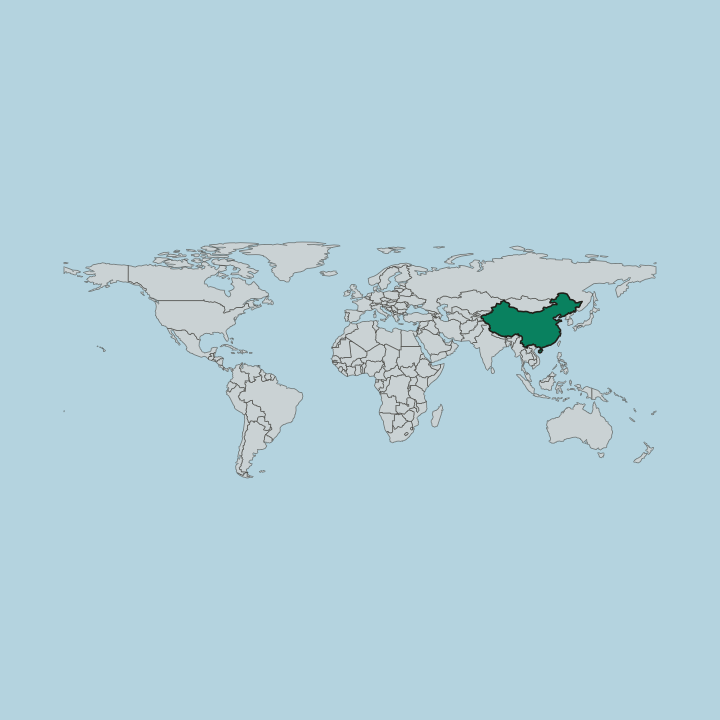
Dongxing is a county-level city of Guangxi on the coast at China's border with Vietnam, facing Móng Cái across the frontier river.
Hotel links are affiliate links: booking through them may earn us a commission, at no extra cost to you. It never affects how places are ranked. How this works


Where to stay in Dongxing
Where the beds are, and what that means for the visit.
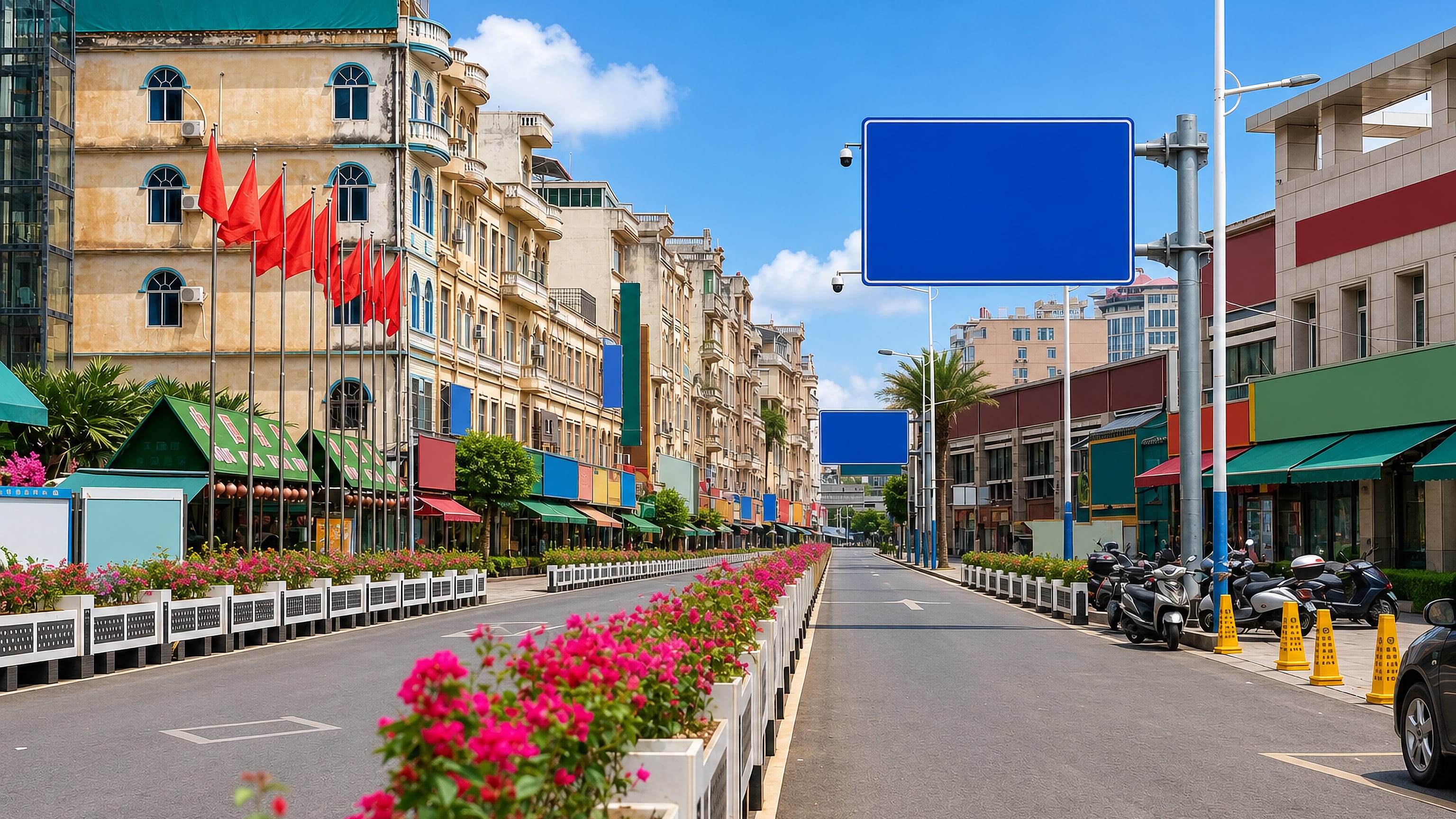
Dongxing is small and pointed at one thing. The whole county-level city covers 549 square kilometres, and almost everything a visitor does here bends toward the frontier river and the crossing to Móng Cái on the Vietnamese bank. Beds cluster near that line.
Rooms in the border quarter suit anyone planning to be over the water early, since the walk to the crossing is short and the way back is simple. The rest of Dongxing thins out fast. Away from the frontier the city gives way to the tropical coastal ground of the Guangxi Zhuang Autonomous Region, where the roads run back toward Fangchenggang rather than toward Vietnam.
Two logics compete. If you want the crossing, the shops and a short walk to the river, take the border streets; if you want quiet and an easy road back into Guangxi, the inland edge facing Fangchenggang serves better. The shore is a third option.
Dongxing sits on the sea as well as on the border, so a room toward the water trades the convenience of the frontier for the coastline that this corner of China carries. River, shore and inland edge lie minutes apart. The city is compact enough that the choice comes down to atmosphere and morning routine rather than to distance.
Find hotels in Dongxing
Direct booking searches for these neighbourhoods.
The border quarter
The streets of Dongxing closest to the frontier river, within a short walk of the crossing itselfFind hotels in The border quarterStays that keep the inland road back into Guangxi shortThe Fangchenggang side
Dongxing's landward edge, turned toward Fangchenggang and away from the frontier traffic. Beds are limited here, so book early.Find hotels in The Fangchenggang sideRooms facing the water rather than the Vietnamese bankThe shore
The seaward strip of Dongxing, tropical coast rather than border town, a short way out from the crossing. Lodging is scarce in this area; reserve in advance.Find hotels in The shoreHotel links are affiliate links: booking through them may earn us a commission, at no extra cost to you. It never affects how places are ranked. How this works
About Dongxing
The border does the work here.
What is Dongxing known for?
Dongxing faces Móng Cái across the river that separates China from Vietnam, and that crossing, rather than any monument, is what the county-level city is known for along this stretch of coast. Trade follows the water. Under the administration of Fangchenggang, Dongxing, Dongxing City in Chinese, covers 549 square kilometres of tropical coastal ground in the Guangxi Zhuang Autonomous Region.
What are the main landmarks in Dongxing?
Dongxing carries no listed monuments. What stands in for them is the frontier itself, the river between China and Vietnam, the crossing to Móng Cái and the working streets that serve it, which together do the job a cathedral or a castle does elsewhere. Crossings replace monuments here.
Beyond that line, the tropical coast of the Guangxi Zhuang Autonomous Region and the inland road to Fangchenggang are what the city has to show a visitor.
What is the history of Dongxing?
Dongxing's past is a border past. No founding year is recorded for the city, and its shape comes instead from the river running between China and Vietnam, a line that made a market of the bank on this side and Móng Cái of the bank on the other. Frontier towns grow from traffic.
What crosses the water, and on what terms, has done more to determine the look of Dongxing than any single ruler or dynasty. Administration came later than the traffic. Dongxing is a county-level city under Fangchenggang, one tier down in the structure of the Guangxi Zhuang Autonomous Region, and that formal status sits on top of a much older habit of exchange across the river.
The territory is compact. Within its 549 square kilometres the city holds the crossing, the approaches to it and the tropical coastal strip behind them, which is a small area by the measure of a Chinese municipal unit. Móng Cái is the constant.
The town on the far bank is Dongxing's counterpart, and the two function as one crossing divided by water rather than as two unrelated places, which is why the story of either is unreadable without the other. Guangxi lies behind it all. The wider region, which carries the Zhuang in its formal name, supplied the hinterland the trade needed, and Fangchenggang supplied the administration, leaving Dongxing to do the one thing a border town does.
Where is Dongxing?
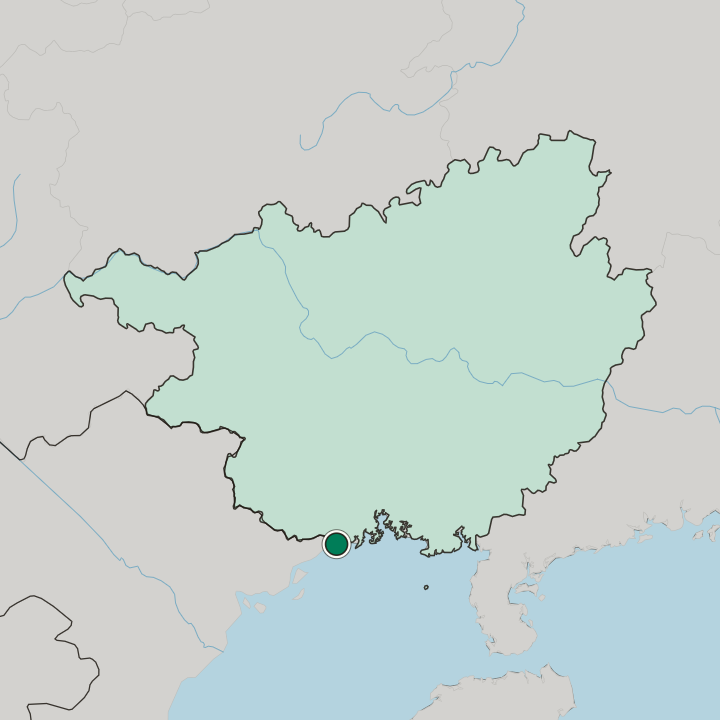
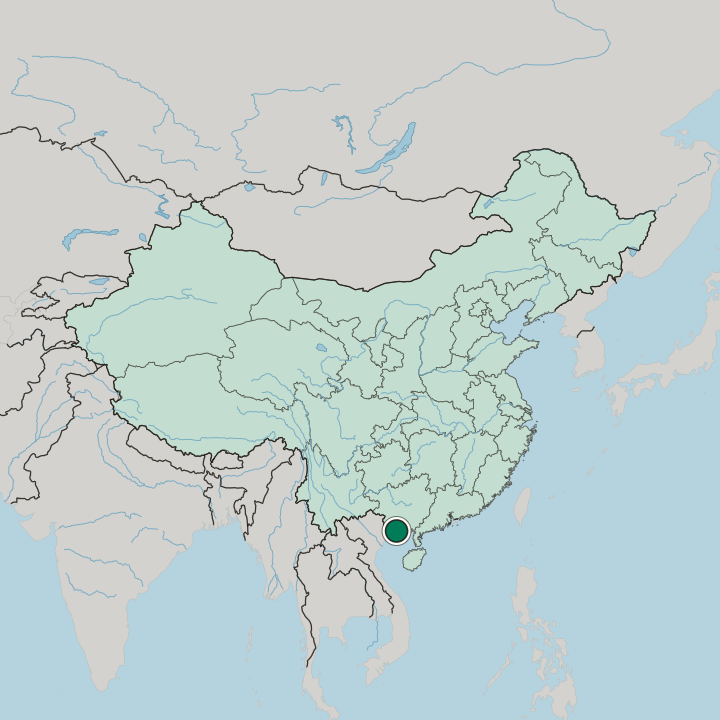
Dongxing occupies a corner. The city covers 549 square kilometres of tropical coastal ground, bounded on one side by the sea and on another by the river that carries the frontier with Vietnam past Móng Cái. Fangchenggang lies inland.
Physically as well as administratively, Dongxing hangs off the seaward rim of the Guangxi Zhuang Autonomous Region, with water on two sides and the rest of Guangxi behind it.
What is the climate of Dongxing?
The sea sets the terms in Dongxing. This corner of Guangxi sits inside the tropical band north of the equator and directly on the water, so the coast softens what a landlocked stretch of the same region would feel. Warm months run long here.
Móng Cái, on the far bank of the frontier river, shares the identical weather, because a border drawn on water divides administration rather than air.
How do you get to Dongxing?
Most arrivals come through Fangchenggang. Dongxing is the end of the road on this side of the frontier, reached overland from the rest of the Guangxi Zhuang Autonomous Region, with the last stretch dropping down to the coast rather than running along it. The other approach is the crossing.
Foot traffic from Móng Cái comes over the frontier river, which makes Dongxing one of the few cities in China a visitor can enter from Vietnam without taking a flight.
Common questions
What is the best area to stay in Dongxing?
The border quarter: Travellers timing an early walk over to Móng Cái. The Fangchenggang side: Stays that keep the inland road back into Guangxi short. The shore: Rooms facing the water rather than the Vietnamese bank.
More cities in Guangxi Zhuang Autonomous Region
Updated September 2026