China · Xinjiang Uyghur Autonomous Region
Where to Stay in Gujangbagh, Xinjiang Uyghur Autonomous Region
Gujangbagh, recorded also as Hotan or Khotan, is an oasis city on the Jade Branch of the Silk Road and the seat of Hotan Prefecture.
Hotel links are affiliate links: booking through them may earn us a commission, at no extra cost to you. It never affects how places are ranked. How this works


Where to stay in Gujangbagh
Where the beds are, and what that means for the visit.
The city proper is compact and self-contained. Hotan broke away from the larger Hotan County in 1984 to stand as an administrative area of its own, and that small seat is where the rooms are, within easy reach of the Hotan Cultural Museum and of most things a visitor comes for. Distances stay short inside the oasis.
Everything past the irrigated belt belongs to Hotan County or to the wider Hotan Prefecture, where settlements thin out and a bed becomes a question of what one particular town happens to hold. Yoktan is the other pole. The old capital lies roughly ten kilometres west of the present city, which makes it a half-day trip rather than a place to sleep, and a room in Gujangbagh keeps both that road and the museum inside one short radius.
Nothing here is dense. Rooms cluster in the seat because the oasis itself clusters there, and the dry ground beyond the cultivated edge offers neither reason nor infrastructure for an overnight stay. One address covers the visit.
A single base in the city serves Khotan's museum, its oasis streets and the run out to Yoktan without a second move.
Find hotels in Gujangbagh
Direct booking searches for these neighbourhoods.
The city proper
The seat that split from Hotan County in 1984, holding nearly all the oasis roomsFind hotels in The city properVisitors giving the old capital at Yoktan a full morningThe Yoktan road
Cultivated oasis ground running out to the earlier Khotan capital, with almost no beds of its own. Lodging is scarce in this area; reserve in advance.Find hotels in The Yoktan roadTravellers crossing Hotan Prefecture between oasesHotan County
County settlements around the seat where a room depends on what the individual town has. Few places to stay nearby — book ahead.Find hotels in Hotan CountyHotel links are affiliate links: booking through them may earn us a commission, at no extra cost to you. It never affects how places are ranked. How this works
About Gujangbagh
Jade named the route.
What is Gujangbagh known for?
Gujangbagh stands on the Jade Branch of the Silk Road, and the Hotan Cultural Museum holds the collections that set out what an oasis city on that road amounted to across many centuries of traffic. Khotan once headed a Buddhist realm. That earlier standing is why the old capital at Yoktan, about ten kilometres west of the modern streets, carries more weight in the record than its remains suggest.
What are the main landmarks in Gujangbagh?
Everything catalogued here fits inside one building. The Hotan Cultural Museum is the single recorded site in Gujangbagh, and it does the work that a dozen scattered monuments do in other cities, gathering the material record of the oasis and of the Jade Branch of the Silk Road under one roof. Yoktan sits outside the city.
The old capital west of the modern streets is the other name worth giving, though it belongs to the ground itself rather than to any roster of buildings.
What is the history of Gujangbagh?
Khotan mattered long before any modern boundary. The oasis stood at the centre of a Buddhist realm, and that is why the name turns up in accounts written far outside Xinjiang centuries before an administration existed to draw a line around it. Yoktan holds the earlier capital.
The site lies about ten kilometres west of the present streets, near enough to belong to the same oasis and far enough to make the modern city a successor rather than a continuation. Trade fixed the place in the written record. The Jade Branch of the Silk Road ran through this oasis, and the stone that gave the branch its name is the commodity tied most tightly to Hotan in every account of the route.
The Hotan Cultural Museum keeps that material record. Administration is far younger than any of it. The city proper separated from the larger Hotan County in 1984 to become an administrative area in its own right, and it took the role of seat of Hotan Prefecture, which leaves a compact municipality laid over a settlement of very great age.
Hetian City is the form the official register uses, and Gujangbagh, Hotan and Khotan all name the same oasis under different systems of transcription.
Where is Gujangbagh?
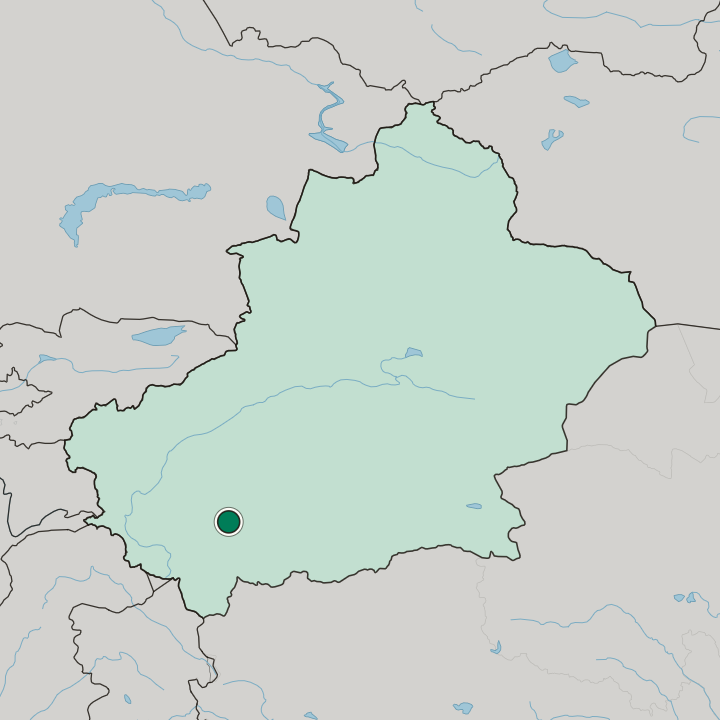
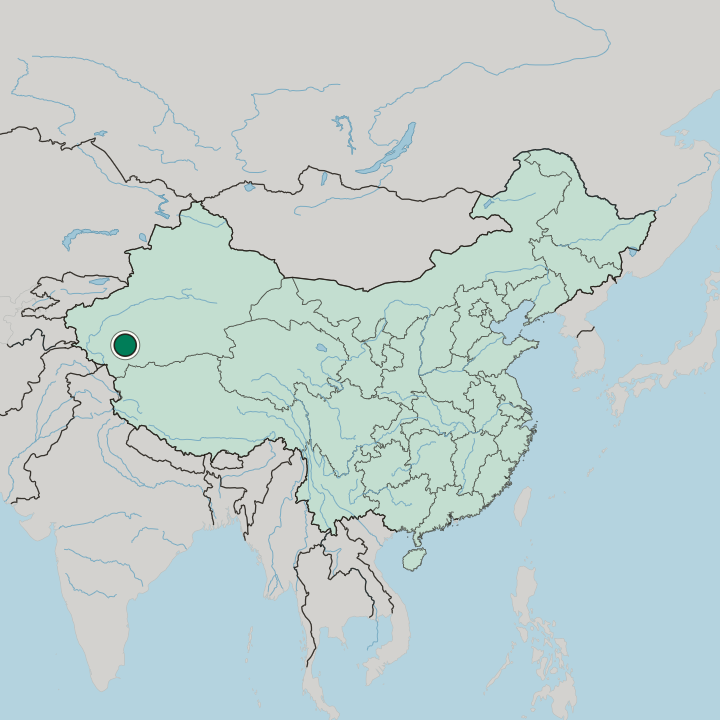
Water decides the shape of it. Gujangbagh is an oasis settlement, and the irrigated ground is the only thing separating its built-up area from the dry country that fills the rest of Hotan Prefecture. The municipality covers little ground.
Hotan County wraps around the city proper, Yoktan lies out west of it, and the Jade Branch of the Silk Road came through this belt precisely because the oasis made the crossing survivable.
What is the climate of Gujangbagh?
Dry country sets the terms. Gujangbagh falls within the temperate band, yet an oasis surrounded by desert swings hard between hot afternoons and cold nights, and dust off the open ground counts for more in a visit than any amount of rain. Shade repays planning.
The Hotan Cultural Museum makes a sensible refuge in the middle of the day, while the run out to Yoktan is better taken early, before the light off the sand becomes punishing.
How do you get to Gujangbagh?
The seat is the hub. Gujangbagh serves as the seat of Hotan Prefecture, so routes across this corner of the Xinjiang Uyghur Autonomous Region converge on the city proper rather than on the county settlements around it. Onward legs run long.
Distances between oases in Hotan Prefecture are counted in hours of road, and Yoktan, ten kilometres out from Khotan, is the rare destination reachable without giving up a whole day to it.
Common questions
What is the best area to stay in Gujangbagh?
The city proper: Car-free stays beside the Hotan Cultural Museum. The Yoktan road: Visitors giving the old capital at Yoktan a full morning. Hotan County: Travellers crossing Hotan Prefecture between oases.
More cities in Xinjiang Uyghur Autonomous Region
Updated September 2026