China · Xinjiang Uyghur Autonomous Region
Where to Stay in Kashgar, Xinjiang Uyghur Autonomous Region
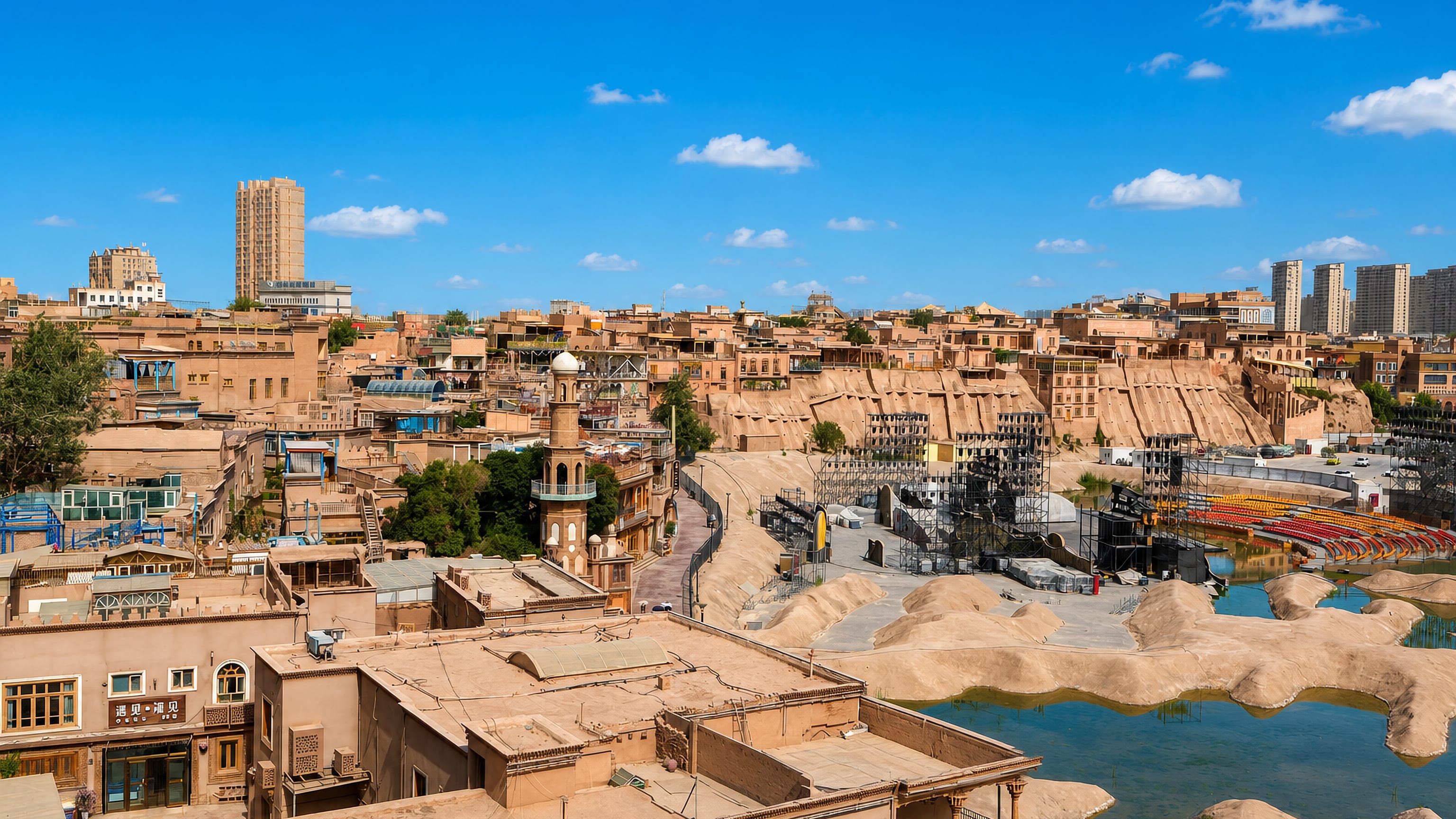
Mud-brick lanes wind through the old town of Kashgar, a Silk Road oasis in southern Xinjiang, China, known for the Id Kah Mosque and its great bazaar.
Hotel links are affiliate links: booking through them may earn us a commission, at no extra cost to you. It never affects how places are ranked. How this works


Where to stay in Kashgar
The practical side of choosing where to sleep.
Kashgar gathers most of its beds close to the old town, so where you stay turns on how near you want to be to the historic core. The streets around the Kashgar Old City and the Id Kah Mosque hold guesthouses and small hotels among the mud-brick lanes, and they suit you if you want the bazaar, the tea houses, and the morning call to prayer within a short walk. Markets sit at the door.
To the east, the newer avenues carry larger hotels along wide, tree-lined streets, quieter and better connected to transport, a steadier base for travellers who want more space after a day in the crowded lanes. Toward the edge of the city, quieter districts run out to the tomb of the Afaq Khoja Mausoleum and the oasis fields beyond. Beds run plentiful across the old and new quarters alike, though rooms fill in the warmer months when the oasis draws the most travellers to the Tarim Basin.
Find hotels in Kashgar
Direct booking searches for these neighbourhoods.
Kashgar Old City
Guesthouses in the mud-brick lanes around the Id Kah Mosque and the old market.Find hotels in Kashgar Old Cityspace and transportEastern avenues
Larger hotels on the wide tree-lined streets of the newer town, near the bus and rail links.Find hotels in Eastern avenuesHotel links are affiliate links: booking through them may earn us a commission, at no extra cost to you. It never affects how places are ranked. How this works
About Kashgar
What is Kashgar known for?
Kashgar is known as an ancient Silk Road oasis on the western rim of the Tarim Basin, one of the oldest continuously inhabited cities in the world. Its markets have drawn traders for centuries. The old bazaar is said to be among the largest in Asia, and the Kashgar Old City preserves a labyrinth of mud-brick lanes around the Id Kah Mosque.
The Afaq Khoja Mausoleum stands among the great tombs of the region. Caravans once left here for the passes toward Central Asia.
What are the main landmarks in Kashgar?
Kashgar keeps its landmarks in and around the old town. The Id Kah Mosque, a broad yellow-walled mosque with a wide forecourt, stands at the centre of the historic quarter as one of the largest of its kind in the whole region. Around it spreads the Kashgar Old City, a warren of mud-brick houses, covered alleys, and workshops.
On the outskirts rises the Afaq Khoja Mausoleum, a domed and tile-clad tomb complex among the finest Islamic monuments of Xinjiang. Older still: the Moore Temple Ruins. They are the weathered remains of an ancient Buddhist site on the oasis edge.
What is the history of Kashgar?
Kashgar counts its history in millennia. For more than 2,000 years the oasis has stood on the Silk Road, a watered halt on the western rim of the Tarim Basin where the desert routes split around the sands and climbed toward the mountain passes into Central Asia. Caravans of silk, jade, and horses passed through, and the city grew rich as a market where the traders of China met those of the west.
The Moore Temple Ruins recall an early Buddhist age, before Islam reached the oasis. Over the long centuries the town became a great centre of Islamic learning and trade in the region. The Id Kah Mosque rose as its religious heart, and the Afaq Khoja Mausoleum was raised for an influential local dynasty whose tombs still stand at the edge of the fields.
Empires from east and west contested the oasis for its command of the routes. Its role never faded. The bazaar drew merchants from across the mountains, and the Kashgar Old City took the dense mud-brick form that still defines it.
In the modern era the city became part of the Xinjiang Uyghur Autonomous Region within China, still a crossroads near the borders with Kyrgyzstan and Tajikistan.
Where is Kashgar?
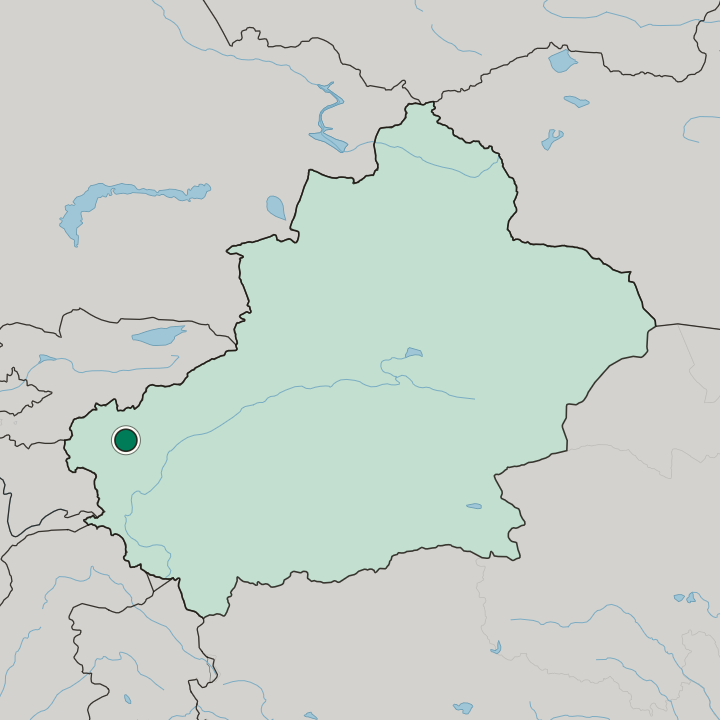
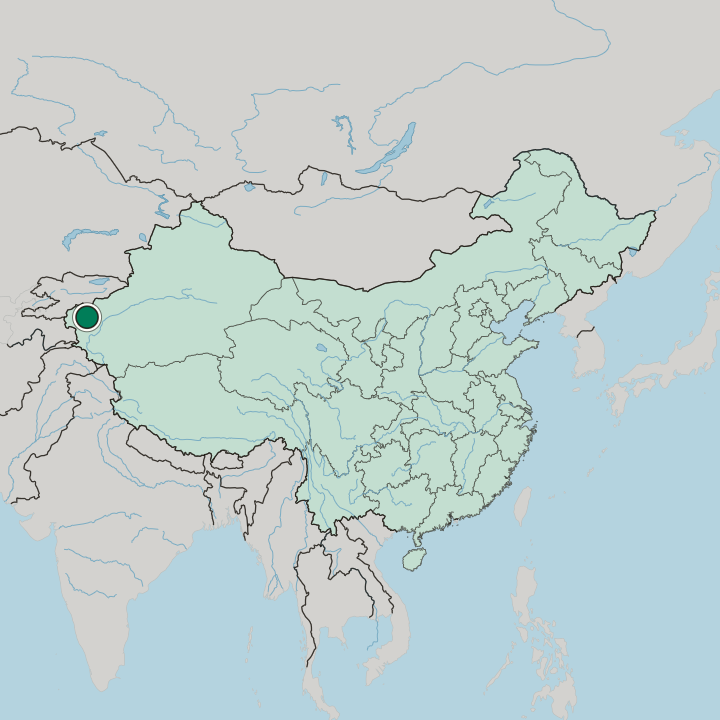
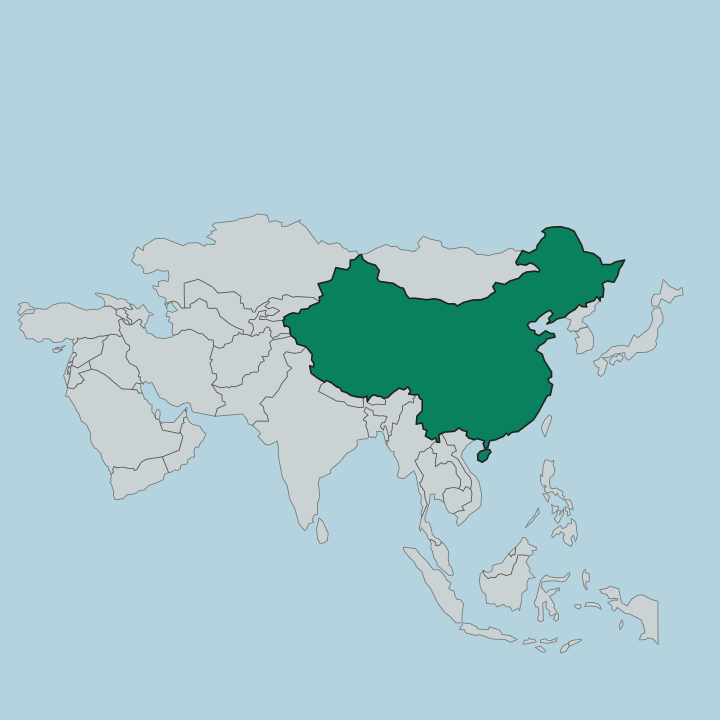
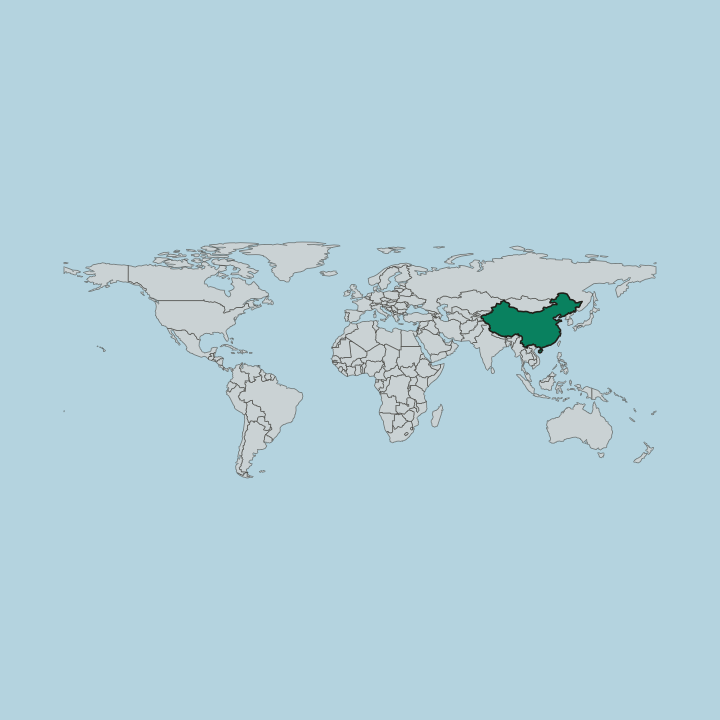
Kashgar lies in the extreme west of China, an oasis on the western edge of the Tarim Basin in southern Xinjiang. Mountains ring the horizon. The city sits where meltwater rivers from the surrounding ranges water a broad belt of fields and orchards, close to the borders with Kyrgyzstan and Tajikistan and the high passes that lead into Central Asia.
Beyond the green oasis the land turns quickly to desert, the sands of the Tarim Basin stretching east, so the settled ground clings to the water at the foot of the mountains.
What is the climate of Kashgar?
Kashgar has a dry, sharply seasonal desert climate on the rim of the Tarim Basin. Little rain falls in any season. Summers are hot and dusty, when the sun beats on the oasis and winds carry sand off the desert, while the meltwater rivers from the mountains keep the fields and orchards green.
Winters are cold and clear, with hard frosts on the plain and snow on the high ranges that ring the oasis. Spring and autumn are brief, bright, and mild between the extremes.
How do you get to Kashgar?
Kashgar reaches the rest of China across long distances of desert and mountain. Flights link it fastest. The airport connects the oasis to the regional hubs of Xinjiang and to cities far to the east, while the railway that crosses the Tarim Basin ties Kashgar into the national network by a long run around the desert.
Roads climb from the city toward the high border passes into Kyrgyzstan, Tajikistan, and Pakistan, the old caravan routes now carried by highway. Most travellers arrive by air or the long train.
Common questions
What is the best area to stay in Kashgar?
Kashgar Old City: bazaar-side wanderers. Eastern avenues: space and transport.
Good for
More cities in Xinjiang Uyghur Autonomous Region
Updated September 2026