Germany · Hessen
Where to Stay in Wetzlar, Hessen
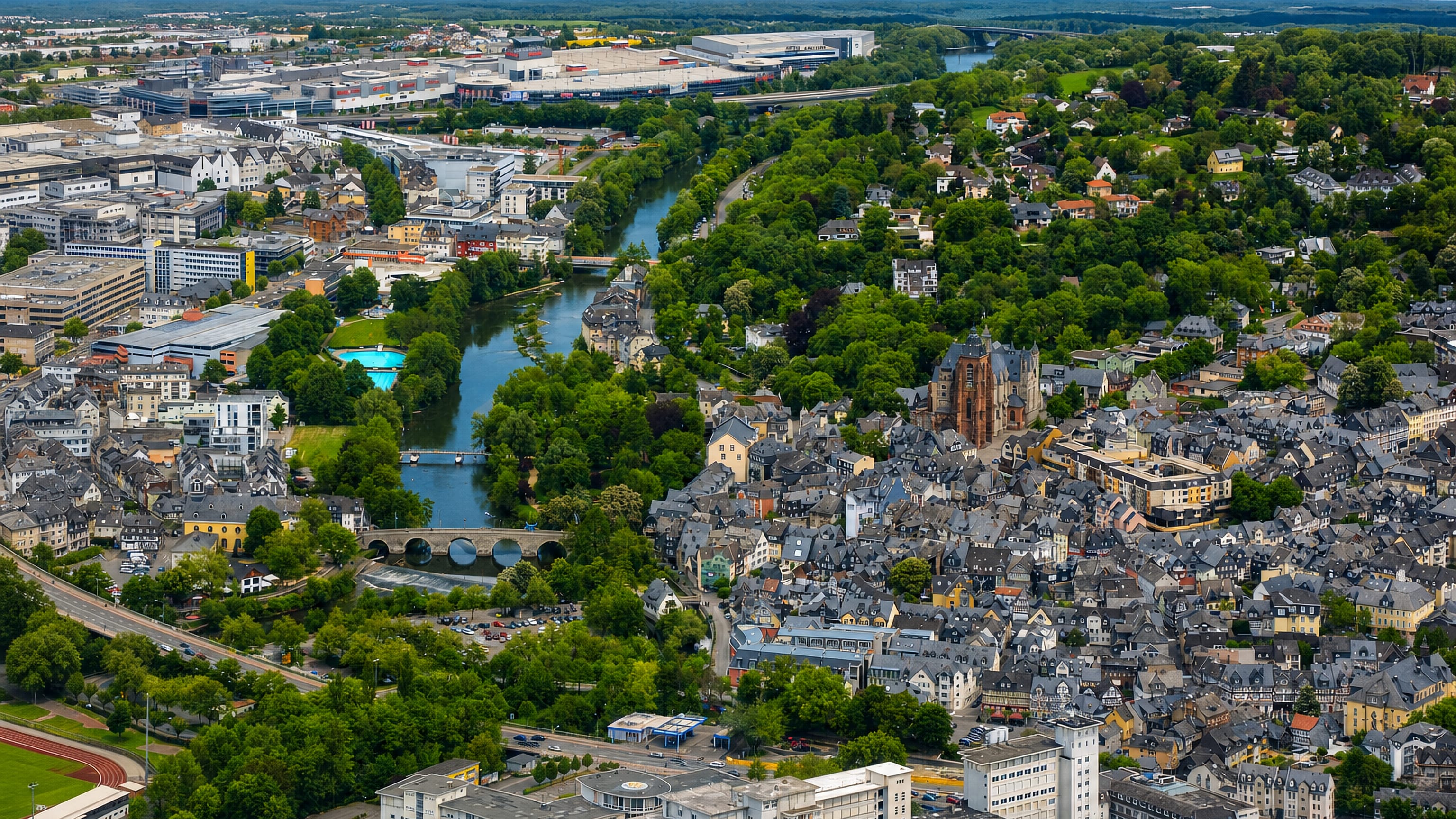
Wetzlar straddles the Lahn, its unfinished cathedral over a half-timbered old town. The Reichskammergericht once sat here.
Hotel links are affiliate links: booking through them may earn us a commission, at no extra cost to you. It never affects how places are ranked. How this works


Where to stay in Wetzlar
Where visitors usually base themselves, and why.
The old town is the reason to come and the place to sleep. Streets there are steep and tightly packed, the Eisenmarkt sits at the middle of them, and the cathedral of St. Mary rises over the whole arrangement. Half-timbered fronts do the rest.
Rooms in that quarter put the Reichskammergerichtsmuseum, the Franciscan Church and the Hospitalkirche Wetzlar within a few minutes of the door, at the cost of a climb on most routes back. The Lahn offers flatter ground. Beds along the river avoid the gradients altogether, and the ruined stone towers on the outskirts stand within a walk of that side, with Burg Kalsmunt above and the Brühlsbacher Warte further out.
The Säuturm belongs to the same family. Anyone working through the museums has the Ernst Leitz Museum, the Atelier Ludwig Leitz and the Viseum to get round as well, and none of them needs a base in the old town. Garbenheim lies outside the city proper.
The Heimatmuseum Garbenheim and the Evangelische Kirche Garbenheim give it a centre of its own, and a bed out there buys quiet in exchange for a drive back at the end of the evening. Nauborn and Aßlar sit on the same outer ring. Wetzlar works as a base for the Lahn-Dill-Kreis, so a stay here is often about the country around as much as the streets inside.
Find hotels in Wetzlar
Direct booking searches for these neighbourhoods.
The old town under the cathedral
The Eisenmarkt, the Reichskammergerichtsmuseum and the half-timbered lanes crowd together beneath the cathedral of St. Mary.Find hotels in The old town under the cathedralLevel rooms by the Lahn, within a walk of Burg Kalsmunt and the tower ruins.The Lahn bank
The Lahn gives Wetzlar its flat ground, with the Brühlsbacher Warte and the Säuturm standing out along the same edge. Beds are limited here, so book early.Find hotels in The Lahn bankQuiet outer rooms near the Heimatmuseum Garbenheim, clear of the gradients.Garbenheim
Garbenheim keeps its own church and its own museum well outside the packed streets of Wetzlar, so nights there are village nights. Beds are limited here, so book early.Find hotels in GarbenheimHotel links are affiliate links: booking through them may earn us a commission, at no extra cost to you. It never affects how places are ranked. How this works
Things to do in Wetzlar
Ranked by global recognition; descriptions from Wikidata (CC0).
Museums & Galleries
3- Reichskammergerichtsmuseum
- Viseum
- Atelier Ludwig Leitz
Churches & Religious Sites
8- Altenberg Abbey, Solms Heritage
- Hospitalkirche Wetzlar Heritage
- Franciscan Church Heritage
- Evangelische Kirche (Aßlar) Heritage
- Paulskirche Heritage
Show 3 more →
- Evangelische Kirche (Nauborn) Heritage
- Evangelische Kirche Garbenheim Heritage
- Evangelische Pfarrkirche Heritage
Castles & Historic Sites
3- Waldgirmes Forum Heritage
- Burg Hermannstein Heritage
- Burg Kalsmunt Heritage
Landmarks & Notable Places
2- Brühlsbacher Warte Heritage
- Säuturm Heritage
worth knowingacross 4 categories in Wetzlar
About Wetzlar
A court and a cathedral.
What is Wetzlar known for?
Wetzlar was a free imperial city and the seat of the Reichskammergericht, the supreme court of the Holy Roman Empire, and the Reichskammergerichtsmuseum keeps that period in view. The cathedral of St. Mary is shared between Catholic and Protestant congregations, and it has never been finished. The Eisenmarkt is the other set piece.
Half-timbering runs through the old town, which is why the German Timber-Frame Road passes this way.
What are the main landmarks in Wetzlar?
The cathedral of St. Mary tops the list. Two castles carry the older defence, Burg Kalsmunt and Burg Hermannstein, while the Brühlsbacher Warte and the Säuturm are what is left of the towers along the river. The Reichskammergerichtsmuseum, the Viseum and the Ernst Leitz Museum head the collections, with the Jerusalemhaus and the Atelier Ludwig Leitz behind them.
Churches fill the rest, among them the Franciscan Church, the Paulskirche and the Anskar-Kirche. Waldgirmes Forum lies furthest back.
What is the history of Wetzlar?
The cathedral came first in stone. Building on the sandstone cathedral of St. Mary began in the 12th century in Romanesque form, continued in Gothic under a later master plan, and stopped short: one steeple was never completed. Two castles watched the same ground.
Burg Kalsmunt and Burg Hermannstein belong to that period, and the Deutschordenskommende Wetzlar and Altenberg Abbey record the orders that held property alongside the town. Waldgirmes Forum predates all of it. Then came the court.
Wetzlar was a free imperial city, and the Reichskammergericht of the Holy Roman Empire sat here, which gave a town of this size a national role it has never had since. The Reichskammergerichtsmuseum records it. Half-timbering from the same centuries survives in enough quantity that the German Timber-Frame Road runs through the city, past the Eisenmarkt and the steep lanes around it.
Industry arrived later and stayed. The Ernst Leitz Museum and the Atelier Ludwig Leitz carry names from that side of the record, and Wetzlar counts as one of ten regional centres in Hessen. Aerial bombing damaged the cathedral in the Second World War, and the restoration of the 1950s put it back without finishing what the Middle Ages left.
The Lahn-Dill-Kreis still turns on the city.
Where is Wetzlar?
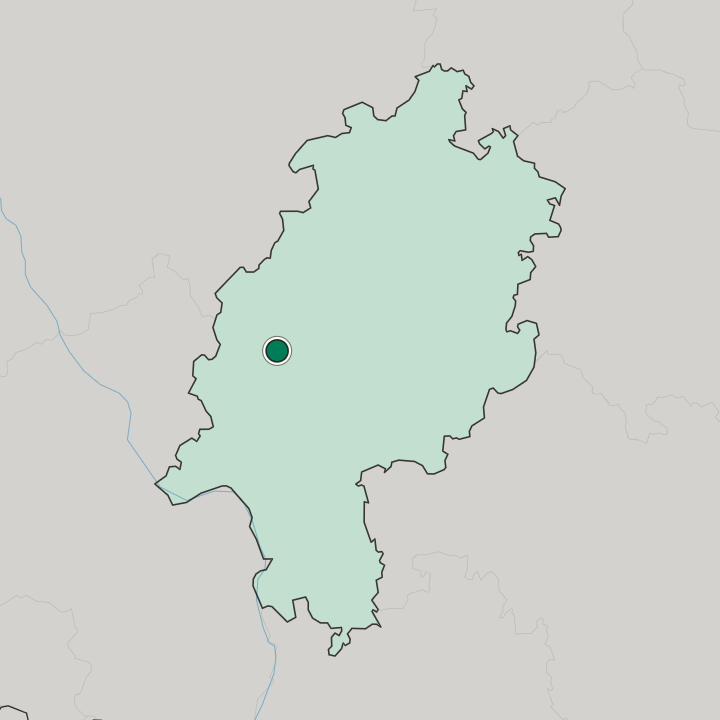
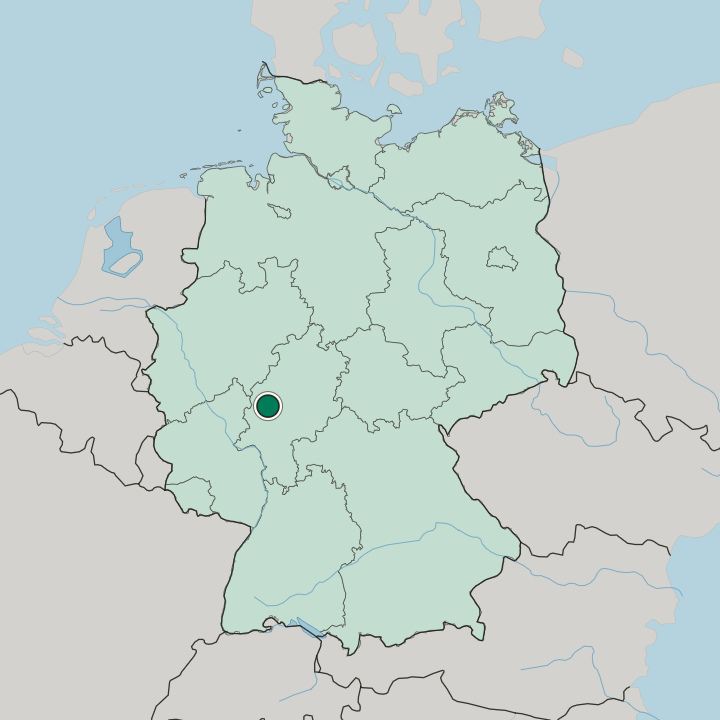
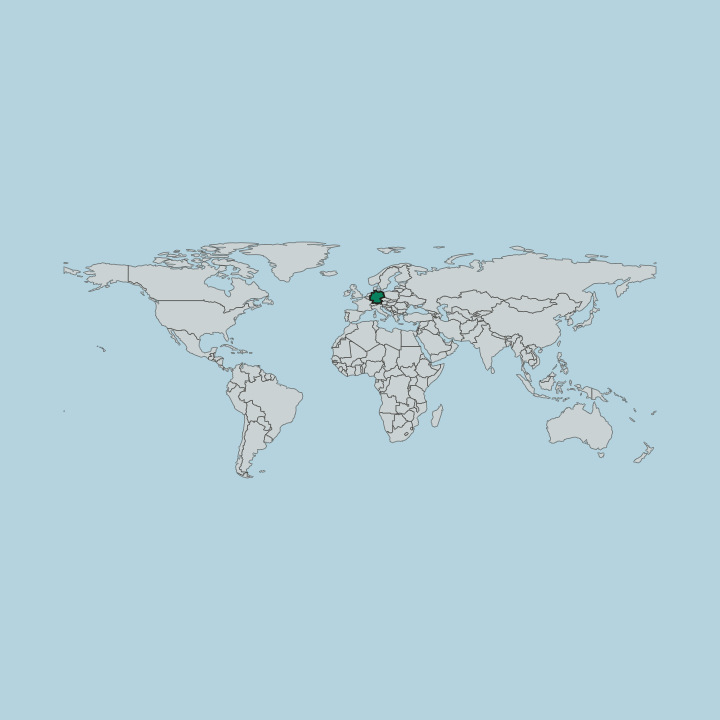
The Lahn splits the city. Wetzlar stands on both banks, on the north edge of the Taunus and at the hub of the Lahn-Dill-Kreis, with Frankfurt some fifty kilometres away. The ground rises steeply inside it.
Streets in the old town are tightly packed and graded, while Garbenheim, Nauborn and Aßlar sit out beyond the built-up middle.
What is the climate of Wetzlar?
The Taunus rises at one edge of it. Wetzlar lies where that upland gives way to the Lahn valley, and the valley holds cloud and damp through the cold months while the higher ground takes the weather first. Summers stay moderate.
The temperate band keeps the extremes off, which is what makes the steep lanes of the old town and the walk out to Burg Kalsmunt worth doing in most months of the year.
How do you get to Wetzlar?
Frankfurt is the nearest big approach. Roads and rail up the Lahn valley cover the fifty-odd kilometres from there, and the German Timber-Frame Road offers the slower version of the same journey. Then the walking starts.
The old town is compact but graded, so the cathedral of St. Mary, the Eisenmarkt and the Reichskammergerichtsmuseum come easily on foot while Burg Hermannstein, Garbenheim and Aßlar want a car.
Common questions
What is the best area to stay in Wetzlar?
The old town under the cathedral: First stays wanting the Eisenmarkt and the cathedral of St. Mary at the door.. The Lahn bank: Level rooms by the Lahn, within a walk of Burg Kalsmunt and the tower ruins.. Garbenheim: Quiet outer rooms near the Heimatmuseum Garbenheim, clear of the gradients..
Good for
More cities in Hessen
Updated October 2026