Germany
Hessen, Germany — Towns & Travel Guide
Hessen is a landlocked German state built around the Frankfurt Rhine-Main region, its wooded hills and half-timbered towns spreading out from Wiesbaden.
Hotel links are affiliate links: booking through them may earn us a commission, at no extra cost to you. It never affects how places are ranked. How this works


Towns & cities in Hessen
Pick a town or city — each links to where to stay.
 Germany
Frankfurt am Main
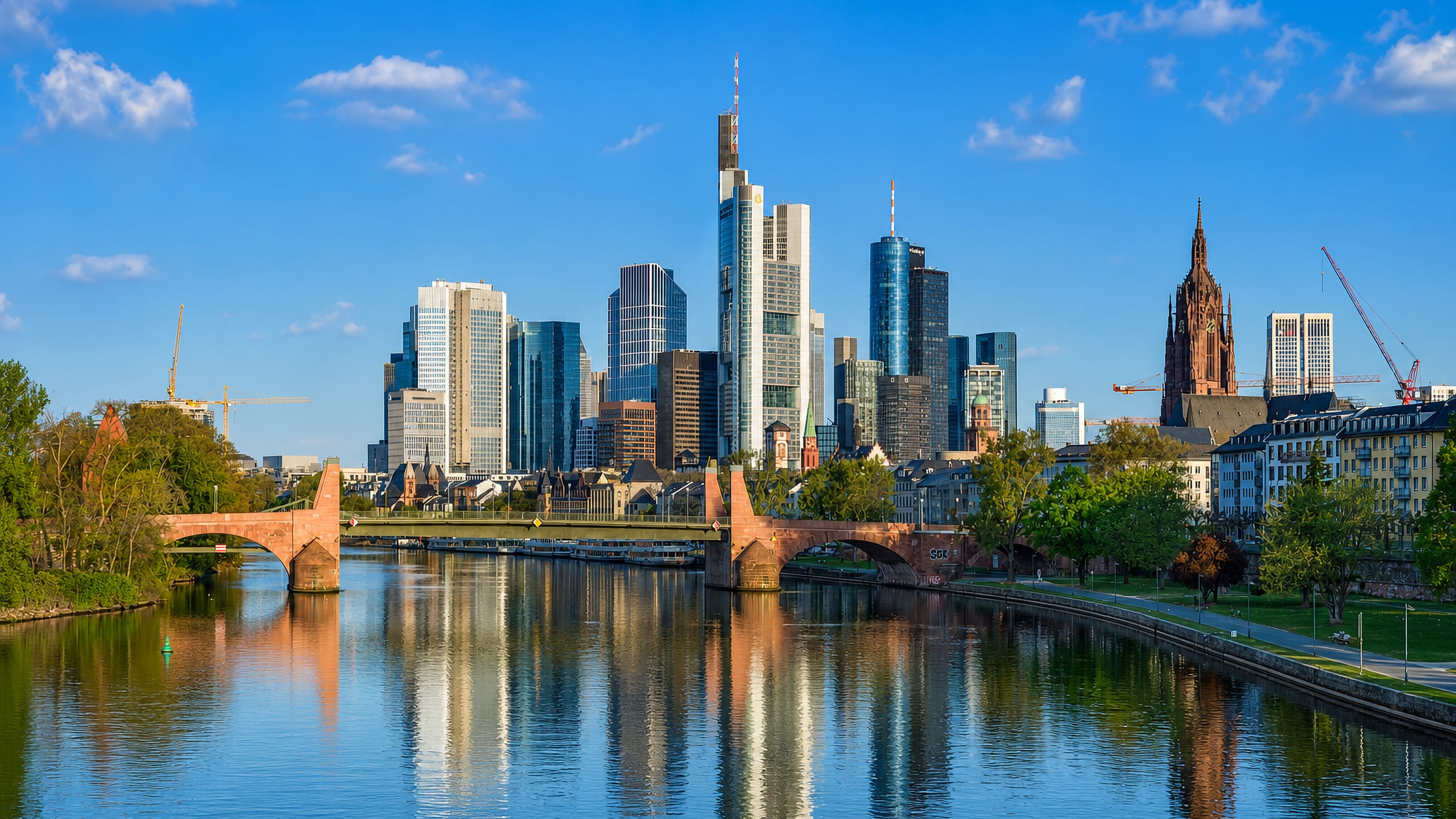
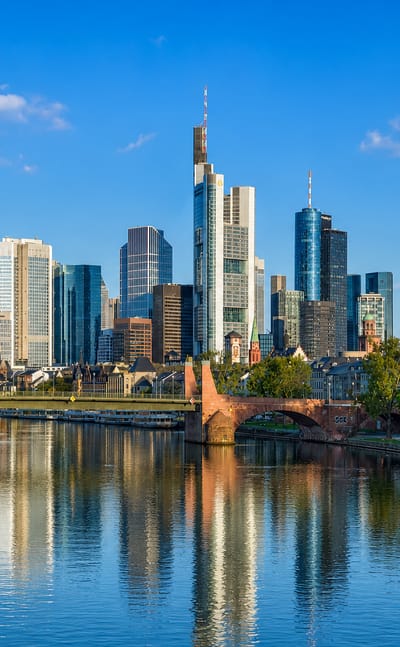
Frankfurt am Main stands on the river Main in Hessen, its old town rising around Frankfurt Cathedral above a riverbank of museums.Where to stay →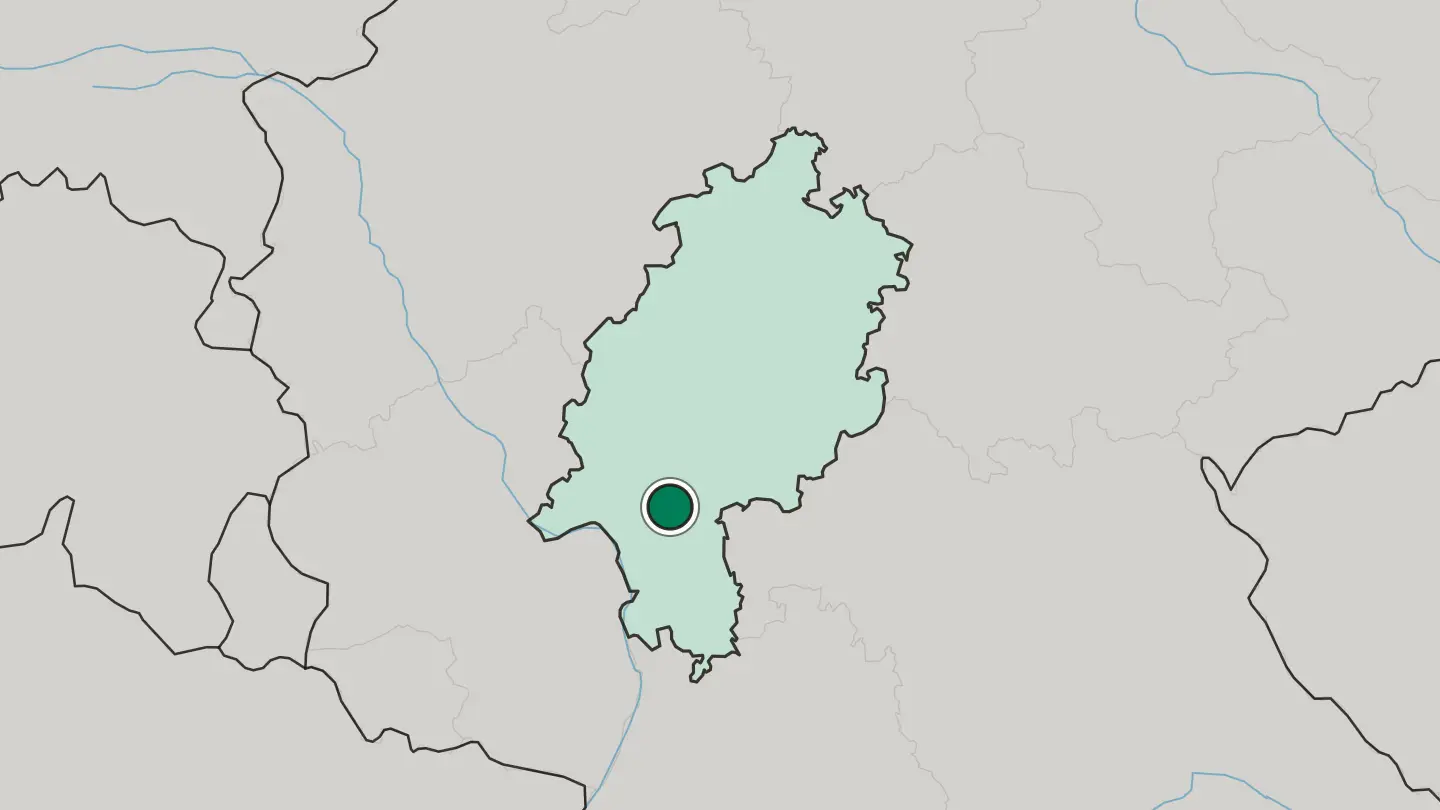
 Germany
Wiesbaden
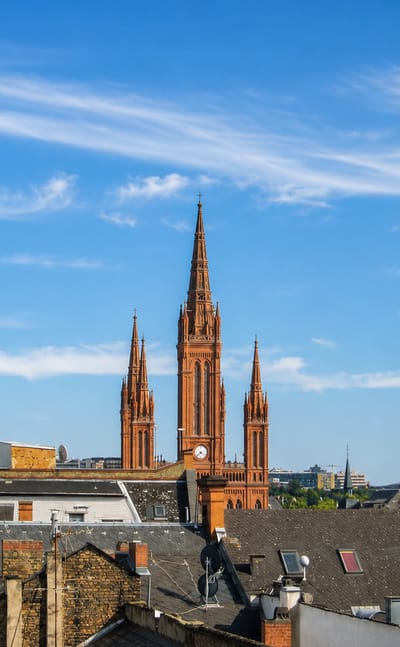
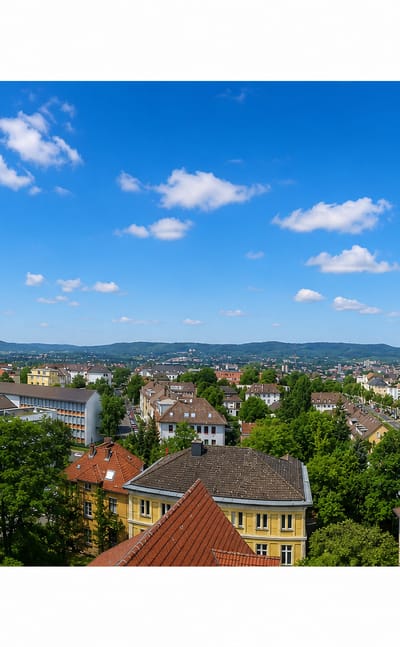
Thermal water rises under Wiesbaden, the capital of Hessen and a spa city facing Mainz, known for the Marktkirche and its fourteen warm springs.Where to stay →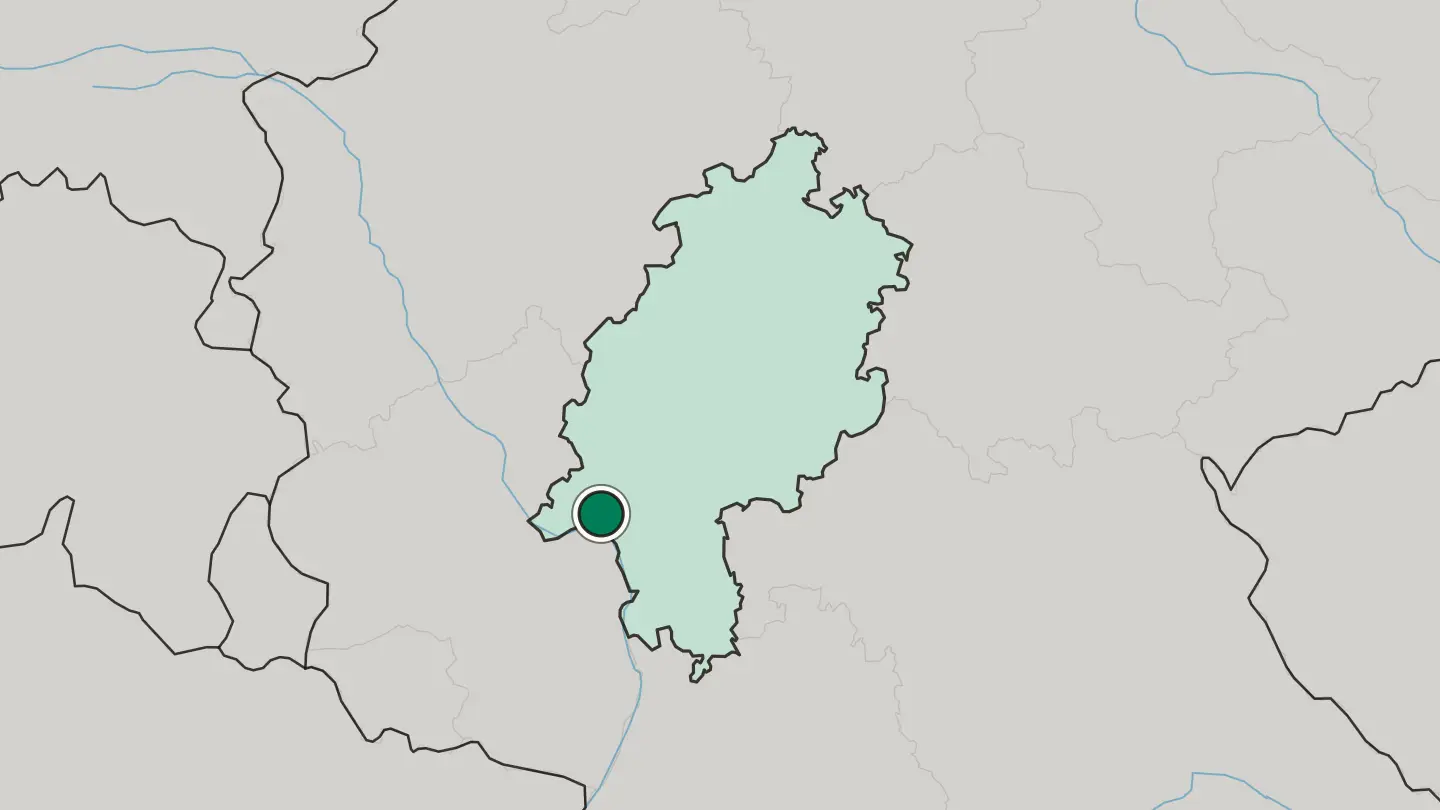
 Germany
Kassel
Water cascades down the terraces of Bergpark Wilhelmshöhe above Kassel, a city on the Fulda in northern Hessen, home of the documenta art exhibitions.Where to stay →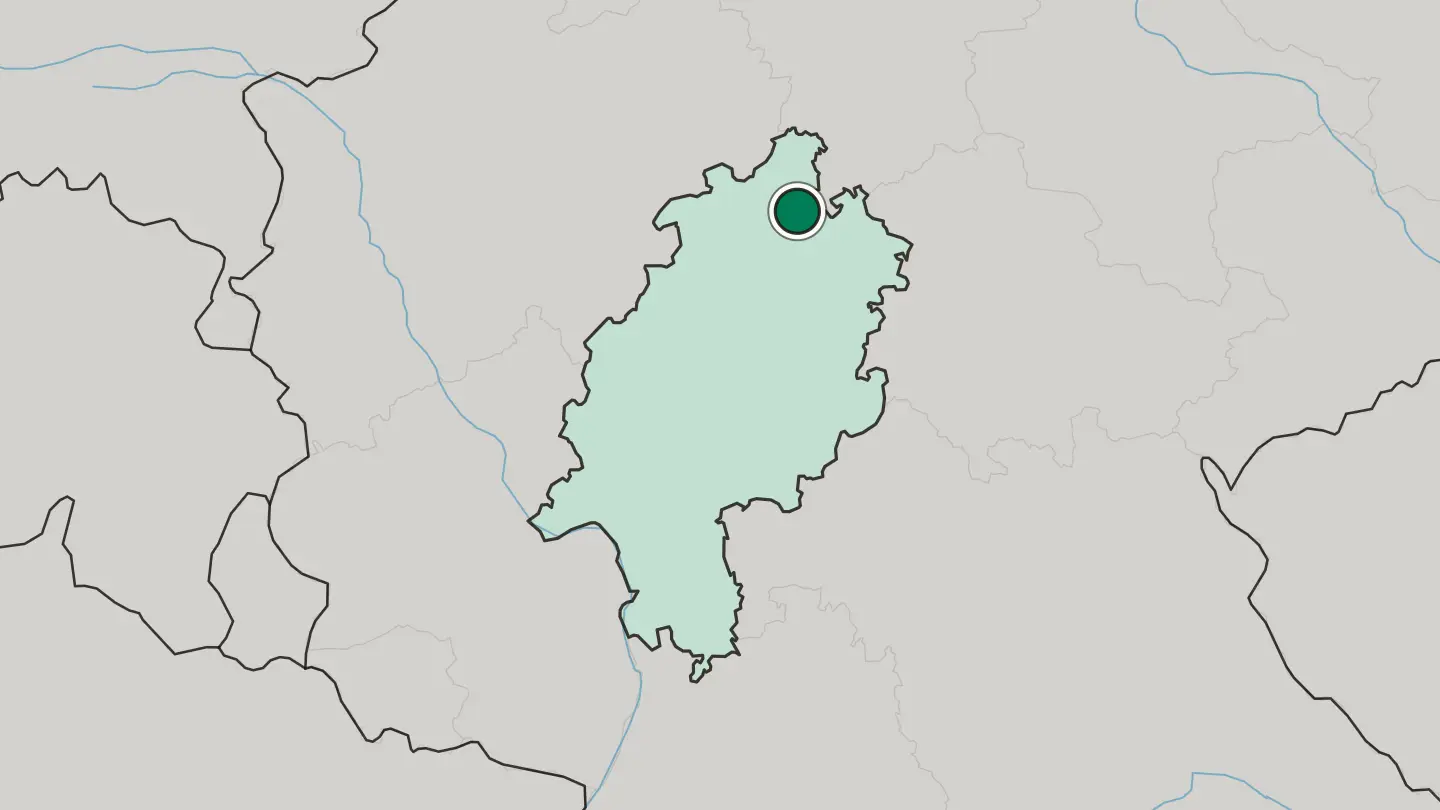
 Germany
Darmstadt
Darmstadt holds city rights from 1330, a grand ducal palace at its middle and the Hochzeitsturm over the Jugendstil colony that made its name.Where to stay →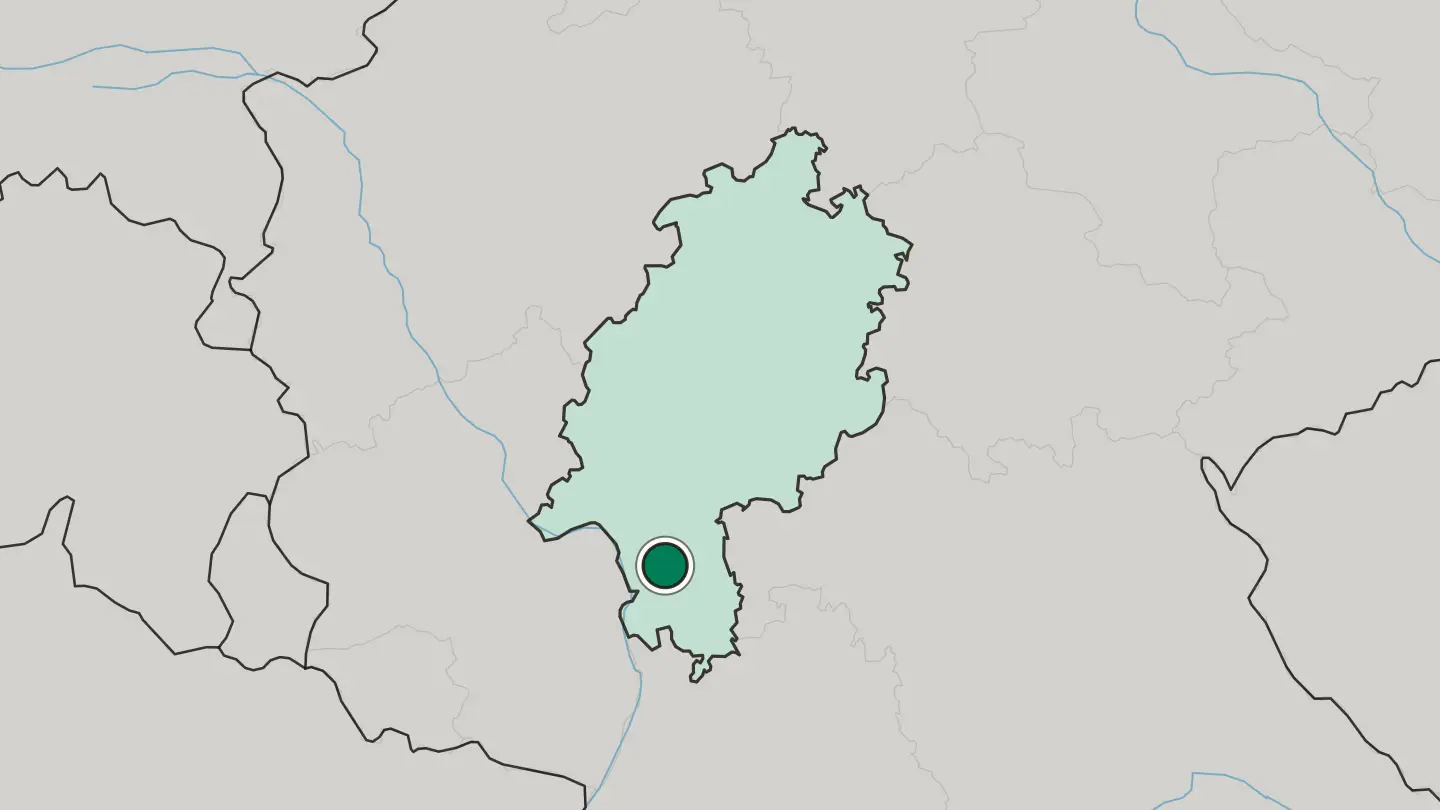
 Germany
Offenbach
Offenbach stands just outside Frankfurt, a city of its own on the edge of a much larger one. The Main runs through its full name.Where to stay →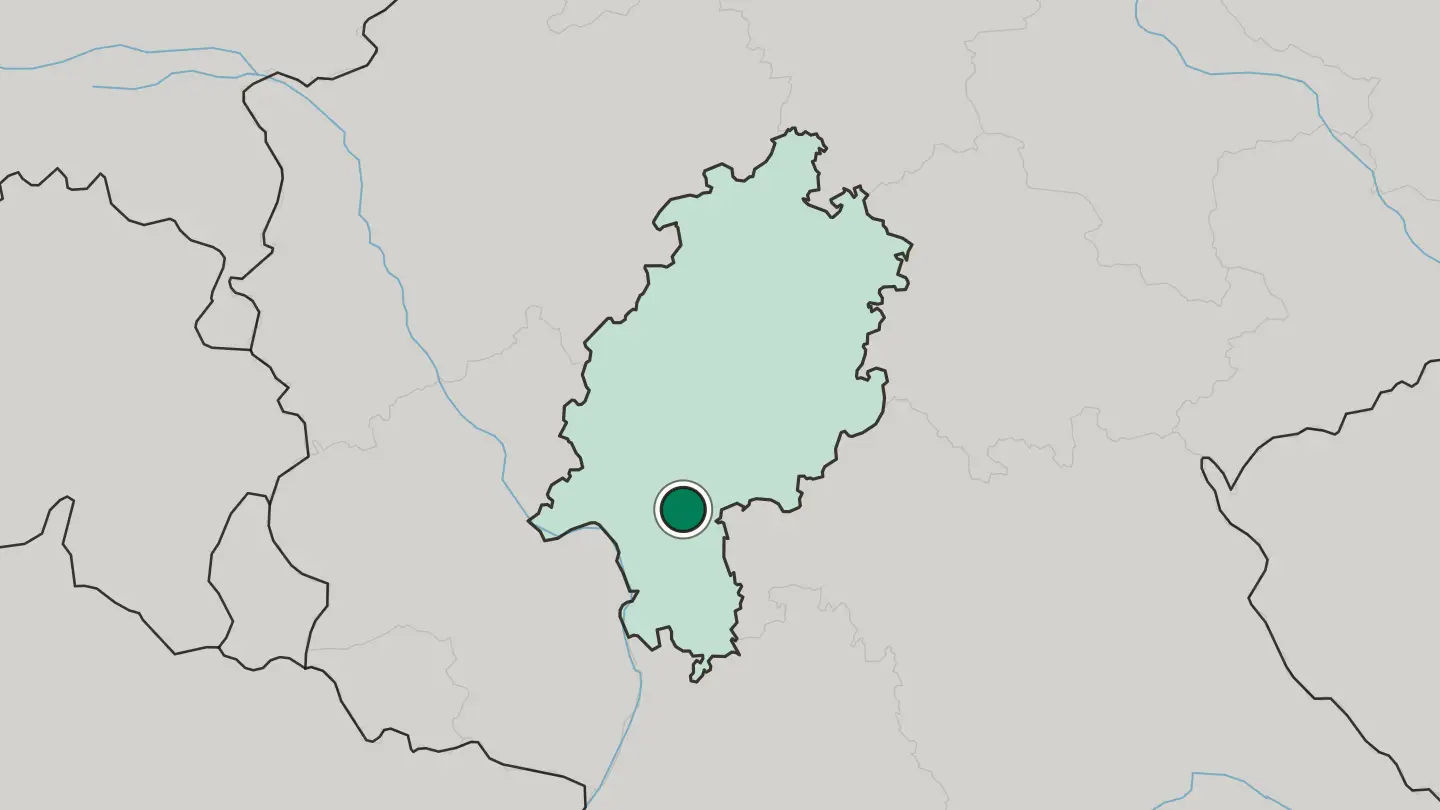 Germany
Gießen
Gießen sits in Hessen, a university town where the Mathematikum turns mathematics into a museum. The Liebig Museum keeps a laboratory intact.Where to stay →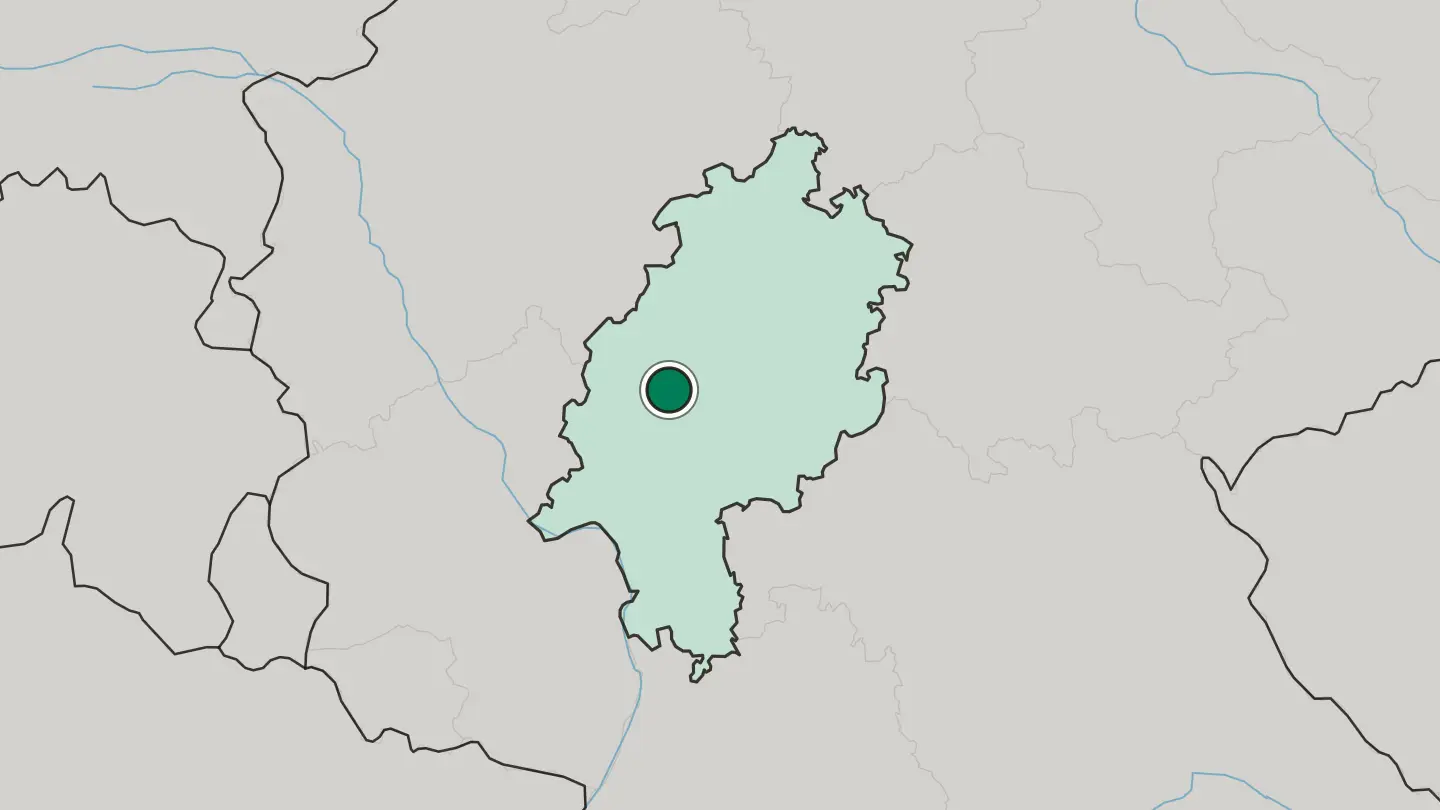
 Germany
Hanau am Main
Jakob and Wilhelm Grimm were born in Hanau, a goldsmiths' town on the Main. The Deutsches Goldschmiedehaus keeps the trade.Where to stay →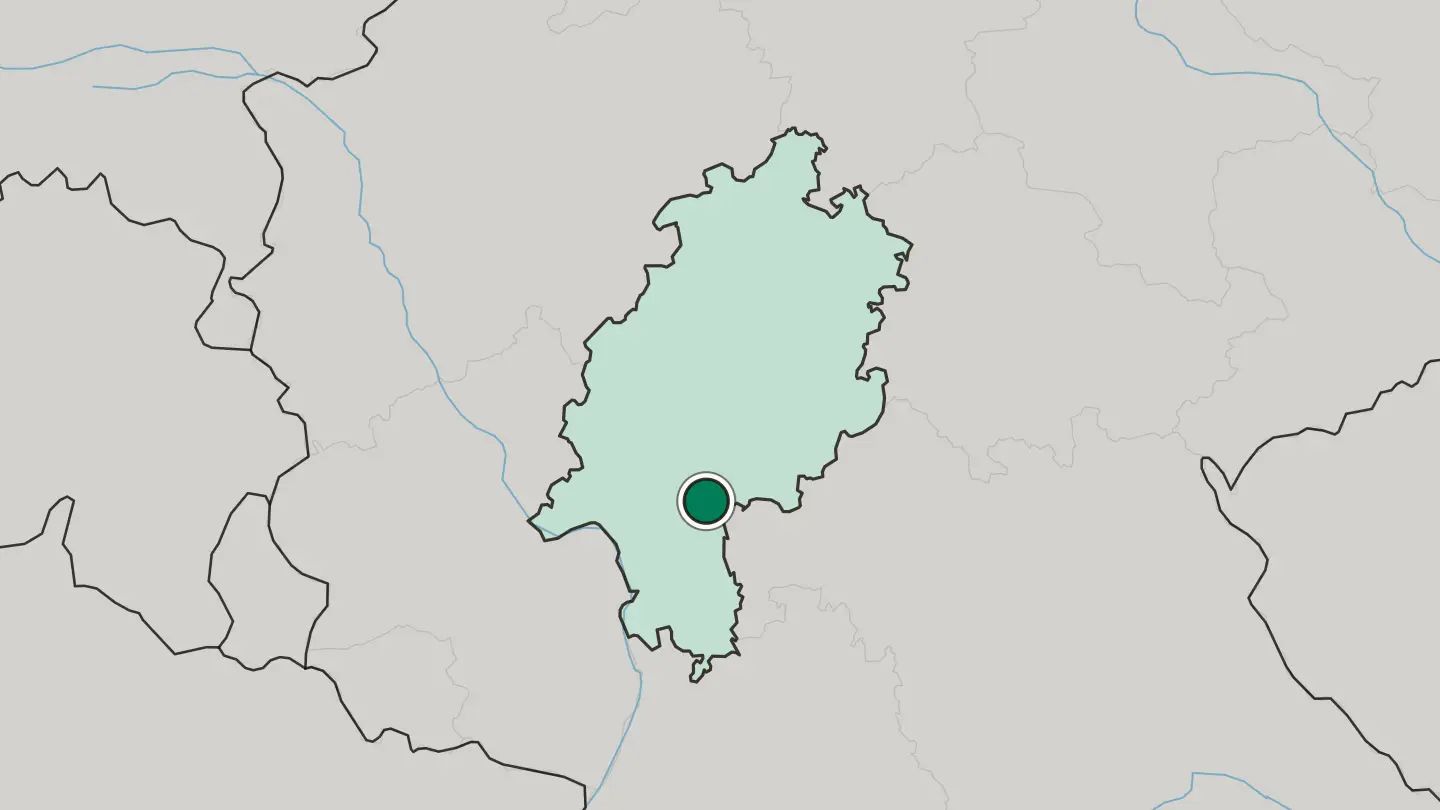
 Germany
Marburg an der Lahn
Marburg climbs from the Lahn. Marburg Castle, the old city and the buildings of the Philipps-Universität Marburg stack up one hillside.Where to stay →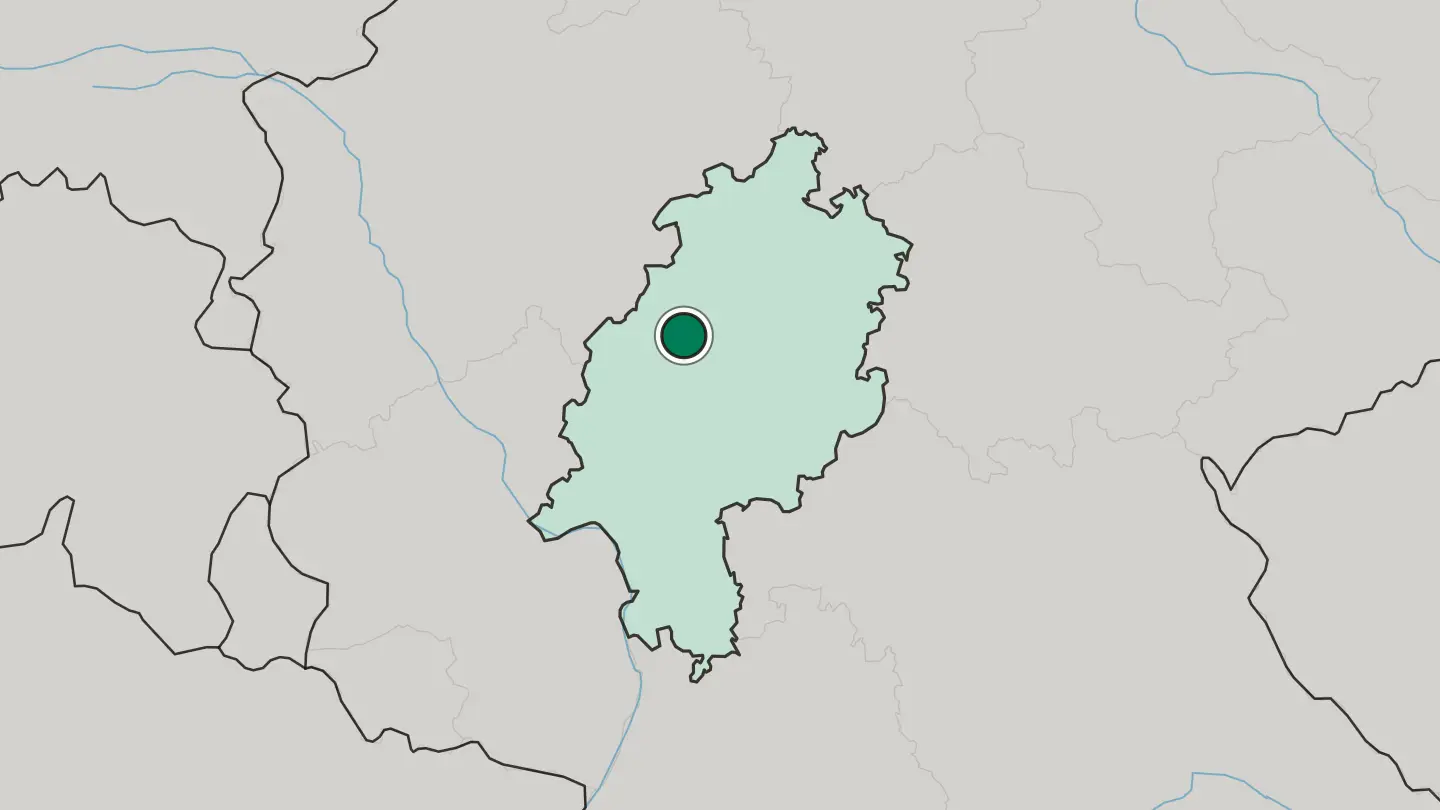
All towns & cities (13)
 Germany
Fulda
Fulda ranges its cathedral, abbey churches and city palace along the river Fulda, seat of the Fulda district in Hesse and a town dated to 1101.Where to stay →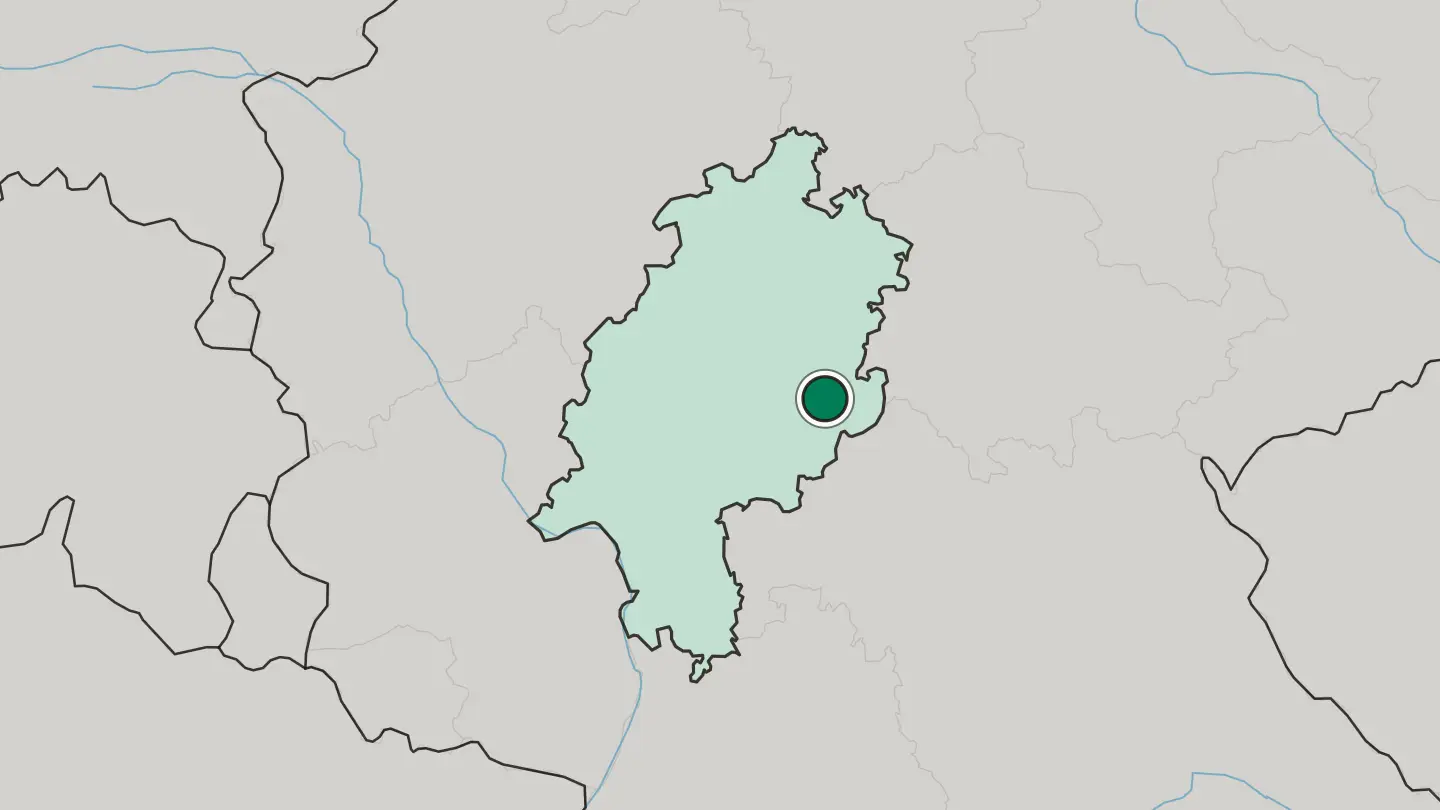
 Germany
Rüsselsheim am Main
Rüsselsheim am Main sits on the river between Frankfurt and Mainz, the largest city of the Groß-Gerau district. Opel is the reason the name carries.Where to stay →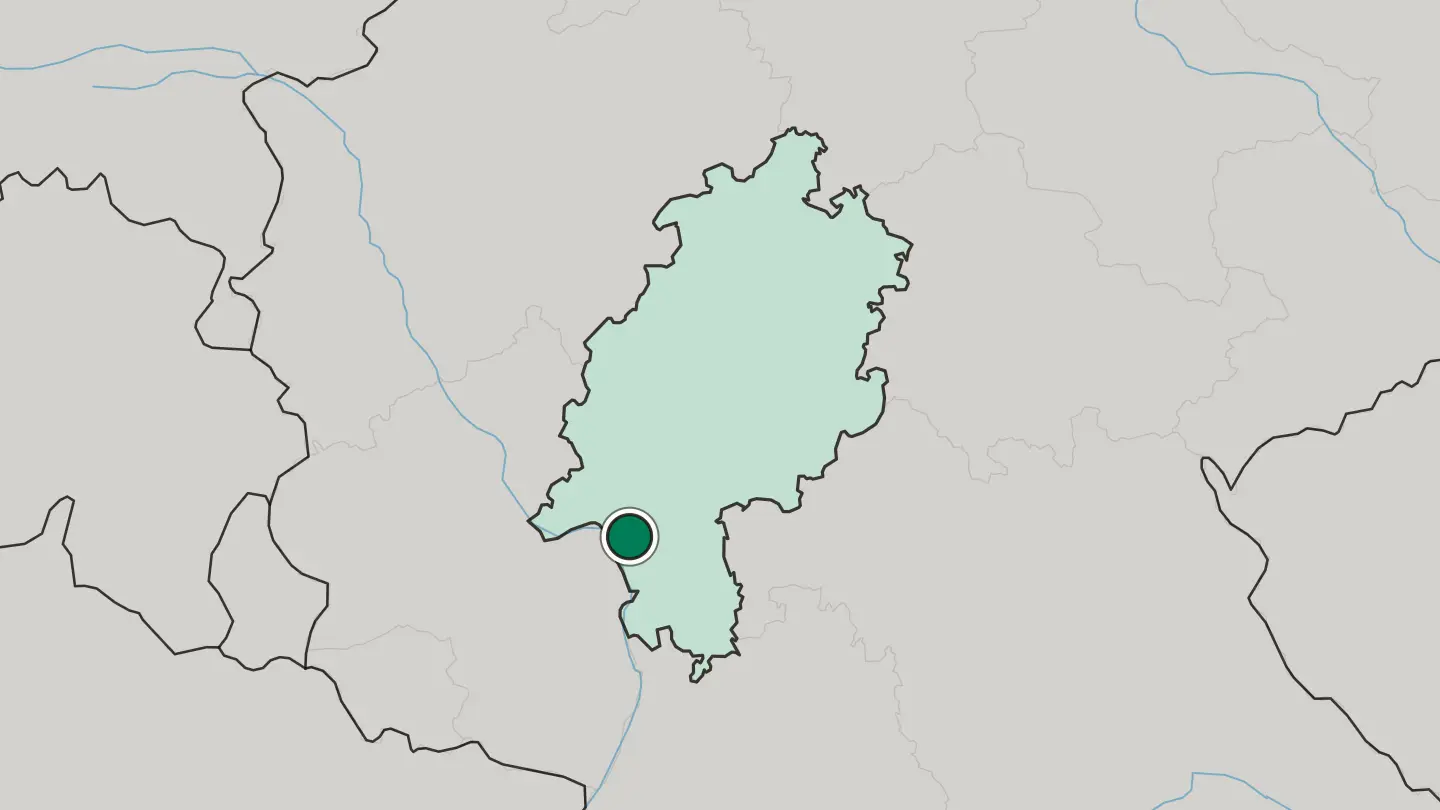
 Germany
Wetzlar
Wetzlar straddles the Lahn, its unfinished cathedral over a half-timbered old town. The Reichskammergericht once sat here.Where to stay →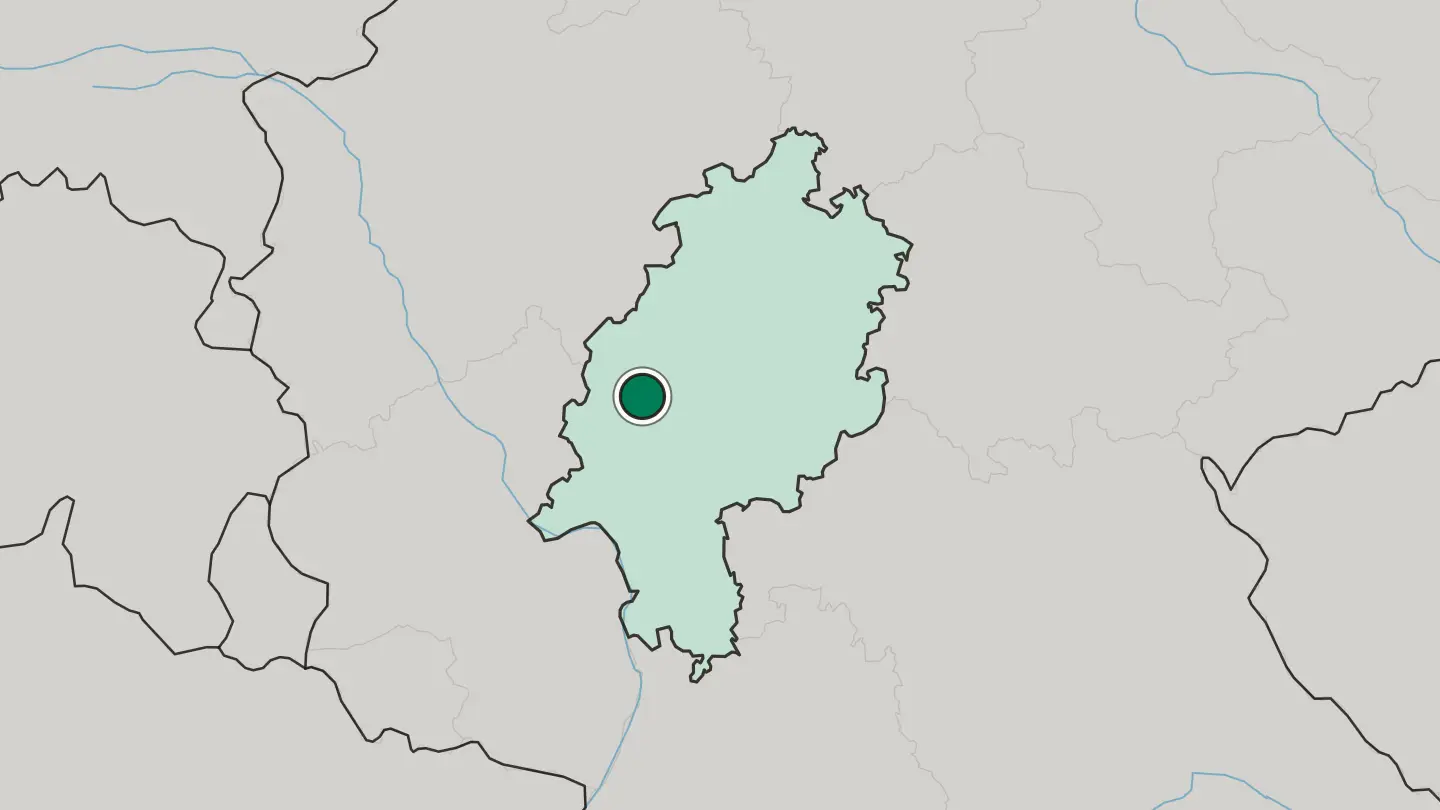
 Germany
Bad Homburg vor der Höhe
Bad Homburg vor der Höhe is a spa town on the southern slope of the Taunus, district seat of the Hochtaunuskreis and a short hop from Frankfurt.Where to stay →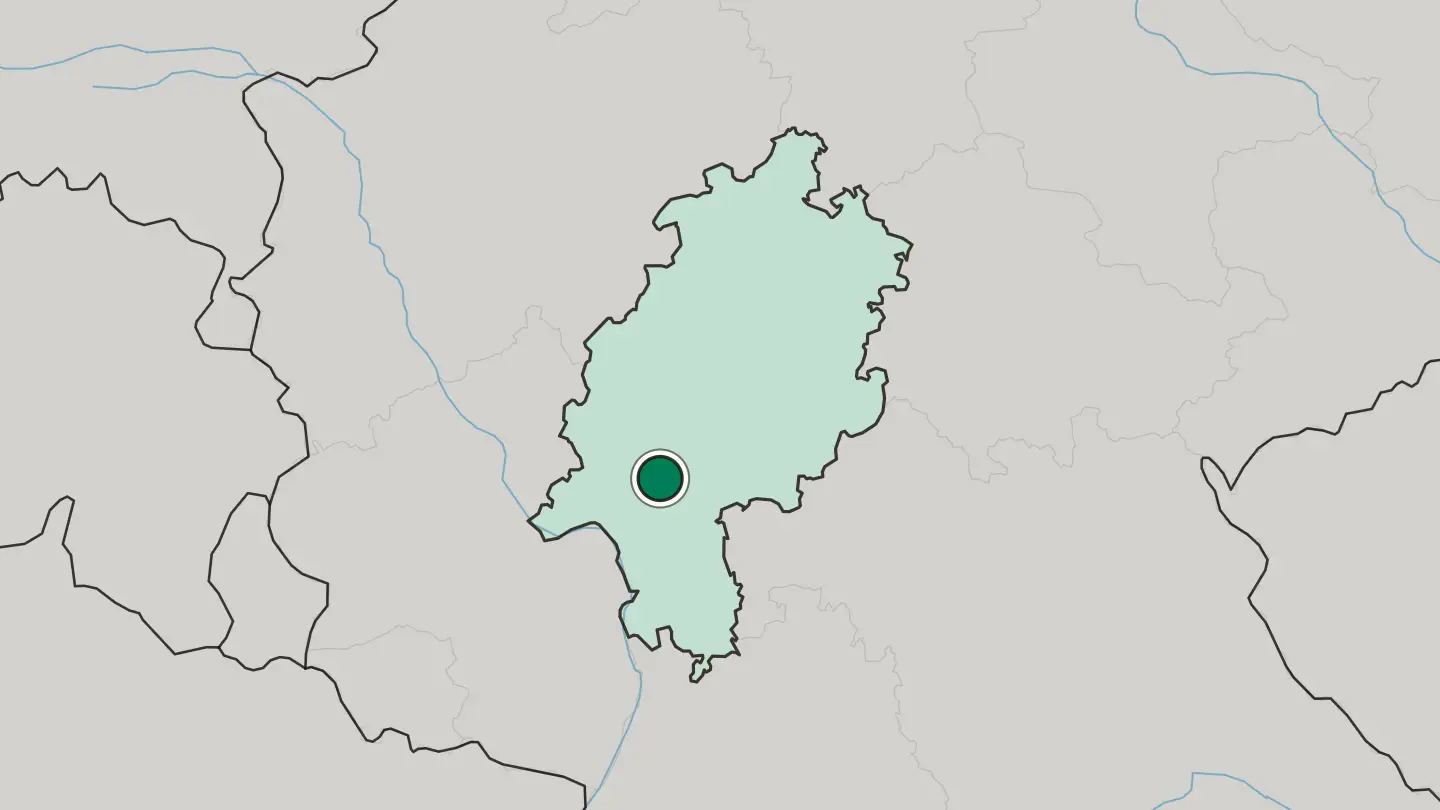 Germany1 area
Alsbach-Hähnlein
Alsbach-Hähnlein is a municipality on the Bergstraße in the Darmstadt-Dieburg district of southern Hesse, made up of Alsbach, Hähnlein and Sandwiese.Where to stay →Hotel links are affiliate links: booking through them may earn us a commission, at no extra cost to you. It never affects how places are ranked. How this works
About Hessen
What is Hessen known for?
Hessen is known for the Frankfurt Rhine-Main region, one of Europe's financial and transport hubs, and for the deep forests that cover much of the rest of the state. Money and woodland sit side by side. Frankfurt am Main anchors the urban core, with Wiesbaden as the state capital nearby, while beyond the cities the land turns rural and hilly, dotted with volcanic massifs and old towns.
Silver-fir, beech and oak run across the uplands. Two worlds share one state.
Where is Hessen?
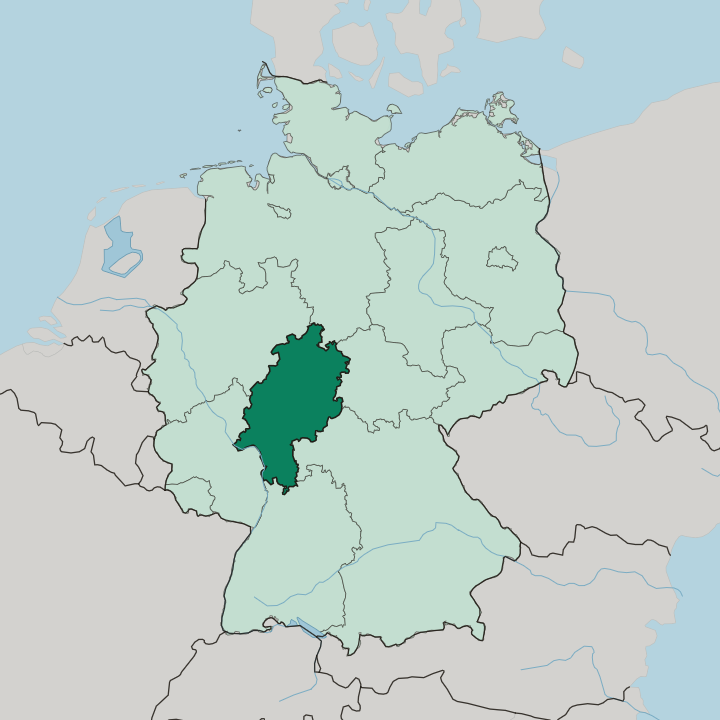
Hessen is a landlocked state in the interior of Germany, a land of wooded hills and river valleys with no coast of its own. Forest covers much of it. Silver-fir, beech and oak run across uplands that make Hessen one of Germany's most densely wooded states, broken by volcanic massifs such as the Vogelsberg.
The forests give the state its cool, shaded valleys. The ground is hilly and green. Woodland is the keynote.
The one great exception is the Frankfurt Rhine-Main region, a dense band of city and industry around Frankfurt am Main and the state capital, Wiesbaden. Here the map turns urban. Away from that hub the land stays rural, dotted with numerous medieval half-timbered towns and older cities like Darmstadt and Kassel.
These timbered towns and older cities carry the rural face of Hessen. The contrast between the crowded Rhine-Main basin and the quiet wooded uplands defines the state's geography. Two landscapes, one Hessen.
What is Hessen like?
Hessen's culture splits along the same line as its map. The cities pull one way. In the Frankfurt Rhine-Main region, an international, money-and-transport culture centres on Frankfurt am Main, drawing people from across Germany and beyond.
Away from it, an older rural culture holds on among the wooded hills, where medieval half-timbered towns keep the look and habits of earlier centuries. The German language is common to both, spoken across the state from Wiesbaden to Kassel. Timber, forest and finance all shape Hessen's character.
Old and new run together.
What is the history of Hessen?
Hessen took its present shape in 1946, when the modern state of Hessen was formed. The borders are recent; the towns are not. Long before the state existed, cities like Darmstadt and Kassel were seats of their own historic territories, and half-timbered market towns grew up across the wooded hills.
Frankfurt am Main rose as a centre of trade and finance over the same long span. The modern state gathered these older lands under one name. History runs deeper than the map.
What is the climate of Hessen?
Hessen has a temperate inland climate, milder in the sheltered Rhine-Main basin and cooler up in the wooded hills. Height makes the difference. The low Frankfurt Rhine-Main lowland sees warm summers and gentle winters, while the uplands around the Vogelsberg run colder, wetter and snowier through the winter months.
Forest shade keeps the valleys cool. Seasons are clearly marked.
How do you get to Hessen?
Hessen is one of the easiest German states to reach, thanks to the Frankfurt Rhine-Main region and its role as a transport hub. Frankfurt is the main entry point. Rail and motorway routes converge on Frankfurt am Main and fan out across the state to Wiesbaden, Darmstadt and Kassel.
The wooded uplands and half-timbered towns lie a short run beyond the cities by road. No coast means no ferries here. Arrive through the hub, then spread out.
More regions in Germany
Updated October 2026