Germany · Hessen
Where to Stay in Wiesbaden, Hessen
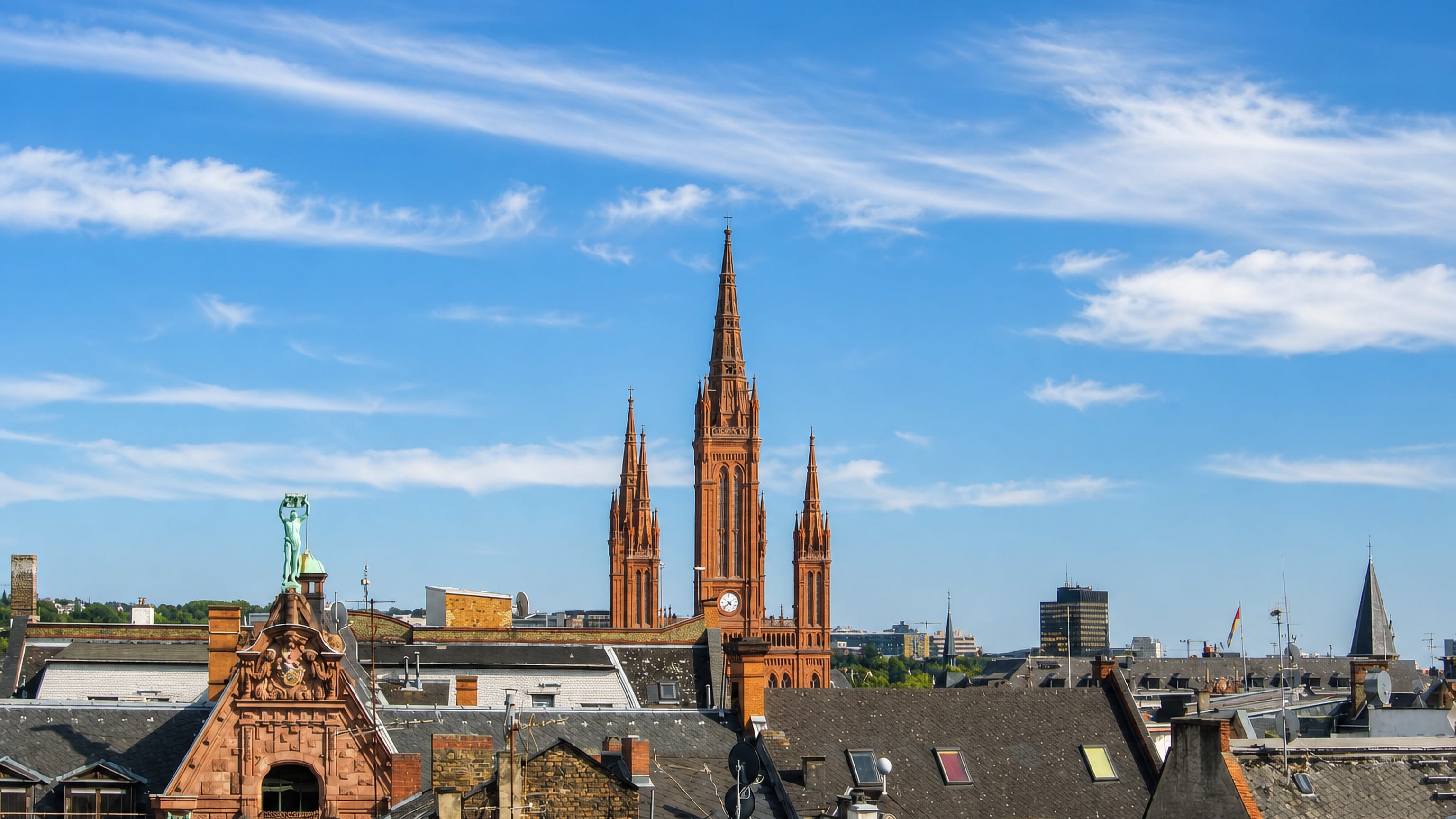
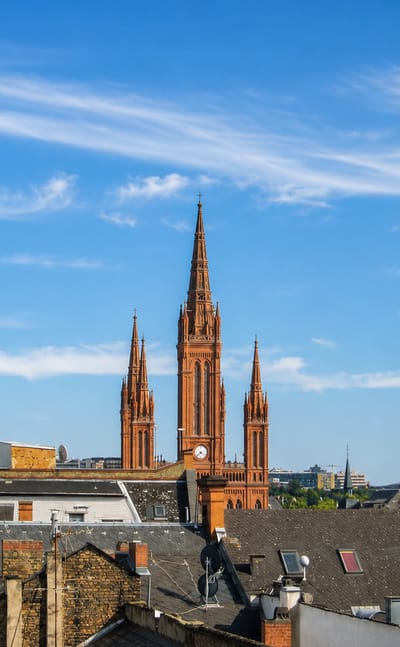
Thermal water rises under Wiesbaden, the capital of Hessen and a spa city facing Mainz, known for the Marktkirche and its fourteen warm springs.
Hotel links are affiliate links: booking through them may earn us a commission, at no extra cost to you. It never affects how places are ranked. How this works


Where to stay in Wiesbaden
The right area depends on your trip — here's what each neighbourhood is best for.
 WiesbadenGermany
Bierstadt
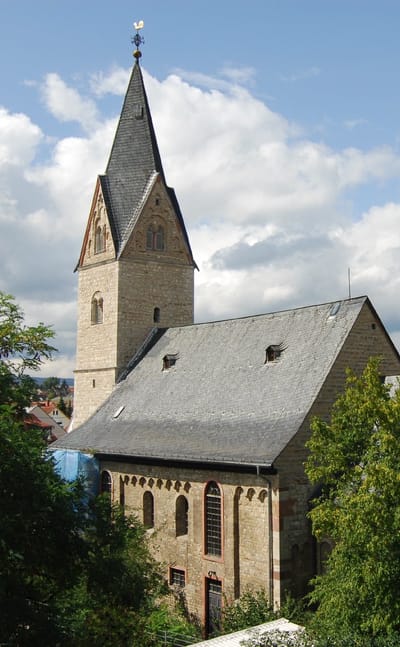
First recorded in 927, Bierstadt keeps its old village shape around the Nikolauskirche and Saint Birgid, its brick past marked by the Alte Ziegelei.Where to stay →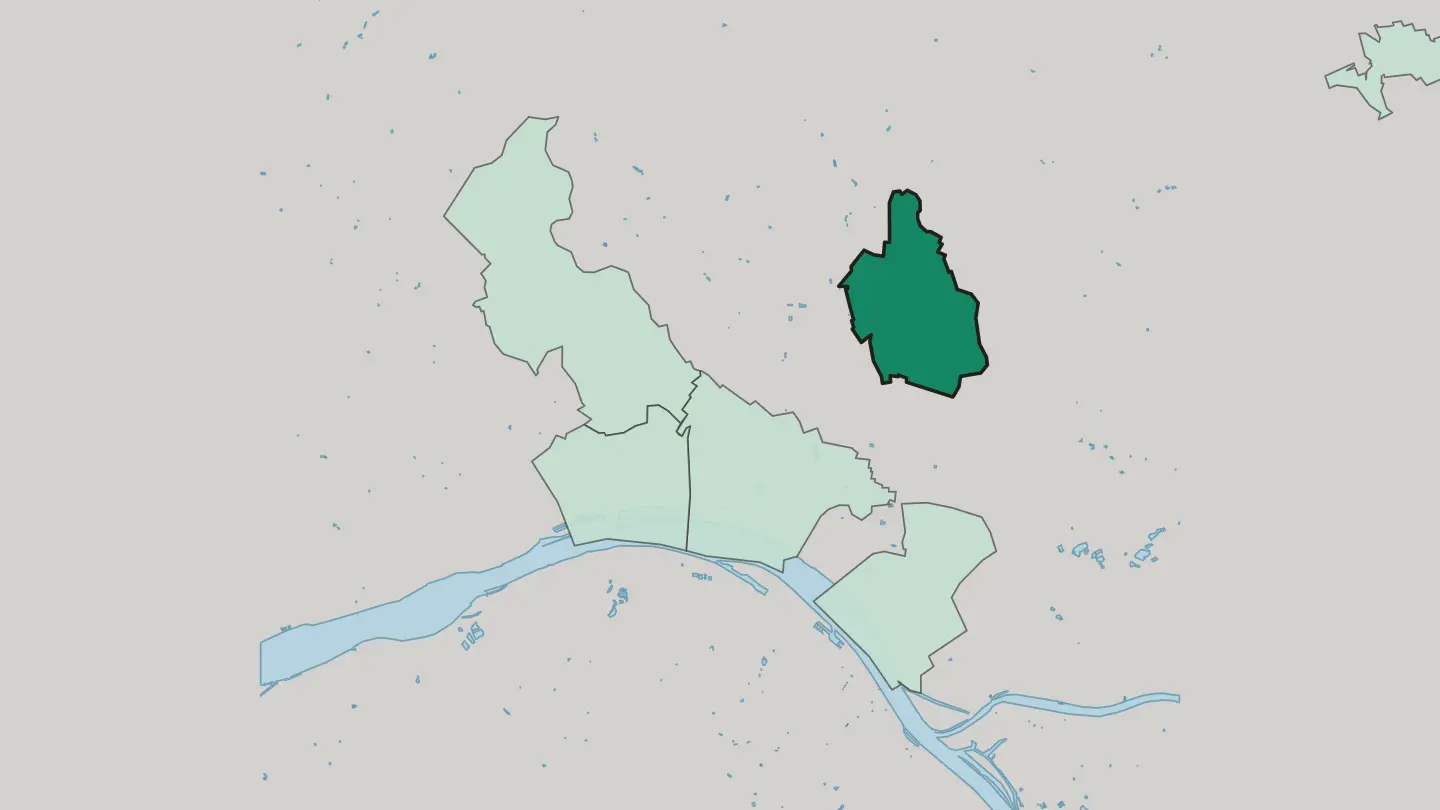
 WiesbadenGermany
Dotzheim
Dotzheim is a borough of Wiesbaden in Hessen, Germany, known for the Kaiser-Wilhelm-Tower, a heritage railway, and the Dotzheimer Museum.Where to stay →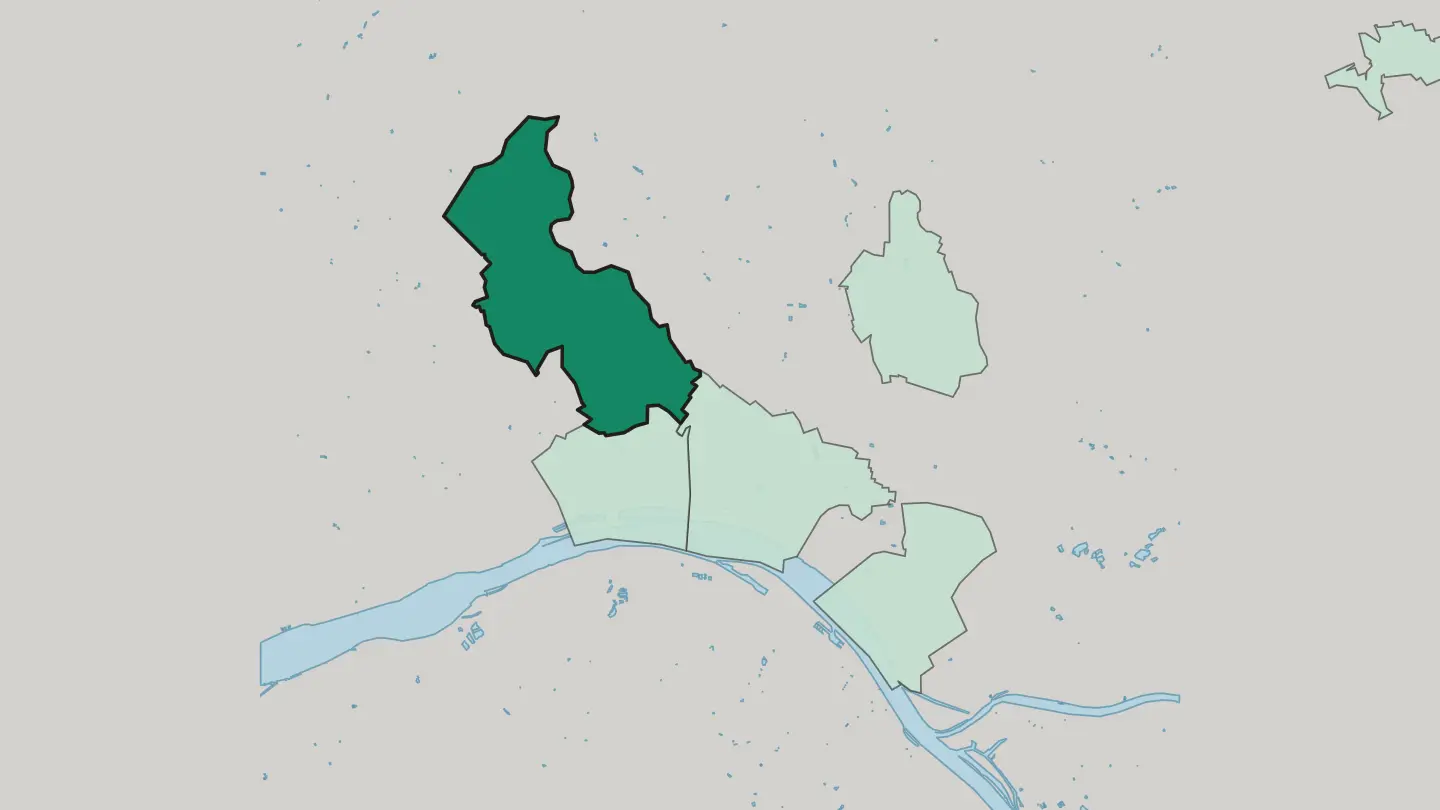
 WiesbadenGermany
Biebrich
Biebrich Palace marks Biebrich, a former town now a borough of Wiesbaden in Hessen, Germany, known for its churches and a film archive.Where to stay →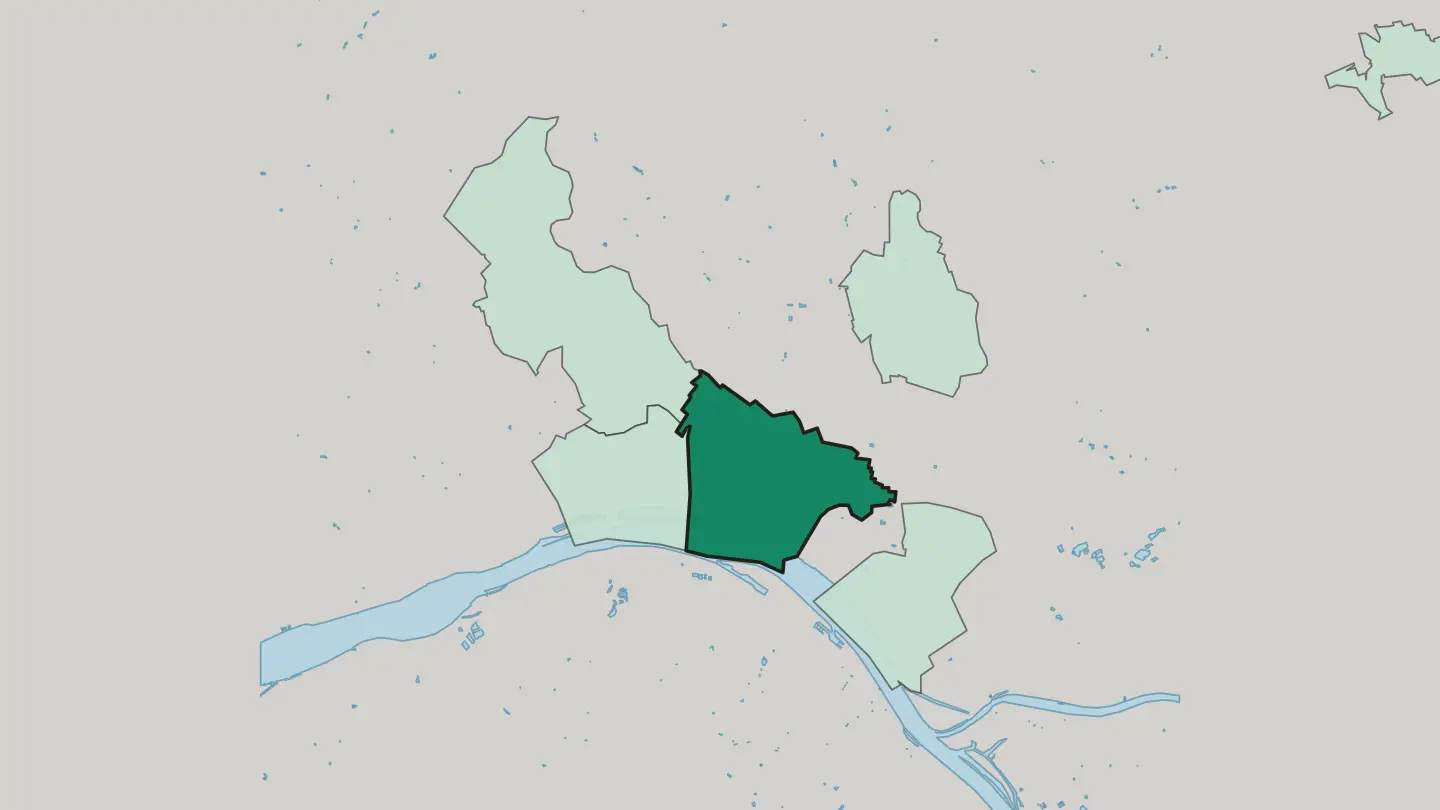
 WiesbadenGermany
Schierstein
Schierstein is a southwestern borough of Wiesbaden on the Rhine in Hessen, Germany, first recorded in 860 and known for its churches.Where to stay →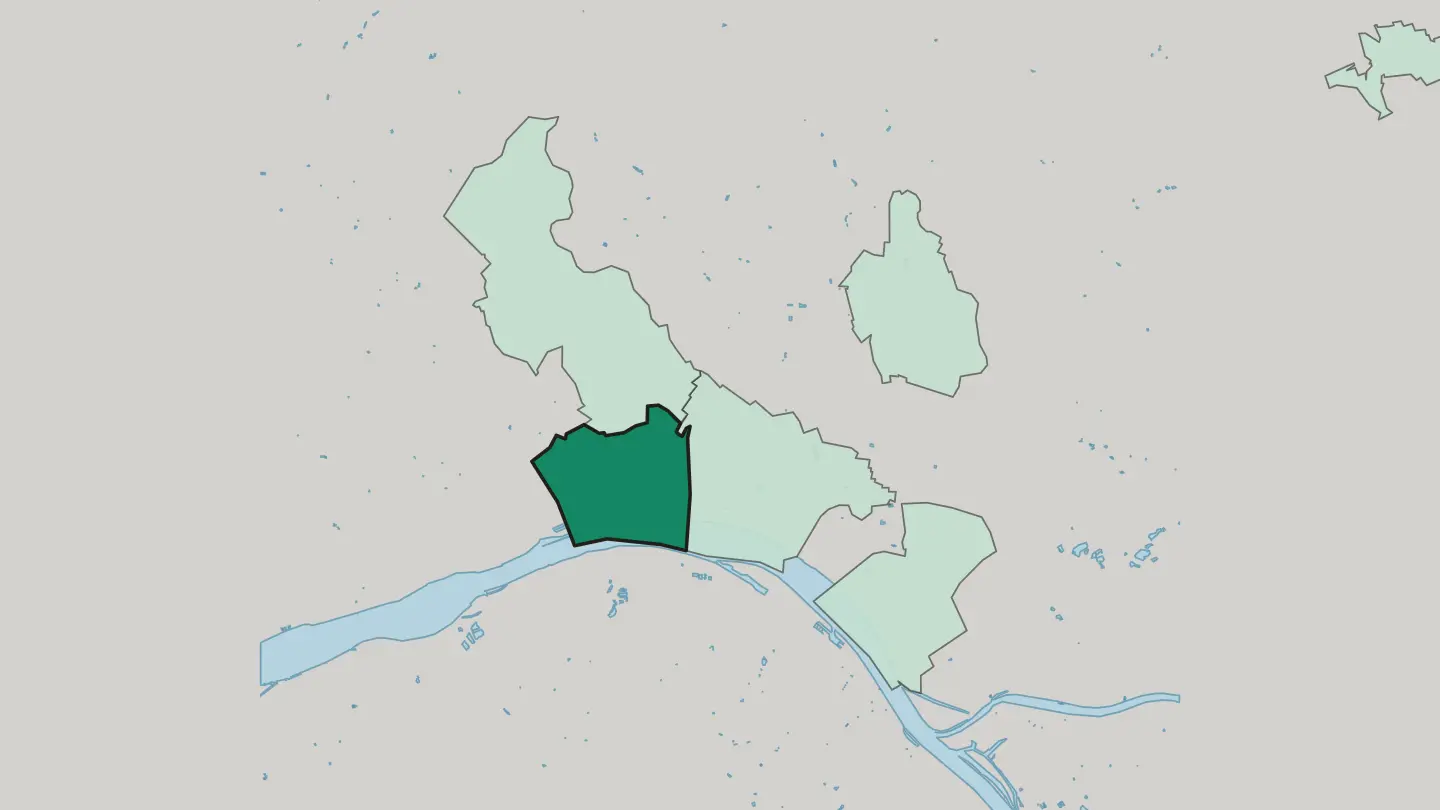
 WiesbadenGermany
Kastel
Kastel, officially Mainz-Kastel, is a district of Wiesbaden in Hessen, Germany, grown from the Roman fort Castellum Mattiacorum.Where to stay →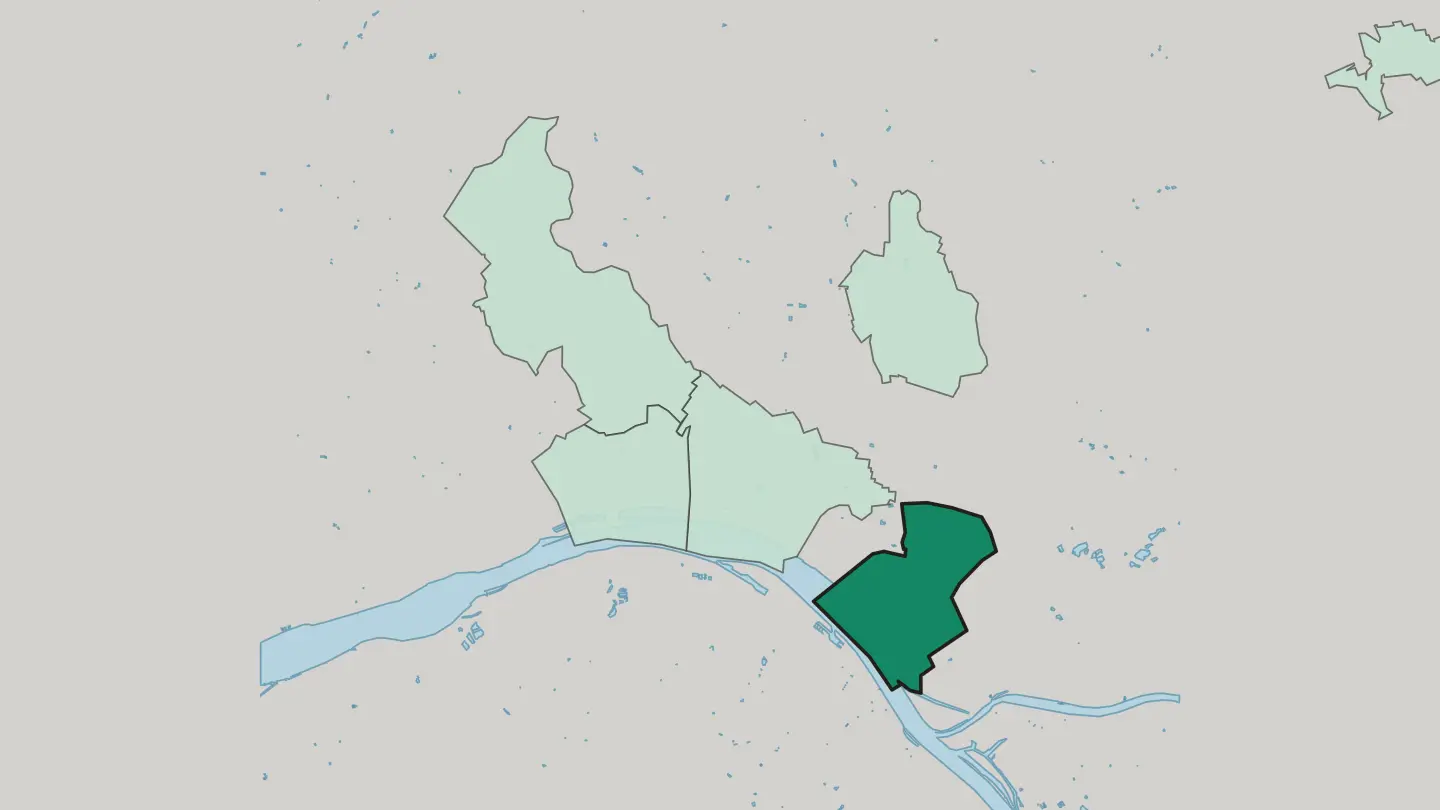
Hotel links are affiliate links: booking through them may earn us a commission, at no extra cost to you. It never affects how places are ranked. How this works
Find hotels in Wiesbaden
Direct booking searches for these neighbourhoods.
Spa quarter and old town
Steps from the Marktkirche, the Warmer Damm park and the neoclassical spa buildings, with the Museum Wiesbaden a short walk away.Find hotels in Spa quarter and old townWoodland walks below Burg SonnenbergSonnenberg slopes
Greener residential streets climbing toward Burg Sonnenberg and the Goethewarte tower, calmer than the thermal core.Find hotels in Sonnenberg slopesHotel links are affiliate links: booking through them may earn us a commission, at no extra cost to you. It never affects how places are ranked. How this works
Things to do in Wiesbaden
Ranked by global recognition; descriptions from Wikidata (CC0).
Museums & Galleries
3- Museum Wiesbaden
- Reinhard Ernst Museum
- Active Museum Spiegelgasse
Churches & Religious Sites
8- St. Elizabeth's Church Wiesbaden Heritage
- Marktkirche Heritage
- St. Bonifatius Heritage
- Ringkirche Heritage
- Luther Church Heritage
Show 3 more →
- Karmeliterkirche Heritage
- Dreifaltigkeitskirche Heritage
- Nikolauskirche Heritage
Castles & Historic Sites
3- Heidenmauer Heritage
- Burg Sonnenberg Heritage
- Landesdenkmal
Nature & Outdoors
1- Warmer Damm Heritage
worth knowingacross 4 categories in Wiesbaden
About Wiesbaden
What is Wiesbaden known for?
Wiesbaden is known above all as a thermal spa city, one that has drawn visitors to its warm mineral springs for centuries. The Romans tapped the same water and named the place Aquis Mattiacis. Fourteen springs still flow beneath the streets.
That inheritance shaped a genteel resort culture around the Kurpark and the neoclassical spa quarter, while the Marktkirche and the state capital's role gave the city its civic weight within Hessen, opposite Mainz on the far bank.
What are the main landmarks in Wiesbaden?
Wiesbaden's landmarks range from churches to spa-era monuments. The red-brick Marktkirche towers over the market square, while the Ringkirche and St. Bonifatius anchor other quarters. Art fills the Museum Wiesbaden and the newer Reinhard Ernst Museum, and the Nassauischer Kunstverein keeps a gallery in the centre.
The Warmer Damm gardens, the Heidenmauer wall left by the Romans and the hilltop Goethewarte round out a compact roster within easy reach of the old town.
What is the history of Wiesbaden?
Wiesbaden began as a Roman spa settlement, known to the Romans as Aquis Mattiacis for the warm springs that fed its baths. A fragment of that era survives in the Heidenmauer, a length of old wall near the market. The name means meadow bath.
Over the centuries the small town grew under the Duchy of Nassau, which made it a residence and lent its buildings a courtly scale. The spa trade turned Wiesbaden into a fashionable resort in the era of the grand hotels, and the Marktkirche rose in brick to crown the enlarged town. Later it became the capital of Hessen, a role that anchored its administration and its museums.
The Museum Wiesbaden and the memorials scattered through the city, including the Gedenkstätte Michelsberg, record both the resort centuries and the darker chapters that followed, keeping the past legible in stone.
Where is Wiesbaden?
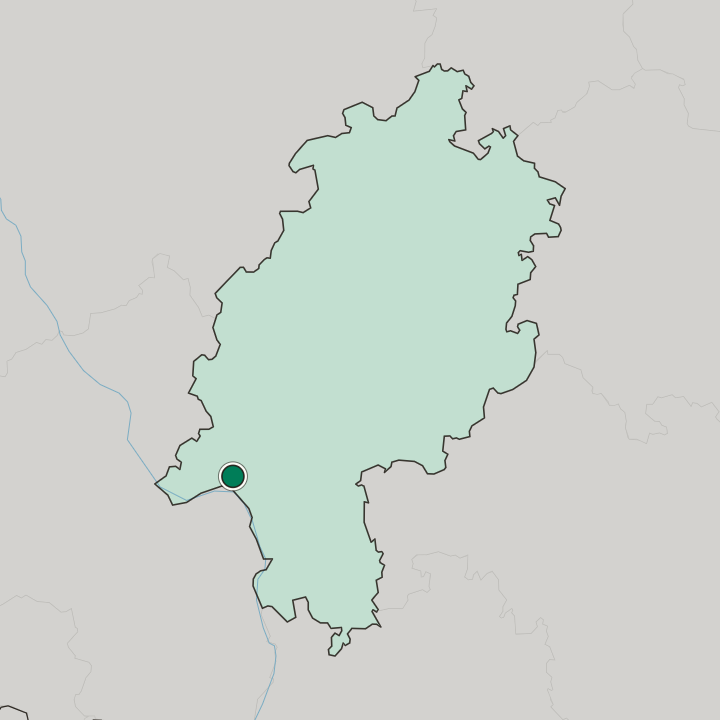
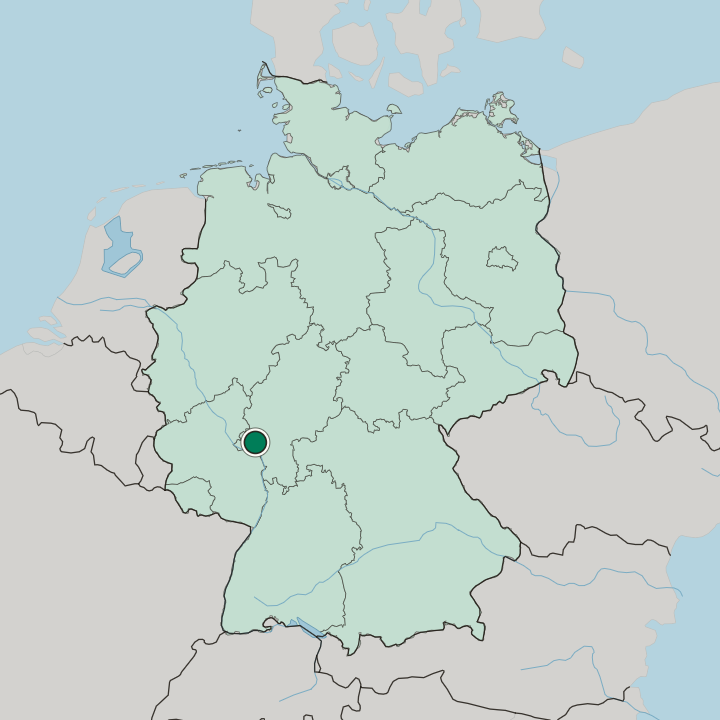
Wiesbaden sits at the foot of the Taunus hills. Its wooded slopes drop toward the Rhine valley, where warm springs surface along the lower ground and gave the first settlement its reason to grow on exactly this spot. The city faces Mainz across the river.
Higher up, the ground climbs toward Sonnenberg and the ridge that carries the Goethewarte, and this position within the Rhine-Main region places Wiesbaden a short hop from Frankfurt am Main and the wider cluster of Hessen's cities.
What is the climate of Wiesbaden?
Wiesbaden has a mild, sheltered climate, tempered by the Taunus hills that shield it from the north. Summers are warm and often long in the Rhine valley, and the surrounding vineyards depend on that warmth. Winter arrives mild rather than harsh.
Snow rarely lingers on the lower streets near the Rhine, though it dusts the higher ground toward Sonnenberg more readily, and the warm springs make the town feel gentle even in the coldest weeks.
How do you get to Wiesbaden?
Wiesbaden sits inside the Rhine-Main transport network, one of Germany's busiest. Frequent trains cross the Rhine to Mainz in minutes and reach Frankfurt am Main and its airport without a change. The Hauptbahnhof anchors regional and long-distance lines.
Autobahns thread the surrounding valley, tying the city to Darmstadt and the rest of Hessen, while local S-Bahn and bus services knit Wiesbaden to its neighbours across the conurbation.
Common questions
What is the best area to stay in Wiesbaden?
Spa quarter and old town: Kurpark spa culture and the Marktkirche on foot. Sonnenberg slopes: Woodland walks below Burg Sonnenberg.
Good for
More cities in Hessen
Updated October 2026