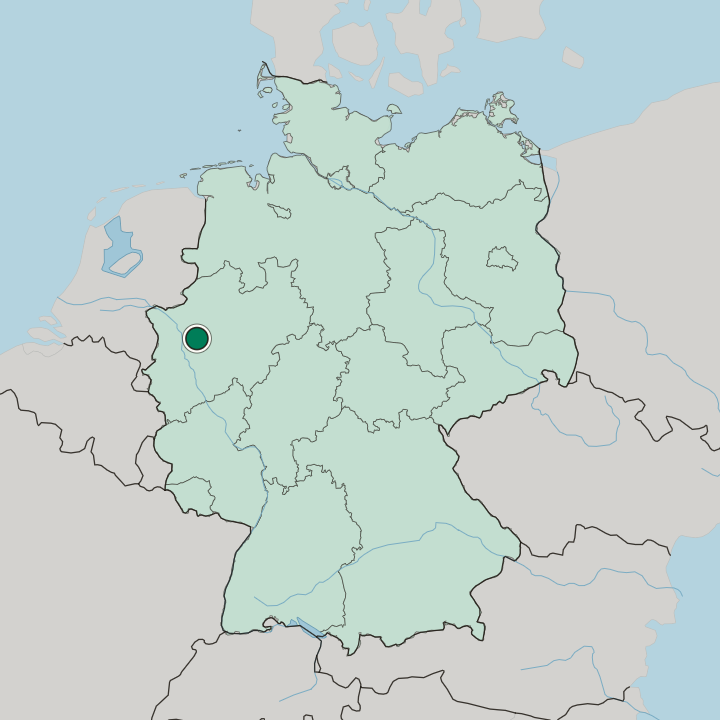
Germany · Nordrhein-Westfalen · Essen
Stadtkern, Essen — Area Guide & Where to Stay
Stadtkern is Essen's smallest Stadtteil by area and its oldest, holding the Essener Münster on the Burgplatz, church of the abbey Altfrid founded in 845.
Hotel links are affiliate links: booking through them may earn us a commission, at no extra cost to you. It never affects how places are ranked. How this works


Where to stay in Stadtkern
How the choice of base plays out on the ground.
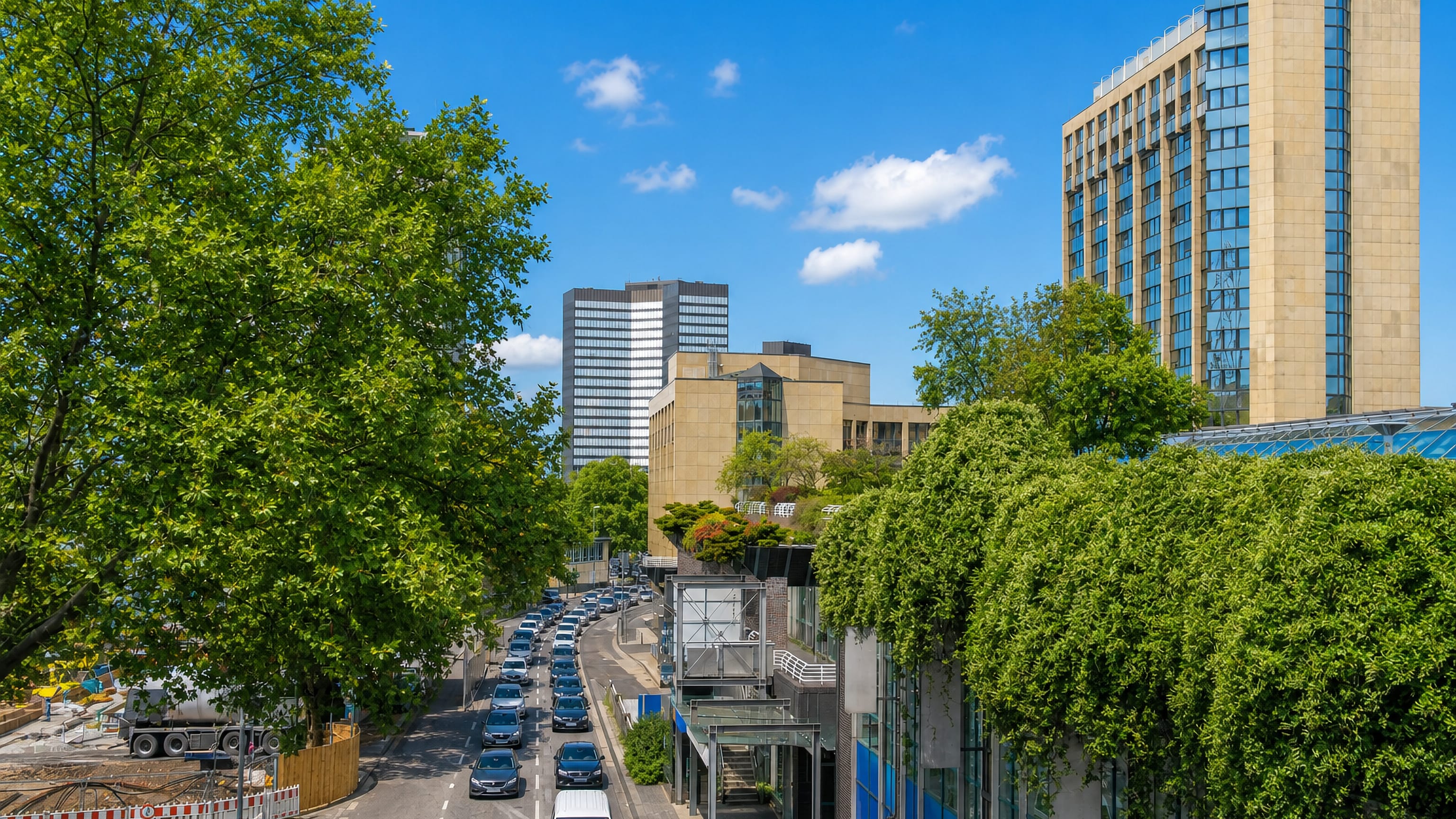
Everything is walkable from here. The pedestrian streets run out from the Kennedyplatz in four directions, Kettwiger Straße opened on 16 June 1965, then Limbecker, Rathenau and Viehofer Straße, and the two shopping centres at the Limbecker Platz and the Rathaus Galerie sit at either end of them. There is a trade-off.
This is the shopping city Essen has called itself since 1938, so the streets empty when the shops shut, and a room here buys daytime convenience rather than evening life. The Hauptbahnhof is minutes away.
Things to do in and around Essen
Ranked by global recognition; descriptions from Wikidata (CC0).
Museums & Galleries
3- Old Synagogue Heritage
- Markt- und Schaustellermuseum
- Red Cross Museum Essen
Churches & Religious Sites
4- Essen Minster Heritage
- Kreuzeskirche Heritage
- Marktkirche Heritage
- Friedenskirche Heritage
Castles & Historic Sites
1- Alfred Krupp monument, Essen Heritage
Landmarks & Notable Places
1- Gildehofbad
worth knowingacross 4 categories in and around Essen
About Stadtkern
What are the main landmarks in Stadtkern?
The minster is the seed of the city. Essen grew from the women's abbey that Altfrid, bishop of Hildesheim, founded about 845, and the wall that enclosed almost exactly the present Stadtkern stood from around 1244 until 1865. War took nearly everything else.
Around ninety per cent of the inner city was destroyed or badly damaged, so what stands from before it is a short list, the Marktkirche at the Flachsmarkt with a history back to the 11th century, St.-Gertrud-Kirche of 1877 by August Rincklake, the Grillo-Theater of 1892 and the Lichtburg cinema of 1928. Two buildings carry the harder memory. The Alte Synagoge of 1913 near the Porscheplatz is a memorial and meeting place, and a memorial set up in 2002 in an old stairwell marks the Schwarze Poth satellite camp of Buchenwald that stood in the Stadtkern from 1944 until March 1945.
What is the history of Stadtkern?
The wall drew the outline. From about 1244 until 1865 the Essener Stadtmauer enclosed almost exactly what is now the Stadtkern, with four gates of which the Viehofer Tor stood at the north until the early 19th century. Industry filled it with people.
Krupp's cast-steel works west of the old town and the coal mines around it pulled in enough newcomers that the Stadtkern introduced house numbering by street name in 1861, where numbering each house in turn had done before. Then came the shops. The Einkaufsstadt label was coined by an advertising association in 1938 but only took hold after the war, retail turnover doubled between 1950 and 1960 and overtook mining as the leading trade, and the words have stood in large letters on the roof of the Hotel Handelshof since 1951.
The squares tell the rest. Kopstadtplatz was laid out in 1858 on ground of the family that gave Essen three mayors between 1734 and 1833, Kennedyplatz was called Gildenplatz from about 1953 to 1964, and Berliner Platz took its name after the Wall went up and kept it after the Wall came down.
Where is Stadtkern?
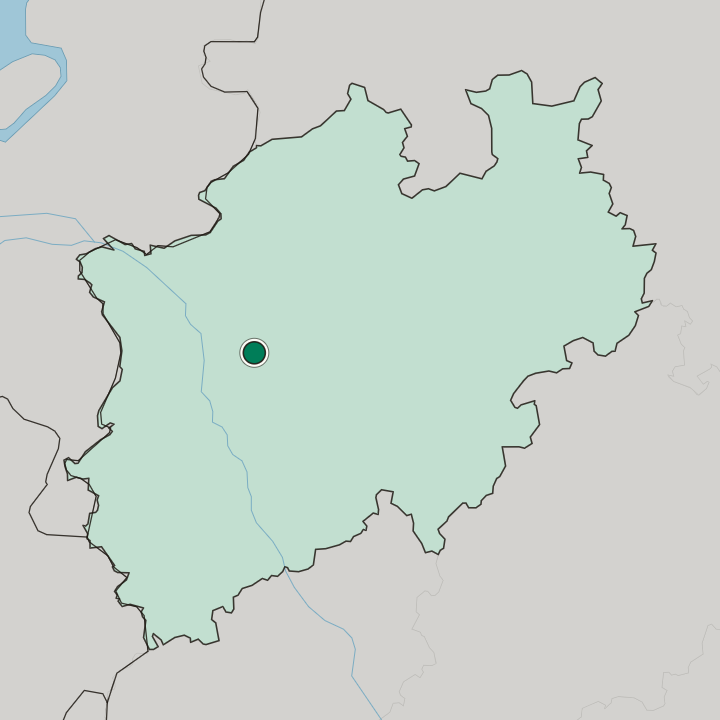
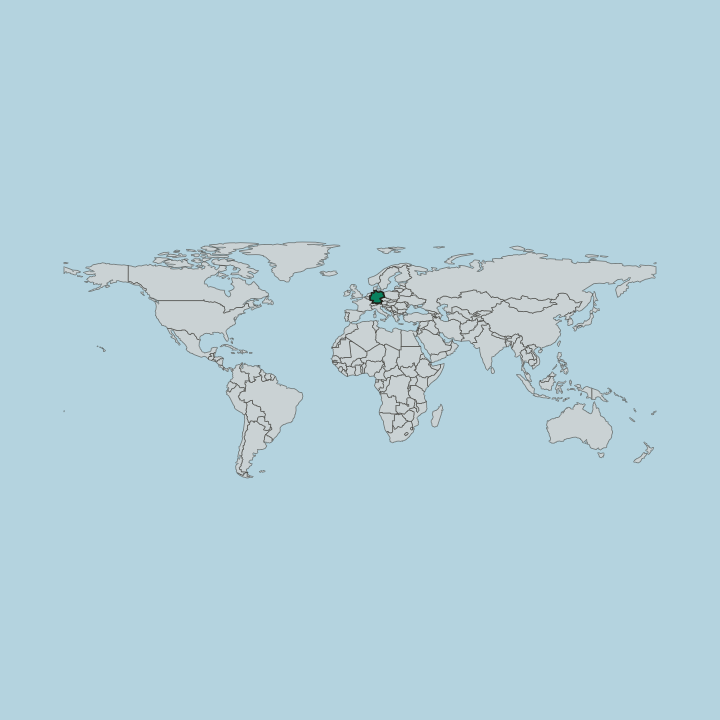
Stadtkern is the innermost of the six Stadtteile that make up Essen's Stadtmitte, alongside the Westviertel, the Nordviertel, the Südviertel, the Ostviertel and the Südostviertel, and it is the smallest by area in the city.
Good for
More areas in Essen
Updated October 2026