Germany · Nordrhein-Westfalen
Where to Stay in Essen, Nordrhein-Westfalen
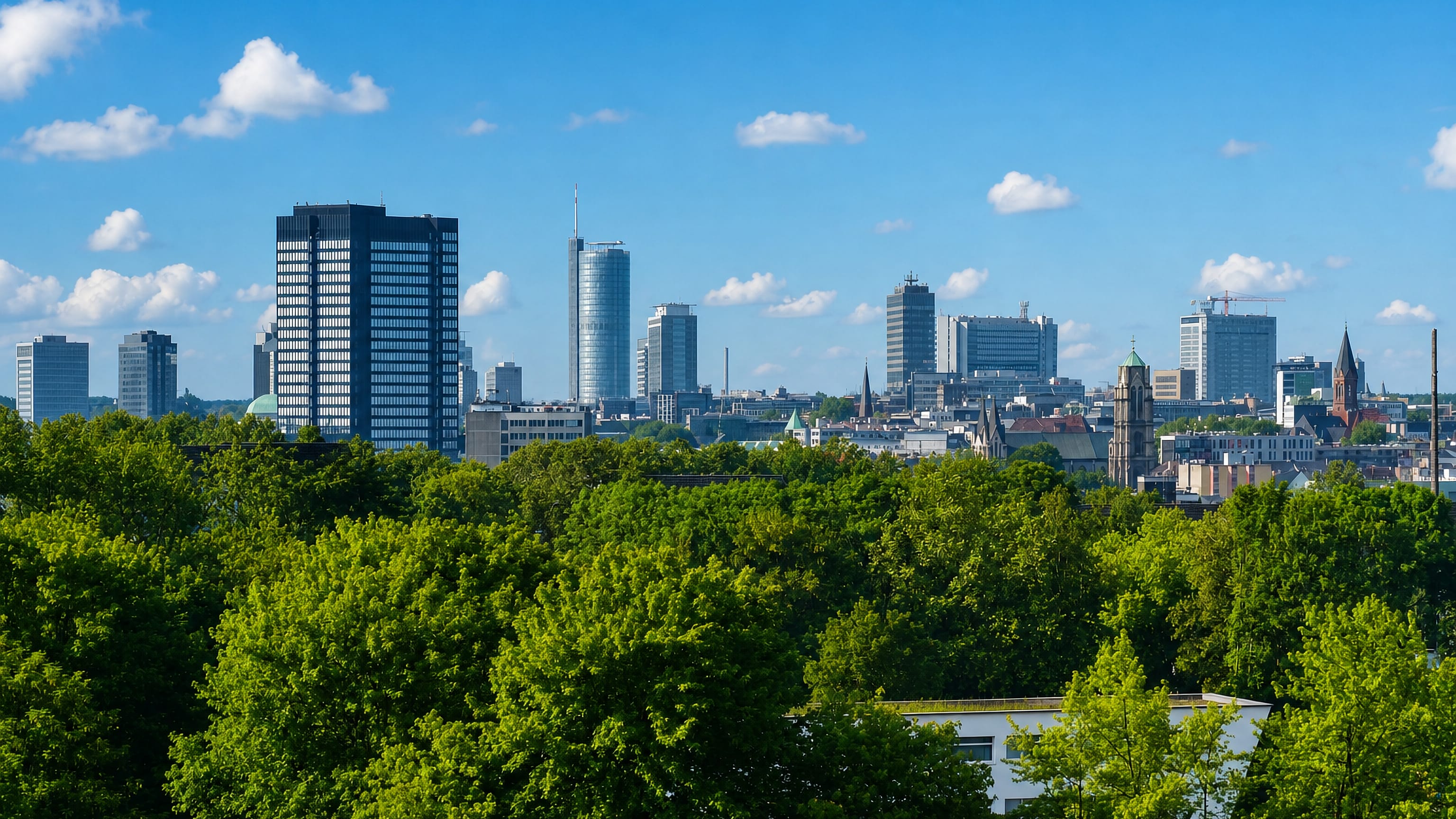
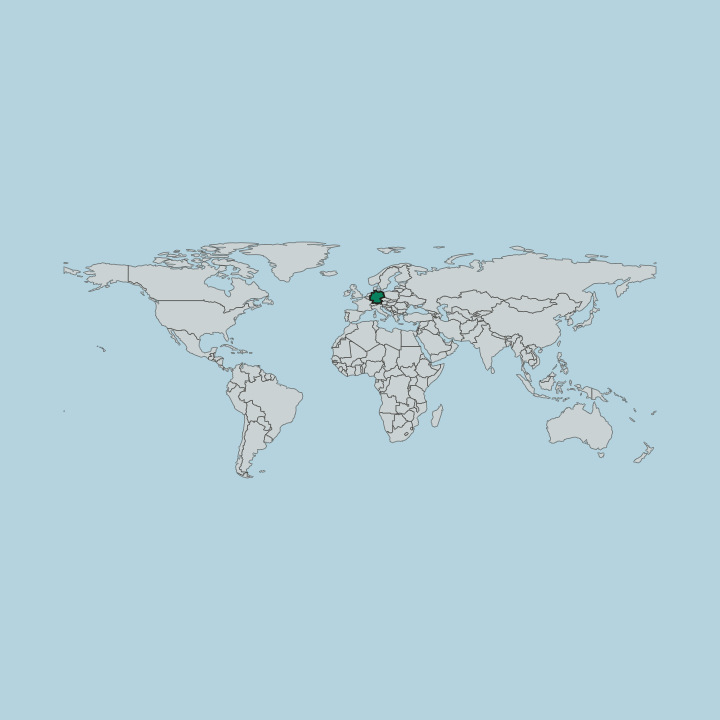
Essen stands at the heart of the Ruhr in North Rhine-Westphalia, a former coal-and-steel city built around Essen Minster and the Krupp works.
Hotel links are affiliate links: booking through them may earn us a commission, at no extra cost to you. It never affects how places are ranked. How this works


Where to stay in Essen
Each area has its own feel; here's who each one suits.

 EssenGermanyFirst-time visitors who want the station and Essen Minster at the door
Stadtkern
Wraps the Marktkirche and Essen Minster beside the main station and shopping lanesStadtkern → EssenGermanyA leafier stay near the Grugapark gardens
Rüttenscheid
Runs its long café-lined avenue toward the Grugapark and the Grugaturm south of the centreRüttenscheid → EssenGermany
Südviertel
The Südviertel is one of six quarters that form the Stadtmitte of Essen, and its office towers shape the city's skyline more than any other.Where to stay → EssenGermany
Westviertel
Westviertel is a district of Essen of barely two square kilometres, marked by the Tiegelgussdenkmal and by a name meaning the west quarter.Where to stay → EssenGermany
Südostviertel
The Südostviertel packs the Auferstehungskirche, the Altlutherische Kirche and the Weigle-Haus into one small quarter of Essen.Where to stay →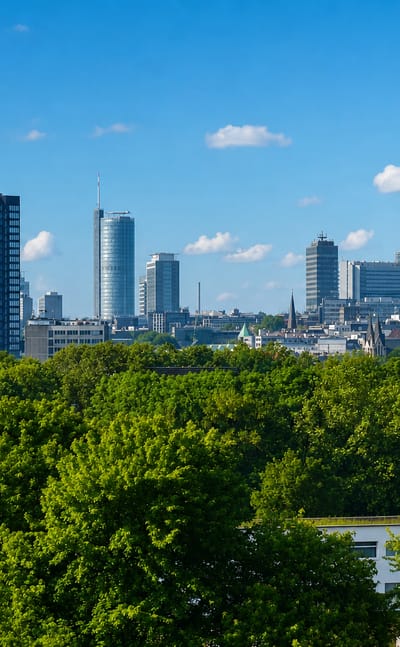 EssenGermany
Ostviertel
Ostviertel is a district of Essen of under two square kilometres, with the church of Saint Barbara as its one named landmark.Where to stay → EssenGermany
Holsterhausen
The Fernsehturm Essen stands over Holsterhausen, a borough of roughly three square kilometres whose other markers are churches and a former convent.Where to stay → EssenGermany
Huttrop
Huttrop sits inside Essen's Stadtbezirk I, a built-up district marked by St. Bonifatius and the Neue Pauluskirche.Where to stay →EssenGermanyNordviertel
The Nordviertel is the northernmost borough of Stadtbezirk I in Essen, largely residential, with the Elting-Viertel among its streets.Where to stay →EssenGermanyFrillendorf
Frillendorf is a compact quarter of Essen, gathered about the Schutzengel parish church and covering just over two square kilometres.Where to stay →EssenGermanyFrohnhausen
Lutherkirche, Markuskirche and Apostelkirche stand within Frohnhausen, one of the districts of Essen, alongside a site named Oase.Where to stay →EssenGermanyBergerhausen
Bergerhausen is a central borough of Essen, lying south of the Stadtkern, with the Johanneskirche its one listed monument.Where to stay →All neighbourhoods (44)
EssenGermanyAltendorf
Altendorf became part of Essen in 1901, a borough of two former halves, Oberdorf and Unterdorf, gathered around the Christuskirche.Where to stay → EssenGermany
Margarethenhöhe
Margarethenhöhe is a small Essen district of under two square kilometres, entered in the register as a landmark in its own right.Where to stay → EssenGermany
Stoppenberg
Stoppenberg carries the Ruhr Museum, the Red Dot Design Museum and the Skulpturenpark Zollverein, along with Stiftskirche Stoppenberg.Where to stay →EssenGermanyRellinghausen
Rellinghausen sits in the central-southern part of Essen, a small borough carrying Schloss Schellenberg, the Blücherturm and four more listed sites.Where to stay →EssenGermanyAltenessen
Altenessen spreads across the north of Essen, in Germany, split since 1915 into Altenessen-Nord and Altenessen-Süd.Where to stay →EssenGermanyBergeborbeck
Bergeborbeck is a northern borough of Essen, taken into the city in 1915 after belonging to the Bürgermeisterei Borbeck.Where to stay →EssenGermanyFulerum
Fulerum is a small quarter of Essen, about one and a half square kilometres of housing built around the Theresia vom Kinde Jesu church.Where to stay → EssenGermany
Bochold
Bochold is a northwestern borough of Essen, holding three churches and the older Haus Berge, and joined to the city in 1915.Where to stay →EssenGermanyBredeney
Villa Hügel stands in Bredeney, a southern borough of Essen and, by the city's own description, its green lung.Where to stay → EssenGermany
Steele
The Ruhr runs along the southern border of Steele, an Essen suburb with two railway stations of its own and the Friedenskirche among its churches.Where to stay →EssenGermanyVogelheim
Vogelheim is a northern Stadtteil of Essen and the youngest in its district, where the oldest human tool found in the region came to light in 1926.Where to stay → EssenGermany
Kray
The Alte Kirche Kray and the district's own Rathaus stand in Kray, one of the districts of Essen.Where to stay → EssenGermany
Borbeck-Mitte
Schloss Borbeck anchors Borbeck-Mitte, the central borough of Borbeck, which forms the fourth suburban district of Essen.Where to stay → EssenGermany
Haarzopf
Haarzopf is a Stadtteil in the southwest of Essen, first named as Hartzappe in a donation of 1215, and it has been part of the city since 1 April 1915.Where to stay → EssenGermany
Schönebeck
Schönebeck is a western Stadtteil of Essen above the Winkhauser Tal, its name officially recorded from 1795, when it was a Bauerschaft.Where to stay → EssenGermany
Überruhr
Überruhr is a district of Essen where two churches carry listings, the Stephanuskirche and St. Suitbert, beside a Stadtwerke Essen company museum.Where to stay →EssenGermanySchonnebeck
Schonnebeck is a district of Essen holding five listed sites, the Kaiser-Wilhelm-Turm and Haus Achternberg among them.Where to stay →EssenGermanyKaternberg
Katernberg is a north-eastern Essen borough of nearly five square kilometres, grown up around the Zeche Zollverein colliery.Where to stay →EssenGermanyLeithe
Leithe is an eastern Stadtteil of Essen on the boundary with Bochum, a commune of its own until it joined Kray in 1920 and Essen with it in 1929.Where to stay →EssenGermanyAltenessen-Nord
Altenessen-Nord is one half of Altenessen, the Essen borough divided in two when the city absorbed it in 1915.Where to stay → EssenGermany
Bedingrade
Bedingrade is a north-western borough of Essen, first written down in the 11th century as Batingrotha and part of the city since 1915.Where to stay → EssenGermany
Heisingen
Heisingen is a southern Stadtteil of Essen, set on a peninsula north of the Ruhr where the river widens into the Baldeneysee. It was first recorded in 796.Where to stay →EssenGermanyFischlaken
Fischlaken is a largely rural Stadtteil in the south of Essen, its name joining a word for standing water to the fish that filled it.Where to stay → EssenGermany
Werden
Werden is an Essen borough of just over four square kilometres, built around Werden Abbey and grouped with Kettwig and Bredeney.Where to stay →EssenGermanyDellwig
Dellwig is a residential quarter of Essen, a run of houses and gardens gathered around the Friedenskirche that gives the place its landmark.Where to stay →EssenGermanyByfang
Byfang keeps the character of a village inside Essen, a southeastern borough named for the forest that once enfolded it.Where to stay → EssenGermany
Schuir
Schuir is a district of Essen whose name is carried by Haus Schuir, the property that stands as the quarter's one recorded landmark.Where to stay → EssenGermany
Heidhausen
Heidhausen belongs to Essen, the central city of the Ruhr in North Rhine-Westphalia, and counts the church of St. Kamillus among its landmarks.Where to stay →EssenGermanyKarnap
Karnap is the northernmost district of Essen and the only one north of the Emscher, first documented in 1332 as Carnap.Where to stay →EssenGermanyKupferdreh
Kupferdreh is a Stadtteil in the far southeast of Essen on the Ruhr and the Baldeneysee, named for a bend the river once made where the Deilbach comes in.Where to stay → EssenGermany
Frintrop
Frintrop is a small district of Essen, its record naming two churches: St. Josef and the Gnadenkirche.Where to stay →EssenGermanyBurgaltendorf
Burgaltendorf takes its name from Burg Altendorf, a castle raised in the later 12th century, and joined Essen as a borough in 1970.Where to stay →Hotel links are affiliate links: booking through them may earn us a commission, at no extra cost to you. It never affects how places are ranked. How this works
Find hotels in Essen
Direct booking search for this neighbourhood.
Hotel links are affiliate links: booking through them may earn us a commission, at no extra cost to you. It never affects how places are ranked. How this works
Things to do in Essen
Ranked by global recognition; descriptions from Wikidata (CC0).
Museums & Galleries
3- Villa Hügel Heritage
- Old Synagogue Heritage
- Mineralien-Museum Kupferdreh Heritage
Churches & Religious Sites
8- Essen Minster Heritage
- Werden Abbey Heritage
- Kreuzeskirche Heritage
- Marktkirche Heritage
- Erlöserkirche Heritage
Show 3 more →
- Auferstehungskirche Heritage
- Friedenskirche Heritage
- Evangelische Kirche Werden Heritage
Castles & Historic Sites
8- Schloss Borbeck Heritage
- Haus Scheppen Heritage
- Schloss Schellenberg Heritage
- Burg Altendorf Heritage
- Bismarck-Denkmal Heritage
Show 3 more →
- Haus Heisingen Heritage
- Alfred Krupp monument, Essen Heritage
- Tiegelgussdenkmal Heritage
Landmarks & Notable Places
3- Blücherturm Heritage
- Oase
- Fernsehturm Essen
worth knowingacross 4 categories in Essen
About Essen
What is Essen known for?
Essen is known as the central city of the Ruhr, the great industrial belt of North Rhine-Westphalia, and often called the region's secret capital. Coal and steel made it. The Krupp works turned a market town into a heavy-industry giant, and the Museum Folkwang and the green expanse of the Grugapark grew from that wealth.
Essen Minster, older than the mines, still marks the medieval core the city spread out from.
What are the main landmarks in Essen?
Essen's landmarks range from a medieval church to the monuments of its industrial age, spread from the old core out across the parks and the wider city in a way that mirrors its layered history. Essen Minster holds the ancient centre, near the Old Synagogue and the Marktkirche. The Museum Folkwang gathers the art the coal fortunes bought.
In the green Grugapark rise the Grugaturm and the tall Fernsehturm Essen, while the Alfred Krupp monument recalls the family that built the works. Industry left its marks.
What is the history of Essen?
Essen began as a settlement around a women's abbey, whose church survives as Essen Minster at the medieval heart of the city. Faith came first. For centuries a small market and church town in what is now North Rhine-Westphalia, it lay quiet above coal seams that would one day remake it entirely.
The Old Synagogue and the Marktkirche mark that older, pre-industrial layer of the town. Coal and steel changed everything about the place. The Krupp works rose in the nineteenth century and drew mines, mills, and railways across the surrounding Ruhr, swelling the old town into a heavy-industry capital whose smoke and forges reached far beyond its walls.
The fortunes built the Museum Folkwang and laid out the Grugapark, and the Alfred Krupp monument still marks the dynasty at the centre of it. As the mines closed, the city turned toward culture and green space while keeping the frame the works had built. That industrial past still shapes every district.
Where is Essen?
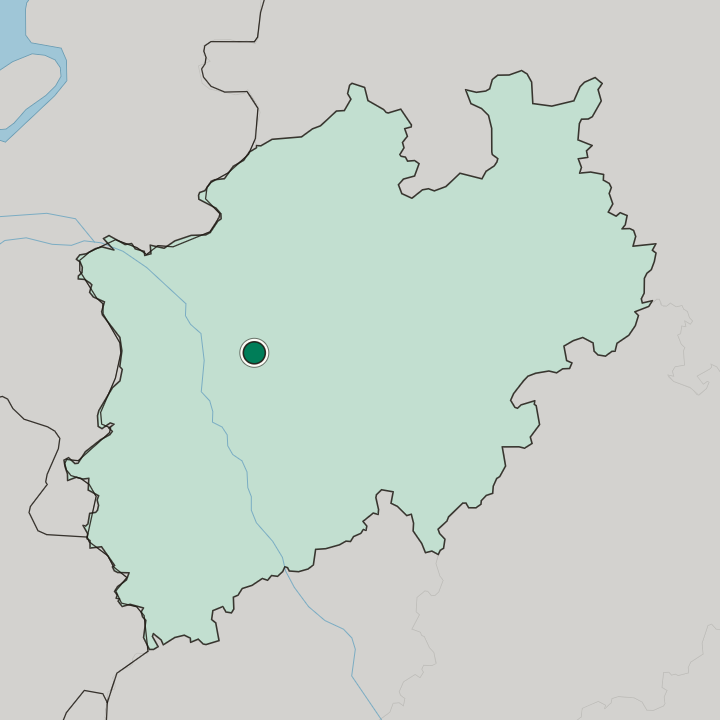
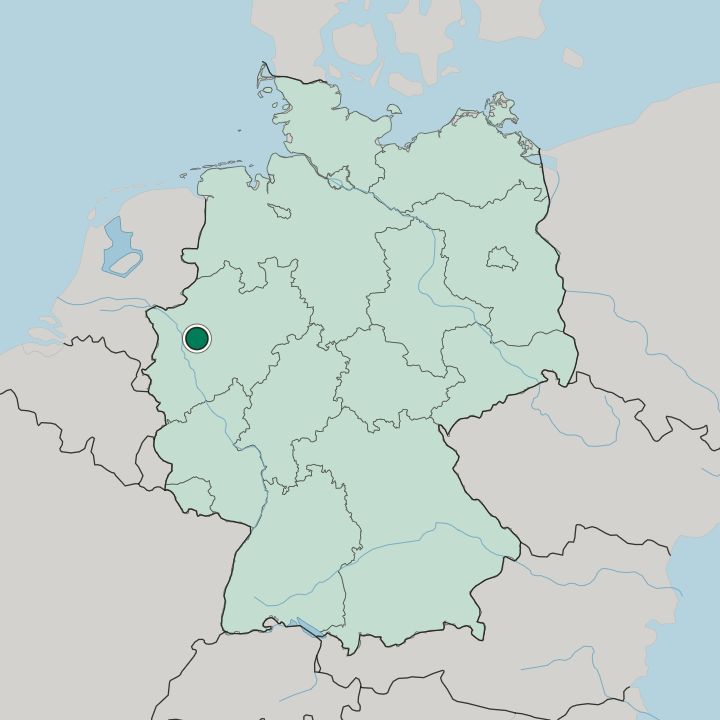
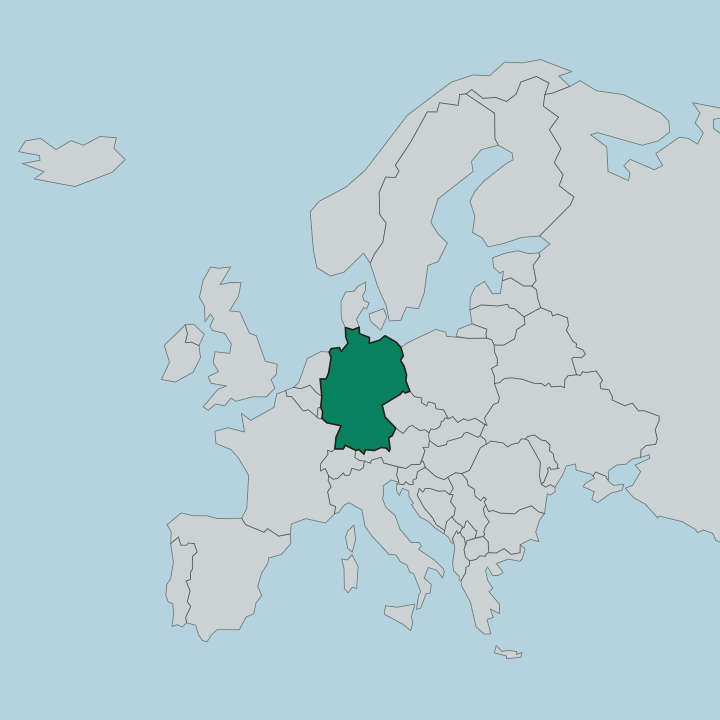
Essen lies at the centre of the Ruhr, the dense urban belt of North Rhine-Westphalia in western Germany. The city spreads across low ground between the Ruhr river to the south and the Emscher to the north, part of the wider Rhine-Ruhr region of the Rhineland. Level land carries it in every direction.
This central place in the Ruhr has long earned it the name of the region's secret capital.
What is the climate of Essen?
Essen has a mild, damp maritime climate typical of the lowlands of North Rhine-Westphalia. Winters stay cool rather than harsh, with grey skies and rain more common than snow across the flat ground of the Ruhr. The Ruhr summers run warm, and the Grugapark stays green.
Rain falls in every season, kept steady by the westerly air off the North Sea, and the gardens of the Grugapark stay lush through much of the year.
How do you get to Essen?
Essen sits at the crossroads of the dense rail network that binds the Ruhr, and its main station links the city with the neighbouring centres of North Rhine-Westphalia. Trains, trams, and the S-Bahn meet in the centre. Motorways cross the region around the city, part of the tight web that ties the whole Ruhr together.
Most visitors arrive by train.
Common questions
What is the best area to stay in Essen?
Stadtkern: First-time visitors who want the station and Essen Minster at the door. Rüttenscheid: A leafier stay near the Grugapark gardens. Museumsviertel: Gallery visitors basing near the art collections.
Good for
More cities in Nordrhein-Westfalen
Updated October 2026