Dominican Republic
Provincia Duarte, Dominican Republic — Towns & Travel Guide
Provincia Duarte is a northeastern province of the Dominican Republic, named for Juan Pablo Duarte and run from San Francisco de Macorís.
Hotel links are affiliate links: booking through them may earn us a commission, at no extra cost to you. It never affects how places are ranked. How this works


Towns & cities in Provincia Duarte
One town here has its own guide — it links to where to stay.

 Dominican Republic
San Francisco de Macorís
San Francisco de Macorís stands in the Cibao, capital of Duarte Province, its name joining Saint Francis to Macorix, the old name of the territory.Where to stay →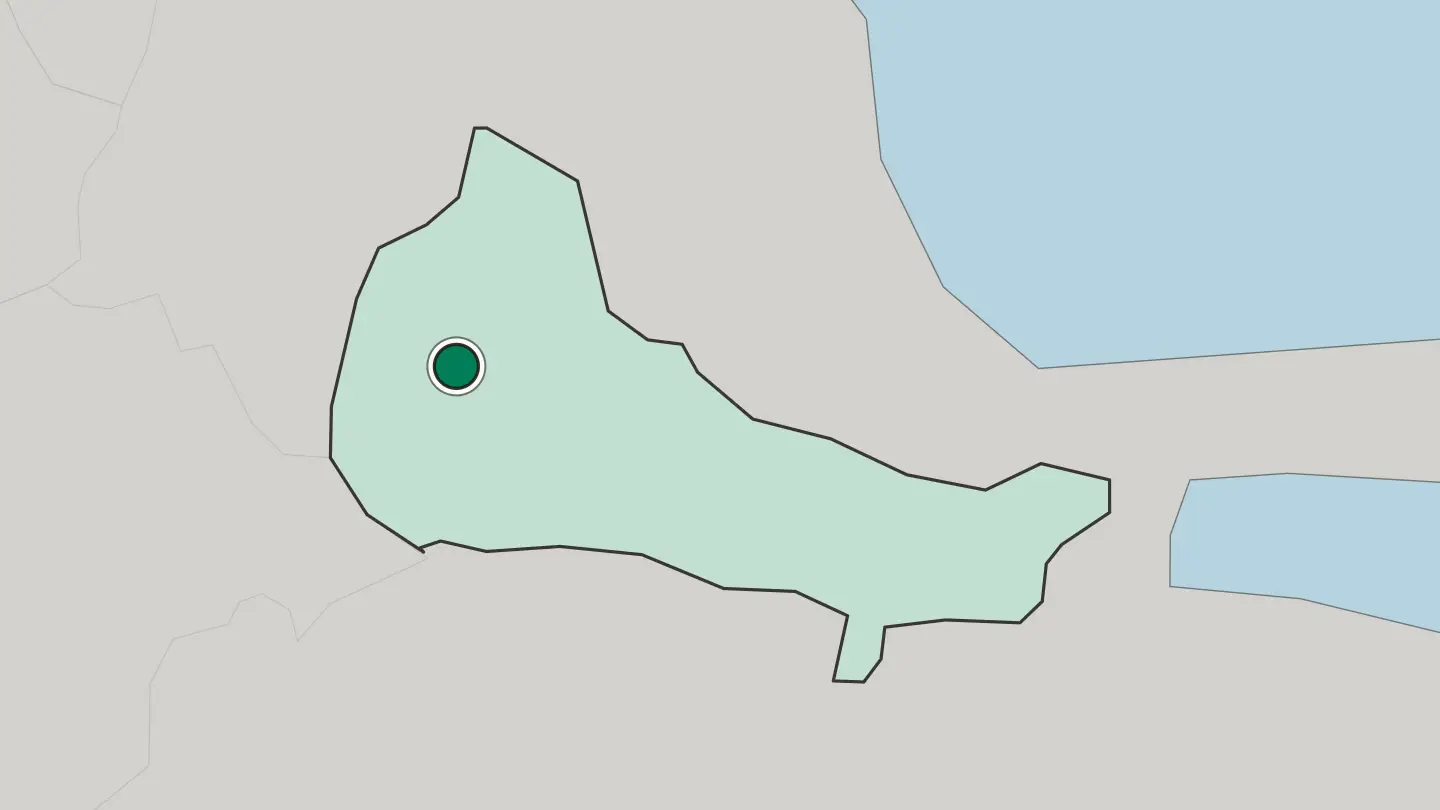
Hotel links are affiliate links: booking through them may earn us a commission, at no extra cost to you. It never affects how places are ranked. How this works
About Provincia Duarte
What is Provincia Duarte known for?
The province carries a founder's name. Juan Pablo Duarte, called the Father of the Nation of the Dominican Republic, gave his surname to this province, whose seat is the city of San Francisco de Macorís. Seven municipalities answer to it.
Its ground reaches from the Espaillat line in the north down to Monte Plata and Sánchez Ramírez in the south, with Samaná and María Trinidad Sánchez closing the eastern side.
Where is Provincia Duarte?
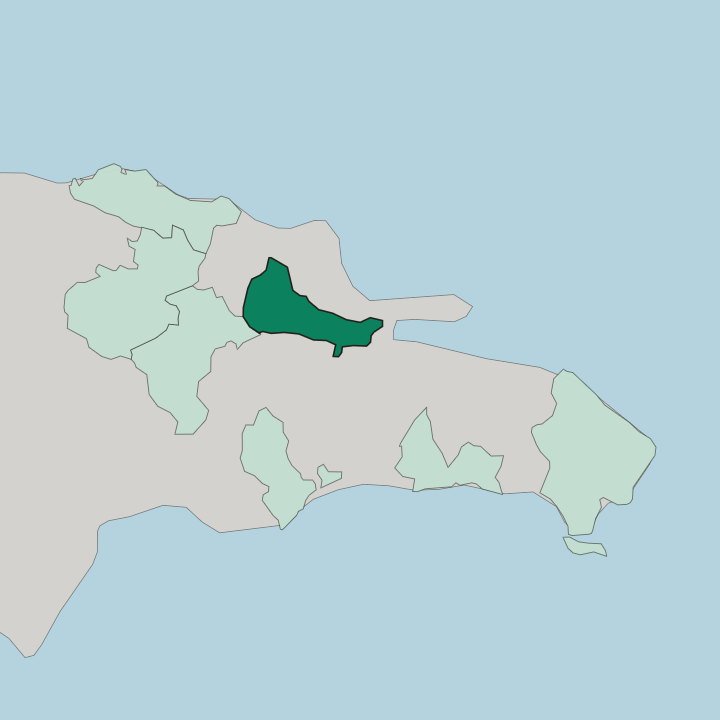
Seven municipalities fill the province. Provincia Duarte covers roughly one thousand six hundred square kilometres in the northeast of the country, ground bounded on all four sides by other provinces and reaching no shoreline of its own. Espaillat holds the northern border.
To the east lie Samaná and María Trinidad Sánchez, to the south Monte Plata and Sánchez Ramírez, and to the west La Vega and Hermanas Mirabal, which gives the province seven neighbours in total and a long, irregular perimeter. Inland country throughout. Nothing in Provincia Duarte touches the sea, and the province sits in the interior of the northeast with San Francisco de Macorís among the farmland at its heart.
The tropics run over the whole of it. Northern-hemisphere ground this close to the equator carries warmth year-round, and the province supports its seven municipalities and their towns without any coast to shape the way they trade. Its widest span is short.
From the Hermanas Mirabal line in the west to the Samaná border in the east is a manageable drive, and the province holds together as one working unit rather than splitting into separated halves.
What is Provincia Duarte like?
A national figure gives the province its name. Juan Pablo Duarte is remembered in the Dominican Republic as the Father of the Nation, and the province established in 1844 carries his surname, which places a founding story at the centre of how the territory presents itself. Spanish is spoken throughout.
The seven municipalities share the language with the rest of the country, and San Francisco de Macorís, as the seat, is where the provincial institutions that use it are concentrated. Neighbours matter more than distance here. Seven provinces touch Provincia Duarte, and the towns near each border look as much toward Espaillat, Samaná, Monte Plata, Sánchez Ramírez, La Vega, Hermanas Mirabal, or María Trinidad Sánchez as they do toward their own capital.
That pull runs both ways. Being one of the 32 provinces of a small country means the provincial line is rarely far, and the municipalities of Provincia Duarte are lived in close to those edges rather than in isolation from them. The seat still holds the balance.
San Francisco de Macorís gathers the administration, the trade, and the name that Juan Pablo Duarte left behind.
What is the history of Provincia Duarte?
Everything here starts in 1844. Provincia Duarte took the surname of Juan Pablo Duarte, whom the Dominican Republic calls the Father of the Nation, so the name of the territory has carried a founding figure from that year onward. The seat came with it.
San Francisco de Macorís has served as the capital of a province whose seven municipalities and whose borders with Espaillat, Samaná, and Sánchez Ramírez have given it the shape it keeps.
What is the climate of Provincia Duarte?
Frost is unknown here. The tropics of the northern hemisphere cover Provincia Duarte entirely, which leaves the year to be counted in rainfall rather than in temperature, and the seven municipalities feel the same pattern from the Espaillat border down to the Monte Plata line. Growing seasons blur into one another.
What a visitor notices is the steady warmth of an interior province rather than any change of coat between one month and the next.
How do you get to Provincia Duarte?
Duarte is reached by road alone. Provincia Duarte has no coast and no border with the outside world, so approaches come across the provincial lines it shares with La Vega, Hermanas Mirabal, Espaillat, Sánchez Ramírez, Monte Plata, Samaná, and María Trinidad Sánchez. San Francisco de Macorís is the knot.
Routes through the province converge on the capital, and travellers working between the seven municipalities generally pass through it on the way.
Common questions
What is the best area to stay in Provincia Duarte?
San Francisco de Macorís: basing in the seat of Provincia Duarte to work its seven municipalities. the eastern municipalities: a night on the rim before crossing into Samaná.
More regions in Dominican Republic
Updated September 2026