Spain · Castilla-La Mancha
Where to Stay in Cuenca, Castilla-La Mancha
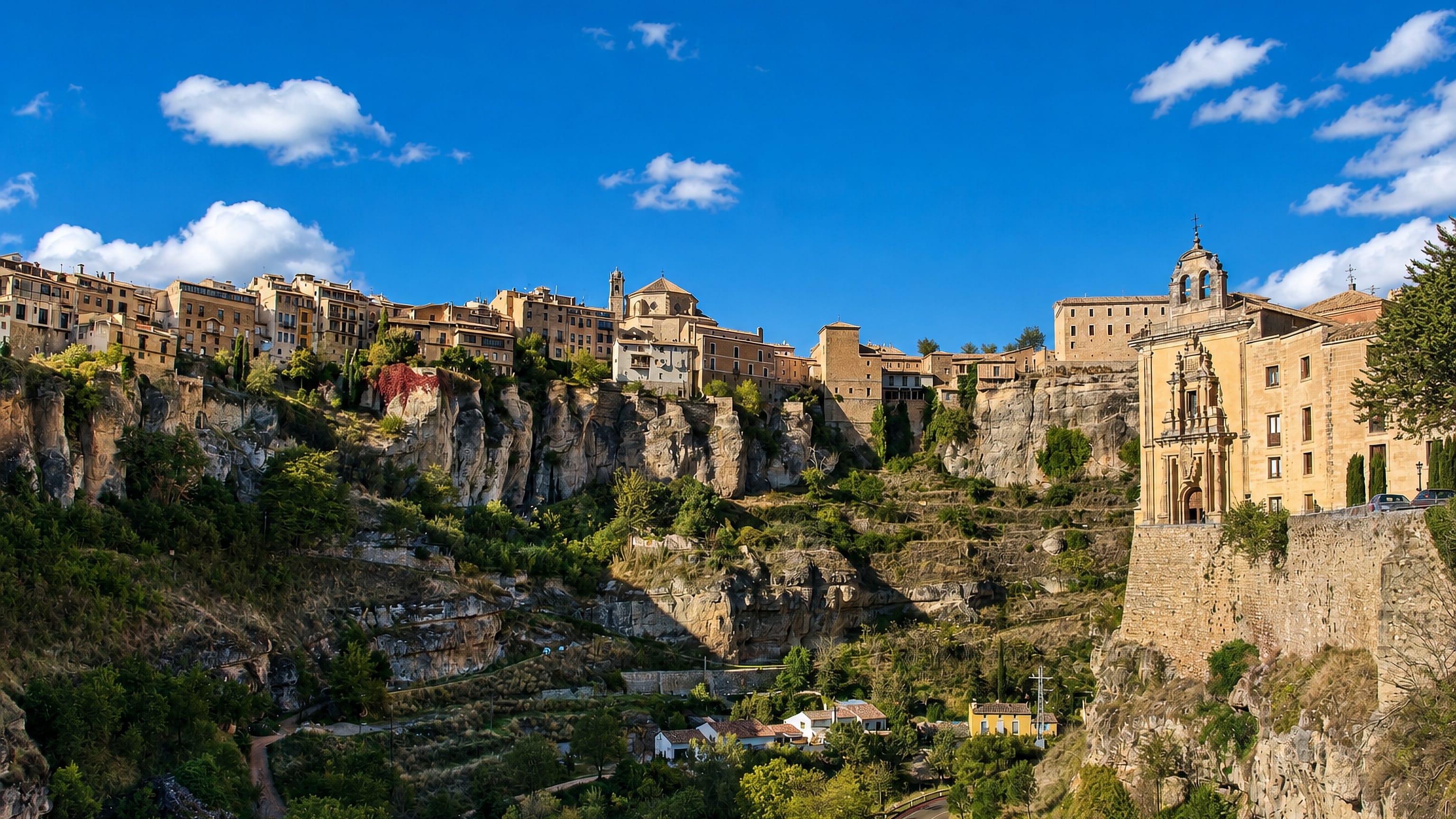
A medieval old town on the cliffs: Cuenca hangs its casas colgadas over the edge, a UNESCO World Heritage site in Castilla-La Mancha.
Hotel links are affiliate links: booking through them may earn us a commission, at no extra cost to you. It never affects how places are ranked. How this works


Where to stay in Cuenca
Where visitors usually base themselves, and why.
The old town is the reason to come and the harder place to sleep. Rooms up on the ridge sit within reach of Cuenca Cathedral, the casas colgadas and the Museo de Arte Abstracto Español, in buildings that were never designed around a car and mostly still aren't. Beds up there are few.
Anyone who wants the cliff-edge view at first light should book it a long way out, because the stock is small and the demand is not. Down in the lower town the arithmetic flips. Streets around the Torre de Mangana and the newer quarters below it hold most of the city's rooms, with parking, shops and a level walk that the ridge cannot offer, and the climb up is a matter of minutes rather than an expedition.
The lift is in the legs. Families and anyone travelling with luggage tend to do better here than up on the steep streets above. Holy Week is the exception to all of it.
The Museo de la Semana Santa de Cuenca exists for a reason, and when the processions fill the stepped streets the rooms in both halves of the city disappear first. Book ahead or stay out. Villages and roadside stops outside the city absorb what it cannot hold, and the drive back in is short enough that the trade is a fair one.
Find hotels in Cuenca
Direct booking searches for these neighbourhoods.
The walled old town
Stepped streets along the ridge, with the Museo de Arte Abstracto Español a few doors on. Beds are limited here, so book early.Find hotels in The walled old townArrivals with luggage or a car below the Torre de ManganaThe lower town
Level streets, parking and most of the city's rooms under the ridgeFind hotels in The lower townSemana Santa weeks when the walled town has nothing leftOutside the city
A short drive in past the Museo de las Ciencias de Castilla-La Mancha. Lodging is scarce in this area; reserve in advance.Find hotels in Outside the cityHotel links are affiliate links: booking through them may earn us a commission, at no extra cost to you. It never affects how places are ranked. How this works
Things to do in Cuenca
Ranked by global recognition; descriptions from Wikidata (CC0).
Museums & Galleries
3- Museo de Cuenca Heritage
- Castilla-La Mancha Paleontological Museum
- Museo de la Semana Santa de Cuenca
Churches & Religious Sites
8- Cuenca Cathedral Heritage
- Iglesia de San Pedro, Cuenca Heritage
- Church of El Salvador, Cuenca Heritage
- Church of San Miguel, Cuenca Heritage
- Monasterio de Madres Benedictinas Heritage
Show 3 more →
- Church of San Nicolás, Cuenca Heritage
- Church of San Andrés, Cuenca Heritage
- Convent of the Concepción Franciscana Heritage
Castles & Historic Sites
5- Convento de las Petras, Cuenca Heritage
- Casa del Corregidor, Cuenca Heritage
- Casa de Las Rejas, Cuenca Heritage
- Alhóndiga de Cuenca Heritage
- Public State Library, Cuenca building Heritage
Landmarks & Notable Places
1- Torre de Mangana Heritage
worth knowingacross 4 categories in Cuenca
About Cuenca
The casas colgadas do the talking.
What is Cuenca known for?
Built out to the very edge of the cliff, they make Cuenca one of the most striking towns in Spain, and the walled old town they belong to carries a UNESCO World Heritage listing for the medieval city as a whole. Cuenca Cathedral holds the high ground. The Torre de Mangana stands over the other end, while the Museo de Arte Abstracto Español gives the same streets a second reputation entirely.
What are the main landmarks in Cuenca?
Cuenca Cathedral came first among the buildings. It stands at the heart of the old town, and the Torre de Mangana, the Casa del Corregidor and the Alhóndiga de Cuenca mark out the civic side of a place that otherwise runs to churches. There are a great many churches.
The Church of San Miguel, the Church of San Andrés, the Church of El Salvador, the Iglesia de San Pedro and the Church of Santa Cruz share the ridge with the Convento de las Petras and the Monasterio de Madres Benedictinas.
What is the history of Cuenca?
Defence explains the site. A town on the steep sides of a mountain, walled at the top, is not built there for convenience, and the medieval city that resulted is exactly what the UNESCO World Heritage listing recognises. The Torre de Mangana survives from that logic.
Churches followed the walls, the Church of San Miguel and the Church of San Andrés among them, and Cuenca Cathedral rose to take the centre of it all. Building to the edge became the habit. The casas colgadas push right up to the cliff, balconies over the drop, and they are the image the town has traded on ever since.
Convents filled the gaps behind them. The Convent of the Concepción Franciscana, the Monasterio de Madres Benedictinas and the Casa de Las Rejas belong to the centuries when the ridge was fully built, while the Alhóndiga de Cuenca and the Casa del Corregidor handled the grain and the law of the same town. Modern art arrived last.
The Museo de Arte Abstracto Español changed what Cuenca was known for, and the Fundación Antonio Pérez, the Museo de Cuenca and the Museo Diocesano de Cuenca followed it. Science took the lower ground, with the Museo de las Ciencias de Castilla-La Mancha and the Castilla-La Mancha Paleontological Museum drawing visitors who never climb to the walls.
Where is Cuenca?
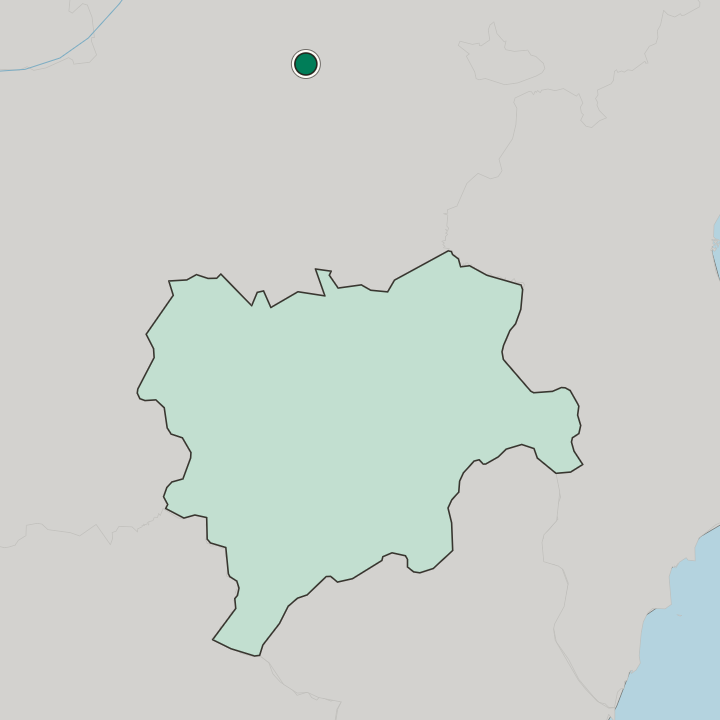
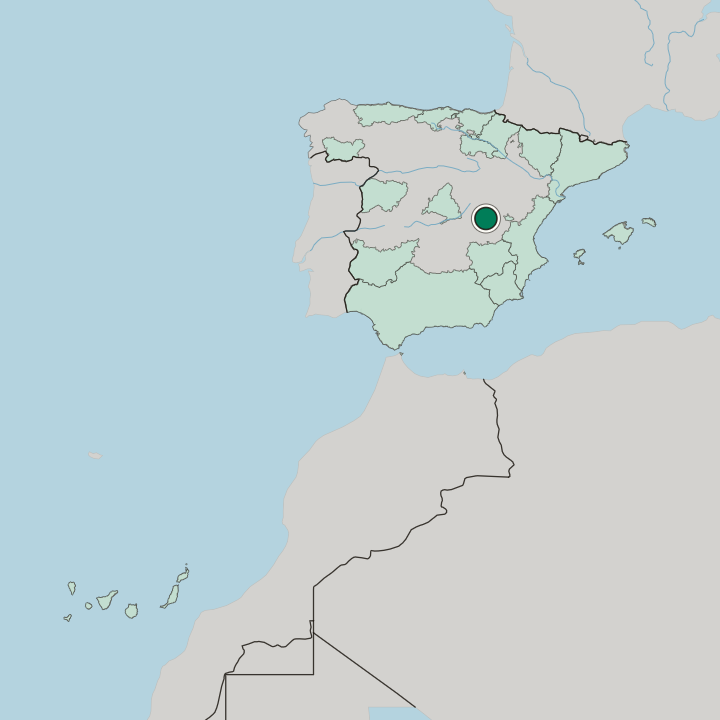
Cuenca stands where the ground gives out. The old town runs along the top of a steep-sided height with cliffs on its flanks, so the medieval streets had nowhere to go but up and along, while the newer city spreads on the easier ground below. That split is the whole plan.
Castilla-La Mancha surrounds it with country far gentler than the site the walls were put on, and the municipal district reaches well out into that.
What is the climate of Cuenca?
Height changes the year here. Cuenca sits well above the plains of Castilla-La Mancha, and that elevation makes its winters colder and its nights sharper than the country below, while the summer heat still finds the streets. Stone holds the cold.
The old town's narrow lanes stay in shadow for most of the day, which helps in August and is less welcome when the processions of Semana Santa come round.
How do you get to Cuenca?
Arrival is from below. Roads reach Cuenca across Castilla-La Mancha and stop at the foot of the old town, where the last stretch up to Cuenca Cathedral is a climb on foot or a short drive along a narrow way. Most visitors park below.
The lower town holds the parking, and the walk up past the Torre de Mangana is the standard approach for anyone not staying on the ridge.
Common questions
What is the best area to stay in Cuenca?
The walled old town: Waking beside the casas colgadas and Cuenca Cathedral. The lower town: Arrivals with luggage or a car below the Torre de Mangana. Outside the city: Semana Santa weeks when the walled town has nothing left.
Good for
More cities in Castilla-La Mancha
Updated October 2026