Spain · Euskal Autonomia Erkidegoa
Where to Stay in Gasteiz / Vitoria, Euskal Autonomia Erkidegoa
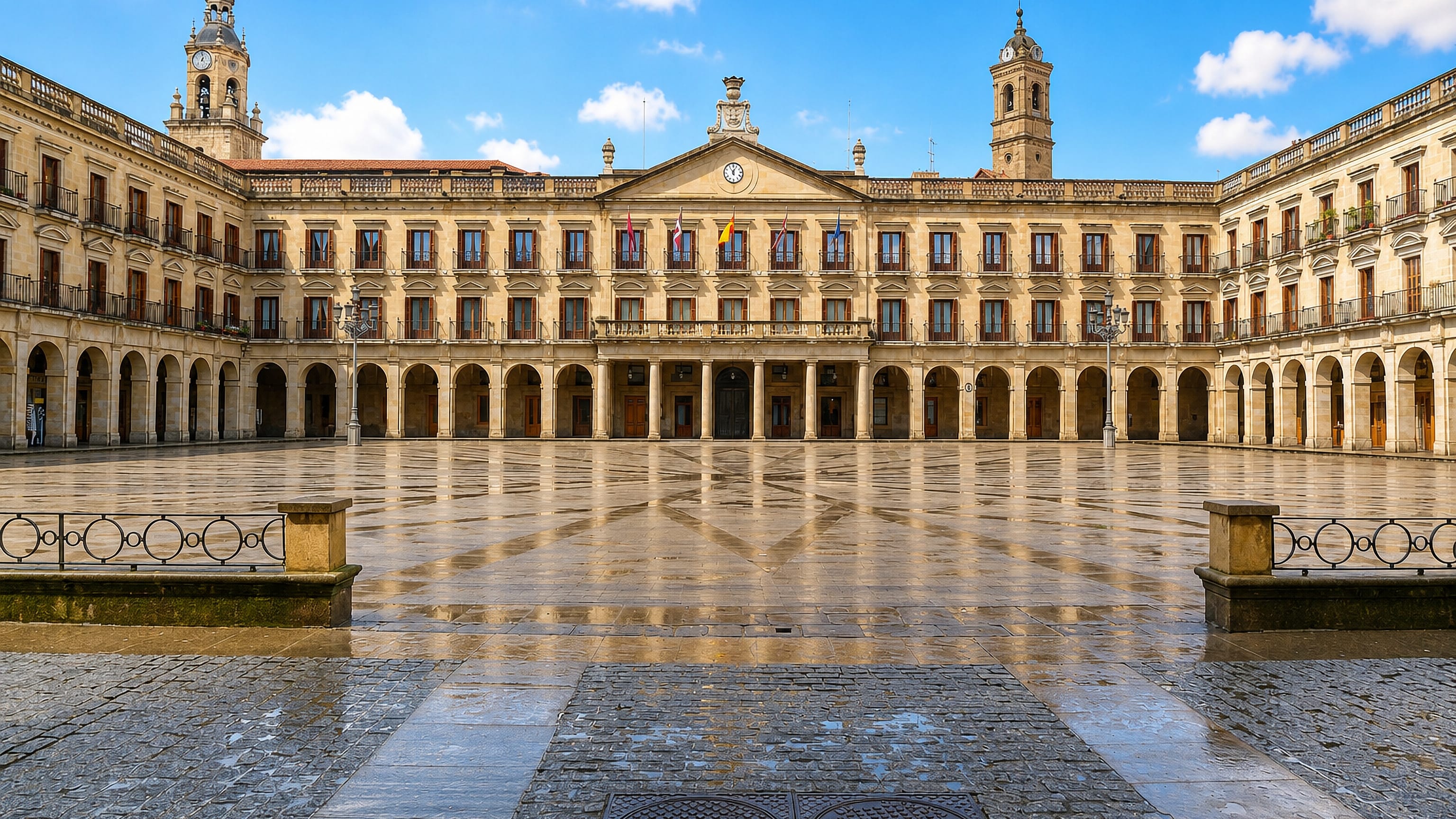
Trade lanes ring the almond-shaped hill of Gasteiz / Vitoria, Basque capital on the Llanada Alavesa, known for its cathedral and the Anillo Verde.
Hotel links are affiliate links: booking through them may earn us a commission, at no extra cost to you. It never affects how places are ranked. How this works


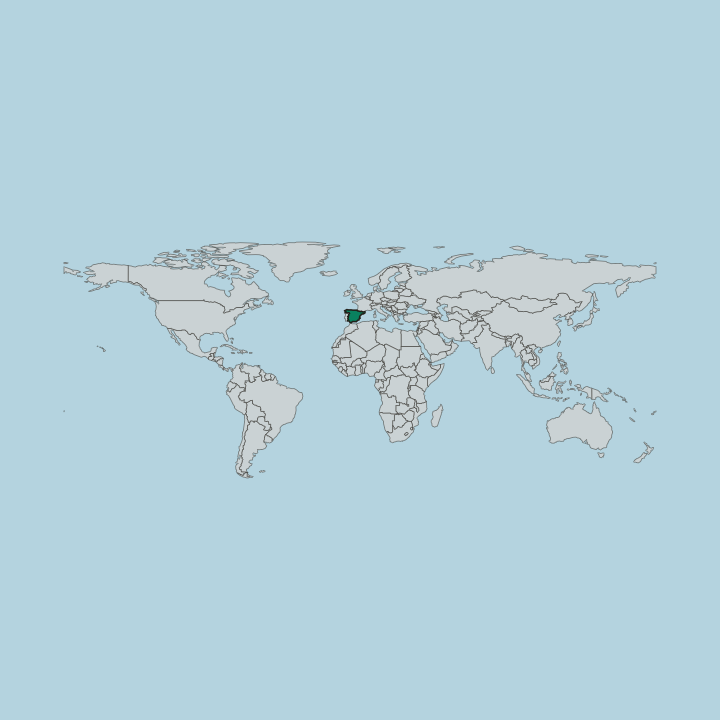
Where to stay in Gasteiz / Vitoria
The practical side of choosing where to sleep.
Gasteiz / Vitoria keeps its beds either on the Almendra hill or below it in the Ensanche. The Almendra is the medieval oval, a stack of streets still named for the trades that filled them, with Cuchillería and Zapatería running the long way and the Catedral de Santa María closing the top. It is steep.
Los Arquillos steps the hill down to the Plaza de España, and the Torre de doña Ochanda, the Casa del Cordón, and the Torre de los Anda all stand within that oval. The Ensanche lies flat below. Nineteenth-century blocks run out from the Plaza de la Virgen Blanca along Calle Dato to the station, and the Artium and the Museo de Bellas Artes de Álava sit on the southern avenues.
You want the Ensanche for level ground, tram stops at the door, and a short walk to the trains, and the hill for the older rooms and the quiet after dark. Both sit inside the ring. The Anillo Verde closes around the whole of it.
Salburua and Zabalgana turn the old flood meadows into wetland and woodland, and the Ataria centre looks over the deer and the reed beds from the eastern edge. A room on that rim trades the bars of Cuchillería for a morning that starts among herons, which suits families more than anyone here for the pintxo crawl. Bikes cover the gap.
Find hotels in Gasteiz / Vitoria
Direct booking searches for these neighbourhoods.
La Almendra
The medieval oval stacks its trade-named streets up to the Catedral de Santa María, with Los Arquillos stepping back down.Find hotels in La AlmendraLevel ground between Calle Dato and the trainsEl Ensanche
Nineteenth-century blocks put the Artium and the Plaza de la Virgen Blanca on the same flat grid as the tram line.Find hotels in El EnsancheMornings on the Salburua boardwalksThe Anillo Verde edge
Wetland and woodland parks wrap the built edge, and the Ataria centre overlooks the deer herds from the eastern rim.Find hotels in The Anillo Verde edgeHotel links are affiliate links: booking through them may earn us a commission, at no extra cost to you. It never affects how places are ranked. How this works
Things to do in Gasteiz / Vitoria
Ranked by global recognition; descriptions from Wikidata (CC0).
Museums & Galleries
3- Fournier Museum of Playing Cards Heritage
- Museo de Arqueología de Álava Heritage
- Artium Museum
Churches & Religious Sites
6- Cathedral of Santa María de Vitoria Heritage
- Basilica of San Prudencio de Armentia Heritage
- Church of San Miguel Heritage
- Church of San Pedro Apóstol Heritage
- Church of San Vicente Mártir Heritage
Show 1 more →
- Church of Nuestra Señora de la Asunción, Lasarte Heritage
Castles & Historic Sites
7- Nueva Square Heritage
- House of Cordón Heritage
- Augustin Zulueta Palace Heritage
- Torre de doña Ochanda Heritage
- Los Arquillos Heritage
Show 2 more →
- Palacio-Casa de San Prudencio Heritage
- Casa De Los Ruiz De Vergara Y Álava Heritage
Landmarks & Notable Places
2- Torre de los Anda Heritage
- casa taller Bonilla Heritage
worth knowingacross 4 categories in Gasteiz / Vitoria
About Gasteiz / Vitoria
What is Gasteiz / Vitoria known for?
Gasteiz / Vitoria is known for the Almendra, the Catedral de Santa María, and the Anillo Verde of parks around it. The cathedral never closed for its repair. Visitors walk the Catedral de Santa María in hard hats while masons work the Gothic piers, a restoration running since the last century that gave Ken Follett the setting for a novel.
The Fiestas de la Virgen Blanca open every August when the Celedón figure slides down from the tower of San Miguel.
What are the main landmarks in Gasteiz / Vitoria?
Gasteiz / Vitoria crowns its hill with the Catedral de Santa María, the unfinished Gothic church that opens to visitors mid-restoration. Old defensive towers survive. Torre de doña Ochanda holds the Museo de Ciencias Naturales de Álava, the Casa del Cordón keeps its late-Gothic arch, and the Church of San Miguel guards the Virgen Blanca above the square that carries her name.
Below the hill, Los Arquillos and the arcaded Plaza de España run into the Ensanche, where the Artium and the Museo Fournier de Naipes hold the collections. Armentia keeps a Romanesque basilica at the southern edge.
What is the history of Gasteiz / Vitoria?
Gasteiz / Vitoria was founded in 1181. Sancho VI of Navarre gave a charter to the hilltop village of Gasteiz and renamed it Nova Victoria, and the double name has held ever since. Castile took it in 1200.
Alfonso VIII besieged the hill and pulled Álava into his kingdom, and the walled oval filled with the trade streets that still carry the names of cutlers, cobblers, and painters. Fire and plague thinned it more than once, and the Casa del Cordón and the Torre de los Anda are what is left of the merchant houses that survived. Wellington broke Joseph Bonaparte here in 1813.
The Battle of Vitoria ended French rule in Spain and left the city burnt at its edges, and Beethoven wrote a noisy piece about it. Olaguíbel rebuilt the join. His Los Arquillos and Plaza de España stitched the medieval hill to the flat ground below, and the Ensanche spread south from there through the nineteenth century.
The Basque Government took the city as its seat, and the Anillo Verde was laid out over the flood meadows that ring the Llanada Alavesa. The cathedral is still open for works.
Where is Gasteiz / Vitoria?
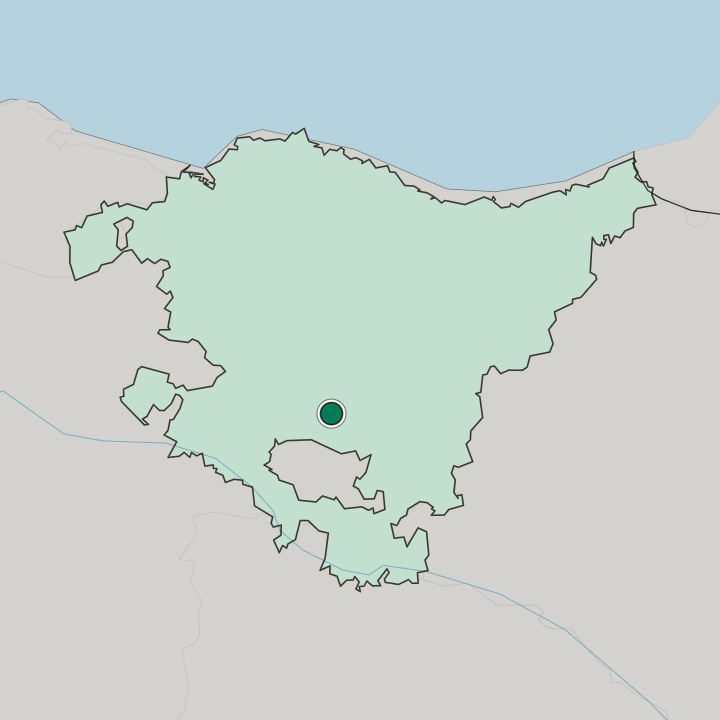
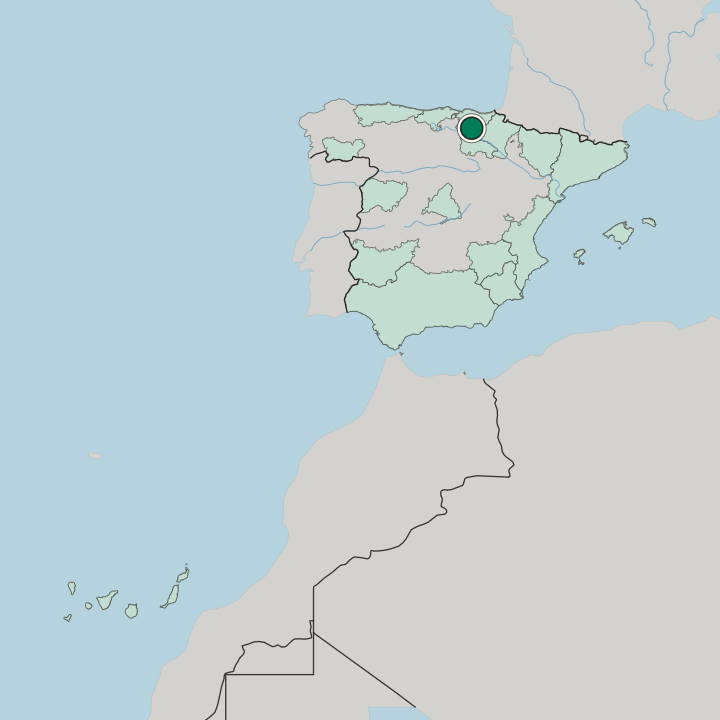
Gasteiz / Vitoria stands on a low rise in the middle of the Llanada Alavesa, the wide plain that fills inland Álava. Hills close the plain on every side. The Montes de Vitoria block the south, the Sierra de Badaia and the Arrato ridge stand to the west and north, and the Zadorra river crosses the flat ground between them on its way to the Ebro.
Salburua fills the eastern edge with water.
What is the climate of Gasteiz / Vitoria?
The Basque coastal ranges cut Gasteiz / Vitoria off from the sea air that soaks the coast. What crosses them arrives cooler and drier, so the Llanada Alavesa gets long grey winters with frost and fog on the plain rather than the constant coastal drizzle. Summers stay short.
July and August turn warm without turning Andalusian, and evenings on the Almendra cool quickly once the sun drops behind the Sierra de Badaia. Green stays green here.
How do you get to Gasteiz / Vitoria?
Gasteiz / Vitoria sits on the A-1 between Madrid and the French border. That motorway and the old N-I carry most arrivals, and trains on the Madrid to Irún line stop at the Renfe station on the southern edge of the Ensanche. Bilbao airport is the usual door. Foronda handles freight more than passengers, and inside the city the tram runs from Ibaiondo across the Ensanche while buses fan out to the villages of the Llanada Alavesa.
Common questions
What is the best area to stay in Gasteiz / Vitoria?
La Almendra: Pintxo bars along Cuchillería and Zapatería. El Ensanche: Level ground between Calle Dato and the trains. The Anillo Verde edge: Mornings on the Salburua boardwalks.
Good for
More cities in Euskal Autonomia Erkidegoa
Updated October 2026