Spain · Euskal Autonomia Erkidegoa
Where to Stay in Irun, Euskal Autonomia Erkidegoa
Irun stands at the border of France in Gipuzkoa, a Bidasoaldea town on the Northern Way of the Camino de Santiago.
Hotel links are affiliate links: booking through them may earn us a commission, at no extra cost to you. It never affects how places are ranked. How this works


Where to stay in Irun
One neighbourhood here has its own guide — here's what it is best for.
 IrunSpain
Bidasoa
Bidasoa names the river joining the Cantabrian Sea between Hendaye and Hondarribia, and the quarter of Irun that carries it.Where to stay →Hotel links are affiliate links: booking through them may earn us a commission, at no extra cost to you. It never affects how places are ranked. How this works
Find hotels in Irun
Direct booking searches for these neighbourhoods.
The centre around Nuestra Señora del Juncal
Museo Romano Oiasso, Casa de Casadevante and Casa Echeveste all stand within a few minutes of the Juncal church.Find hotels in The centre around Nuestra Señora del JuncalEvenings under the Castle of Carlos V rather than in a border townHondarribia's walled quarter
Arma Plaza, the Church of Santa María del Manzano and Casa de Juana la Loca fill the old walls of Hondarribia. Rooms are few around here — worth securing early.Find hotels in Hondarribia's walled quarterDrivers wanting quiet ground near the Hermitage of Santa ElenaThe outskirts towards Santa Elena
Out where Urdanibia jauregia and the hermitage sit clear of the crossing traffic of Irun. Lodging is scarce in this area; reserve in advance.Find hotels in The outskirts towards Santa ElenaHotel links are affiliate links: booking through them may earn us a commission, at no extra cost to you. It never affects how places are ranked. How this works
Things to do in Irun
Ranked by global recognition; descriptions from Wikidata (CC0).
Museums & Galleries
1- Museo Romano Oiasso
Churches & Religious Sites
4- Church of Santa María del Manzano, Hondarribia Heritage
- Church of Nuestra Señora del Juncal, Irún Heritage
- Hermitage of Santa Elena, Irun Heritage
- Church of Santa María Magdalena, Hondarribia Heritage
Castles & Historic Sites
8- Castle of Carlos V, Hondarribia Heritage
- Gaztelu Zahar gaztelua Heritage
- Arbelaitz Palace Heritage
- Casa Echeveste (Hotel Obispo) Heritage
- Urdanibia jauregia Heritage
Show 3 more →
- San Juan Harri Heritage
- Palacio Zuloaga Heritage
- Casa de Casadevante Heritage
Landmarks & Notable Places
7- San Nikolas 3 etxea Heritage
- Gipuzkoa Plaza z/g etxea, Hondarribia Heritage
- Iparraldeko 1 etxea Heritage
- Arma Plaza 12 etxea Heritage
- Arma Plaza 13 etxea Heritage
Show 2 more →
- Iparraldeko 3 etxea Heritage
- Nagusia 2 etxea, Hondarribia Heritage
worth knowingacross 4 categories in Irun
About Irun
France begins on the far side.
What is Irun known for?
Irun works as the crossing town of Bidasoaldea in Gipuzkoa, the point where the Northern Way of the Camino de Santiago and the traffic between two states reach the frontier together. Museo Romano Oiasso holds the older story, of a settlement that mattered long before customs posts, and the Church of Nuestra Señora del Juncal carries the parish that followed. Palaces stand along its streets.
Arbelaitz Palace, Urdanibia jauregia, Palacio Zuloaga and Ramery jauregia give the town more grand houses than a border post would suggest.
What are the main landmarks in Irun?
Museo Romano Oiasso is the reason to stop. The Church of Nuestra Señora del Juncal dominates the centre, and Gaztelu Zahar gaztelua, San Juan Harri and the Hermitage of Santa Elena mark the older ground around it. Arbelaitz Palace, Palacio Zuloaga, Urdanibia jauregia and Ramery jauregia are the grand houses, with Casa de Casadevante, Casa Mugaretenea and Casa Echeveste among the lesser ones.
Aduanako Zaintza-gorputza recalls the customs service. Hondarribia adds the Castle of Carlos V, the Church of Santa María del Manzano and Casa de Juana la Loca.
What is the history of Irun?
Rome was here first. The collection at Museo Romano Oiasso comes from the settlement that occupied this ground long before any frontier ran through it, and the name Oiasso belongs to that period rather than to the modern town. Gaztelu Zahar gaztelua and the Hermitage of Santa Elena hold the older ground, while the Church of Nuestra Señora del Juncal became the parish of the town below.
Irun counts 1776 as its founding year. The border with France made the rest of the history. Customs, crossings and the movement of goods gave the town its work, and Aduanako Zaintza-gorputza survives as the building of the service that ran it.
Pilgrims came the same way. The Northern Way of the Camino de Santiago enters here, and Urdanibiako ospitalea survives among the buildings that served that road. Wealth followed the traffic, and Arbelaitz Palace, Urdanibia jauregia, Palacio Zuloaga and Ramery jauregia went up for families of Bidasoaldea.
Hondarribia guarded the same line, and its Castle of Carlos V and Casa de Juana la Loca record a frontier that mattered long before customs sheds.
Where is Irun?
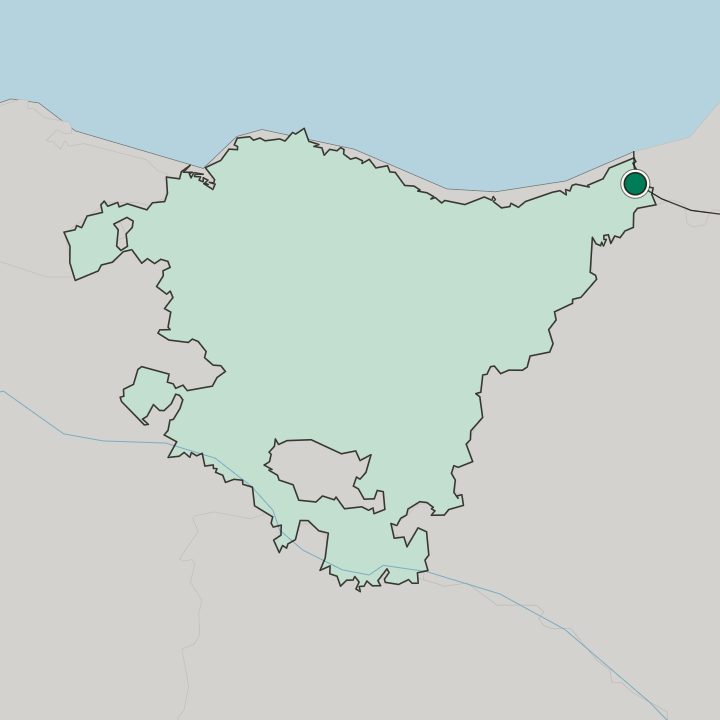
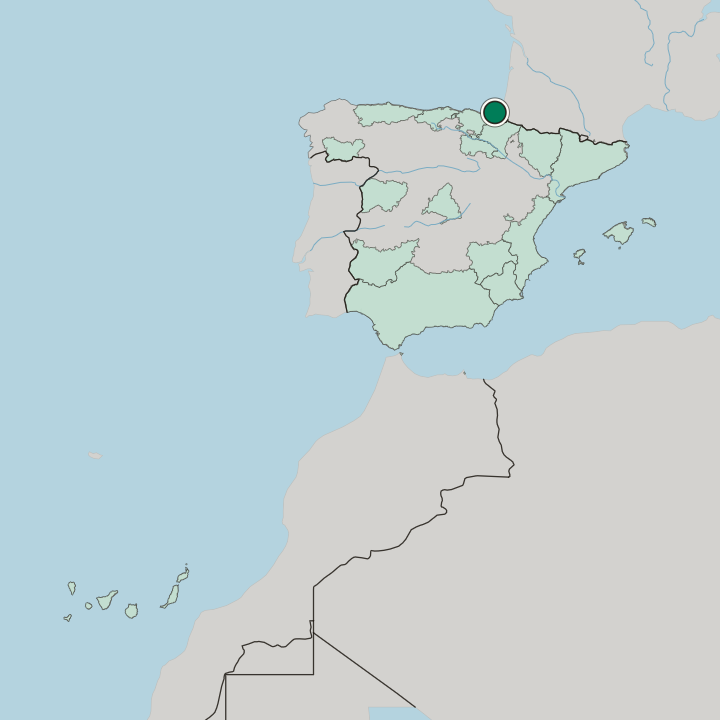
Irun occupies the Bidasoaldea corner of Gipuzkoa, with France on the other side of the boundary that runs past the town. Hondarribia shares the district. Beyond the built streets the municipality runs wide, taking in open land as well as houses, which is why Irun covers more ground than its centre suggests. Spain ends at this line.
Gipuzkoa is the province, and the Basque Autonomous Community the region above it, with Bidasoaldea the small local district that Irun and Hondarribia both belong to.
What is the climate of Irun?
Wet is the default here. The temperate band that Gipuzkoa sits in delivers cloud and drizzle across most of the year, and the green of the Bidasoaldea reflects that more than any dry season. Pilgrims on the Northern Way of the Camino de Santiago meet the same weather on either side of the border with France.
Neither heat nor frost is severe in Irun, and the difference from the drier interior of Spain shows in how rarely the ground here goes brown.
How do you get to Irun?
Everything here funnels to the crossing. Irun is where the route between Spain and France passes through Bidasoaldea, and travellers arriving from Gipuzkoa or from over the border reach the same few streets around the Church of Nuestra Señora del Juncal. The Northern Way of the Camino de Santiago runs through on foot, which makes Irun a first or last stage rather than a stop in the middle.
Hondarribia is minutes away.
Common questions
What is the best area to stay in Irun?
The centre around Nuestra Señora del Juncal: Pilgrims on the Northern Way who want Irun on foot. Hondarribia's walled quarter: Evenings under the Castle of Carlos V rather than in a border town. The outskirts towards Santa Elena: Drivers wanting quiet ground near the Hermitage of Santa Elena.
Good for
More cities in Euskal Autonomia Erkidegoa
Updated October 2026