Spain · Euskal Autonomia Erkidegoa
Where to Stay in Bilbao, Euskal Autonomia Erkidegoa
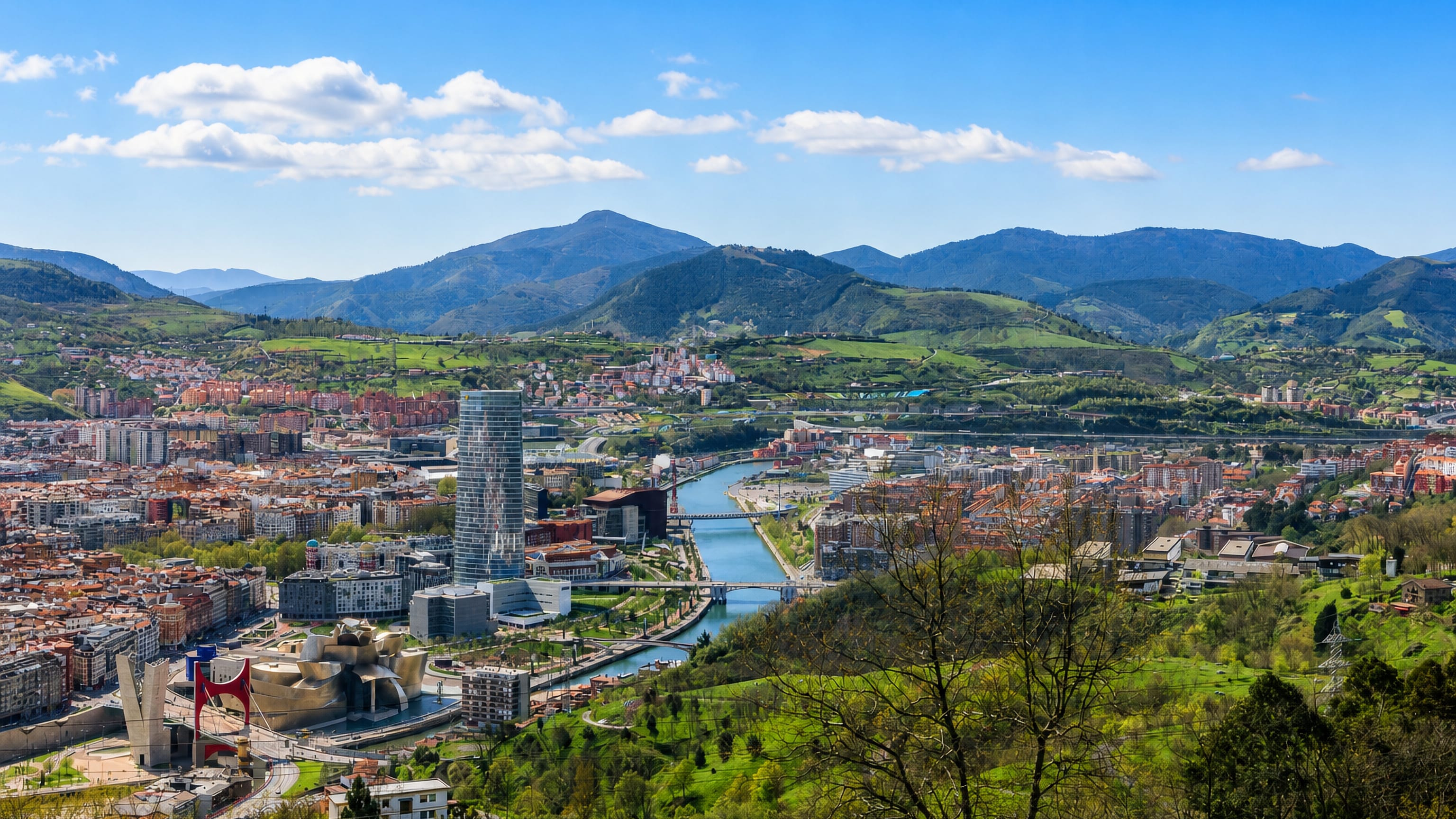
Iron ore built Bilbao and titanium remade it, a Basque port on the Nervión known for the Guggenheim Museum Bilbao and Plaza Nueva.
Hotel links are affiliate links: booking through them may earn us a commission, at no extra cost to you. It never affects how places are ranked. How this works


Where to stay in Bilbao
The right area depends on your trip — here's what each neighbourhood is best for.

 BilbaoSpain
Zazpi Kaleak
Zazpi Kaleak is the medieval quarter of Bilbao, the Seven Streets that Spanish calls Casco Viejo, held inside the Ibaiondo district.Where to stay → BilbaoSpain
Begoñalde
Begoñalde rises on the lower slopes of Mount Artxanda above Bilbao, a historical municipality of Biscay whose name reads as the lower foot.Where to stay → BilbaoSpain
Deustu
Deustu, one of Bilbao's eight districts, holds the University of Deusto on the right side of the estuary below Mount Artxanda.Where to stay → BilbaoSpain
Bolueta
Bolueta covers under a square kilometre of Bilbao, a district whose short register runs to a convent, a diocesan museum and little else.Where to stay →BilbaoSpainZorrotza
Zorrotza is a working district of Bilbao, listed for its workshops and for Euskararen Etxea rather than for galleries or old streets.Where to stay →Hotel links are affiliate links: booking through them may earn us a commission, at no extra cost to you. It never affects how places are ranked. How this works
Find hotels in Bilbao
Direct booking searches for these neighbourhoods.
Casco Viejo
The seven original streets hold Plaza Nueva, the Church of San Nicolás and the Euskal Museoa within a few hundred paces.Find hotels in Casco ViejoGran Vía at street level with the trains and the metro underneathAbando
Gran Vía runs past La Equitativa and the Edificio La Unión y el Fénix to the Bilbao Fine Arts Museum at the park end.Find hotels in AbandoWaking up in front of the Guggenheim Museum BilbaoAbandoibarra
Reclaimed shipyard quay where the Guggenheim Museum Bilbao and the Itsasmuseum Bilbao took the ground the cranes left.Find hotels in AbandoibarraHotel links are affiliate links: booking through them may earn us a commission, at no extra cost to you. It never affects how places are ranked. How this works
Things to do in Bilbao
Ranked by global recognition; descriptions from Wikidata (CC0).
Museums & Galleries
3- Bilbao Fine Arts Museum Heritage
- Alhóndiga Bilbao Heritage
- Euskal Museoa Heritage
Churches & Religious Sites
6- Basilica of Begoña Heritage
- Church of San Antón Heritage
- Church of San Nicolás, Bilbao Heritage
- Church of los Santos Juanes, Bilbao Heritage
- Church of San Francisco de Asís, Bilbao Heritage
Show 1 more →
- Convento De La Encarnacion Heritage
Castles & Historic Sites
3- Plaza Nueva Heritage
- Casa Arróspide Heritage
- Monument to the Sacred Heart of Jesus
Landmarks & Notable Places
6- Casa Montero Heritage
- Casa Lezama-Leguizamón, Bilbao Heritage
- Casa cuna de Urazurrutia Heritage
- La Equitativa, Bilbao Heritage
- Edificio La Unión y el Fénix, Bilbao Heritage
Show 1 more →
- Vivienda en talleres de Zorroza Heritage
worth knowingacross 4 categories in Bilbao
About Bilbao
Bilbao owes its name abroad to the Guggenheim Museum Bilbao.
What is Bilbao known for?
Frank Gehry's titanium shell went up on a bend of the Nervión where the cranes had stood, and the city that had shipped iron for centuries became a place people flew in to look at. The food came with it. Pintxo counters line the arcades of Plaza Nueva, and the Bilbao Fine Arts Museum, the Euskal Museoa and the Itsasmuseum Bilbao fill out the rest of a short list.
What are the main landmarks in Bilbao?
Bilbao keeps its landmarks on both banks of the Nervión. The Guggenheim Museum Bilbao is the one people come for. Titanium plates curve over the river bend, the Bilbao Fine Arts Museum answers it inland with the older collection, and the Itsasmuseum Bilbao keeps the shipbuilding record on the water.
Plaza Nueva squares off the old town. The Church of San Antón stands on the bank at the bridge that carries the city arms, the Euskal Museoa holds the Basque collection nearby, and Alhóndiga Bilbao occupies a wine warehouse a few streets inland.
What is the history of Bilbao?
Bilbao was chartered in 1300. Diego López de Haro gave the town its founding charter on a bend of the Nervión where sea-going boats could still reach, and the seven streets laid out behind the Church of San Antón are the town that grew from it. Iron did the rest.
The ore in the Biscay hills went out through the estuary for centuries, and from the nineteenth century blast furnaces, shipyards and banks turned a river port into the industrial centre of northern Spain. The Ensanche across the water was laid out for that money, and Gran Vía with La Equitativa and the Edificio La Unión y el Fénix on it dates from the same confidence. Then the works closed.
The estuary emptied of cranes through the late twentieth century, the city cleaned the water and pulled down the yards, and the Guggenheim Museum Bilbao opened on the cleared quay in 1997. Alhóndiga Bilbao and the Itsasmuseum Bilbao followed the same idea, reusing a wine warehouse and a shipyard slipway. Miguel de Unamuno was born in the old town, and the square that carries his name marks the edge of it.
Where is Bilbao?
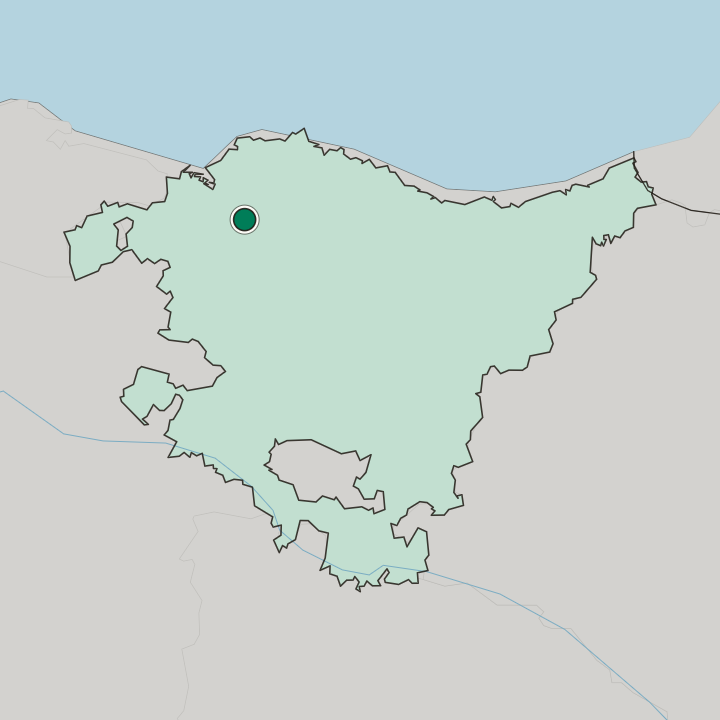
Bilbao sits inland from the sea on the Nervión, in a valley the Biscay hills close on both sides. The estuary is tidal all the way up. Ships once reached the old town on it, and the water widens downstream through the industrial towns toward the open Bay of Biscay, which is where the port moved when the ships got too big for the bend.
Green ridges start at the last street.
What is the climate of Bilbao?
The Bay of Biscay keeps Bilbao green. Atlantic fronts come ashore over the estuary through most of the year, so rain is a constant rather than a season, and the hills wring more of it out as the air climbs them. Summers stay mild by Spanish standards.
Snow belongs to the ridges, not the streets.
How do you get to Bilbao?
Bilbao Airport handles the flights from a hillside at Loiu. The road in from it drops straight to the Nervión. Renfe trains terminate at Abando in the middle of the Ensanche, the metro runs the length of the estuary out to the beaches, and the AP-8 motorway carries traffic along the coast toward France.
Ferries still cross from England.
Common questions
What is the best area to stay in Bilbao?
Casco Viejo: Pintxo counters and the arcades of Plaza Nueva at the door. Abando: Gran Vía at street level with the trains and the metro underneath. Abandoibarra: Waking up in front of the Guggenheim Museum Bilbao.
Good for
More cities in Euskal Autonomia Erkidegoa
Updated October 2026