France · Auvergne-Rhône-Alpes
Where to Stay in Saint-Étienne, Auvergne-Rhône-Alpes
Coal and craft shaped Saint-Étienne, an industrial city in Auvergne-Rhône-Alpes, known for its Mine Museum and design heritage.
Hotel links are affiliate links: booking through them may earn us a commission, at no extra cost to you. It never affects how places are ranked. How this works


Where to stay in Saint-Étienne
The practical side of choosing where to sleep.
Most visitors base themselves near the centre, where the Grand'Église, the shopping streets, and the Musée d'Art et d'Industrie de Saint-Étienne sit within one walkable core of the old town. The great church marks the heart. Around the Grand'Église the cafés and hotels gather along the long central axis, and the pace holds through the day near the Musée d'Art et d'Industrie de Saint-Étienne.
Rooms here fill on match days. For a base among the industrial heritage, travellers choose the ground toward the Saint-Étienne Mine Museum and La Rotonde, where the old pits and the design quarter carry the city's making story. The cathedral quarter offers a quieter choice.
Around Saint-Étienne Cathedral and the church of Notre-Dame the older stone gathers away from the main streets. If you follow the club, the blocks near the Musée des Verts and the football ground set the green-and-white story a short ride from the centre.
Find hotels in Saint-Étienne
Direct booking searches for these neighbourhoods.
The central axis around the Grand'Église
The Grand'Église and the Musée d'Art et d'Industrie de Saint-Étienne stand within one walkable core of the old town along the long central axis.Find hotels in The central axis around the Grand'ÉgliseTravellers drawn to the pits and the design heritageThe industrial quarter by the Mine Museum
The old pits of the Saint-Étienne Mine Museum and the design centre of La Rotonde carry the city's mining and making story.Find hotels in The industrial quarter by the Mine MuseumVisitors wanting the older stone and quiet streetsThe cathedral quarter of Saint-Étienne
The lanes around Saint-Étienne Cathedral and the church of Notre-Dame keep the town's older stone away from the main shopping streets.Find hotels in The cathedral quarter of Saint-ÉtienneFootball travellers following the green-and-white clubNear the Musée des Verts and the ground
The blocks by the Musée des Verts and the football ground set the club's green-and-white story a short ride from the centre.Find hotels in Near the Musée des Verts and the groundHotel links are affiliate links: booking through them may earn us a commission, at no extra cost to you. It never affects how places are ranked. How this works
Things to do in Saint-Étienne
Ranked by global recognition; descriptions from Wikidata (CC0).
Museums & Galleries
3- Saint-Étienne Mine Museum Heritage
- Musée des Verts
- musée du vieux Saint-Étienne
Churches & Religious Sites
8- Saint-Étienne Cathedral Heritage
- Abbey of Valbenoîte Heritage
- Église Sainte-Marie Heritage
- Grand'Église Heritage
- Église Notre-Dame de Saint-Étienne Heritage
Show 3 more →
- Église Saint-François-Régis de Saint-Étienne Heritage
- Église Saint-Louis Heritage
- Eglise Saint-Ennemond Heritage
Castles & Historic Sites
2- Monument Jacquard Heritage
- Monument à José Frappa
Stadiums & Sports
3- Stade Etivallière
- Stade Henri-Lux
- Formeo
Landmarks & Notable Places
2- demeure Chamoncel Heritage
- 4 rue du Théâtre, Saint-Étienne Heritage
worth knowingacross 5 categories in Saint-Étienne
About Saint-Étienne
Saint-Étienne is known as a city built on coal and craft.
What is Saint-Étienne known for?
The Saint-Étienne Mine Museum keeps the pits that made it a mining town, and the Musée d'Art et d'Industrie de Saint-Étienne holds the ribbons, arms, and cycles of its trades. A loom left its mark. The Monument Jacquard honours the weaving that ran the ribbon works, while the Musée des Verts and the great Grand'Église round out a city of industry and football.
What are the main landmarks in Saint-Étienne?
Saint-Étienne keeps its landmarks in its industry and its faith. The Saint-Étienne Mine Museum holds the old pits, and the Musée d'Art et d'Industrie de Saint-Étienne gathers the ribbons, arms, and cycles beside the Monument Jacquard. Churches mark the centre too.
The Grand'Église and Saint-Étienne Cathedral rise over the old town, while La Rotonde carries the design trade and the Musée des Verts keeps the football story.
What is the history of Saint-Étienne?
Saint-Étienne grew from a small parish into one of France's great industrial towns. Coal lay beneath its ground. The pits that the Saint-Étienne Mine Museum preserves drew workers to the valley, and around the coal grew the trades of ribbon-weaving, arms, and cycles that the Musée d'Art et d'Industrie de Saint-Étienne gathers.
A loom transformed the ribbons. The Monument Jacquard marks the weaving that made the city a ribbon capital, and the mills and workshops spread along the streets while the Grand'Église and the older Église Saint-Ennemond held the parish faith. The town rose with its industry.
Saint-Étienne Cathedral and the Abbey of Valbenoîte anchored the growing city, and the collections of the Musée d'Art et d'Industrie de Saint-Étienne recorded a working past. Design followed the making. From that trade the city carried its craft into a later age, a story told at La Rotonde and remembered across the old industrial streets.
Where is Saint-Étienne?
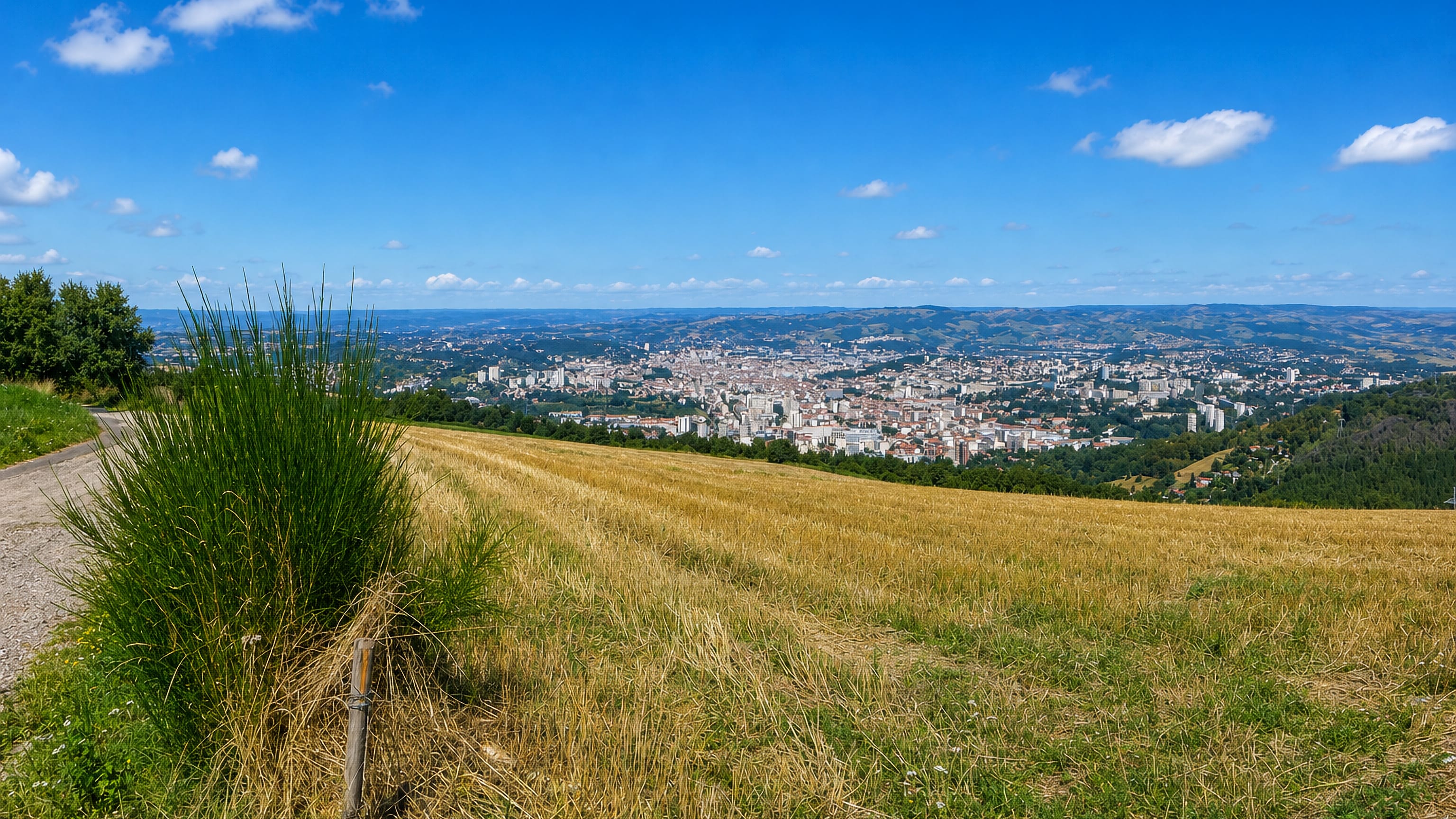
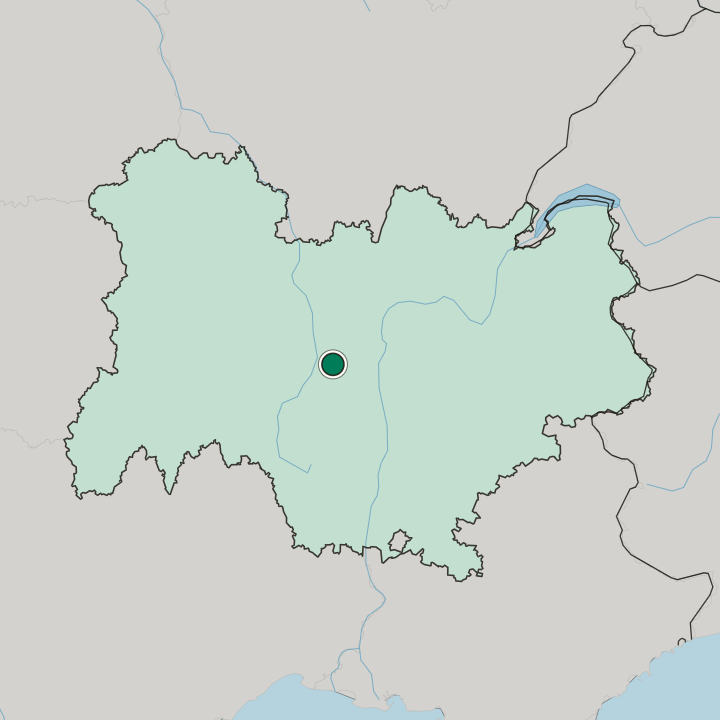
Saint-Étienne lies in Auvergne-Rhône-Alpes, spread along a valley on the edge of the old coal basin. The city runs in a long line, with the Grand'Église and Saint-Étienne Cathedral in the centre and the old pits of the Saint-Étienne Mine Museum on the slopes above. Green hills close the valley around.
The Abbey of Valbenoîte stands toward the upper end, and the industrial quarters spread down the long axis of the town.
What is the climate of Saint-Étienne?
Saint-Étienne has a temperate climate cooled by the hills that ring its valley. Warm summers settle over the long town while the higher slopes hold cooler air, and winter brings frost and grey days to the old coal basin. Rain follows the seasons.
The green rises above the Saint-Étienne Mine Museum turn wet in the shorter days, and snow can dust the ridges around the valley.
How do you get to Saint-Étienne?
Saint-Étienne sits on the rail and road routes that cross Auvergne-Rhône-Alpes. Trains reach the city along the valley line, and a tram runs the length of the long central axis past the Grand'Église. Walking covers the old centre.
Motorways meet close by, and the roads climb out of the valley over the surrounding hills.
Common questions
What is the best area to stay in Saint-Étienne?
The central axis around the Grand'Église: First-time visitors wanting the shops and museums on foot. The industrial quarter by the Mine Museum: Travellers drawn to the pits and the design heritage. The cathedral quarter of Saint-Étienne: Visitors wanting the older stone and quiet streets. Near the Musée des Verts and the ground: Football travellers following the green-and-white club.
Good for
More cities in Auvergne-Rhône-Alpes
Updated September 2026