France · Auvergne-Rhône-Alpes
Where to Stay in Grenoble, Auvergne-Rhône-Alpes
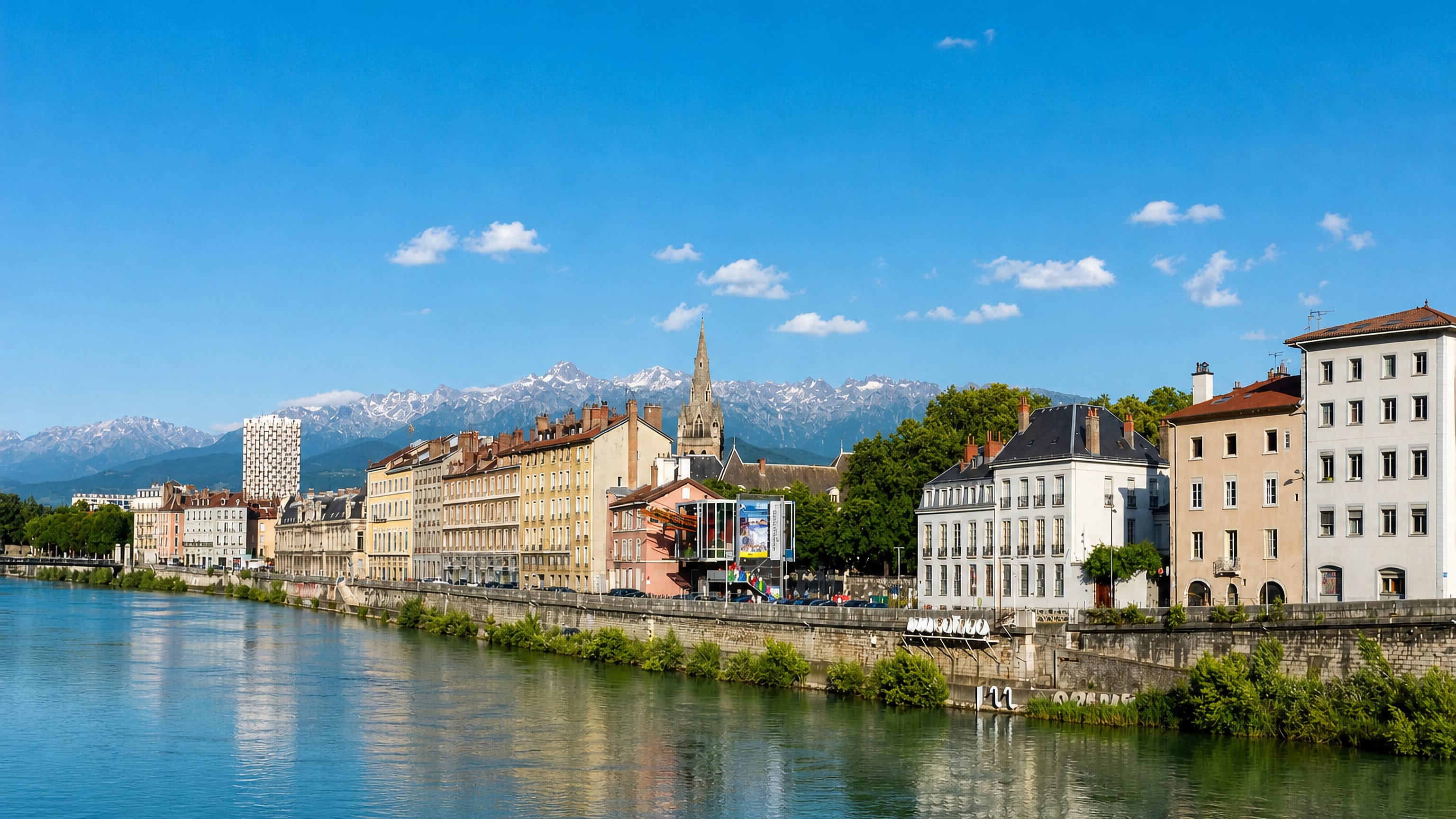
The Drac joins the Isère below Grenoble, prefecture of Isère in southeastern France, ringed by the French Alps.
Hotel links are affiliate links: booking through them may earn us a commission, at no extra cost to you. It never affects how places are ranked. How this works


Where to stay in Grenoble
The practical side of choosing where to sleep.
Grenoble keeps its lodging close to the two rivers and the old streets between them. The historic core gathers around Grenoble Cathedral and the Collegiate Church of Saint-André, a walkable grid of squares where much of the city's built heritage stands within a few minutes of the Isère. This is the base for a first visit.
Beyond it the ground rises across the river toward the heights that overlook the whole valley of the Dauphiné. Across the Isère, the higher slopes give a quieter footing with the Musée dauphinois close at hand. If you want the museums, the streets around the Museum of Grenoble and the Musée de la Résistance et de la Déportation put art and memory within reach on foot.
Base yourself by the water. The Drac and the Isère mark the edges of where you will want to stay in Grenoble.
Find hotels in Grenoble
Direct booking searches for these neighbourhoods.
Historic core around Grenoble Cathedral
The old grid between Grenoble Cathedral and the Collegiate Church of Saint-André keeps most of the city's built heritage within a short walk of the Isère.Find hotels in Historic core around Grenoble Cathedraltravellers who want the Musée dauphinois above the IsèreHigher slopes across the Isère
The rising ground across the Isère holds the Musée dauphinois, a short crossing from central Grenoble and its cathedral.Find hotels in Higher slopes across the IsèreHotel links are affiliate links: booking through them may earn us a commission, at no extra cost to you. It never affects how places are ranked. How this works
Things to do in Grenoble
Ranked by global recognition; descriptions from Wikidata (CC0).
Museums & Galleries
3- Grenoble Archaeological Museum Heritage
- Museum of the Old Archbishopric Heritage
- House of Doctor Gagnon Heritage
Churches & Religious Sites
4- Grenoble Cathedral Heritage
- Collegiate Church of Saint-André, Grenoble Heritage
- Basilique Saint-Joseph de Grenoble Heritage
- Saint-Louis Church, Grenoble Heritage
Castles & Historic Sites
3- Cularo
- Vestiges of the Gallo-Roman wall, Grenoble
- Statue of Bayard in Grenoble
Stadiums & Sports
3- Palais des Sports Pierre Mendès France Heritage
- Stade des Alpes
- Stade Lesdiguières
Parks & Gardens
1- parc Albert-Michallon
Landmarks & Notable Places
1- maison Vaucanson Heritage
worth knowingacross 6 categories in Grenoble
About Grenoble
What is Grenoble known for?
Grenoble is known as the old capital of the Dauphiné and the prefecture of the Isère department. The city sits at the foot of the French Alps, where the fast river Drac feeds into the Isère, and it carries a long line of built heritage from Grenoble Cathedral to the Musée dauphinois. Mountains hem it on every side.
The Roman town of Cularo began here.
What are the main landmarks in Grenoble?
Grenoble crowds its landmarks along the Isère and up the surrounding slopes. Grenoble Cathedral and the Collegiate Church of Saint-André anchor the old town, while the Musée dauphinois, the Museum of Grenoble, and the Basilique du Sacré-Cœur draw visitors to the higher ground; the Statue of Bayard and the Vestiges of the Gallo-Roman wall mark the city's long past. The Perret tower rises tall.
Cularo left its stones here.
What is the history of Grenoble?
Grenoble began as Cularo, a Roman crossing on the Isère whose Gallo-Roman wall still shows in the Vestiges kept within the city. The town grew where the Drac meets the Isère, guarding the routes into the Alps, and by the Middle Ages it had become the seat of the Dauphiné, the historical province whose rulers held this corner of southeastern France. Rome laid the first stones.
Grenoble Cathedral rose in the medieval centuries at the heart of the walled town. The Dauphiné passed to the French crown, and Grenoble carried its role as the province's capital into later ages, gathering the churches and colleges that still stand along the river. The Musée de la Résistance et de la Déportation records the harder chapters of the twentieth century here.
Its stones remember much. From Cularo to the modern prefecture of Isère, the city has kept its place at the foot of the mountains.
Where is Grenoble?
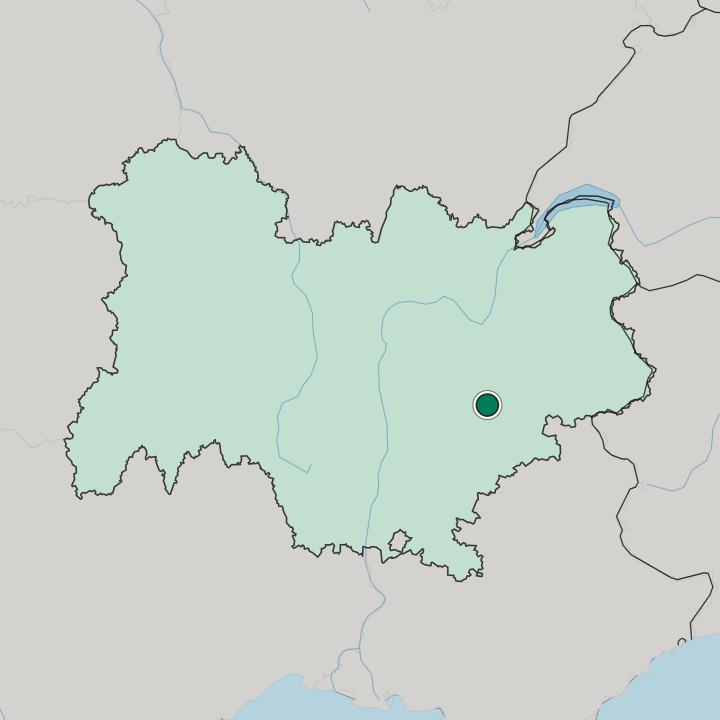
Grenoble sits on a flat valley floor in southeastern France, held in on all sides by the French Alps. The city stands where the river Drac flows into the Isère, and the mountains press close around the plain the two rivers cut through the old land of the Dauphiné. Peaks rise on every horizon.
The heights climb straight from the Isère above the old town.
What is the climate of Grenoble?
Grenoble has a climate shaped by its ring of mountains. Shut into a valley at the foot of the French Alps, the city sees warm summers on the plain and cold winters when snow settles on the peaks above, with the Drac and the Isère running cold from the high ground of the Dauphiné for much of the year. Winters bite in the shadow.
The mountains hold the weather in.
How do you get to Grenoble?
Grenoble sits on the rail and road corridors that run up the Isère valley into the Alps. Trains reach the city across the wider Auvergne-Rhône-Alpes network, and the motorways follow the Drac and the Isère through the mountain passes toward the high country of the Dauphiné. Rails climb the valley floor.
The Alpine roads fan out from the prefecture of Isère.
Common questions
What is the best area to stay in Grenoble?
Historic core around Grenoble Cathedral: first-time visitors who want the old squares by Grenoble Cathedral and the Collegiate Church of Saint-André on foot. Higher slopes across the Isère: travellers who want the Musée dauphinois above the Isère.
Good for
More cities in Auvergne-Rhône-Alpes
Updated October 2026