France · Bretagne
Where to Stay in Quimper, Bretagne
Quimper is the old capital of the Cornouaille in Brittany, western France, a cathedral city where two rivers meet.
Hotel links are affiliate links: booking through them may earn us a commission, at no extra cost to you. It never affects how places are ranked. How this works


Where to stay in Quimper
How the choice of base plays out on the ground.
Quimper's rooms divide between the old centre and the Odet valley. The lanes around the cathedral and the rivers keep the museums, the shops, and the quays within a walk, and staying downtown suits anyone here for the old city. The old bridges cross the streams.
Rooms sit near the cathedral. Out along the Odet toward the sea, the town gives way to woods and water. A room by the river trades the old lanes for the gardens, the walks, and the boats down to the coast.
The green valley opens past the edge. If you want the cathedral and the shops, stay downtown; if you want the river, take a room by the water. Both leave the cathedral quarter within reach.
Find hotels in Quimper
Direct booking searches for these neighbourhoods.
The old town
Around the cathedral within a walk of the riversFind hotels in The old townStays wanting the walks and the coastThe riverside
Along the Odet toward the woods and the seaFind hotels in The riversideHotel links are affiliate links: booking through them may earn us a commission, at no extra cost to you. It never affects how places are ranked. How this works
Things to do in Quimper
Ranked by global recognition; descriptions from Wikidata (CC0).
Museums & Galleries
2- Musée départemental breton Heritage
- Musée de la faïence de Quimper
Churches & Religious Sites
3- Église de la Trinité de Kerfeunteun Heritage
- Église de Saint-Alor Heritage
- Chapelle de la Providence de Quimper
Castles & Historic Sites
2- Buste de Jean Moulin
- Statue of René Laennec by Eugène-Louis Lequesne
Stadiums & Sports
3- Stade de Penvillers
- Michel Gloaguen Room
- New Quimper room
Landmarks & Notable Places
8- Maison 14 rue Kéréon, Quimper Heritage
- Maison des Cariatides Heritage
- Maison 19 place Terre-au-Duc, Quimper Heritage
- Maison 10 rue du Salé, Quimper Heritage
- Maison, 12 rue Kéréon Heritage
Show 3 more →
- Maison, 22 rue Saint-François Heritage
- Maison 22 rue Elie-Freron, Quimper Heritage
- Maison conventuelle des Dames de la Retraite Heritage
worth knowingacross 5 categories in Quimper
About Quimper
Quimper is the cathedral city of the Cornouaille.
What is Quimper known for?
Where the Odet and the Steïr meet in western Brittany, it grew around the twin-spired cathedral of Saint-Corentin, and it is famed for its hand-painted faience, its half-timbered old town, and its Breton festivals, the heart of Cornouaille culture. The green hills ring the town. Cathedral and faience mark the city.
What are the main landmarks in Quimper?
The cathedral of Saint-Corentin is the pride of Quimper. The Gothic church of grey stone, with its two tall spires over the old town, rises by the Odet, the emblem of the city, above the quays. A faience museum tells the craft's tale.
The Musée de la Faïence keeps the painted pottery of Quimper, while the Breton museum, the old timbered houses, and the cathedral square mark the streets of Quimper.
What is the history of Quimper?
Quimper grew as the seat of the counts of Cornouaille. Its name means confluence in Breton, from the meeting of its rivers, and around the year one thousand it became the chief town of Cornouaille and the seat of a bishop. A great cathedral rose by the water.
Over the centuries the townsfolk built the cathedral of Saint-Corentin with its soaring twin spires, and half-timbered houses crowded the lanes around it. Then a craft made the town famous. In the seventeenth century potters began to make the painted faience of Quimper, gaily coloured with Breton figures and flowers, and it was sold across France and beyond.
The town kept its Breton soul. Through all the changes Quimper held to the Breton tongue and its festivals, and it became a centre of the culture of Cornouaille. The old cathedral still stands by the Odet.
Quimper keeps its spires and its faience in Brittany.
Where is Quimper?
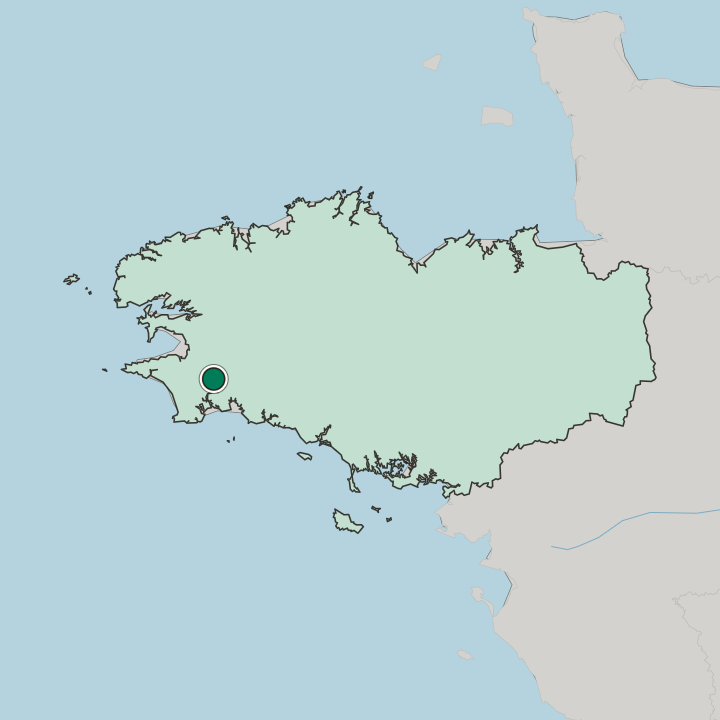
Quimper lies where the Odet meets the Steïr in Finistère, western Brittany. The city sits at the head of the Odet estuary, in a green country of wooded hills, a short way up from the Atlantic coast. Wooded slopes rise around.
The river runs down to the sea.
What is the climate of Quimper?
Quimper has a mild oceanic climate. Cool summers and soft winters cross the country, and rain and cloud blow in off the Atlantic through the year, keeping the land green and the air damp. Rain sweeps in from the west in winter.
The hills stay green through the year.
How do you get to Quimper?
Quimper lies in western Brittany, at the far end of Finistère. Trains and the expressway run to it from Rennes and Nantes across the peninsula, and roads reach the coast and the western capes. Buses reach the Breton towns around.
Most arrive by train from Rennes.
Common questions
What is the best area to stay in Quimper?
The old town: Visitors here for Saint-Corentin and the Musée de la Faïence. The riverside: Stays wanting the walks and the coast.
Good for
More cities in Bretagne
Updated September 2026