France · Bretagne
Where to Stay in Brest, Bretagne
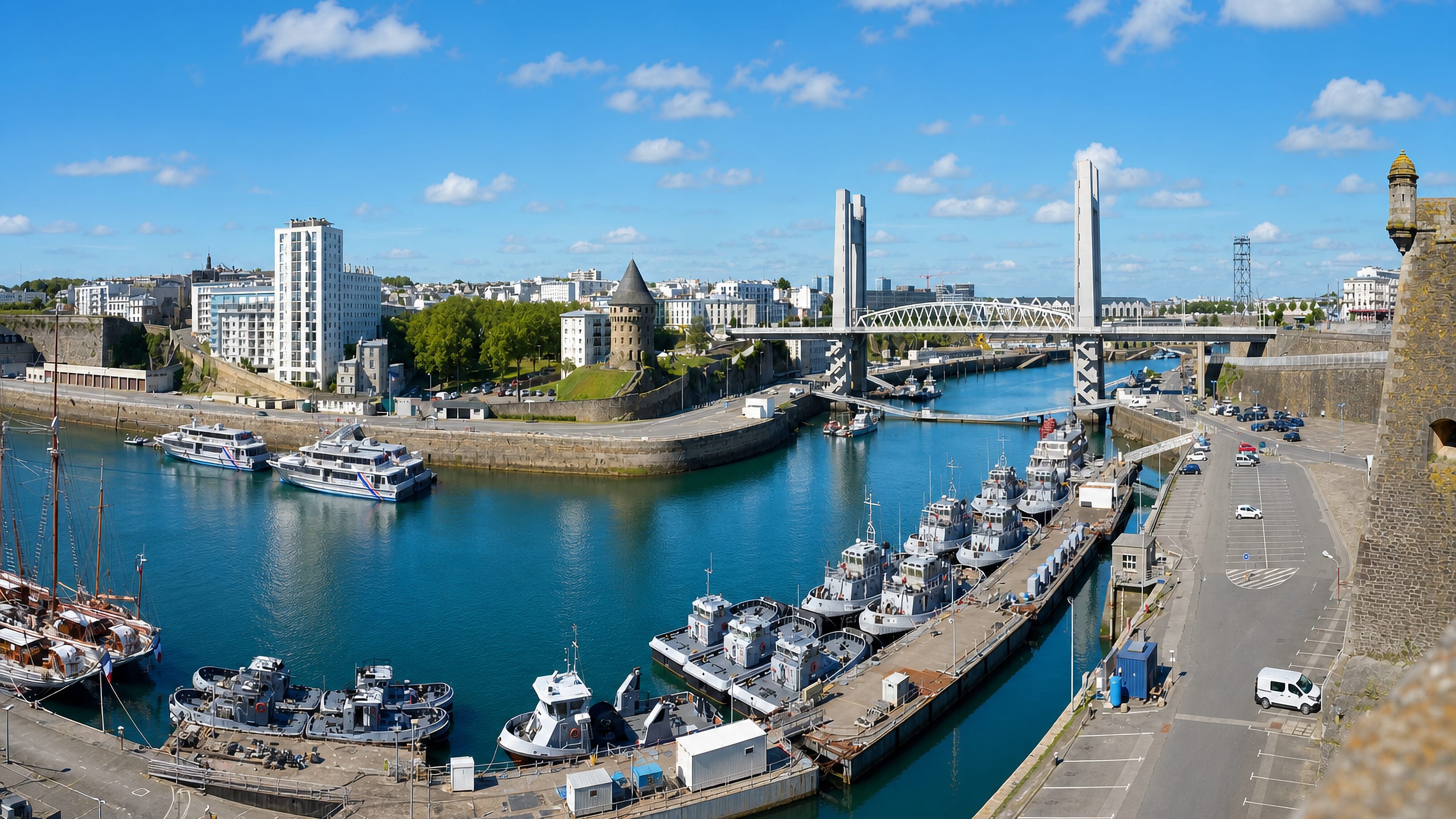
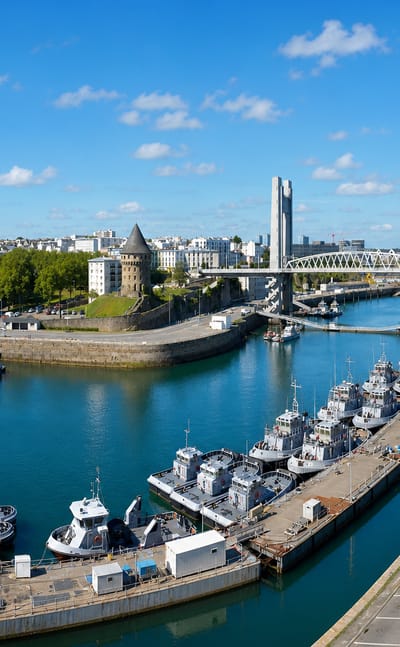
Brest is a naval port city in Bretagne, its harbour watched over by the medieval Tour Tanguy above the Recouvrance quarter.
Hotel links are affiliate links: booking through them may earn us a commission, at no extra cost to you. It never affects how places are ranked. How this works


Where to stay in Brest
One neighbourhood here has its own guide — here's what it is best for.
 BrestFrance
Questel
Questel is a quarter of Brest around a Vauban-type redoubt of 1776, the fort standing between Fort Keranroux and Fort Penfeld.Where to stay →Hotel links are affiliate links: booking through them may earn us a commission, at no extra cost to you. It never affects how places are ranked. How this works
Find hotels in Brest
Direct booking searches for these neighbourhoods.
City centre
The rebuilt grid around the Brest national naval museum and the église Saint-Louis de Brest, the main base for shops and stays.Find hotels in City centrethe old high town and harbour viewsRecouvrance
The steep older quarter under the Tour Tanguy, by the église Saint-Sauveur and the maison de la Fontaine.Find hotels in Recouvrancea marina base near the sea lifeMoulin Blanc
Beside the Port de plaisance du Moulin blanc and Oceanopolis, out east on the water.Find hotels in Moulin BlancHotel links are affiliate links: booking through them may earn us a commission, at no extra cost to you. It never affects how places are ranked. How this works
Things to do in Brest
Ranked by global recognition; descriptions from Wikidata (CC0).
Museums & Galleries
3- Tour Tanguy
- Brest’s Museum of Fine Arts
- Brest national naval museum
Churches & Religious Sites
4- église Saint-Louis de Brest Heritage
- Église Saint-Sauveur à Recouvrance, Brest Heritage
- église Saint-Laurent Heritage
- église Saint-Martin, Brest Heritage
Castles & Historic Sites
3- La Consulaire Heritage
- monument commémoratif, canon du bâtiment de ligne Richelieu Heritage
- Monument hommage à la seconde division d’infanterie
Stadiums & Sports
3- Stade Francis-Le Blé
- Patinoire Rïnkla Stadium
- stade Ménez Paul
Landmarks & Notable Places
3- Naval Monument Heritage
- maison de la Fontaine Heritage
- maison Bruslé Heritage
worth knowingacross 5 categories in Brest
About Brest
Brest is known first as a naval town.
What is Brest known for?
The Brest national naval museum and the old cannon called La Consulaire keep that story, and the Naval Monument marks the sailors it lost. Oceanopolis draws visitors to the sea for a different reason. Add the Tour Tanguy and the Museum of Fine Arts, and the shape of the city is clear.
What are the main landmarks in Brest?
Brest carries its landmarks between the harbour and the water. The Tour Tanguy stands above the Recouvrance bank, while the Brest national naval museum, the old cannon La Consulaire, and the Naval Monument hold the naval story. Oceanopolis and the Port de plaisance du Moulin blanc pull the other way, toward the sea.
The Museum of Fine Arts and the église Saint-Louis de Brest anchor the rebuilt centre.
What is the history of Brest?
Brest grew up as a fortress guarding one of the great natural harbours of Bretagne. Its story is a naval one. The medieval Tour Tanguy still stands on the Recouvrance bank as a survivor of the old fortified town, and for centuries the port armed and repaired the fleets of France, a role the Brest national naval museum and the captured cannon known as La Consulaire still record.
War in the twentieth century fell hard on the city. Bombing in the Second World War flattened much of the old centre, which is why the streets around the église Saint-Louis de Brest are so plainly rebuilt, laid out anew in the years after. The Naval Monument and the Mémorial des marins du Narval keep the memory of the sailors the sea took.
Across the water the older Recouvrance quarter, steeper and spared in part, still shows the grain of the pre-war town around the maison de la Fontaine. The result is a city read in two ages, medieval survivor and post-war reconstruction, split by the harbour it was built to guard.
Where is Brest?
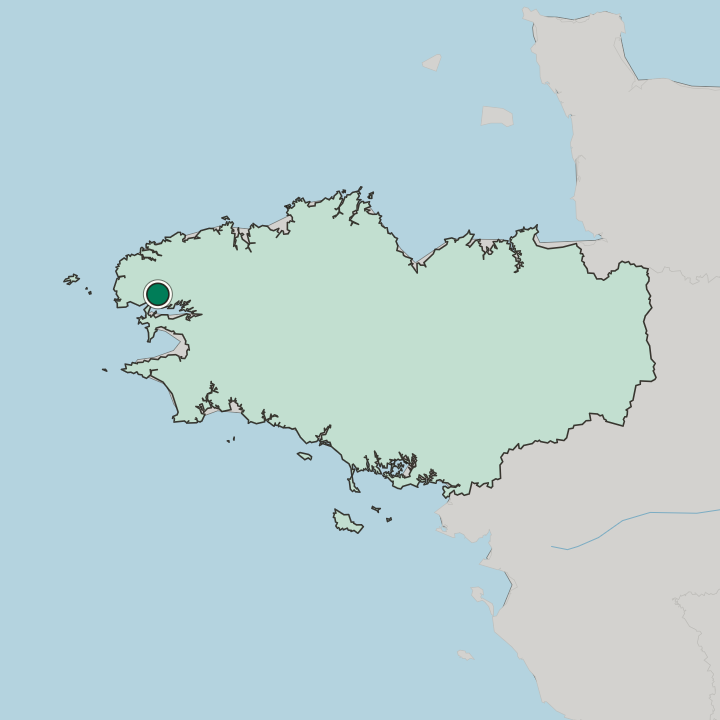
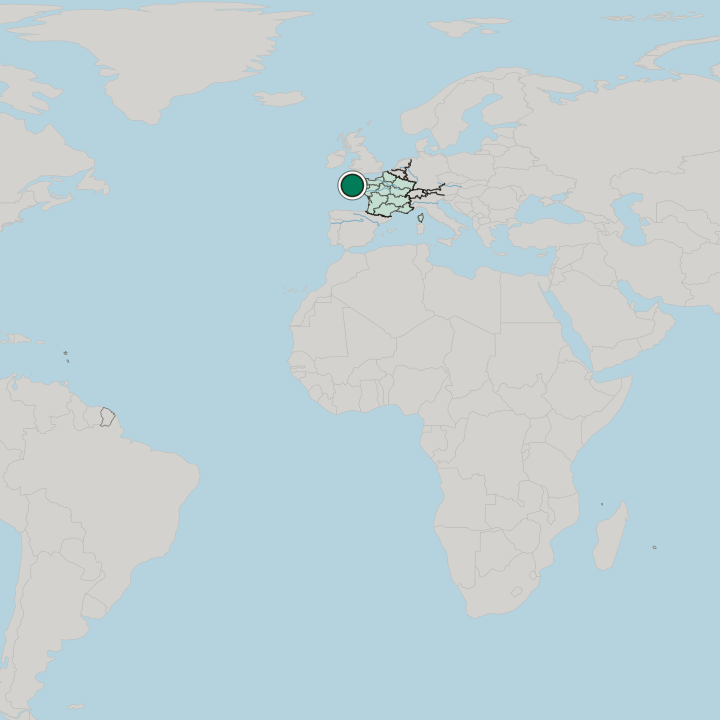
Brest stands at the western tip of Bretagne, one of the region's principal cities. The harbour divides it. The central city and the older Recouvrance quarter face each other across the water, the Tour Tanguy above the western bank.
East of the centre the shore runs out to the Port de plaisance du Moulin blanc and Oceanopolis.
What is the climate of Brest?
Brest has one of the wettest, mildest climates in Bretagne, shaped by the open Atlantic at the region's western tip. Winters are soft. Cool, rainy, windy weather blows in off the sea for much of the cold season, but hard frost and snow are rare on this exposed western shore.
Summers stay mild rather than hot, kind to a day out at Oceanopolis or along the harbour. The wind is a constant.
How do you get to Brest?
Brest sits at the end of the rail line running west across Bretagne, so most visitors arrive by train. The train is the usual way in. The station stands a short way from the central grid around the église Saint-Louis de Brest.
An airport serves the far western tip of the region for longer hops. Once in the city, the centre and the Recouvrance quarter under the Tour Tanguy are close enough to walk, with the Port de plaisance du Moulin blanc a little further east along the water.
Common questions
What is the best area to stay in Brest?
City centre: hotels and everything on foot. Recouvrance: the old high town and harbour views. Moulin Blanc: a marina base near the sea life.
Good for
More cities in Bretagne
Updated September 2026