France
Bretagne, France — Towns & Travel Guide
Bretagne is the western peninsula of France, a Celtic land of rugged coast, walled ports and the Breton tongue.
Hotel links are affiliate links: booking through them may earn us a commission, at no extra cost to you. It never affects how places are ranked. How this works


Towns & cities in Bretagne
Pick a town or city — each links to where to stay.
 France
Rennes
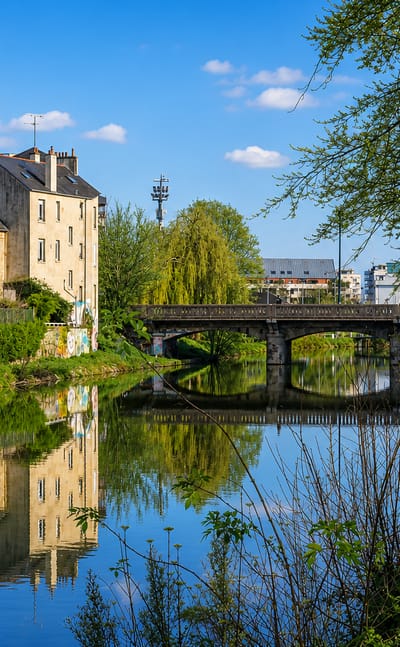
Two rivers braid through Rennes, a Breton city where the Ille joins the Vilaine, prefecture of Brittany and known for its timber-framed old town.Where to stay →
 France
Brest
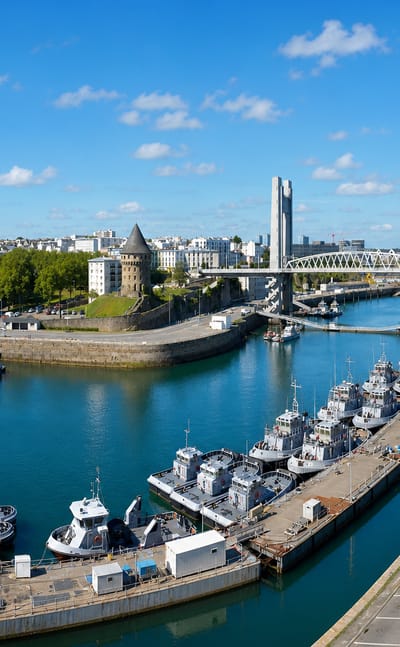
Brest is a naval port city in Bretagne, its harbour watched over by the medieval Tour Tanguy above the Recouvrance quarter.Where to stay →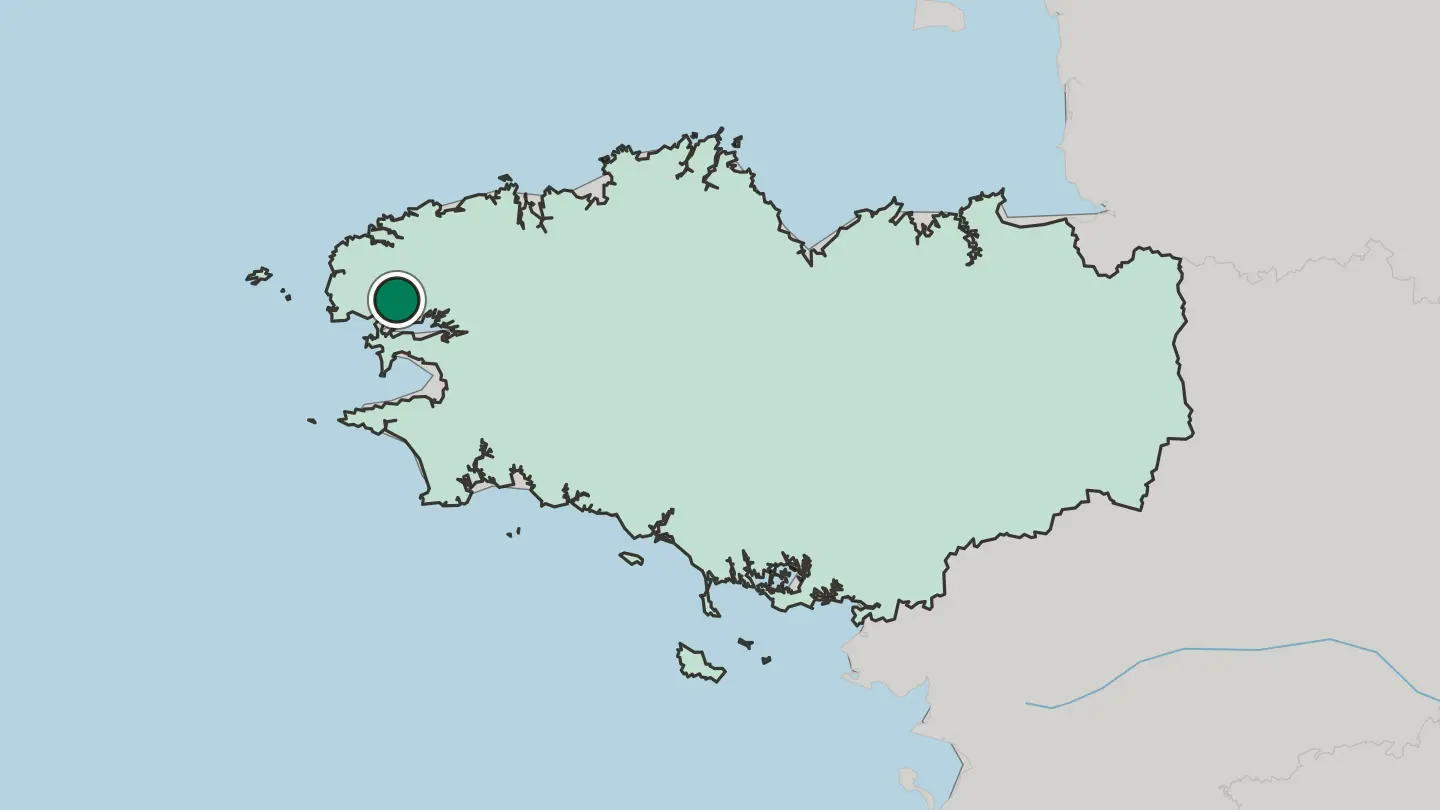 France
Quimper
Quimper is the old capital of the Cornouaille in Brittany, western France, a cathedral city where two rivers meet.Where to stay →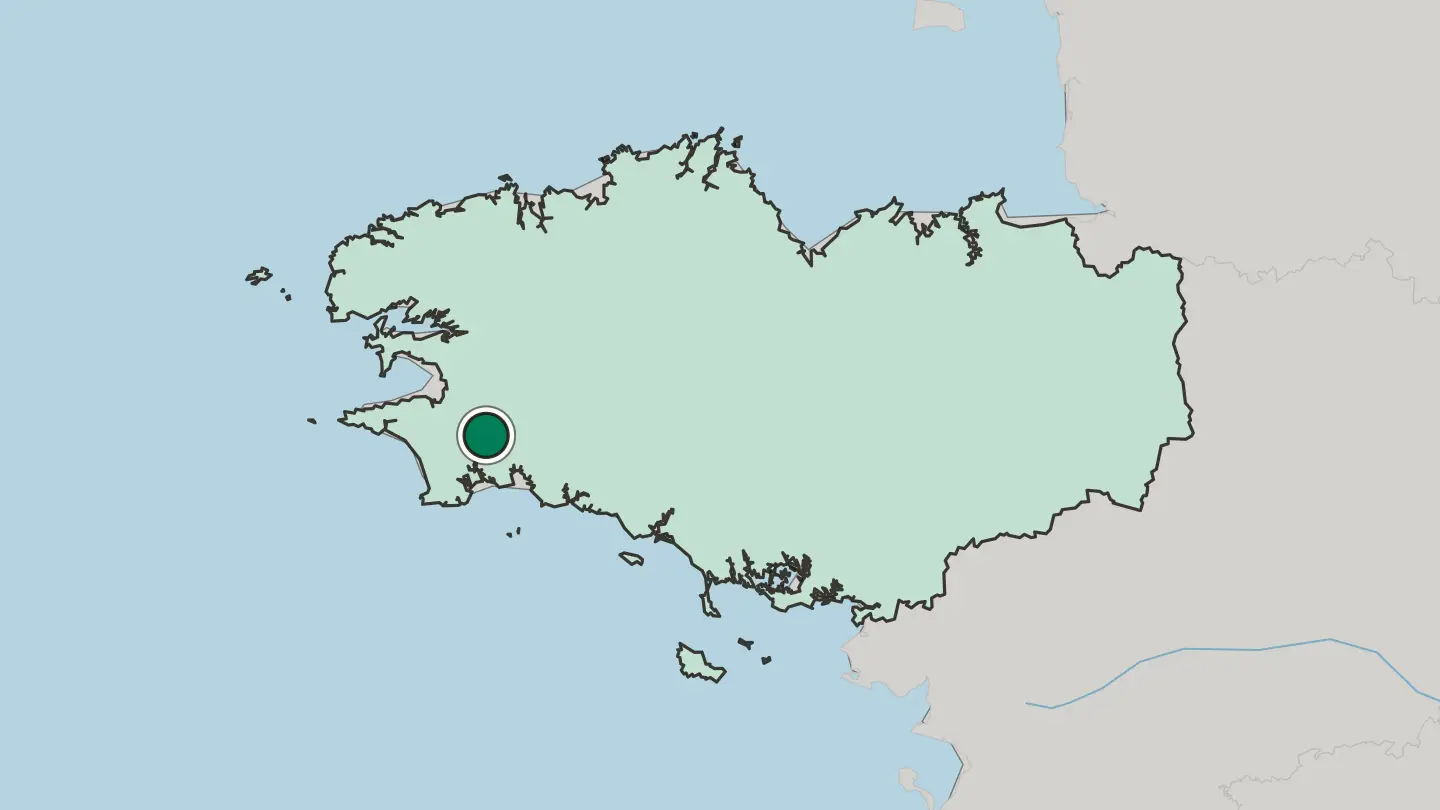
 France
Lorient
Lorient is a port city on the Atlantic coast of Brittany in France, born of the old French East India Company.Where to stay →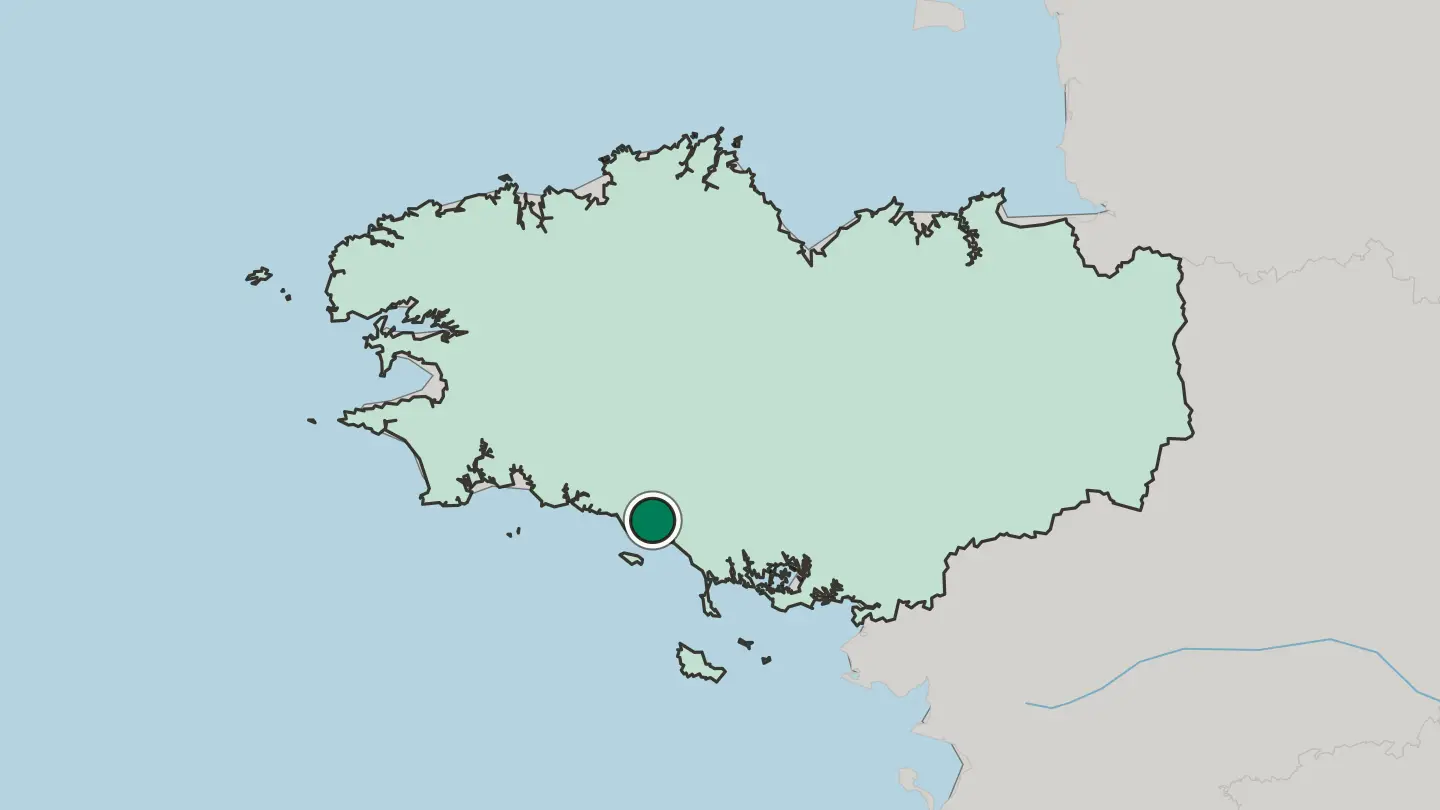
 France
Vannes
Vannes is a Morbihan town in Brittany, founded more than two thousand years ago and gathered around the Château de l'Hermine and the place des Lices.Where to stay →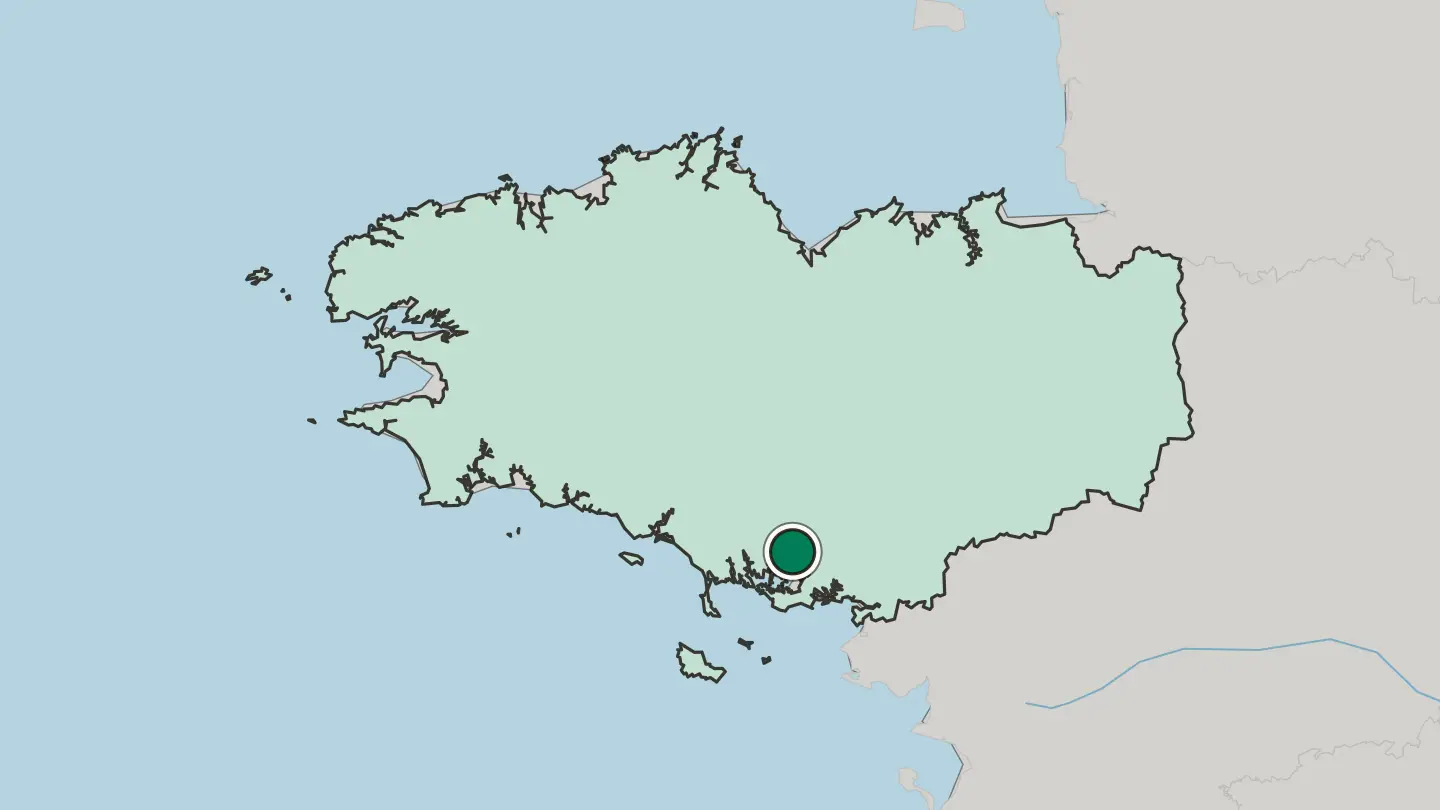 France
Saint-Brieuc
Saint-Brieuc is a city of Brittany in northwest France, an old cathedral town above a tidal bay, between two wooded valleys on the north Breton coast.Where to stay →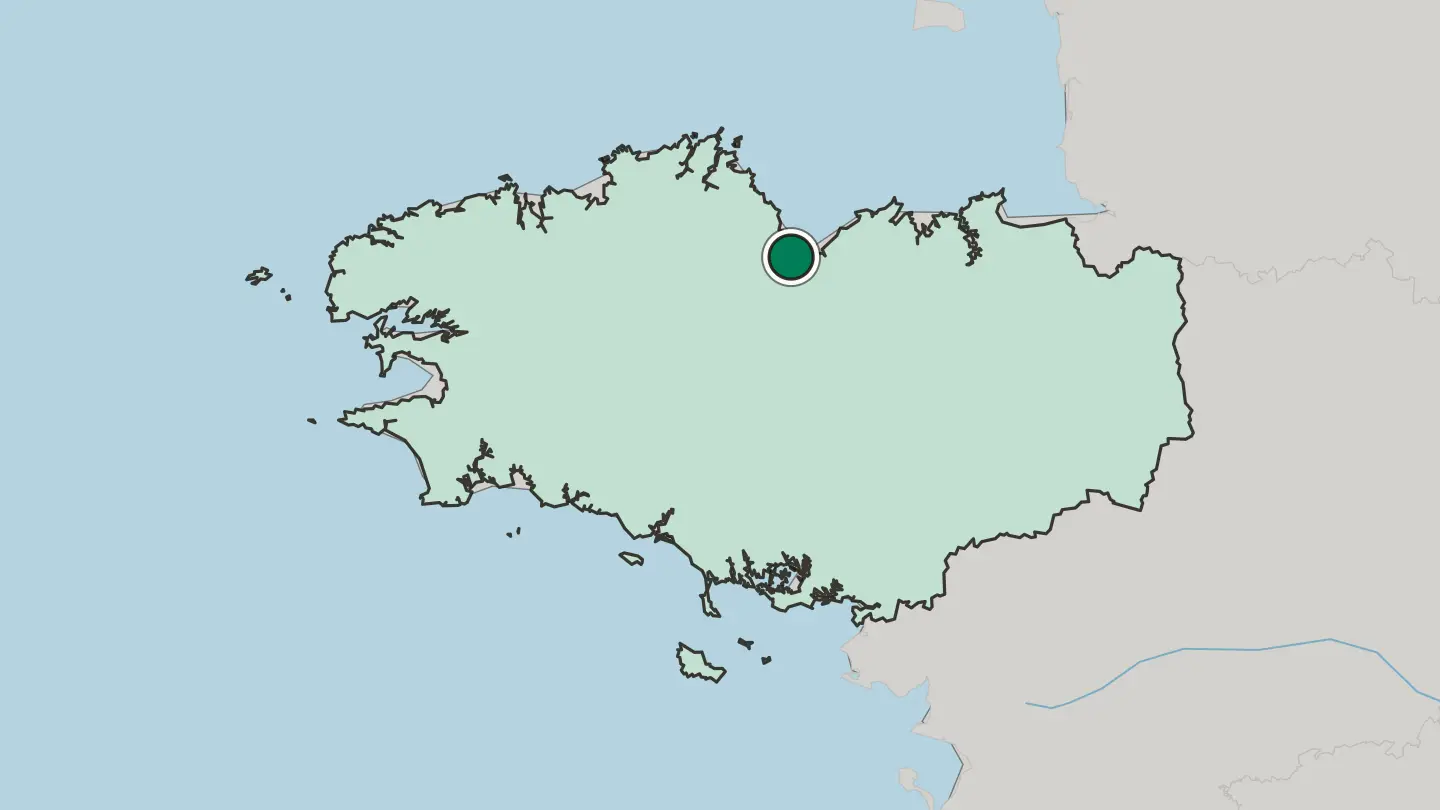
 France
Saint-Malo
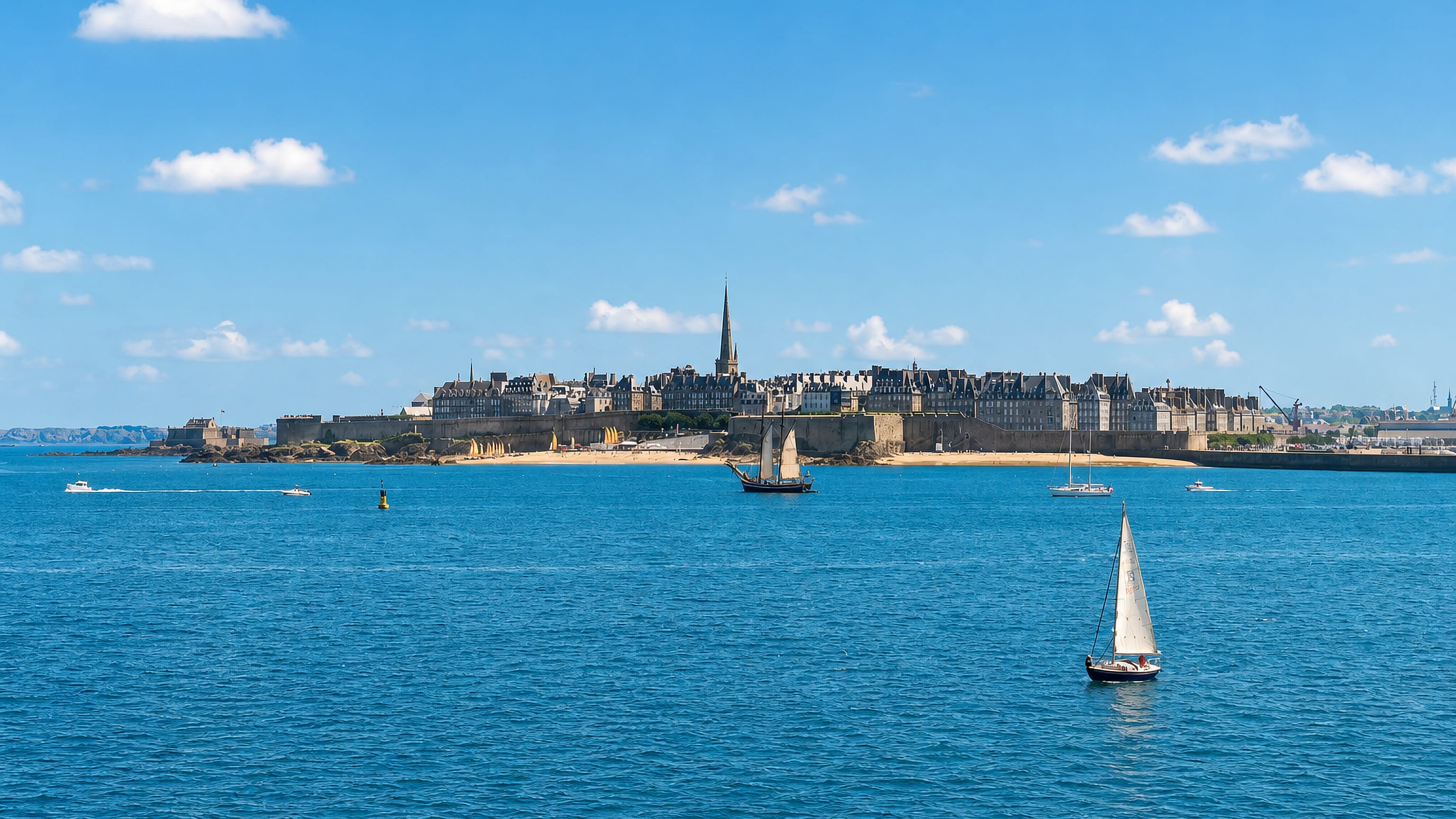
Saint-Malo is a walled port on the Brittany coast, where the intramuros ramparts, Saint Malo Castle and the Solidor Tower face the sea.Where to stay →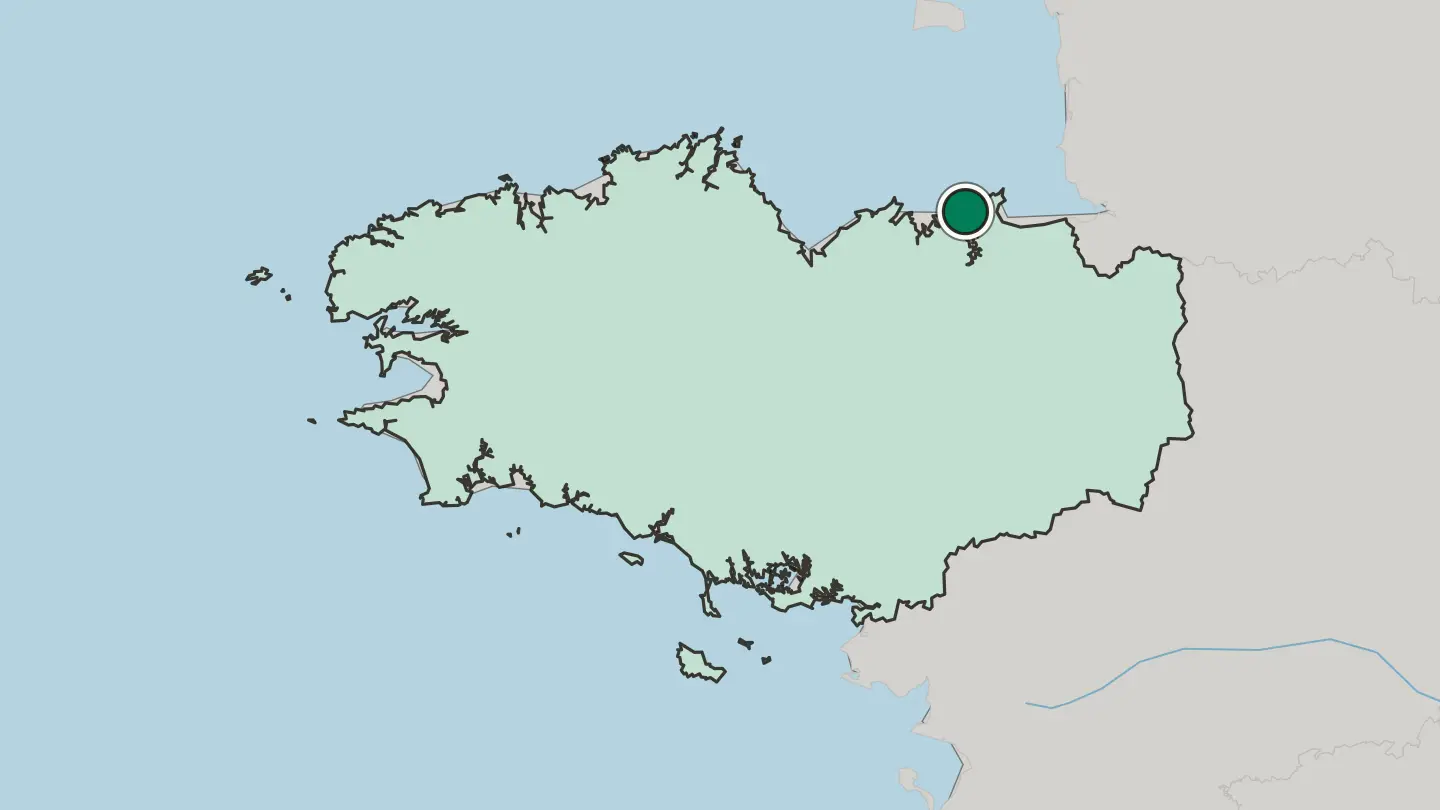
Hotel links are affiliate links: booking through them may earn us a commission, at no extra cost to you. It never affects how places are ranked. How this works
About Bretagne
Bretagne juts west into the sea.
What is Bretagne known for?
It is one of the six Celtic nations, and its identity sets it apart from the rest of France. Travellers come for the long rocky coastline, the walled port of Saint-Malo, and the crêperies and cider of a distinct regional table. Rennes anchors the eastern side as the region's capital and largest city.
The Breton language, korrigan folklore and the interceltic festivals give the place a character you find nowhere else on the French mainland.
Where is Bretagne?
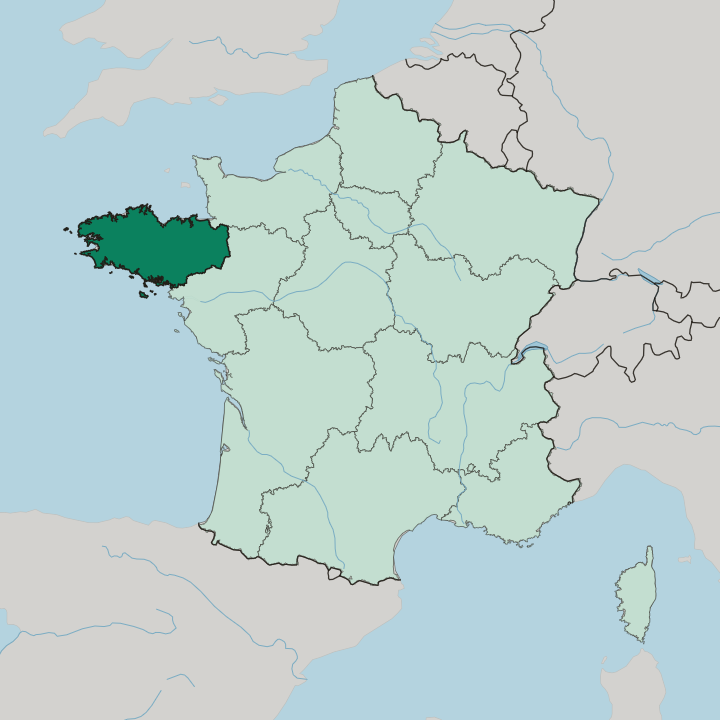
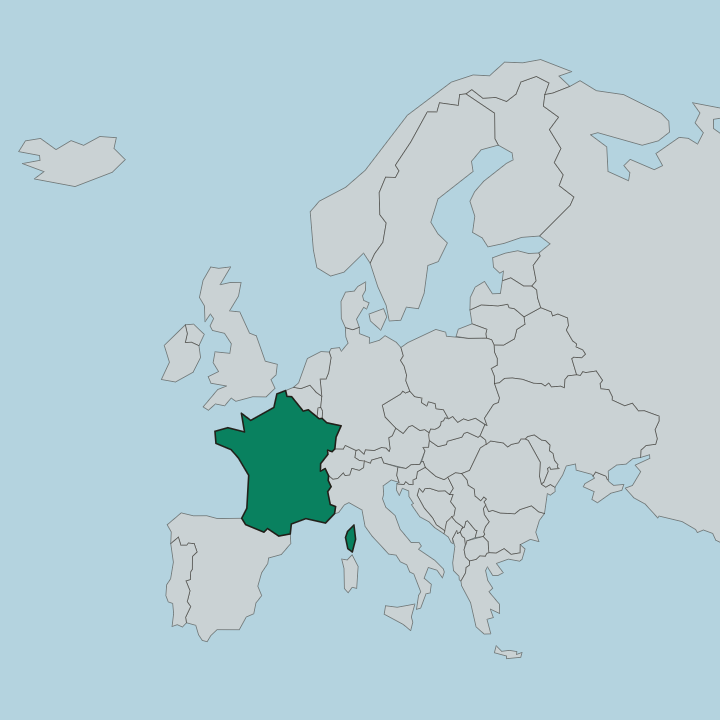
Bretagne is the largest peninsula in France, reaching west into the Atlantic Ocean at the country's north-western corner. It is nearly surrounded by water. The English Channel washes its northern shore, the Celtic Sea and the open Atlantic break against the western headlands, and the Bay of Biscay laps the milder south coast.
Only the eastern edge is landlocked. There Normandy lies to the north-east and Pays de la Loire to the south-east, the two neighbours that tie the peninsula back to the French mainland. Its two coasts differ sharply.
North and west stand open to the North Atlantic, rugged and rocky, cut by the fjord-like inlets the Bretons call abers, with the Finistère cliffs marking the true end of the land. The south coast, turned toward the Bay of Biscay, runs flatter and warmer, strung with broad sandy beaches and the sheltered water of the Golfe du Morbihan. Inland the ground rises into low wooded hills and moorland, the old granite spine of what the Romans knew as Armorica.
No part of the region sits far from salt water, and that sea-bound shape has ruled Breton life for as long as anyone has lived here.
What is Bretagne like?
Bretagne wears its Celtic descent openly, and that inheritance shapes almost everything a visitor meets. It is one of the six Celtic nations. The Breton language, brought across the sea by Britons from Cornwall and Wales in the early Middle Ages, still lives on bilingual road signs and in the schools of the western departments.
Music carries the identity as loudly as speech. The binioù bagpipe and the bombarde lead the fest-noz dances, and every summer the interceltic gathering at Lorient draws pipers and dancers from Wales, Ireland and Scotland. Food is its own dialect here.
The savoury galette of buckwheat and the sweet wheat crêpe come with bowls of local cider rather than wine, a table set apart from the rest of France. Older stories run underneath all of it. Grandparents once told of the korrigans, the small magical folk of the moors, in the fireside veillées that passed Breton lore down the generations.
Granite churches, roadside calvaries and walled towns fill the countryside, and the sea threads through the music, the myth and the daily rhythm of the coast.
What is the history of Bretagne?
Britons fleeing Great Britain settled the old land of Armorica in the early Middle Ages, and their language and name took root. Bretagne grew into a kingdom and then the powerful Duchy of Brittany, holding its own against the French crown for centuries. The end came through marriage.
Anne of Brittany wed two kings of France in turn, and in 1532 Francis I proclaimed the permanent union of the duchy with the Kingdom of France, keeping it a province governed as a separate nation under the crown.
What is the climate of Bretagne?
Bretagne has a mild oceanic climate. The Atlantic keeps it changeable, so a bright morning can turn to driving rain by noon and back to sun by evening. Winter lands lightly on Bretagne.
Coastal temperatures seldom drop to freezing, and frost and snow are uncommon along the shore. The exposed Finistère west catches the heaviest rain straight off the ocean, while the eastern inland around Rennes stays noticeably drier. Grey skies and salt wind come with the ground.
How do you get to Bretagne?
Most travellers reach Bretagne through Rennes, its eastern gateway and busiest hub. The high-speed TGV covers the run from Paris to Rennes in under two hours, and airports at Rennes and Brest carry direct flights from across Britain and Europe. The sea route is the region's own.
Brittany Ferries sail overnight from the English coast into Saint-Malo and Roscoff, landing you in Bretagne by dawn. Road and rail then fan out from Rennes to the far Finistère headlands and the southern beaches.
Good for
More regions in France
Updated October 2026