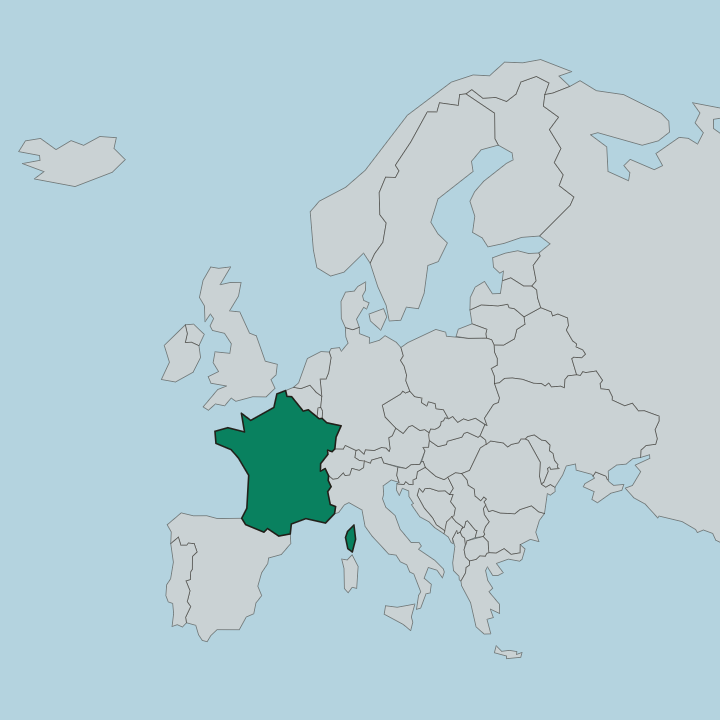
France · Bretagne
Where to Stay in Saint-Malo, Bretagne
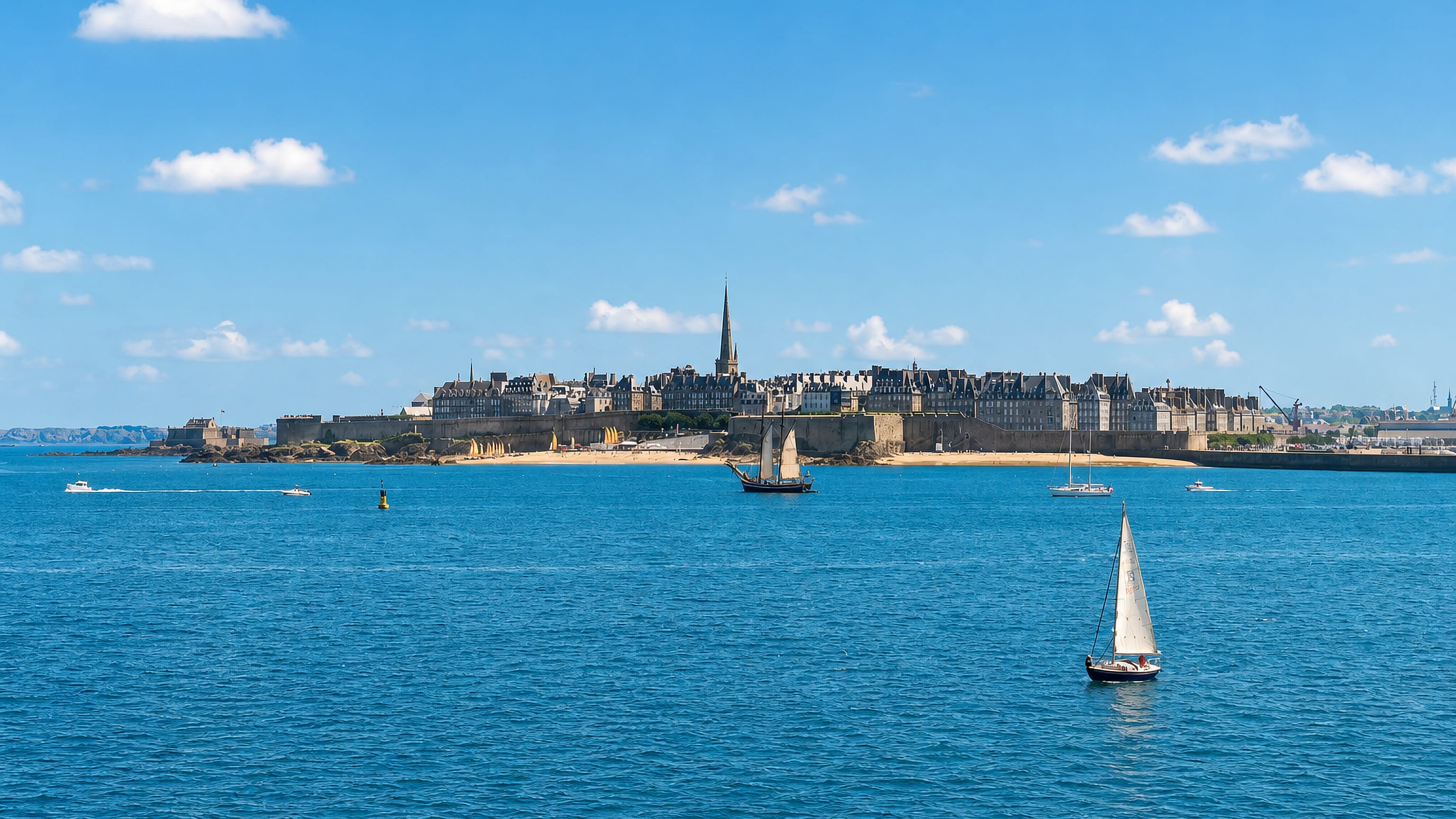
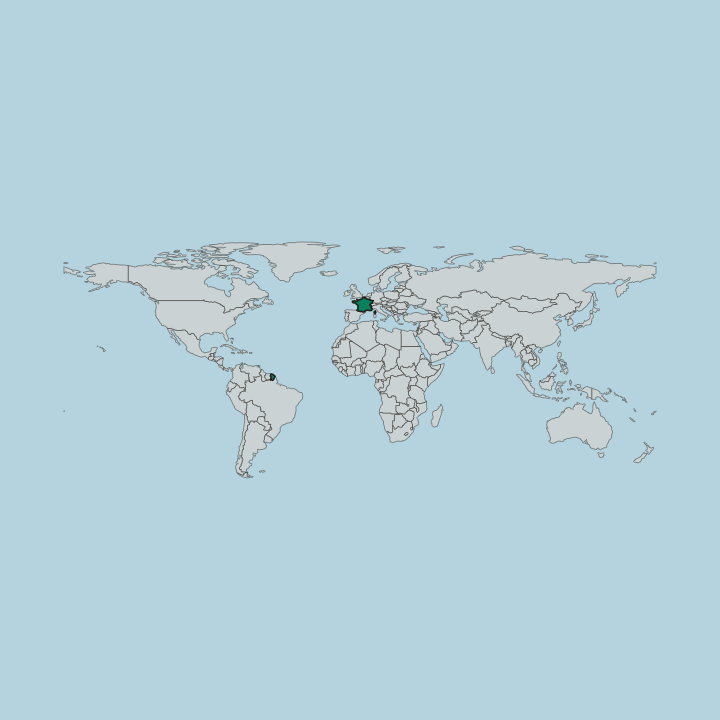
Saint-Malo is a walled port on the Brittany coast, where the intramuros ramparts, Saint Malo Castle and the Solidor Tower face the sea.
Hotel links are affiliate links: booking through them may earn us a commission, at no extra cost to you. It never affects how places are ranked. How this works


Where to stay in Saint-Malo
Each area has its own feel; here's who each one suits.

 Saint-MaloFrance
walled city of Saint-Malo
Granite ramparts ring the walled city of Saint-Malo, the old quarter of Saint-Malo in Brittany, rebuilt inside its walls after the bombardment of 1944.Where to stay →Saint-MaloFranceSaint-Servan-sur-Mer
Saint-Servan-sur-Mer is the Saint-Malo quarter under Solidor Tower, with Aleth Cathedral on the headland and shops through its streets.Where to stay →Saint-MaloFranceSaint-Ideuc
The granite église Saint-Ideuc, its portal cut with the date 1721, faces Place de l'Église in Saint-Ideuc, a former commune in north-east Saint-Malo.Where to stay →Saint-MaloFranceRothéneuf
Granite faces cut into the sea cliff mark Rothéneuf, a coastal quarter of Saint-Malo known for its rochers sculptés and the manoir de Limoëlou.Where to stay →Hotel links are affiliate links: booking through them may earn us a commission, at no extra cost to you. It never affects how places are ranked. How this works
Find hotels in Saint-Malo
Direct booking searches for these neighbourhoods.
Intramuros
The walled inner town, where the Église Saint-Sauveur, the Maison de la Duchesse Anne and the rampart walk all sit inside the gates. Beds are limited here, so book early.Find hotels in Intramurosbeach days among the villégiature villasParamé
The resort frontage, lined with seaside houses such as Granite House and the villa Eugénie, with the sand in front of them.Find hotels in Paraméthe Solidor Tower and the Aleth headlandSaint-Servan
A quarter with its own centre at the église Sainte-Croix, keeping the Solidor Tower and Aleth above the water.Find hotels in Saint-ServanHotel links are affiliate links: booking through them may earn us a commission, at no extra cost to you. It never affects how places are ranked. How this works
Things to do in Saint-Malo
Ranked by global recognition; descriptions from Wikidata (CC0).
Museums & Galleries
1- Mémorial 39-45 de Saint-Malo
Churches & Religious Sites
8- Aleth Cathedral Heritage
- église Sainte-Croix de Saint-Servan (Saint-Malo) Heritage
- Église Saint-Sauveur de Saint-Malo Heritage
- église Saint Bartholomew de Dinard Heritage
- Église Saint-Ideuc Heritage
Show 3 more →
- église Saint-Jean-l'Évangéliste de Saint-Servan Heritage
- église Saint-Michel de Rothéneuf Heritage
- Église Saint-Énogat de Dinard Heritage
Castles & Historic Sites
3- Solidor Tower Heritage
- Saint Malo Castle Heritage
- Retranchement de l'âge du Fer de la pointe du Meinga Heritage
Stadiums & Sports
2- Stade équestre du Val Porée
- complexe sportif de Marville
Landmarks & Notable Places
8- Maison du Prince Noir Heritage
- Maison, 3 rue d'Orléans, Saint-Malo Heritage
- Maison de la Duchesse Anne Heritage
- maison de villégiature balnéaire dite Belle Assise Heritage
- maison de villégiature balnéaire dite Granite House Heritage
Show 3 more →
- maison de villégiature balnéaire dite villa la Garde Heritage
- maison dite Château des Deux Rives Heritage
- maisons de villégiature balnéaire dite Vélox Heritage
worth knowingacross 5 categories in Saint-Malo
About Saint-Malo
The wall is the whole point.
What is Saint-Malo known for?
Saint-Malo's intramuros, the walled inner town, gathers granite streets behind ramparts that run out to the Tour Bidouane and back past Saint Malo Castle, and it is what nearly every visitor comes for. Ferries work the port. Beyond the gates, Saint-Servan keeps the Solidor Tower and Aleth, while Paramé holds the seaside villas that made the resort side of the commune.
What are the main landmarks in Saint-Malo?
The ramparts are the first thing anyone walks. From them the town shows its parts in order: Saint Malo Castle at the corner, the Tour Bidouane along the seaward side, the Église Saint-Sauveur and the Maison de la Duchesse Anne within the gates, and the Maison du Prince Noir a few streets on. Solidor Tower guards Saint-Servan.
Aleth Cathedral, the église Sainte-Croix de Saint-Servan and the Micro Zoo de Saint Malo fill out a day that runs beyond the walls.
What is the history of Saint-Malo?
Aleth held the ground first. Its cathedral survives from a settlement that watched this coast long before the ramparts went up, and the name now belongs to a headland quarter beside Saint-Servan rather than to a town in its own right. Then came the rock and the wall.
Saint Malo Castle anchored one corner of the defences, the Tour Bidouane took another angle of them, and the granite houses inside, the Maison du Prince Noir, the Maison de la Duchesse Anne, the house at 3 rue d'Orléans, went up behind that line. The port made the money. Trade and the sea gave the intramuros its merchant houses, the Solidor Tower watched the approach from the water, and the monastère Notre-Dame-de-la-Victoire and the Église Saint-Sauveur record what the town handed back to the church.
Saint-Servan built its own. The église Sainte-Croix and the église Saint-Jean-l'Évangéliste show a quarter that was never simply an annexe of the walled town. Seaside taste built the next layer.
Paramé filled with villégiature villas, Granite House, Vélox, Belle Assise, the villa Eugénie, the Château des Deux Rives, and an anglican church went up alongside them. War came last. The town's memorial to the fighting of that decade stands within reach of the same walls that still give Saint-Malo its outline.
Where is Saint-Malo?
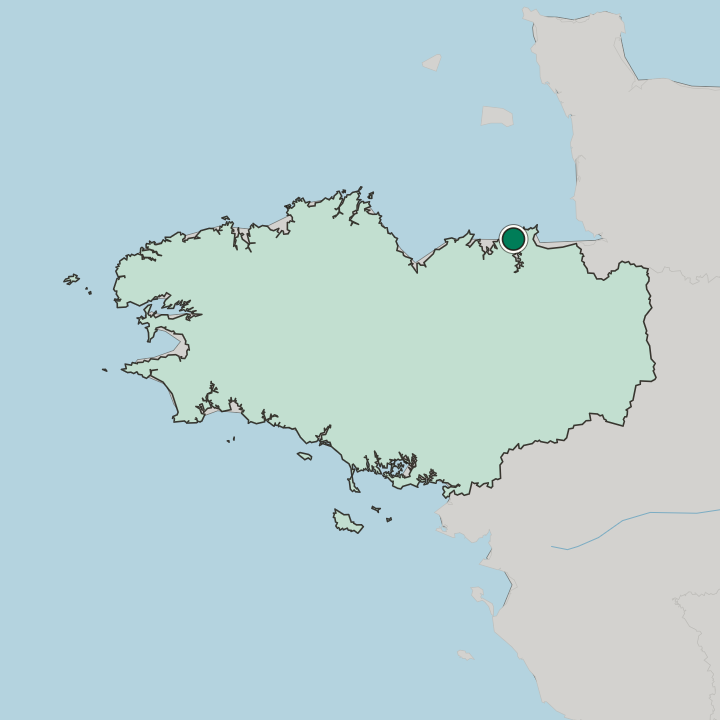
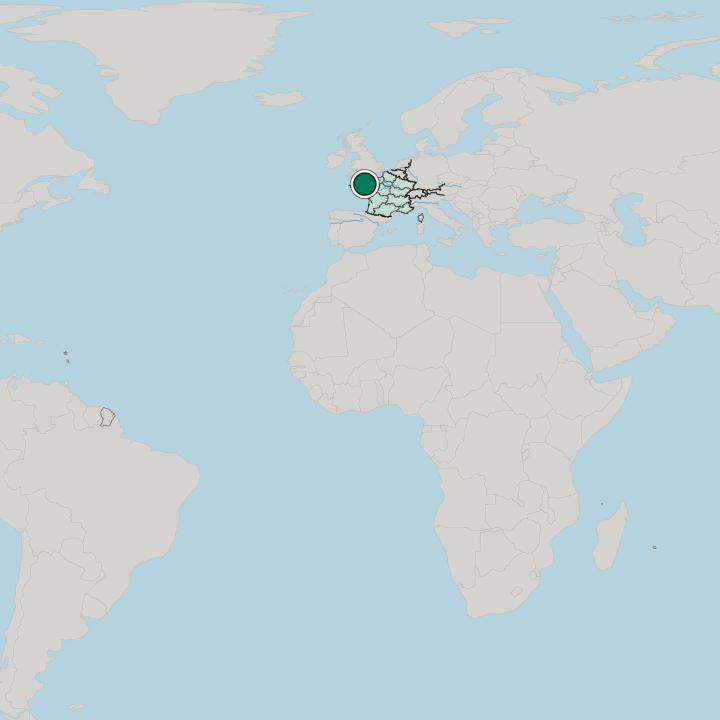
Thirty-six square kilometres, most of it facing water. Saint-Malo sits on the coast of Ille-et-Vilaine in the eastern part of Brittany, with the walled town set hard against the shore and Saint-Servan, Paramé and Aleth spread along the frontage behind it. Dinard lies across the water.
The port occupies one side and the beaches the other, so the commune reads as a line of separate quarters rather than a single centre.
What is the climate of Saint-Malo?
The sea runs this climate outright, keeping winters mild along the ramparts and summers short of real heat, so the gap between January and July is narrower here than a few hours inland. It always blows here. Gales come through in the dark months and drive spray over the walls near the Tour Bidouane, while rain arrives in quick passes rather than long sieges.
Fog can close the port.
How do you get to Saint-Malo?
Ferries make the difference here. Saint-Malo works as a port of entry, so a share of arrivals step off a boat and walk straight through the gates into the intramuros rather than approaching by road at all. Dinard sits opposite.
Once inside the walls a car is useless, and Saint-Servan, Paramé and the Solidor Tower are all reachable along the frontage without one.
Common questions
What is the best area to stay in Saint-Malo?
Intramuros: waking inside the walls beside Saint Malo Castle. Paramé: beach days among the villégiature villas. Saint-Servan: the Solidor Tower and the Aleth headland.
Good for
More cities in Bretagne
Updated October 2026