France · Pays de la Loire
Where to Stay in Angers, Pays de la Loire
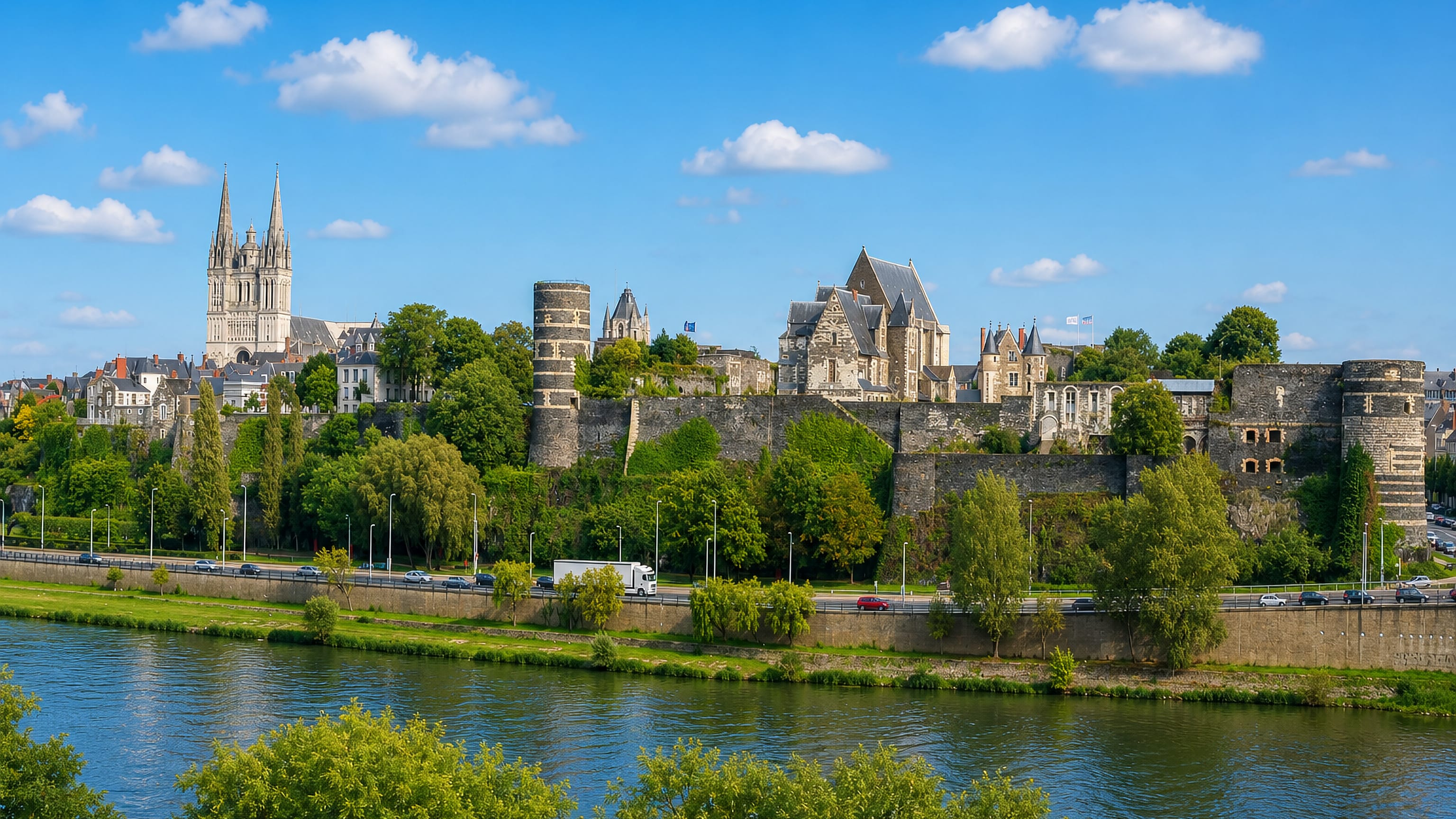
Angers is a city in Pays de la Loire, the old capital of Anjou and prefecture of Maine-et-Loire, known for Angers Cathedral and its museums.
Hotel links are affiliate links: booking through them may earn us a commission, at no extra cost to you. It never affects how places are ranked. How this works


Where to stay in Angers
The practical side of choosing where to sleep.
Angers keeps its lodging close to the old town, and the choice comes down to how near the cathedral quarter you want to be. The historic centre climbs around Angers Cathedral, a warren of streets holding the timber-framed Maison d'Adam and the shops of the medieval core. Base yourself here to walk it all.
The Musée des Beaux-Arts, the Galerie David d'Angers and the market squares sit within easy reach, and the evening life of Anjou fills the lanes around the cathedral. Across the water the newer quarters spread over the far bank, quieter and roomier, with the tapestry collections of the musée Jean Lurçat set among them. The far bank rewards a slower stay.
Stay near the cathedral if you want the old streets and the shopping on your doorstep, or cross the bridges for more space. Out on the western edge, near the gardens of Terra Botanica and the Lac de Maine, hotels give parking and green surroundings well away from the crowded centre and its lanes. Angers packs its old quarter tight.
Its whole medieval core folds into an easy walk between cathedral, museums and squares.
Find hotels in Angers
Direct booking searches for these neighbourhoods.
Cathedral quarter
The old town climbs around the cathedral, with the timber-framed Maison d'Adam and the Musée des Beaux-Arts a few lanes awayFind hotels in Cathedral quarterA quieter, roomier base near the musée Jean Lurçat tapestriesFar bank across the bridges
The newer quarters spread over the far bank around the Jean Lurçat tapestry collection, calmer than the cathedral streetsFind hotels in Far bank across the bridgesGreen surroundings and parking near Terra BotanicaWestern edge by the Lac de Maine
The city's western fringe runs to the Lac de Maine and the gardens of Terra Botanica, space away from the medieval coreFind hotels in Western edge by the Lac de MaineHotel links are affiliate links: booking through them may earn us a commission, at no extra cost to you. It never affects how places are ranked. How this works
Things to do in Angers
Ranked by global recognition; descriptions from Wikidata (CC0).
Museums & Galleries
3- Logis Pincé Heritage
- Musée des Beaux-Arts d'Angers
- musée Jean Lurçat
Churches & Religious Sites
8- Angers Cathedral Heritage
- Église Saint-Martin d'Angers Heritage
- Église Notre-Dame-des-Victoires, Angers Heritage
- Church of the Holy Sepulchre, Angers Heritage
- Église Saint-Laurent, Angers Heritage
Show 3 more →
- Église de la Trinité d'Angers Heritage
- Église Sainte-Thérèse d'Angers Heritage
- Église Saint-Samson d'Angers Heritage
Castles & Historic Sites
2- Château de la Romanerie Heritage
- Iuliomagus
Stadiums & Sports
3- Stade Raymond Kopa
- patinoire du Haras
- Lac de Maine Stadium
Parks & Gardens
1- Terra Botanica
Landmarks & Notable Places
1- Maison d'Adam Heritage
worth knowingacross 6 categories in Angers
About Angers
What is Angers known for?
Angers is known as the historic capital of Anjou, the province whose people are called Angevins. Its skyline turns on Angers Cathedral. The timber-framed Maison d'Adam still stands in the old streets below it, while the Musée des Beaux-Arts and the Galerie David d'Angers hold the city's art, and the tapestry work of the musée Jean Lurçat carries the Angevin craft tradition.
Terra Botanica draws visitors to its gardens on the city's edge.
What are the main landmarks in Angers?
Angers gathers its landmarks in the old town of Anjou. Angers Cathedral rises over the medieval streets, and the timber-framed Maison d'Adam stands among them as one of the finest houses of its kind. The Musée des Beaux-Arts and the Galerie David d'Angers hold the fine-art and sculpture collections, while the musée Jean Lurçat keeps the great tapestry works.
On the city's edge, Terra Botanica lays out its botanical gardens.
What is the history of Angers?
Angers began as the Roman town of Iuliomagus, and the site has held a city ever since. Its rise came with Anjou. As the capital of the province, Angers grew into the seat of the Angevin counts and dukes, and the old town that climbs to Angers Cathedral took shape in the medieval centuries when Anjou was a power in western France.
The timber-framed Maison d'Adam survives from that age in the streets below the cathedral. Anjou remained a distinct province until the French Revolution, when its lands passed into the new department of Maine-et-Loire, of which Angers became the prefecture. The Angevin craft traditions carried on, and the city's tapestry heritage found a home in the musée Jean Lurçat.
Its art collections filled the Musée des Beaux-Arts and the Galerie David d'Angers as the town grew beyond its walls. Angers still reads as the capital of Anjou, its Roman origins under the cathedral hill and its Angevin centuries written across the old streets.
Where is Angers?
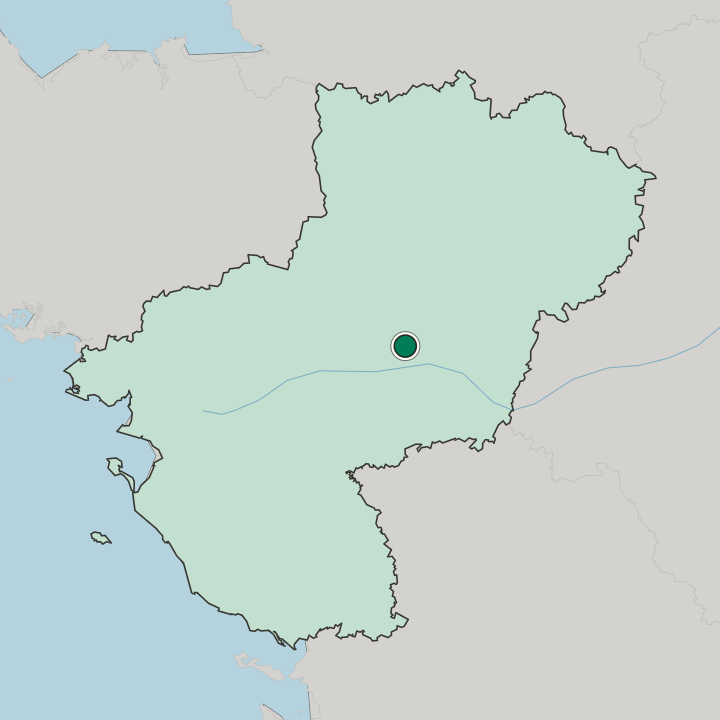
Angers stands in western France, the prefecture of Maine-et-Loire in the Pays de la Loire region, about 300 km southwest of Paris. A river runs through it. Its water splits the old cathedral town on one bank from the newer quarters that spread across the far side, while the historic centre rises on slightly higher ground above the valley.
Around the built-up area the gentle country of Anjou opens out, with the Lac de Maine on its western edge.
What is the climate of Angers?
Angers has a mild oceanic climate, softened by the western reach of France. Summers are warm rather than hot. Winters stay cool and damp, seldom harsh, with grey skies and steady rain more common than snow across the low country of Anjou.
Rain falls fairly evenly through the year, and the river valley keeps the air soft, which long earned the district its reputation for a gentle growing season.
How do you get to Angers?
Angers sits on the main rail line of western France, with fast trains linking it to Paris some 300 km to the northeast. The rails run fast. Motorways cross Maine-et-Loire and the wider Pays de la Loire toward the Atlantic coast and the neighbouring cities of the region, tying the old capital of Anjou into the national network.
Its station is a short walk from the old town and Angers Cathedral.
Common questions
What is the best area to stay in Angers?
Cathedral quarter: Walking to Angers Cathedral, the Maison d'Adam and the medieval shopping streets. Far bank across the bridges: A quieter, roomier base near the musée Jean Lurçat tapestries. Western edge by the Lac de Maine: Green surroundings and parking near Terra Botanica.
Good for
More cities in Pays de la Loire
Updated September 2026