United Kingdom · Wales
Where to Stay in Wrexham, Wales
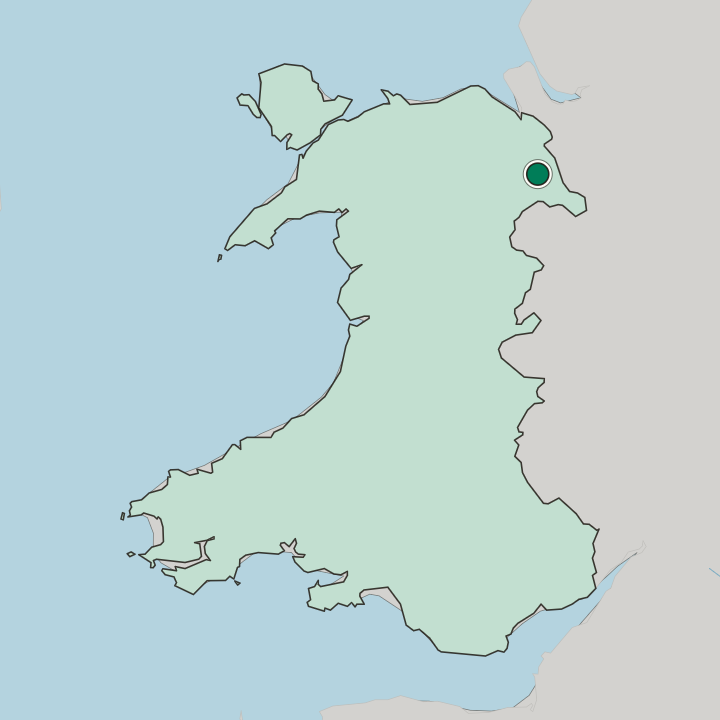
Wrexham lies between the Welsh mountains and the lower Dee Valley in Wales, a city known for Wrexham Cathedral and the Football Museum of Wales.
Hotel links are affiliate links: booking through them may earn us a commission, at no extra cost to you. It never affects how places are ranked. How this works


Where to stay in Wrexham
Where you base yourself shapes the visit — here's the character of each area.
 WrexhamUnited Kingdom
Rhosddu
Rhosddu, also written Rhos-ddu, is a district of Wrexham, close to Wrexham Cathedral and the halls of Tŷ Pawb.Rhosddu →WrexhamUnited KingdomRhosnesni
Rhosnesni grew around a toll gate on Holt Road and is an electoral ward in the community of Acton, in Wrexham, Wales.Rhosnesni →WrexhamUnited KingdomGarden Village
Garden Village is a suburb of Wrexham and an electoral ward in the community of Rhosddu, lying west of Chester Road.Garden Village →WrexhamUnited KingdomStansty
Stansty is an area and electoral ward of Wrexham County Borough, Wales, lying immediately north-west of the city of Wrexham.Stansty →WrexhamUnited KingdomBorras
Borras is a hamlet north-east of the city of Wrexham, in Wrexham County Borough, Wales, and part of the community of Holt.Borras →Hotel links are affiliate links: booking through them may earn us a commission, at no extra cost to you. It never affects how places are ranked. How this works
Things to do in Wrexham
Ranked by global recognition; descriptions from Wikidata (CC0).
Museums & Galleries
2- Tŷ Pawb
- Football Museum of Wales and Wrexham Museum
Churches & Religious Sites
8- Wrexham Cathedral Heritage
- Trinity English Presbyterian Church Heritage
- Church Of Saint Mary Heritage
- Church of St. James Heritage
- Church Of SS Marcella and Deiniol, Marchwiel Heritage
Show 3 more →
- Holy Trinity Church Heritage
- St Margaret's Church Heritage
- Church of the Holy Trinity Heritage
Castles & Historic Sites
3- Cadwgan Castle Heritage
- Gatewen Hall round barrow Heritage
- Bromfield Castle
Landmarks & Notable Places
6- Pant-yr-Ochain Heritage
- Cupola to SE of the house Heritage
- Esless Hall Heritage
- Mill House Heritage
- The White House Heritage
Show 1 more →
- Wood House Heritage
worth knowingacross 4 categories in Wrexham
About Wrexham
Wrexham is known for football.
What is Wrexham known for?
The Football Museum of Wales and Wrexham Museum share the story of the game in a town where it runs deep, and Wrexham Cathedral rises over the centre near the arts market of Tŷ Pawb. Xplore! draws families to its science galleries. St Margaret's Church and the Morgan Llwyd Memorial mark the older faith of the place.
Long the largest town in North Wales, it took city status in 2022.
What are the main landmarks in Wrexham?
Wrexham's landmarks mix faith, football, and old defence. Wrexham Cathedral is the largest church of the centre, with St Margaret's Church and Holy Trinity Church among the older parish stone. The Football Museum of Wales and Wrexham Museum hold the civic and sporting record.
Tŷ Pawb runs as an arts market and gallery, and Xplore! offers the family science hall. Cadwgan Castle and Bromfield Castle survive as earthworks from the medieval frontier.
What is the history of Wrexham?
Wrexham began as a market town on the frontier of Wales. It grew where the Welsh mountains give way to the lower Dee Valley, a crossing point near the border with Cheshire in England, and the earthworks of Cadwgan Castle and Bromfield Castle mark the medieval defence of that edge. Wrexham Cathedral rose over the settlement as its chief church.
The Morgan Llwyd Memorial recalls a Welsh preacher and writer of the seventeenth century whose name the town still carries. Coal and brick made the modern town. Mining and brick-making pulled Wrexham into the industrial age, and the pits and works around it grew the settlement into the largest in North Wales.
Those trades have since gone. The Football Museum of Wales and Wrexham Museum now hold that industrial and sporting past, while Tŷ Pawb turned an old market into a hall of arts. Historically part of Denbighshire, the town joined the county of Clwyd in the reforms of 1974, and it was granted city status in 2022, a ceremonial honour that crowned its long standing in Wales.
Where is Wrexham?
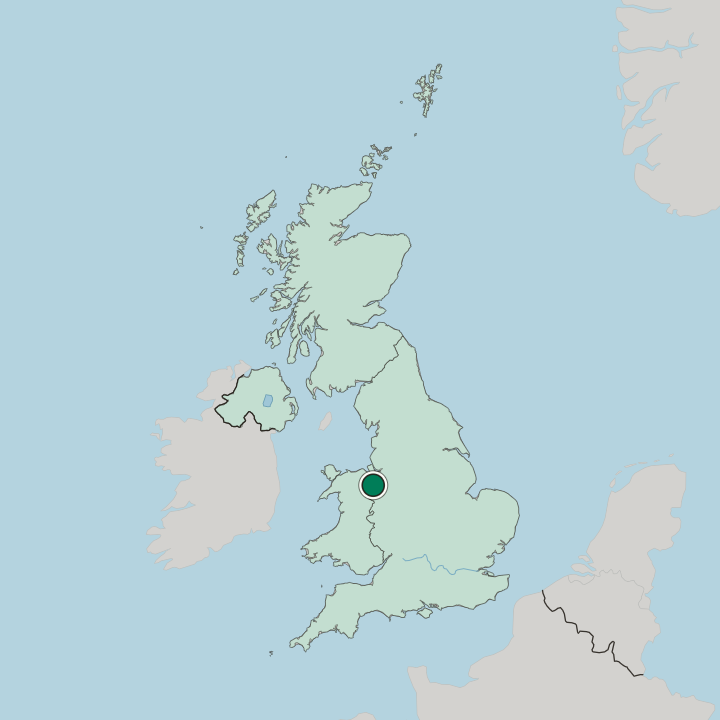
Wrexham lies in the north-east of Wales, between the Welsh mountains and the lower Dee Valley. The land falls eastward. From the hills it slopes down toward the river, and the town sits on that fall of ground near the border with Cheshire in England.
Villages and rural country spread through the wider county borough around it. Cadwgan Castle marks higher ground to one side.
What is the climate of Wrexham?
Wrexham has the cool, wet weather of inland North Wales. Winters are grey and damp rather than severe, sheltered a little by the Welsh mountains to the west. Summers are mild.
Rain sweeps in off the hills through much of the year, and the lower Dee Valley funnels the weather down toward the English border. The seasons stay temperate here.
How do you get to Wrexham?
Wrexham is reached by rail and by the roads that run along the border of Wales. Trains stop in the town on the line between the coast and the Marches, drawing up close to Wrexham Cathedral and the shops at the heart of the centre. The station is a short walk in.
Roads cross east into Cheshire and England, and lanes wind out through the villages of the county borough into the lower Dee Valley.
Good for
More cities in Wales
Updated September 2026