Indonesia · Jawa Barat
Where to Stay in Bandung, Jawa Barat
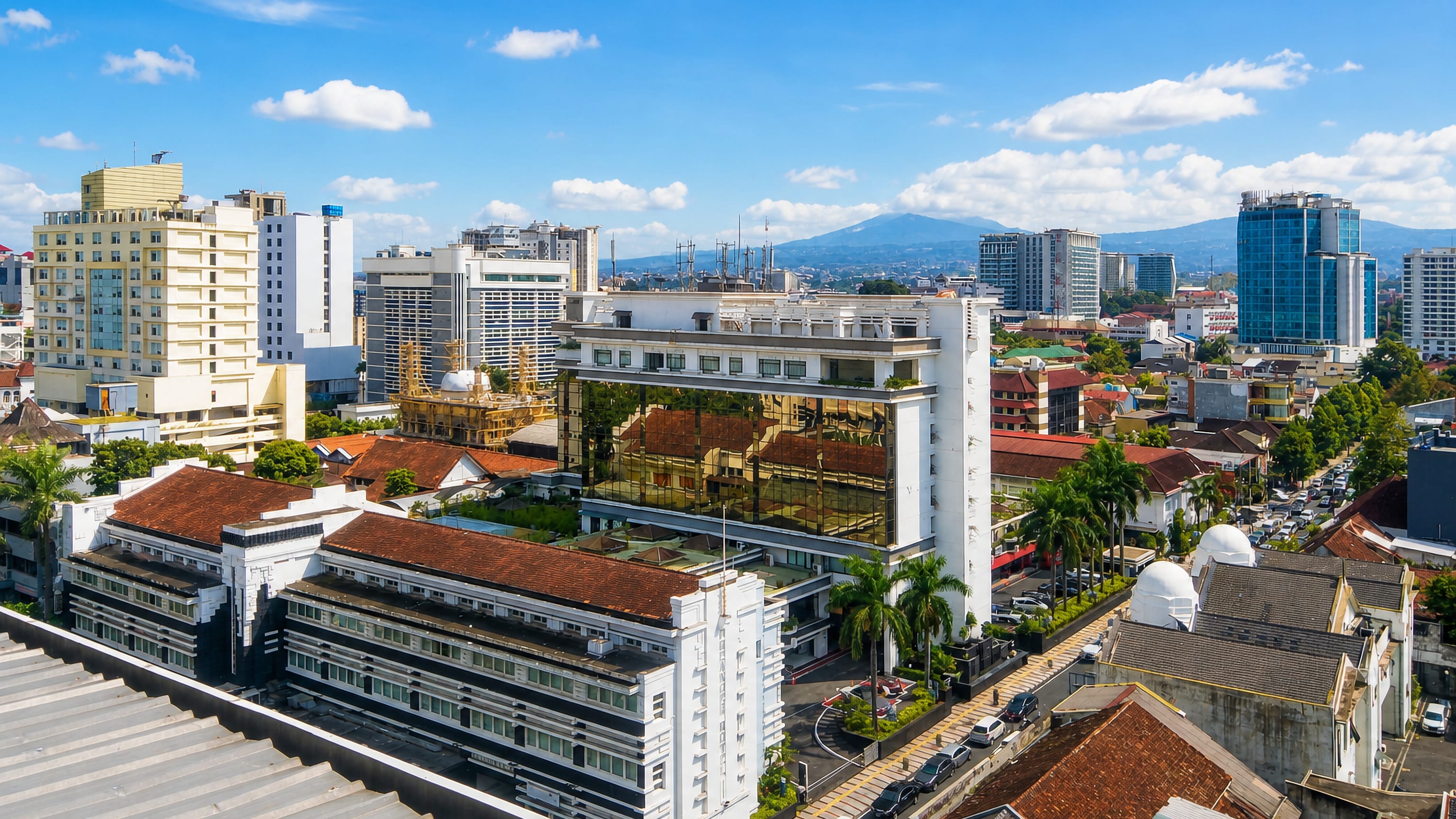
Bandung sits in a volcanic basin above the Java coast, the capital of West Java, known for Jalan Braga, Gedung Sate and the Asian-African Conference.
Hotel links are affiliate links: booking through them may earn us a commission, at no extra cost to you. It never affects how places are ranked. How this works


Where to stay in Bandung
Where the beds are, and what that means for the visit.
Bandung's beds sort themselves by altitude, from the colonial blocks around Jalan Braga at the bottom of the basin up through Dago to the resort road at Lembang on the volcanic rim. Braga is the historic choice. Rooms there put Gedung Merdeka, the Asian-African Conference Museum and the tiled arcades of Jalan Asia-Afrika within a few hundred paces, along with Museum Pos Indonesia and the Preanger frontage.
North of it, the streets around Gedung Sate and Gasibu are quieter and greener, and the Bandung Geological Museum stands on the same block as the provincial offices. Dago climbs. The road north out of the centre gains height quickly, and hotels along it trade walking distance for cooler nights, coffee terraces and a view back down over the whole basin, which suits you if the city is a base rather than the point.
Cihampelas and the Riau streets suit shoppers, since the denim stalls and factory outlets run along them end to end. Lembang is another matter entirely. Up on the rim among the strawberry fields and the hot springs, an hour of switchbacks from the centre, it works only for travellers who came for Tangkuban Perahu and the highland air.
Find hotels in Bandung
Direct booking searches for these neighbourhoods.
Braga and Asia-Afrika
Museum Pos Indonesia and the Preanger frontage are paces awayFind hotels in Braga and Asia-AfrikaGreen provincial streets by the Bandung Geological MuseumAround Gedung Sate
Gasibu opens in front of the offices on the same blockFind hotels in Around Gedung SateCool nights and coffee terraces above the basinDago
The road gains height fast on the way out of the centreFind hotels in DagoStrawberry fields and the crater at Tangkuban PerahuLembang
An hour of switchbacks up onto the volcanic rimFind hotels in LembangHotel links are affiliate links: booking through them may earn us a commission, at no extra cost to you. It never affects how places are ranked. How this works
Things to do in Bandung
Ranked by global recognition; descriptions from Wikidata (CC0).
Museums & Galleries
3- Bandung Geological Museum
- Asian-African Conference Museum
- Mandala Wangsit Siliwangi Museum
Churches & Religious Sites
6- Pasundan Christian Church Heritage
- Our Lady of the Seven Sorrows Church Heritage
- Gereja Bethel Bandung Heritage
- Holy Cross Church, Bandung Heritage
- Gereja Bala Keselamatan Bandung Heritage
Show 1 more →
- Gereja Baptis Pertama Bandung Heritage
Castles & Historic Sites
1- Monumen Perjuangan Rakyat Jawa Barat
Stadiums & Sports
1- Gasibu
Parks & Gardens
1- Trans Studio Bandung
worth knowingacross 5 categories in Bandung
About Bandung
What is Bandung known for?
Bandung is the highland capital of West Java, a Sundanese city that the Dutch called Parijs van Java for its shopfronts and its cool air. Jalan Braga still runs in art-deco frontages down to Jalan Asia-Afrika, where Gedung Merdeka housed the conference of 1955 that gave the non-aligned world its name. The volcanoes stand over all of it.
Tangkuban Perahu smokes on the northern rim, tea and quinine plantations climb the southern slopes, and Gedung Sate faces Gasibu with the pinnacle that gave it a skewer for a name.
What are the main landmarks in Bandung?
Bandung's landmarks are colonial buildings and museums of the Sundanese west. Gedung Sate carries the skewer pinnacle over the provincial offices, the Bandung Geological Museum holds the fossil beds of Java a few doors away, and the Asian-African Conference Museum keeps the hall on Jalan Asia-Afrika where the delegates sat. The Sundanese collections sit south.
Sri Baduga Museum gathers the crafts and regalia of West Java, the Mandala Wangsit Siliwangi Museum tells the division's war, and Bandung Cathedral, Trans Studio Bandung and Bandung Zoo cover the rest of an afternoon.
What is the history of Bandung?
Bandung was made by a road. The Dutch governor Daendels drove the Great Post Road across Java in the first decade of the nineteenth century, and in 1810 the seat of the local regency was moved down to the point where that road crossed the Cikapundung. Coffee and quinine paid for the rest.
The Priangan highlands around the basin filled with plantations, the planters came down to spend in town, and by the turn of the century Jalan Braga carried European shops that earned Bandung the name Parijs van Java. The colony nearly moved here. Plans drawn in the nineteen-twenties would have shifted the capital of the Indies from Batavia up into this defensible bowl, and Gedung Sate was built as the first ministry of a capital that never arrived.
The city burned in 1946. Fighters withdrawing from the returning Dutch set fire to the southern half themselves rather than hand it over, an episode the country remembers as Bandung Lautan Api. Nine years later the delegates arrived.
Twenty-nine Asian and African states met at Gedung Merdeka on Jalan Asia-Afrika in 1955 and drew up the principles that the non-aligned movement carried out of the room.
Where is Bandung?
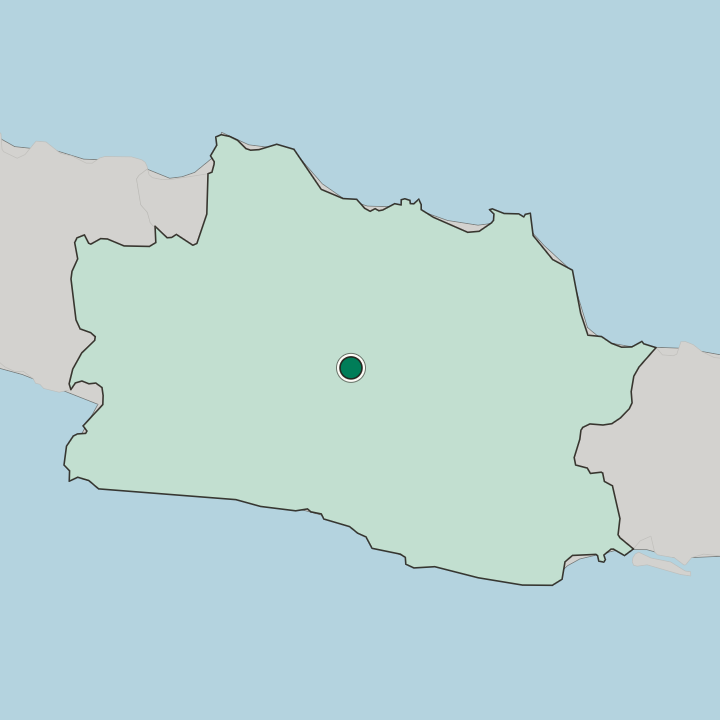
Bandung fills a basin in the western highlands of Java, ringed by volcanoes and lying well above the coastal plain of West Java. Tangkuban Perahu and Burangrang close the northern rim, the Malabar range holds the south, and the whole floor was a lake until the Citarum cut its way out to the west. The Cikapundung still runs through the middle of town.
Jakarta lies northwest, down off the escarpment.
What is the climate of Bandung?
Bandung is cool because it is high, sitting far enough above the Java coast that the nights need a jacket even at the end of the dry season. The wet monsoon runs from November to March. Cloud piles against the volcanic rim through those months and empties over the basin in the afternoon, while June to September stays dry, bright and mild enough to walk all day.
It rarely gets genuinely hot.
How do you get to Bandung?
Bandung is reached from Jakarta either on the Cipularang toll road, which climbs the escarpment in a couple of hours, or on the high-speed line that runs to Padalarang west of the city. The old railway is slower and better. Trains on the Jakarta line thread the Purwakarta gorges and pull into Bandung Station in the middle of town, while Husein Sastranegara International Airport sits a short ride northwest of it.
Angkot minibuses cover the rest.
Common questions
What is the best area to stay in Bandung?
Braga and Asia-Afrika: Art-deco arcades with Gedung Merdeka on the doorstep. Around Gedung Sate: Green provincial streets by the Bandung Geological Museum. Dago: Cool nights and coffee terraces above the basin. Lembang: Strawberry fields and the crater at Tangkuban Perahu.
Good for
More cities in Jawa Barat
Updated October 2026