
Israel
Haifa, Israel — Towns & Travel Guide
Haifa is the district around Israel's great northern port, climbing Mount Carmel above the Mediterranean.
Hotel links are affiliate links: booking through them may earn us a commission, at no extra cost to you. It never affects how places are ranked. How this works


Towns & cities in Haifa
Pick a town or city — each links to where to stay.

 Israel
Haifa
Terraced gardens climb Mount Carmel at Haifa, a Mediterranean port city known for the Baháʼí World Centre and the Stella Maris Monastery.Where to stay →
 Israel
Hadera
Hadera stands on the Israeli coastal plain midway between Tel Aviv and Haifa, founded in 1890 and marked by the Orot Rabin Power Plant chimneys.Where to stay →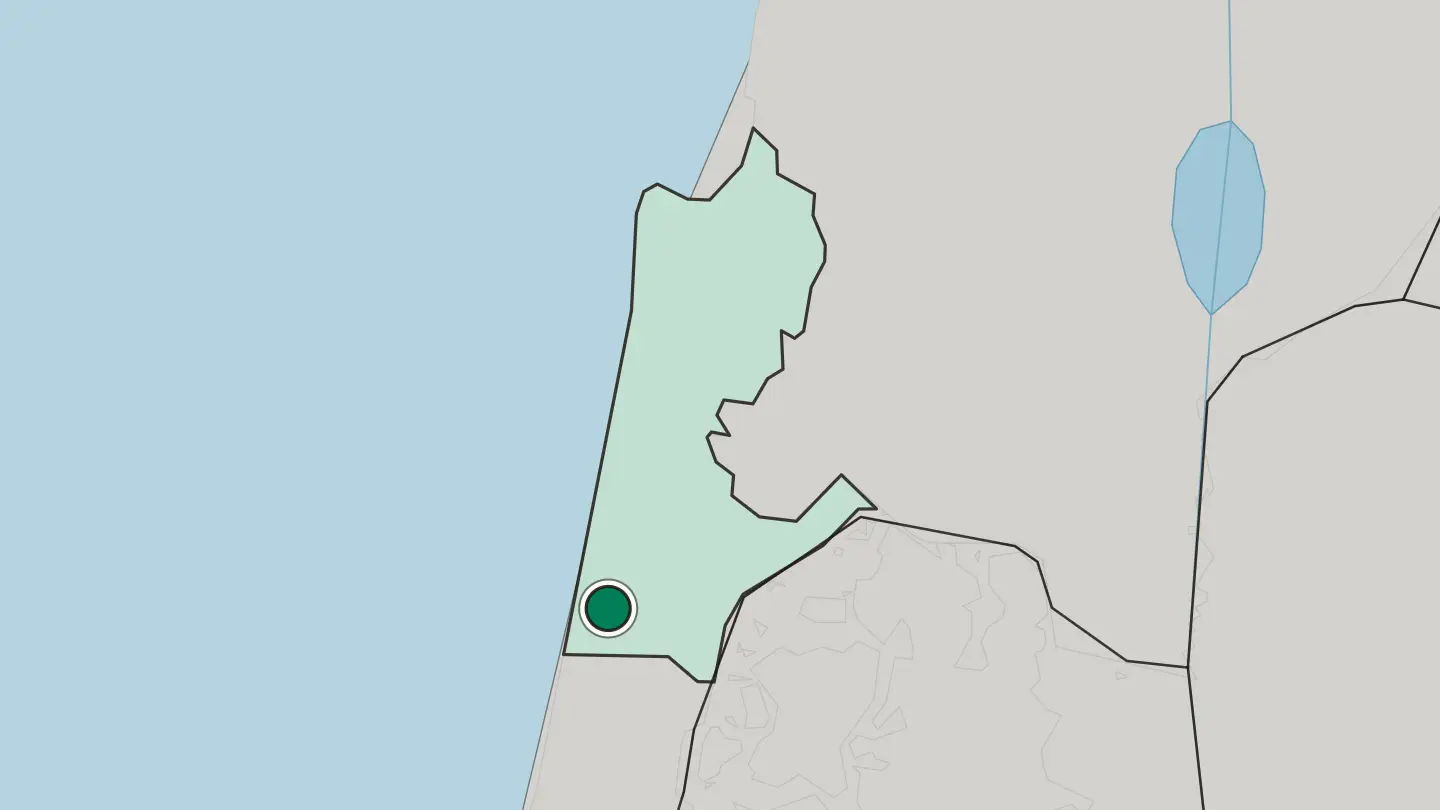
 Israel
Qiryat Ata
Qiryat Ata is a city in the Haifa District of Israel, founded in 1925 and grown up within the built area around Haifa.Where to stay →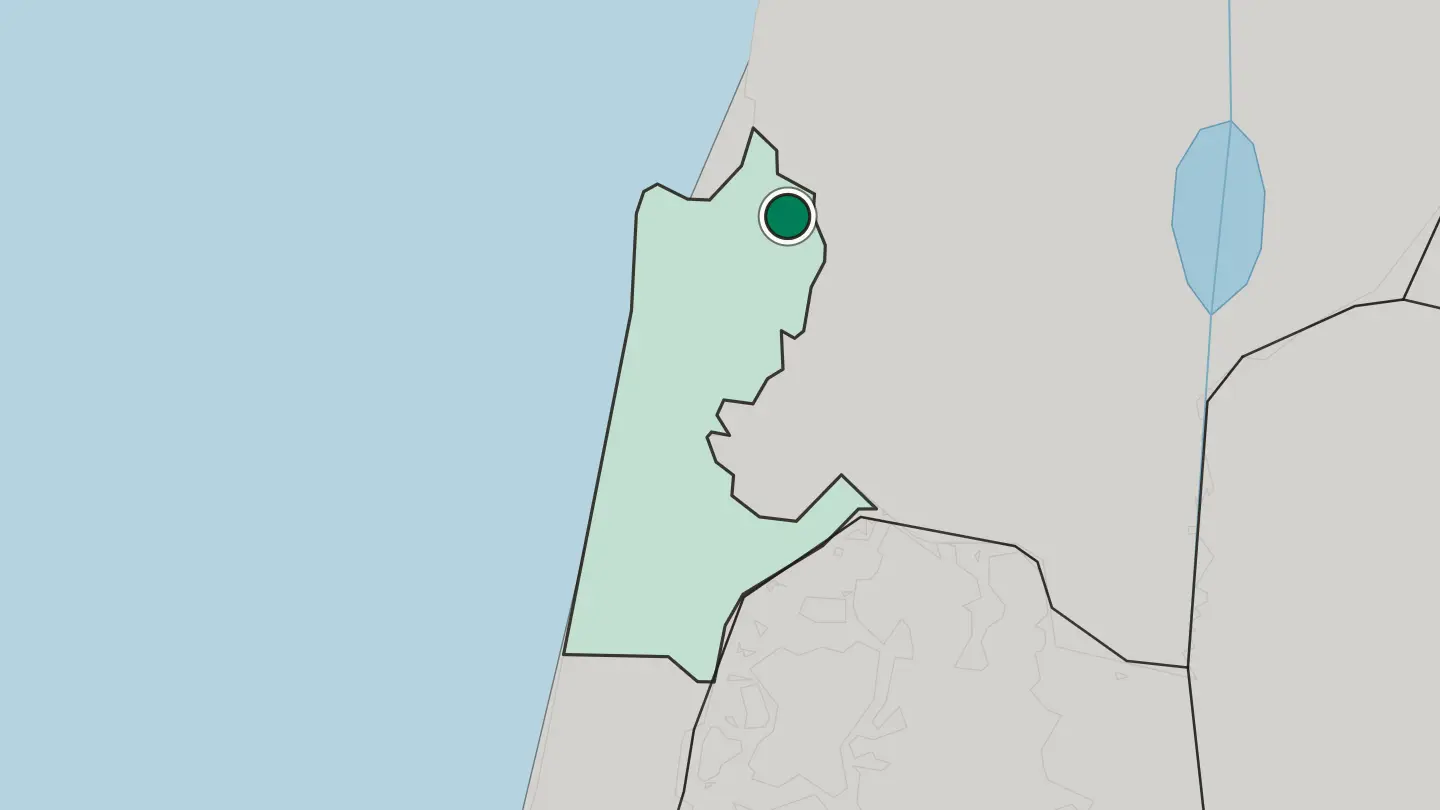
 Israel
Umm el Faḥm
Umm el Faḥm rises on a mountain ridge above Wadi Ara, serving as the social, cultural and economic centre of the Wadi Ara and Triangle regions.Where to stay →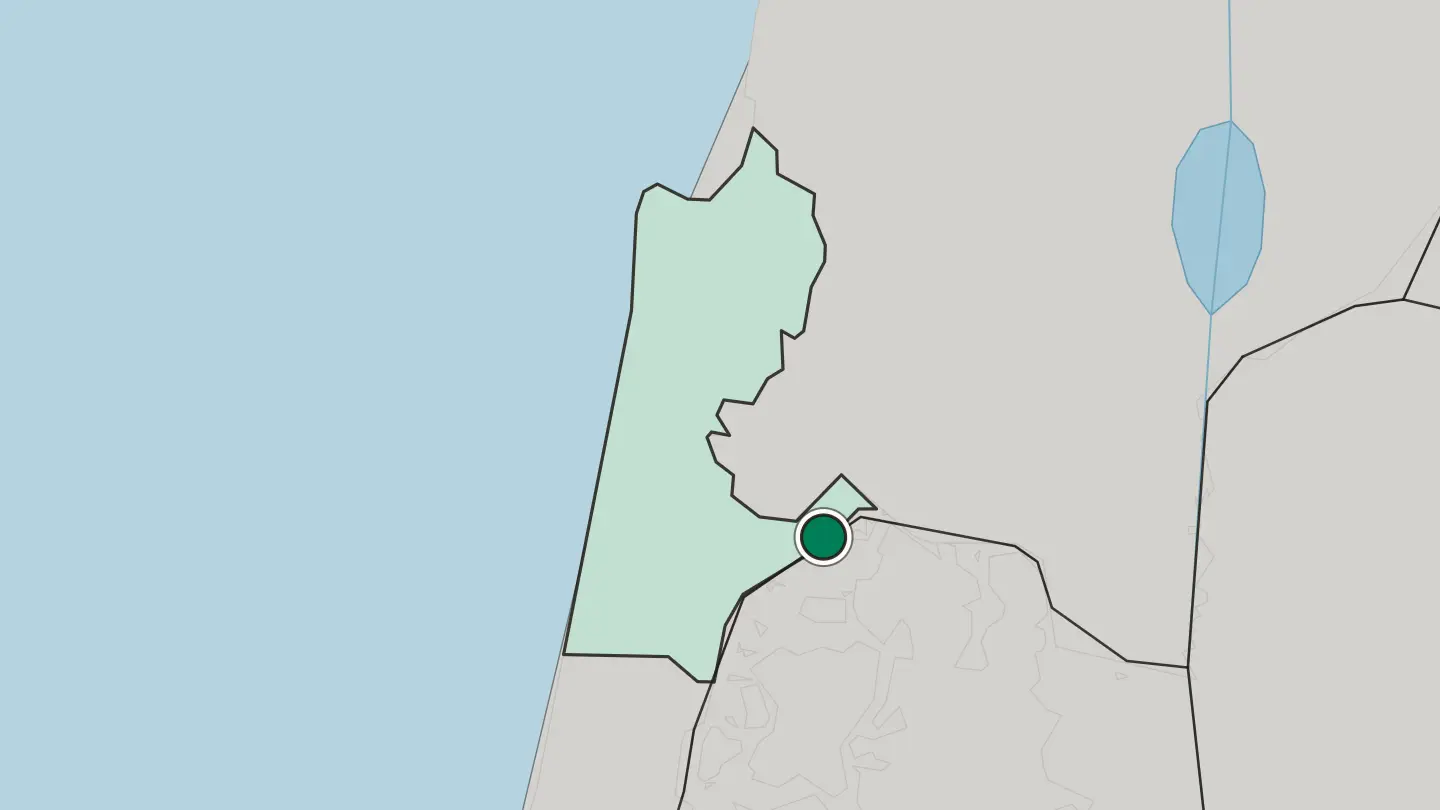
Hotel links are affiliate links: booking through them may earn us a commission, at no extra cost to you. It never affects how places are ranked. How this works
About Haifa
The port defines it.
What is Haifa known for?
Haifa city, the district's hub, is Israel's third-largest and the country's main deep-water harbour, stacked up the slopes of Mount Carmel above the Mediterranean. On the northern face of the mountain the Baháʼí World Centre spills down nineteen terraces of clipped gardens, a UNESCO World Heritage Site and the faith's global seat. Druze villages sit higher on the ridge.
To the south the coastal plain runs flat toward Hadera.
Where is Haifa?
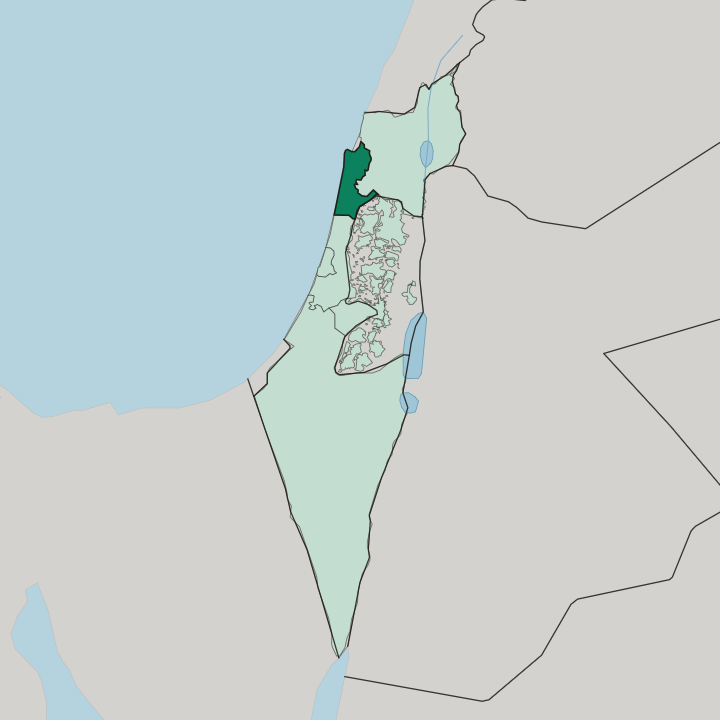
Haifa is a district on the northern coast of Israel, wrapped around the promontory where Mount Carmel drops into the sea. The mountain is the district's spine. Its wooded ridge runs southeast off the coast for some 39 kilometres, ending at a cape above the water where the city of Haifa climbs the northern slope in tiers.
North of that headland the shore curves inland to form the Bay of Haifa, Israel's only natural harbour on the Mediterranean, and the district's flat coastal towns line its rim. The Mediterranean forms the whole western edge. To the south the ground flattens into the Sharon coastal plain, and the district reaches down it to Hadera.
Inland the land climbs east off the plain toward the valleys behind the range. The seaward point of the Carmel almost touches the water. Two worlds meet in a few kilometres here: a deep-water port and a green mountain forest sharing one small stretch of coast.
That compression of harbour, ridge and plain is what gives the district its shape.
What is Haifa like?
Mixing is the district's habit. Haifa city has long carried a reputation as Israel's most mixed place, where a Jewish majority lives alongside a large Arab minority of Christians and Muslims, and the two share the streets below the Carmel more easily than in most of the country. The Baháʼí World Centre adds another layer.
Its terraced gardens on Mount Carmel draw pilgrims of a faith with no other global seat, and the shrine and its parkland are open to visitors of every background. Higher on the ridge the Druze villages of Daliyat al-Karmel and Isfiya keep their own tongue, cooking and calendar, and their kitchens and markets pull weekend crowds up from the coast. Food follows the mix.
Hummus houses in the old port quarters, Druze pita and labneh on the mountain, and the fish of the Mediterranean all belong to the table here. The common language of the district is Hebrew, with Arabic widely spoken across its Arab and Druze towns. Religion is worn many ways at once.
Little of that culture is grand or staged. It lives in the everyday overlap of communities on one mountainside above one working harbour.
What is the history of Haifa?
People have lived at the foot of the Carmel for thousands of years, and the caves of the range hold traces of early humans across a span so long that UNESCO lists them among the sites of human evolution. Haifa stayed small for most of it. Its modern rise began in 1868, when German Protestant Templers laid out the German Colony below Mount Carmel and set the town growing.
Under British rule in the twentieth century the harbour was deepened and the railways run in, turning Haifa into the industrial port that still anchors the district. A cement town, Nesher, grew at the mountain's foot to feed the building.
What is the climate of Haifa?
Haifa has a hot-summer Mediterranean climate. Rain falls almost entirely between the autumn and the spring, the summer months stay effectively rainless, and the sea keeps the coast humid and moderates the extremes so the port and beaches rarely turn cold. The cool season over Haifa is gentle and rainy.
Up on Mount Carmel the air runs a touch cooler and greener than down on the harbour. Storms blow in off the Mediterranean.
How do you get to Haifa?
Most travellers land at Ben Gurion Airport near Tel Aviv and come north from there. The coastal railway does the rest. Trains run straight up the Mediterranean shore from the airport and Tel Aviv into Haifa's central stations, roughly an hour and a half end to end, and carry on north toward Acre.
Haifa's own harbour is a working cargo port and a stop for Mediterranean cruise ships. Inside the district, road and rail thread the coast between Hadera in the south and the bay towns in the north.
Common questions
What is the best area to stay in Haifa?
Mount Carmel and the German Colony: the Baháʼí gardens and the harbour view. The Druze villages of the Carmel ridge: Druze cooking and the Carmel woodland. The Hadera coast: the southern beaches and the coastal plain.
Good for
More regions in Israel
Updated September 2026