India · Uttar Pradesh
Where to Stay in Lakhīmpur, Uttar Pradesh
Lakhīmpur is a city and municipal board in Lakhimpur Kheri district, well inland in the Indian state of Uttar Pradesh.
Hotel links are affiliate links: booking through them may earn us a commission, at no extra cost to you. It never affects how places are ranked. How this works


Where to stay in Lakhīmpur
Where visitors usually base themselves, and why.
Rooms in Lakhīmpur are few and functional. The city serves Lakhimpur Kheri district, so the people filling them are traders, officials and families in from the surrounding villages, and the lodging that exists is built around that traffic. Nobody comes for a view.
Staying in the centre, where the municipal board's ground is most tightly built, puts a visitor closest to the shops and offices that make up the town's working day. Standards are modest across the board. The alternative is to treat the city as a base for the district.
Lakhimpur Kheri district is large, and anyone with reason to travel across it will find Lakhīmpur the most practical place to sleep between days on the road, simply because the alternatives thin out quickly. Book nothing elaborate. What Uttar Pradesh offers in its bigger cities is not the standard here, and a plain room near the centre, close to the transport out, is the sensible choice for a night or two.
Transport from the city runs to the district's towns and villages, which is what most guests need from the location.
Find hotels in Lakhīmpur
Direct booking searches for these neighbourhoods.
Lakhīmpur town centre
The tightly built ground the Lakhīmpur municipal board governs, closest to the shops, offices and the transport out into the district.Find hotels in Lakhīmpur town centreDrivers passing through Lakhimpur Kheri districtDistrict road approaches
The edges of Lakhīmpur where the district roads come in, chosen for an early start rather than for anything in the town itself.Find hotels in District road approachesHotel links are affiliate links: booking through them may earn us a commission, at no extra cost to you. It never affects how places are ranked. How this works
About Lakhīmpur
What is Lakhīmpur known for?
Lakhīmpur is known within Uttar Pradesh as a district town rather than a destination. The name says most of it. Lakhimpur Kheri district takes in a wide stretch of country, and the city carries the municipal board that runs the built-up part of it, which is the role defining the place.
Everything else here is local business, the trade and administration of a working district in India. Sugarcane pays for most of it, and what outsiders come for sits beyond the built edge: Dudhwa National Park up on the Nepal border, and the Shiva pilgrimage town of Gola Gokarannath.
What are the main landmarks in Lakhīmpur?
Lakhīmpur does keep one monument on the state register. The Medhak Shiva Temple at Oel, out on the Sitapur road, was built in 1870 in the shape of a frog, with a gold chhatra set above the shrine, and the Archaeological Survey of India lists it as State Protected Monument S-UP-40. The town itself keeps little else.
Market streets and the everyday trade of Lakhimpur Kheri district are what a visitor finds, without the carved monuments that draw travellers to the older cities of Uttar Pradesh.
What is the history of Lakhīmpur?
Lakhīmpur's recorded story is administrative. The city and its municipal board appear in the register of Uttar Pradesh as the built-up seat of a much larger rural unit, and that relationship, town and district together, is the frame everything else sits in. The district name doubles up.
Lakhimpur Kheri district carries both parts, so the city's own name travels with the district's wherever the two are written down together. The older spelling was Luxmipur, and the second half comes from Kheri, a small town a short way off whose name is traced to the khair trees that once covered this country. British administration drew the modern shape.
On the annexation of Oudh in 1856 the western half of the present area was made into a district called Mohammadi and the eastern half into Mallanpur, and Mohammadi became one of the chief centres of the 1857 rebellion in northern Oudh. The two were merged once order returned, and the headquarters of the single district were moved to Lakhīmpur late in 1858. That move is why the town is where it is.
Municipal government is the newer layer. A municipal board takes charge of streets, markets and services inside the built limit, while the district administration answers for the countryside beyond it, and the division of labour between them has shaped how Lakhīmpur grew. Growth followed the roads in.
Villages across Lakhimpur Kheri district have long used the city as the place to buy, sell and settle paperwork, and that steady traffic, rather than any single event, is what built the town India now records as a city. One name carries further than the rest. Raj Bisaria, born here on 10 November 1935, founded the Bhartendu Academy of Dramatic Arts in 1975 and was the first man from Uttar Pradesh given a Padma Shri for work in modern theatre.
Where is Lakhīmpur?
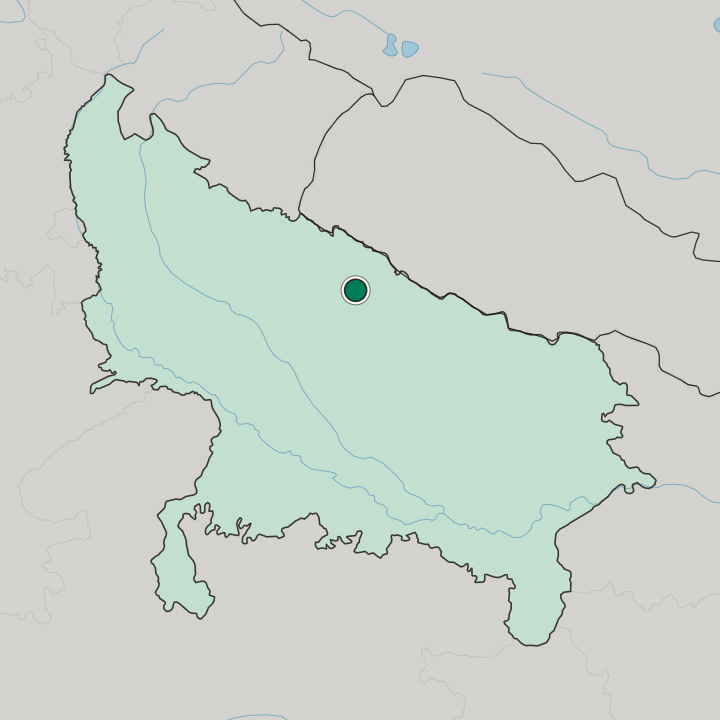
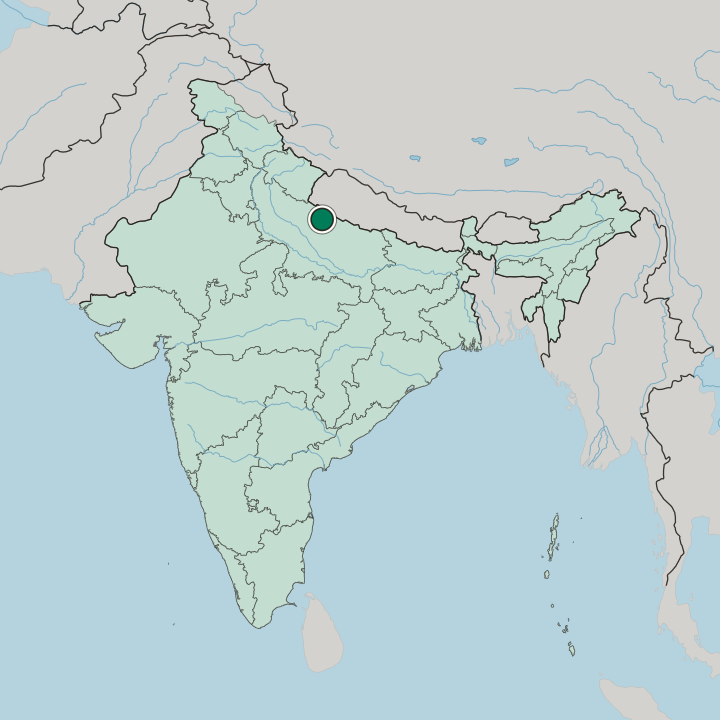
Lakhīmpur lies well inland in Uttar Pradesh, with no coast or frontier of its own nearby. The ground is Terai. That damp lowland belt runs along the foot of the Himalaya, and Lakhimpur Kheri district reaches north across it to the Nepal border.
The Ul river, 175 kilometres long, comes down out of the Pilibhit marshes and crosses the district on its way to the Ghaghara, while the Sharda River is held back by a barrage about 28 kilometres from the city. The built-up area itself stays compact, so the town ends and the countryside begins without much of a transition.
What is the climate of Lakhīmpur?
The monsoon governs the year in Lakhimpur Kheri district, its rains arriving after months of building heat and soaking a countryside that spends the rest of the year dry. Winter is short here. Cold mornings come and go quickly, and the subtropical swing that Uttar Pradesh shares means Lakhīmpur is hot for far more of the year than it is cool.
How do you get to Lakhīmpur?
Roads are the way in. National Highway 730 runs the length of Lakhimpur Kheri district, from Pilibhit through Gola Gokarannath to Lakhīmpur and on east to Bahraich, and traffic from the surrounding villages converges on the town rather than passing through it. Trains come up from the south.
Lakhimpur railway station, code LMP, stands on the Sitapur line converted to broad gauge in 2019, which finally put Lucknow, about 135 kilometres off across Uttar Pradesh, within a direct run of the town.
Common questions
What is the best area to stay in Lakhīmpur?
Lakhīmpur town centre: Nights between days across Lakhimpur Kheri district. District road approaches: Drivers passing through Lakhimpur Kheri district.
Good for
More cities in Uttar Pradesh
Updated September 2026