Japan · Kyoto Prefecture
Where to Stay in Mukō, Kyoto Prefecture
Mukō fits four museums and the Otokuni Kofun Cluster into fewer than eight square kilometres of Kyoto Prefecture, Japan.
Hotel links are affiliate links: booking through them may earn us a commission, at no extra cost to you. It never affects how places are ranked. How this works


Where to stay in Mukō
The practical side of choosing where to sleep.
Everything in Mukō is walkable, which changes the usual calculation entirely. A room anywhere inside the city puts Mukō City Museum, the Kyoto Bamboo Museum, and the Takada Crystal Museum within reach on foot, so the question is not which end of town to sleep in but whether a bed can be had here at all rather than elsewhere in Kyoto Prefecture. Few rooms exist inside Mukō itself.
A municipality of this area supports far less accommodation than its list of collections might suggest, and booking early does more good here than choosing cleverly between neighbourhoods. The Otokuni Kofun Cluster side is the quieter half, where the mounds sit and the streets thin out. It suits you if the point of the visit is the archaeology and an early start on it, before the day fills.
Nearer the centre, the practical services cluster together, which is the sensible choice for a single night. Mukō works best as a base for people who want the museums without the scale of a larger city around them, and the compactness that makes it unusual is exactly what makes any address in it a good one.
Find hotels in Mukō
Direct booking searches for these neighbourhoods.
Otokuni Kofun Cluster side
The Otokuni Kofun Cluster occupies the quieter half of Mukō, where the street grid gives way to the mounds. Lodging is scarce in this area; reserve in advance.Find hotels in Otokuni Kofun Cluster sidea single night with all four collections on footMukō City Museum quarter
Mukō City Museum anchors the built-up middle, with the Nagamori Collection Gallery and the Takada Crystal Museum in easy walking range. Few places to stay nearby — book ahead.Find hotels in Mukō City Museum quartervisitors coming specifically for the Kyoto Bamboo MuseumKyoto Bamboo Museum end
The Kyoto Bamboo Museum gives this corner its subject, and the bamboo trade it documents belongs to the ground around it. Few places to stay nearby — book ahead.Find hotels in Kyoto Bamboo Museum endHotel links are affiliate links: booking through them may earn us a commission, at no extra cost to you. It never affects how places are ranked. How this works
About Mukō
Small city, long list.
What is Mukō known for?
The Otokuni Kofun Cluster sets ancient mounds inside a municipality measuring well under ten square kilometres, and the collections fill in the rest, with Mukō City Museum, the Nagamori Collection Gallery, the Takada Crystal Museum, and the Kyoto Bamboo Museum all holding addresses here. Bamboo gets a hall of its own. Crystal gets another.
Archaeology this old beside four separate collections is an unusual concentration at any scale, and Mukō manages it on ground a walker crosses in an hour.
What are the main landmarks in Mukō?
The Otokuni Kofun Cluster is the oldest thing standing, a group of kofun that survived every later use of the land around them. Mukō City Museum covers the municipal record. Three specialist collections follow it: the Nagamori Collection Gallery, the Takada Crystal Museum, and the Kyoto Bamboo Museum, each built around a subject narrow enough that the visit takes an hour rather than a morning.
Five entries, one small city. The whole set can be walked between without a timetable, which is not something most places with this many collections can claim.
What is the history of Mukō?
Mounds came first. The Otokuni Kofun Cluster records a period when this ground mattered enough for tomb-building on a scale that later centuries never matched, and the mounds have outlasted every settlement pattern laid over them since. Otokuni is the older name for the country around.
It attaches to the kofun rather than to the modern municipality, which is the usual sign that a district name predates the administration that inherited it. Youth belongs to the city, not the ground. Mukō took city status in 1972, which is late as municipal steps go in Kyoto Prefecture, and the boundary drawn then enclosed a remarkably small piece of ground that has stayed small ever since.
Density did the work instead. What followed the municipal step was a run of collections, and Mukō City Museum, the Nagamori Collection Gallery, the Takada Crystal Museum, and the Kyoto Bamboo Museum together represent a decision to hold local subjects locally rather than let them drift toward bigger institutions. The kofun are the exception to all of it.
They were here before the name Muko-shi existed, and they will outlast the argument about what the city is for.
Where is Mukō?
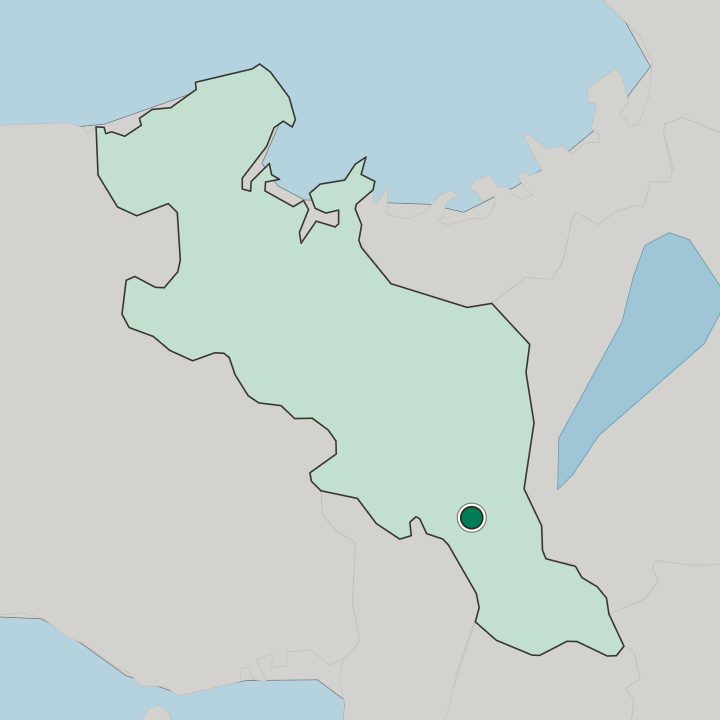
Under eight square kilometres, all of it in use. Mukō's boundary encloses very little of Kyoto Prefecture, and the density that follows means built ground, roads, and the mounds of the Otokuni Kofun Cluster share a space smaller than many single districts elsewhere. Distance is not the constraint here.
Anything inside the city can be reached on foot without planning, and the edges are close enough that a walk in one direction meets a neighbouring municipality quickly.
What is the climate of Mukō?
Bamboo explains the summers. The subtropical band delivers the heat and the humidity that the growth documented in the Kyoto Bamboo Museum depends on, and July and August in Mukō are not the months for walking between collections in the middle of the day. Spring and autumn are the working seasons.
Winter is brief here, and the small scale of the city means shelter is never far off whatever the sky is doing, which is one advantage of a municipality this compact in Kyoto Prefecture.
How do you get to Mukō?
Arrival is the only leg that takes any planning, because once inside Mukō the walking distances are so short that the Otokuni Kofun Cluster and the Nagamori Collection Gallery belong to the same afternoon without any transfer between them. Approaches come through Kyoto Prefecture. The city sits close against its neighbours, so the practical question on arrival is which museum opens first rather than how long the next transfer will run.
Common questions
What is the best area to stay in Mukō?
Otokuni Kofun Cluster side: an early hour among the mounds of the Otokuni Kofun Cluster. Mukō City Museum quarter: a single night with all four collections on foot. Kyoto Bamboo Museum end: visitors coming specifically for the Kyoto Bamboo Museum.
Good for
More cities in Kyoto Prefecture
Updated October 2026