Norway · Nordland
Where to Stay in Leknes, Nordland
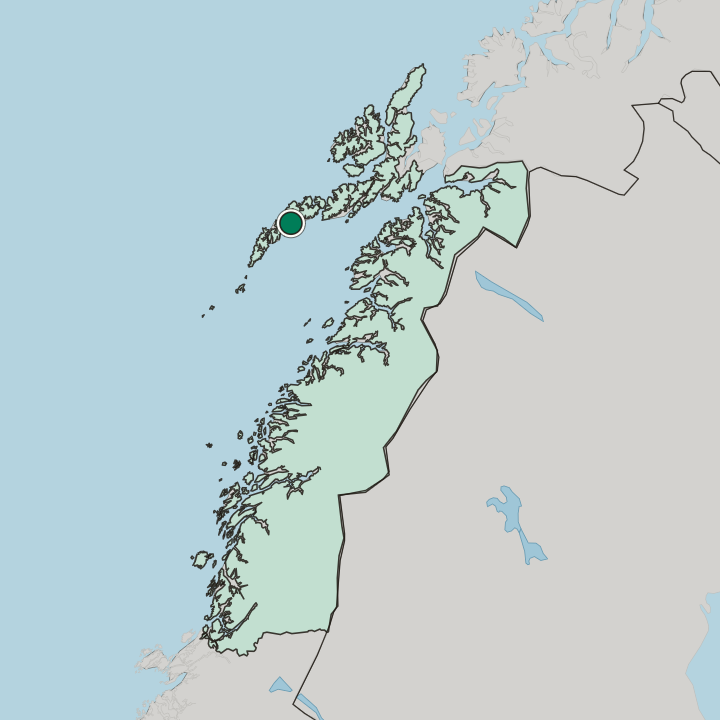
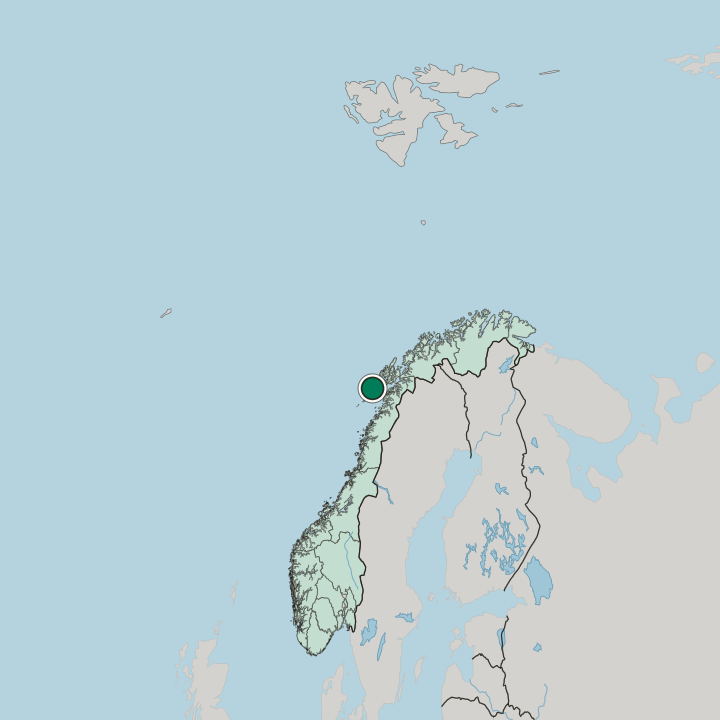
Leknes is a town in the north-western part of Nordland, northern Norway, and the main centre of Vestvågøy.
Hotel links are affiliate links: booking through them may earn us a commission, at no extra cost to you. It never affects how places are ranked. How this works


Where to stay in Leknes
Where the beds are, and what that means for the visit.
The centre of Leknes is the practical base. It draws the beds, shops, and services of Vestvågøy together inland, with Leknes adventkirke in the town and the through roads of the north-western part of Nordland meeting at its core. Stay here for the easiest access to everyday services and onward travel across the island.
The centre keeps everything close and the coast a short drive away. The parish villages widen the choice around the edges. Buksnes kirke and Hol kirke anchor older communities out toward the shore, and the Fygle Museum sits at nearby Fygle on the way out of town.
Rooms are scarcer out in the villages. Pick Leknes itself first for services and links across Vestvågøy. Choose a village base near Buksnes kirke or Hol kirke if you want the quieter parish edge of this corner of northern Norway.
Both keep you on the same island.
Find hotels in Leknes
Direct booking searches for these neighbourhoods.
Leknes centre
The centre draws the beds, shops, and services of Vestvågøy together inland, with Leknes adventkirke in the town and the through roads of the north-western part of Nordland meeting at its core.Find hotels in Leknes centreQuiet parish-edge stays near Buksnes kirke and Hol kirkeBuksnes and Hol parish villages
Buksnes kirke and Hol kirke anchor older communities toward the shore of Vestvågøy, with the Fygle Museum at nearby Fygle on the way out of Leknes. Lodging is scarce in this area; reserve in advance.Find hotels in Buksnes and Hol parish villagesHotel links are affiliate links: booking through them may earn us a commission, at no extra cost to you. It never affects how places are ranked. How this works
About Leknes
It is the service hub of its island.
What is Leknes known for?
Leknes pulls together the shops, services, and through traffic of Vestvågøy, sitting inland from the coast in the north-western part of Nordland. Churches frame the parish around it: the listed Buksnes kirke and Hol kirke serve the older communities, while the smaller Leknes adventkirke stands in the town itself. The Fygle Museum keeps the local story at nearby Fygle, a plain working centre of northern Norway.
What are the main landmarks in Leknes?
Churches do most of the marking here. Buksnes kirke and Hol kirke are the listed heritage churches of the parish, standing in the older communities of Vestvågøy, while Leknes adventkirke serves the town itself. The Fygle Museum holds the local history out at Fygle.
There is little monumental stone. What Leknes offers instead is the working core of an island in northern Norway, its landmarks the parish churches and the small museum.
What is the history of Leknes?
Faith and farming came first. The old communities of Vestvågøy gathered around Buksnes kirke and Hol kirke, both now listed heritage churches, and the island lived by its fields and its sea long before a town stood at the centre. The Fygle Museum, out at Fygle, keeps that rural story.
Croft, boat, and parish ran the years on this island in the north-western part of Nordland. Leknes grew up later as the meeting point. Inland, where the island's roads converge, it became the service centre of Vestvågøy rather than an old harbour or charter town, gathering the shops and offices the parishes around it needed.
Leknes adventkirke joined the older churches. The result is a young, practical hub. Leknes reads as a working island centre of northern Norway, its history written in the surrounding parishes more than in the town itself.
Where is Leknes?
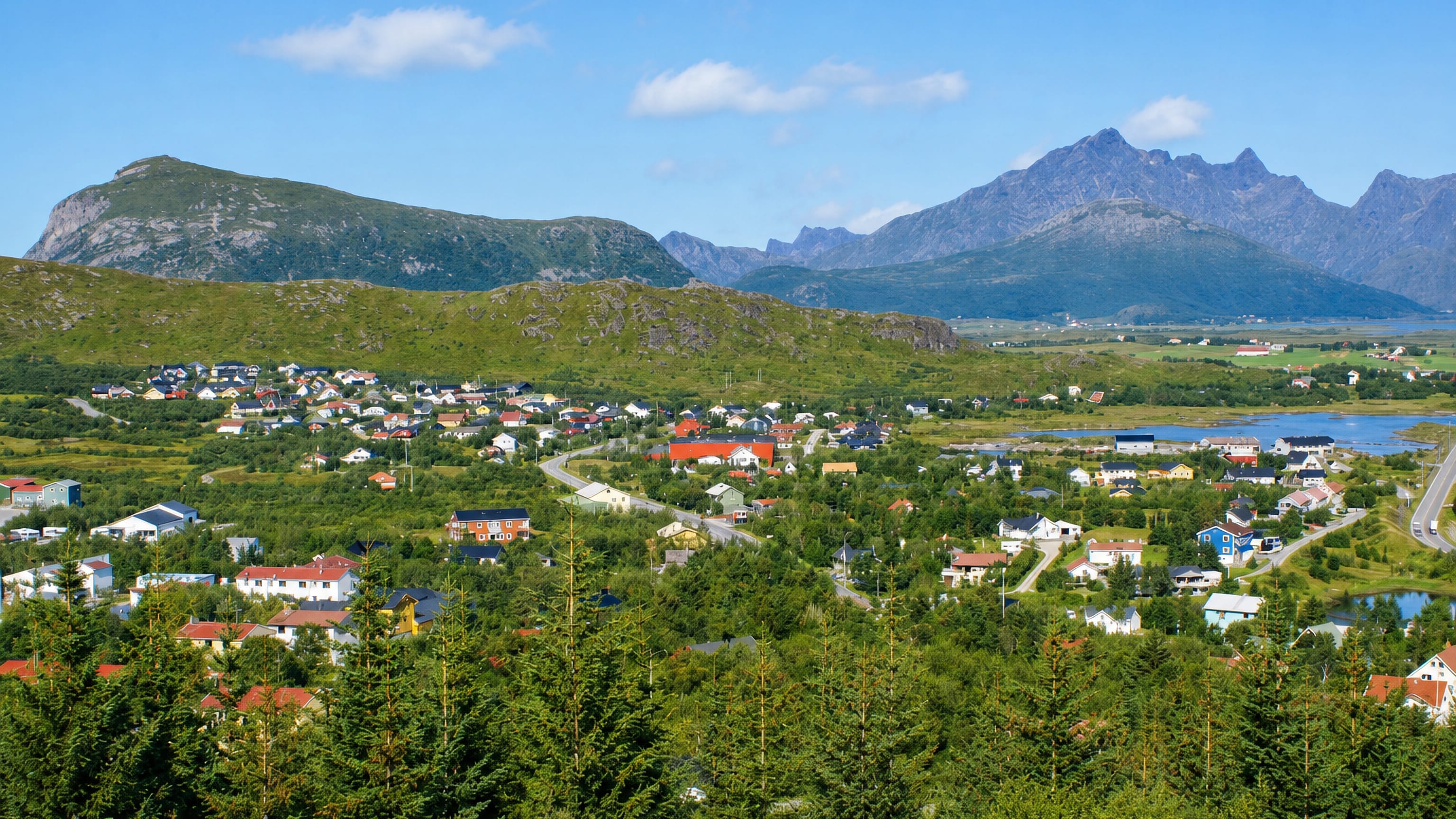
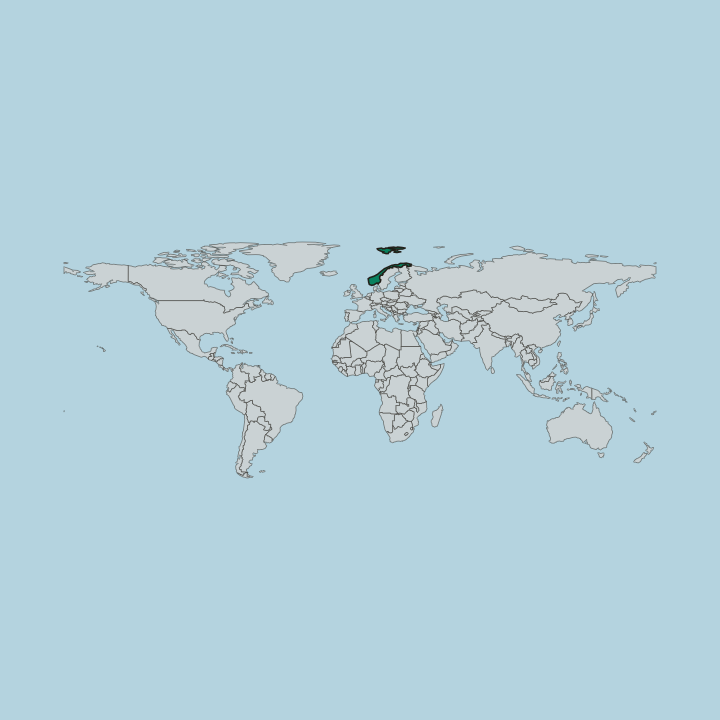
Leknes sits inland on its island in the north-western part of Nordland. Back from the coast, where the local roads converge, the town occupies low farmland on Vestvågøy, with the sea reaching the parish shores a short way off and peaks rising around the island's edges. The ground here is gentler than the open coast.
Field, low rise, and inland flat define the centre, an unusually level pocket for this stretch of northern Norway.
What is the climate of Leknes?
Leknes lies in the polar band, but the sea around Vestvågøy keeps the cold far softer than the far north usually implies. Maritime air brings wind, rain, and quick changes rather than deep dry frost, with short dark winter days and long bright summer light. The weather shifts fast.
Cloud and clear spells trade across the island, and the surrounding ocean holds the worst of the freeze off this corner of northern Norway.
How do you get to Leknes?
Leknes is the road hub of its island. The local routes of Vestvågøy converge at the inland centre, making it the natural arrival and transfer point for the north-western part of Nordland. Head for the centre.
From there the shops, Leknes adventkirke, and the parish villages around Buksnes kirke are within easy reach, and onward roads carry travellers across the island and along the coast of northern Norway.
Common questions
What is the best area to stay in Leknes?
Leknes centre: Inland service-hub stays by Leknes adventkirke on Vestvågøy. Buksnes and Hol parish villages: Quiet parish-edge stays near Buksnes kirke and Hol kirke.
Good for
More cities in Nordland
Updated September 2026