Russia · Moscow Oblast
Where to Stay in Klimovsk, Moscow Oblast
Klimovsk is a factory town in Podolsk Urban Okrug, 55 kilometres south of Moscow and 8 kilometres from Podolsk, with a record from 1882.
Find your area →


Where to stay in Klimovsk
How the choice of base plays out on the ground.
Podolsk is the sensible base, and it is only 8 kilometres off. Klimovsk itself covers about 16 square kilometres of mostly factory-built streets, so a room here means a room among the plant's own architecture: the barracks of the Krestovnikov works, the commune house, and the listed dwellings recorded alongside them. The old craft school, the fire station, and Muravyov's tea house stand within the same few streets.
That is the appeal. Anyone coming for the industrial fabric should stay inside the town rather than outside it. The villages are day trips, not bases.
Koledino has the Holy Trinity church and Sertyakino the Church of the Renewal of the Temple of the Resurrection, both reached from Klimovsk in a short run, and the Sertyakino estate sits beside the second of them. Neither village keeps much in the way of rooms. Podolsk carries the wider choice.
Moscow lies 55 kilometres north, which puts a full hotel market within reach of anyone willing to travel back and forth, though the Mashinostroitel House of Culture and the May Day House of Culture are the sort of thing seen best on foot.
Things to do in Klimovsk
Ranked by global recognition; descriptions from Wikidata (CC0).
Churches & Religious Sites
2- Holy Trinity church, Koledino Heritage
- Church of the Renewal of the Temple of the Resurrection (Sertyakino) Heritage
Landmarks & Notable Places
8- Усадьба «Сертякино» (Сертякино) Heritage
- Водонапорная башня Климовского машиностроительного завода (Климовск) Heritage
- Дом культуры Машиностроитель (Климовск) Heritage
- Дом культуры имени 1-го мая (Климовск) Heritage
- Дом-коммуна ПЖК Климовского машиностроительного завода (Климовск) Heritage
Show 3 more →
- Жилой дом (Климовск) Heritage
- Пожарное депо (Климовск) Heritage
- Рабочие казармы завода Московского товарищества механических изделий Г.А. Крестовникова (Климовск) Heritage
worth knowingacross 2 categories in Klimovsk
About Klimovsk
What is Klimovsk known for?
Workers' housing is the heritage here. The Krestovnikov works left barracks, and the Klimovsk machine-building plant left a water tower, a commune house, and the Mashinostroitel House of Culture, all of them still standing among the town's protected buildings. Muravyov's tea house survives too.
Beyond the built-up edge, the Holy Trinity church at Koledino and the Church of the Renewal of the Temple of the Resurrection at Sertyakino carry the older village layer.
What are the main landmarks in Klimovsk?
Industrial buildings dominate the protected list. The Krestovnikov works left rows of workers' barracks, the machine-building plant added its water tower and a commune house, and two houses of culture, the Mashinostroitel House of Culture and the May Day House of Culture, served the same streets. Muravyov's tea house, the craft school, and the fire station complete the town's own set.
Two churches lie outside it: Holy Trinity church at Koledino, and the Church of the Renewal of the Temple of the Resurrection beside the estate at Sertyakino.
What is the history of Klimovsk?
Klimovsk begins in 1882. Nothing older than that date is recorded in the town itself, and the settlement that grew afterwards took its shape from a factory rather than from a church, a market, or a river crossing. Industry came first here.
Moscow Oblast holds it, 55 kilometres from Moscow and 8 kilometres from Podolsk. The barracks name their builder. They belong to the Krestovnikov factory of the Moscow Association of Mechanical Goods, and the Klimovsk machine-building plant accounts for most of what stands around them: a water tower, a commune house, a craft school, a fire station, and street after street of dwellings that still carry protection.
Culture was provided as well. The Mashinostroitel House of Culture and the May Day House of Culture belong to that programme, and Muravyov's tea house survives from the same decades. Older ground lies just outside.
Koledino keeps its Holy Trinity church and Sertyakino its Church of the Renewal of the Temple of the Resurrection, with the Sertyakino estate beside it, and both villages carry a history the factory town does not. Administration has since folded Klimovsk into the Podolsk Urban Okrug. About 16 square kilometres make up its ground.
Where is Klimovsk?
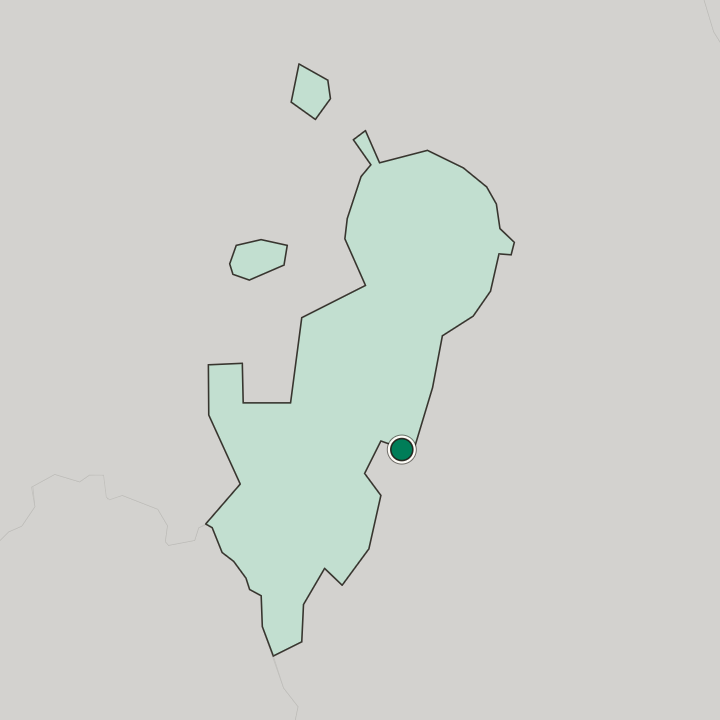
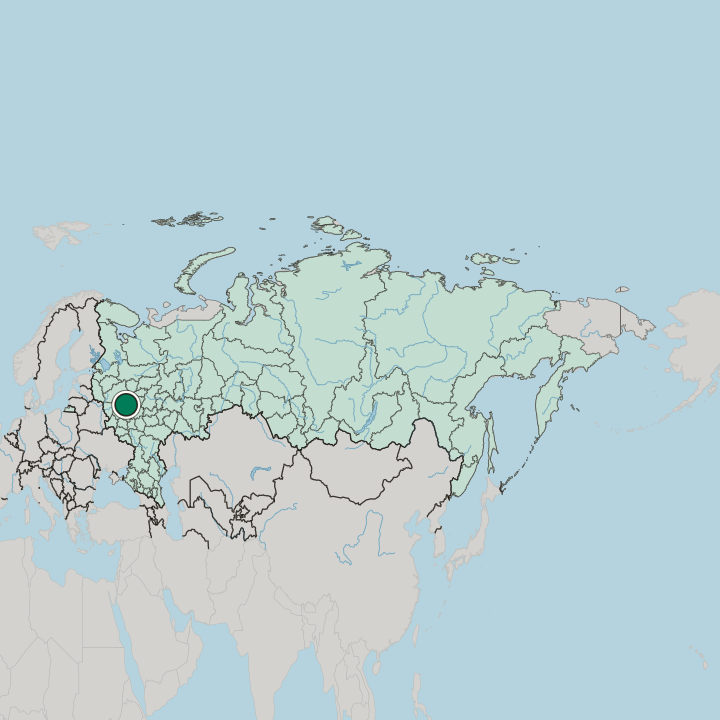
Klimovsk sits south of Moscow, 55 kilometres out, and 8 kilometres beyond Podolsk. About 16 square kilometres of Moscow Oblast make up the town. Koledino and Sertyakino lie just past its edge.
The Podolsk Urban Okrug is the administrative unit that contains all of it, which ties the town's administration to its larger neighbour rather than to Moscow directly.
What is the climate of Klimovsk?
Cold arrives early and stays. Klimovsk shares the temperate inland pattern of the country between Podolsk and Moscow, where no sea is near enough to soften either end of the year, so the winter months run hard and the summer concentrates its warmth into a short middle stretch. Snow belongs to that pattern.
Anyone planning to walk out to Koledino or Sertyakino should treat the warmer half of the year as the practical window.
How do you get to Klimovsk?
Podolsk is the way in. Only 8 kilometres separate the two, and Klimovsk sits at the far side of that gap, 55 kilometres from Moscow along the same southern approach. The town is walkable once reached.
Its 16 square kilometres put the water tower, the Krestovnikov barracks, and both houses of culture inside one circuit, while Koledino and Sertyakino need a short drive out.
More cities in Moscow Oblast
Updated October 2026