Sweden · Södermanland County
Where to Stay in Eskilstuna, Södermanland County
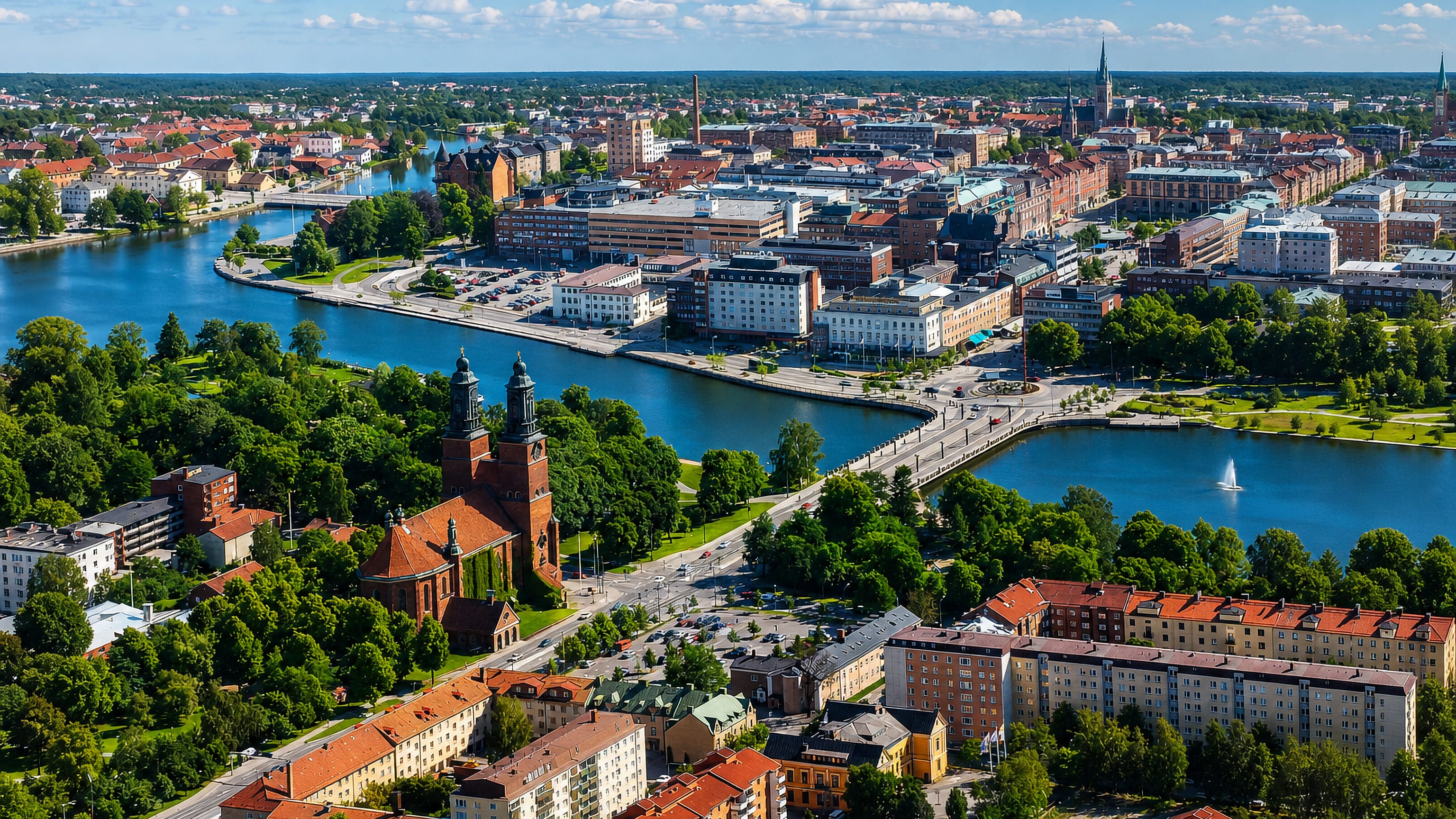
Eskilstuna is an old smithing city in northern Södermanland, set on the Eskilstunaån between Lake Hjälmaren and Lake Mälaren.
Hotel links are affiliate links: booking through them may earn us a commission, at no extra cost to you. It never affects how places are ranked. How this works


Where to stay in Eskilstuna
The practical side of choosing where to sleep.
Most visitors stay in the centre. The compact core straddles the Eskilstunaån, with hotels set close to the shops, the river walks, and the station, putting almost everything within an easy stroll. It suits travellers who arrive by train and want the city on foot.
Rooms here run from plain commercial hotels to a few smarter river-front addresses, and this is the natural first choice for a short stay. The area around the old town and Fristadstorget, just east of the river, offers a quieter alternative within the same walkable distance. Here the streets hold cafes, the art museum, and the green banks that follow the water through the city.
Families and longer-stay guests often settle here. For lower rates and easy parking, look to the outer districts and the approaches along the main roads, where chain hotels and motels sit close to the motorway for drivers passing between Stockholm and the west. Visitors drawn by Parken Zoo or the Munktell heritage may prefer a base near the western parks and museums, a short ride from the centre.
Make the centre your first choice. The riverside rewards a slower visit, and the outskirts suit anyone travelling by car.
Find hotels in Eskilstuna
Direct booking searches for these neighbourhoods.
City centre
hotels by the river, shops, and the station within a short walkFind hotels in City centrecalm, longer staysOld town and Fristadstorget
cafes, the art museum, and green riverbanks just east of the waterFind hotels in Old town and Fristadstorgetmotorway-side driversOuter districts
chain hotels and easy parking near the motorway approachesFind hotels in Outer districtsHotel links are affiliate links: booking through them may earn us a commission, at no extra cost to you. It never affects how places are ranked. How this works
Things to do in Eskilstuna
Ranked by global recognition; descriptions from Wikidata (CC0).
Museums & Galleries
3- Rademachersmedjorna Heritage working life museum
- Munktellmuseet
- Eskilstuna City Museum history museum
Churches & Religious Sites
7- Klosters kyrka Heritage
- Fors kyrka Heritage
- Ansgarskyrkan Heritage
- Sankt Andreas kyrka Heritage
- Tomaskyrkan Heritage
Show 2 more →
- Sankt Pauli kyrka Heritage
- Sankt Petri kyrka Heritage
Stadiums & Sports
3- Eskilstuna Sporthall
- Eskiltuna Ice Rink outdoor ice rink
- Smehallen indoor ice hockey rink
worth knowingacross 3 categories in Eskilstuna
About Eskilstuna
Steel made this city famous.
What is Eskilstuna known for?
Eskilstuna built its name on metalwork, the forges and factories that turned it into the smithy of Sweden and earned it a reputation for knives, tools, and fine steel known across the country. The old Rademachersmedjorna, a street of preserved seventeenth-century forge cabins, keeps that craft alive for visitors. Industry still hums here.
The river running through the centre, the engineering heritage of Munktell, and a lively zoo round out the draw.
What are the main landmarks in Eskilstuna?
Rademachersmedjorna is the city's signature sight, a row of preserved timber forge cabins from the seventeenth century where smiths still demonstrate the old craft. Nearby the Eskilstuna konstmuseum shows art beside the river, and the engineering past lives on at the Munktellmuseet, devoted to the tractors and machines once built here. Klosters kyrka and Fors kyrka anchor the older parishes with their brick and stone.
Parken Zoo draws families to the western edge. The river ties it all together.
What is the history of Eskilstuna?
The city takes its name from a saint. Eskil, an English missionary bishop martyred in the region, gave his name to the early settlement that grew around a monastery on the river, and a medieval Johannite priory once stood where the town later rose. For centuries this was a modest river crossing between two great lakes, a place of church, mill, and market on the road through Södermanland.
Metal changed everything. In the mid-seventeenth century the German smith Reinhold Rademacher was brought here to found a forge colony, and his workshops planted the smithing craft that would define the city for generations. A free town for metalworkers grew alongside, drawing smiths and giving Eskilstuna its lasting character as a centre of steel.
The forges multiplied. Through the industrial age the city became famous for knives, tools, locks, and fine cutlery sent across Sweden and beyond. Heavy engineering followed the smiths.
The Munktell works built tractors and machinery that carried the city into the modern industrial era, and waves of workers arrived to fill the factories, among them a large Sweden Finn community that shaped the city's culture. Old forge and modern factory together left Eskilstuna a working town proud of its hands, its history bound up with iron, steel, and the river that powered it all.
Where is Eskilstuna?
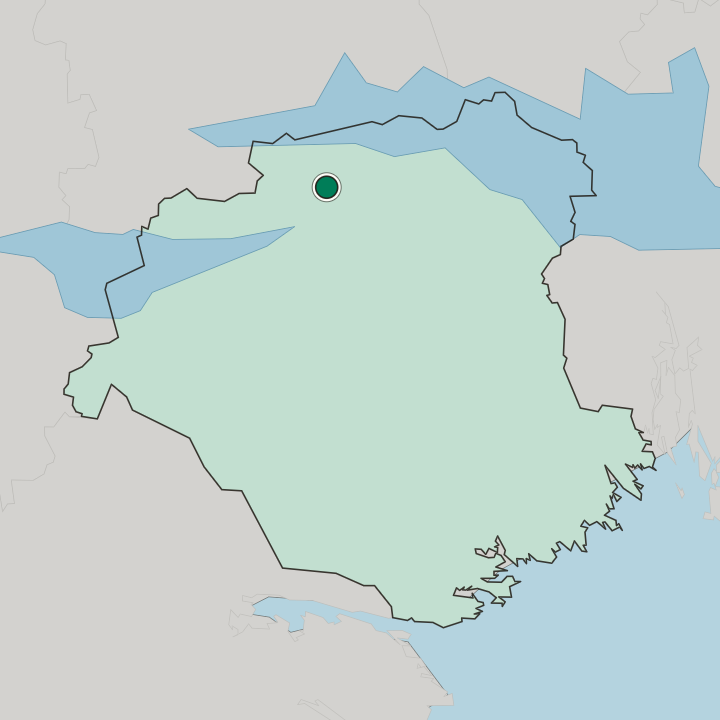
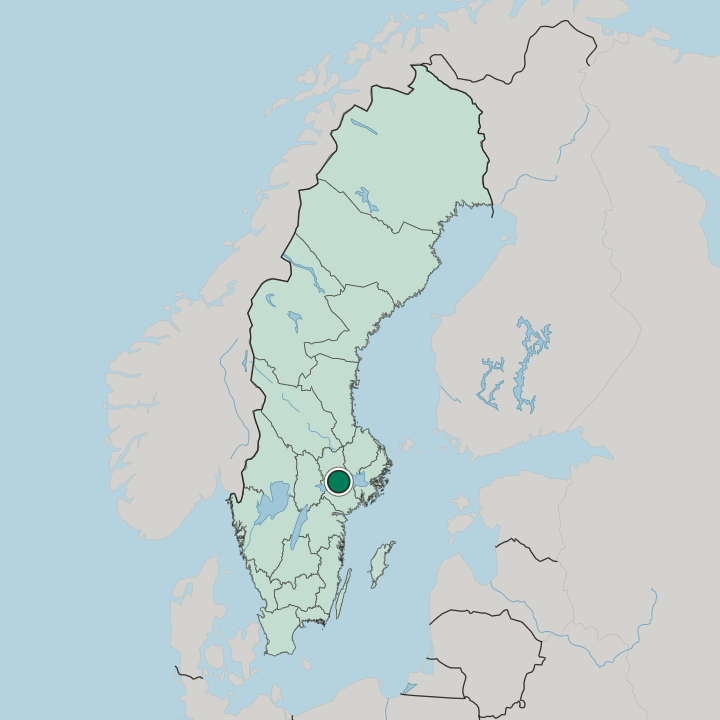
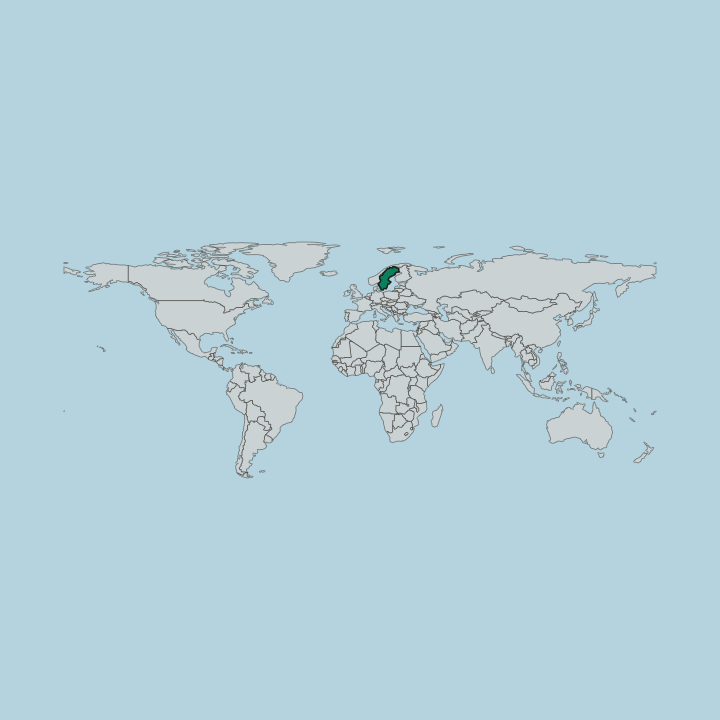
Eskilstuna lies in the north-western part of Södermanland County, west of Stockholm. The Eskilstunaån runs through the heart of the city, the short river that carries water from Lake Hjälmaren north into Lake Mälaren and once powered the forges along its banks. Gentle country surrounds the town, a land of farm fields, low wooded ridges, and lake shores typical of the Mälaren basin.
This river splits the centre in two. Green parks and walks follow the water through town toward the bays of Mälaren in the north.
What is the climate of Eskilstuna?
Eskilstuna's weather is that of the mild Swedish interior. Its position in the Mälaren basin brings fairly mild, settled weather by Swedish standards, with warm summers that fill the riverbanks and parks with people. Winters arrive with snow and frost.
The nearby lakes moderate the seasons a little, easing both the summer heat and the deep winter cold that grips the interior. Rain falls across the year, heaviest in the late summer months. Spring comes at a steady pace, melting the river ice before the lakeside woods turn fully green.
How do you get to Eskilstuna?
Eskilstuna sits well on the rail network. The city sits on the Svealand Line, with frequent trains linking it to Stockholm in around an hour and onward toward Örebro and the west, and the station drops you a short walk from the centre. Drivers reach the city on the E20, which runs past between the capital and Göteborg.
Stockholm's airports lie within driving range to the east. Local and regional buses connect the centre with the surrounding towns and the lakeside districts.
Common questions
What is the best area to stay in Eskilstuna?
City centre: first-timers. Old town and Fristadstorget: calm, longer stays. Outer districts: motorway-side drivers.
Good for
More cities in Södermanland County
Updated October 2026