
Tajikistan: Regions, Cities & Travel Guide
Tajikistan is a landlocked country in Central Asia, walled by the Pamir Mountains, with Dushanbe as its capital.
Hotel links are affiliate links: booking through them may earn us a commission, at no extra cost to you. It never affects how places are ranked. How this works


Top destinations in Tajikistan
Cities to start from, then drill into areas and hotels.

 Tajikistan
Dushanbe
Dushanbe is the capital of Tajikistan, a city of the Hisar Valley founded about 1700 and known as Stalinabad until 1961.Where to stay →
 Tajikistan
Khujand
Khujand is the second-largest city of Tajikistan and the capital of Sughd, standing in the western Ferghana Valley.Where to stay →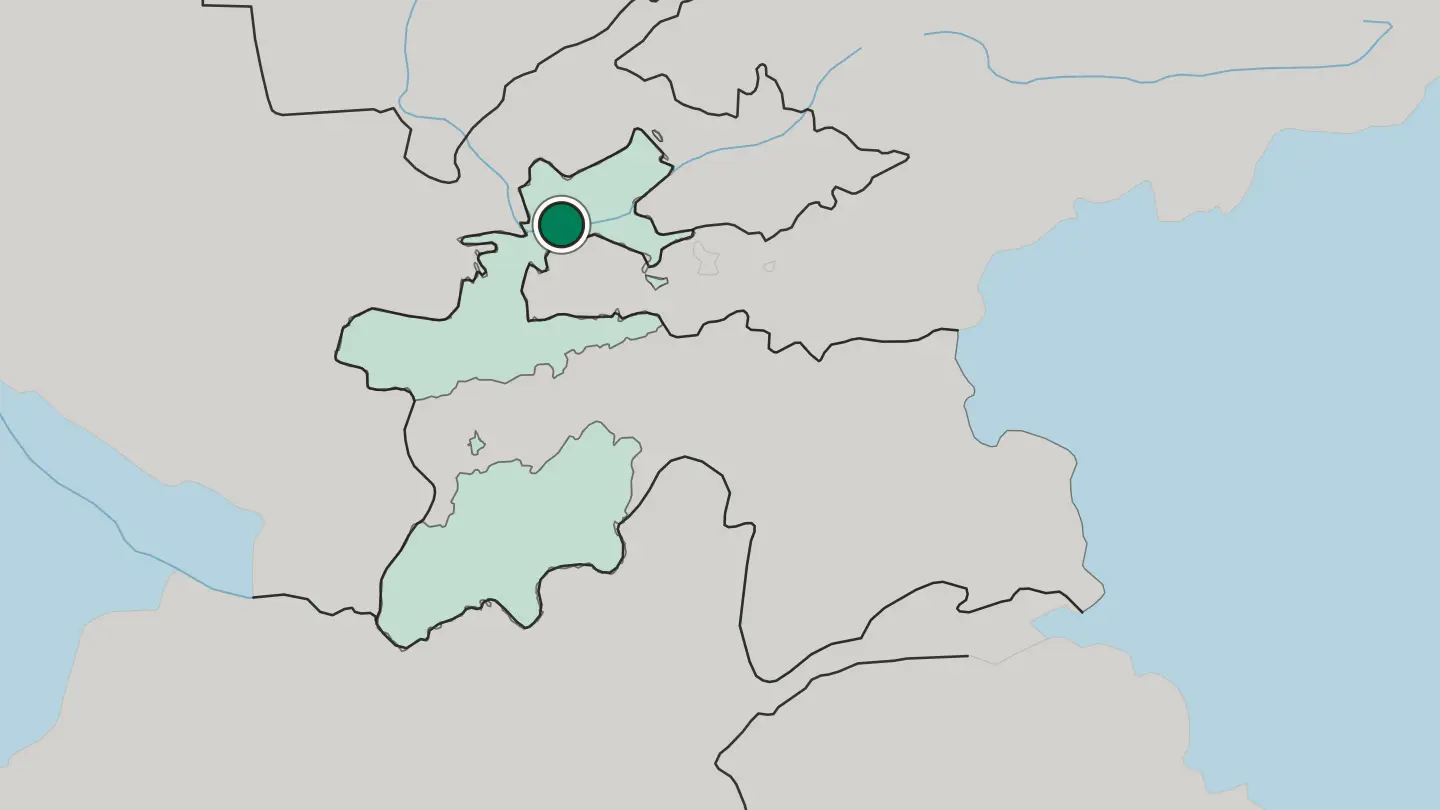
 Tajikistan
Kŭlob
Kulob is a city of southern Tajikistan, one of the oldest towns of Central Asia, a market of the cotton plains near the shrine of a great Sufi saint.Where to stay →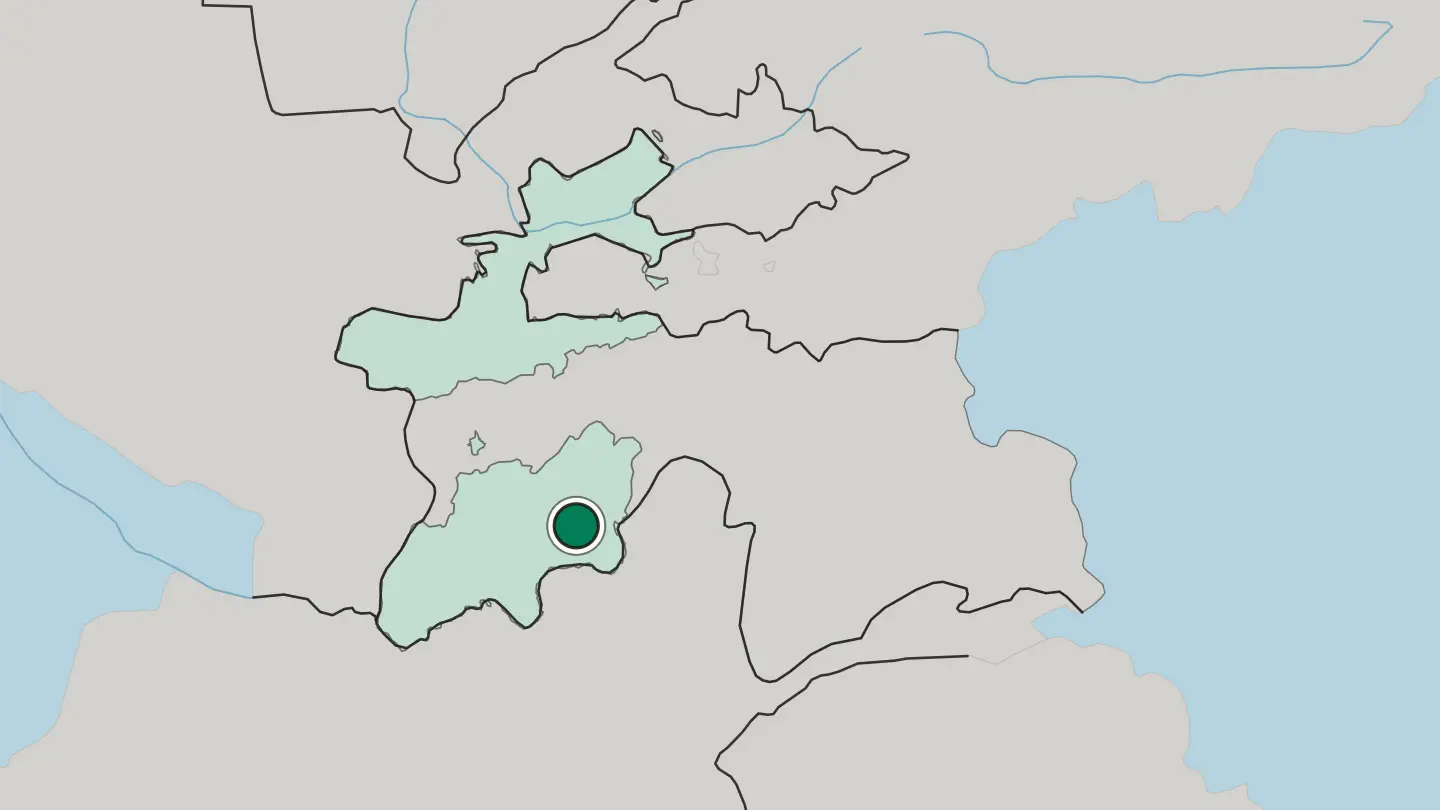
 Tajikistan
Bokhtar
Bokhtar is the capital of the Khatlon region and the largest city of southern Tajikistan, known before its renaming as Qurghonteppa and Kurgan-Tyube.Where to stay →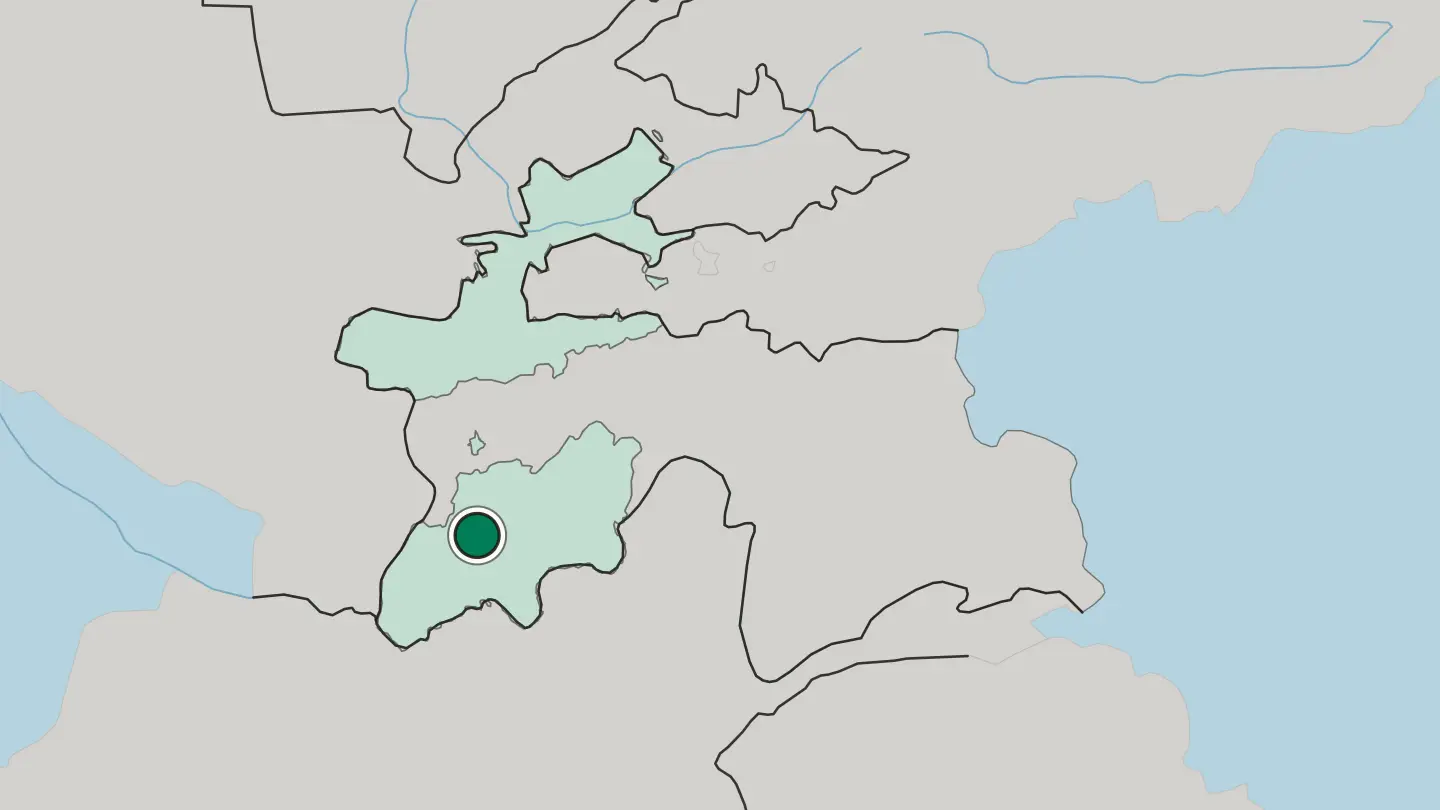
 Tajikistan
Istaravshan
Istaravshan, called Uroteppa until 2000, is an old city in the Turkistan foothills of Tajikistan, known for its Abdullatif Madrassah and Mosque.Where to stay →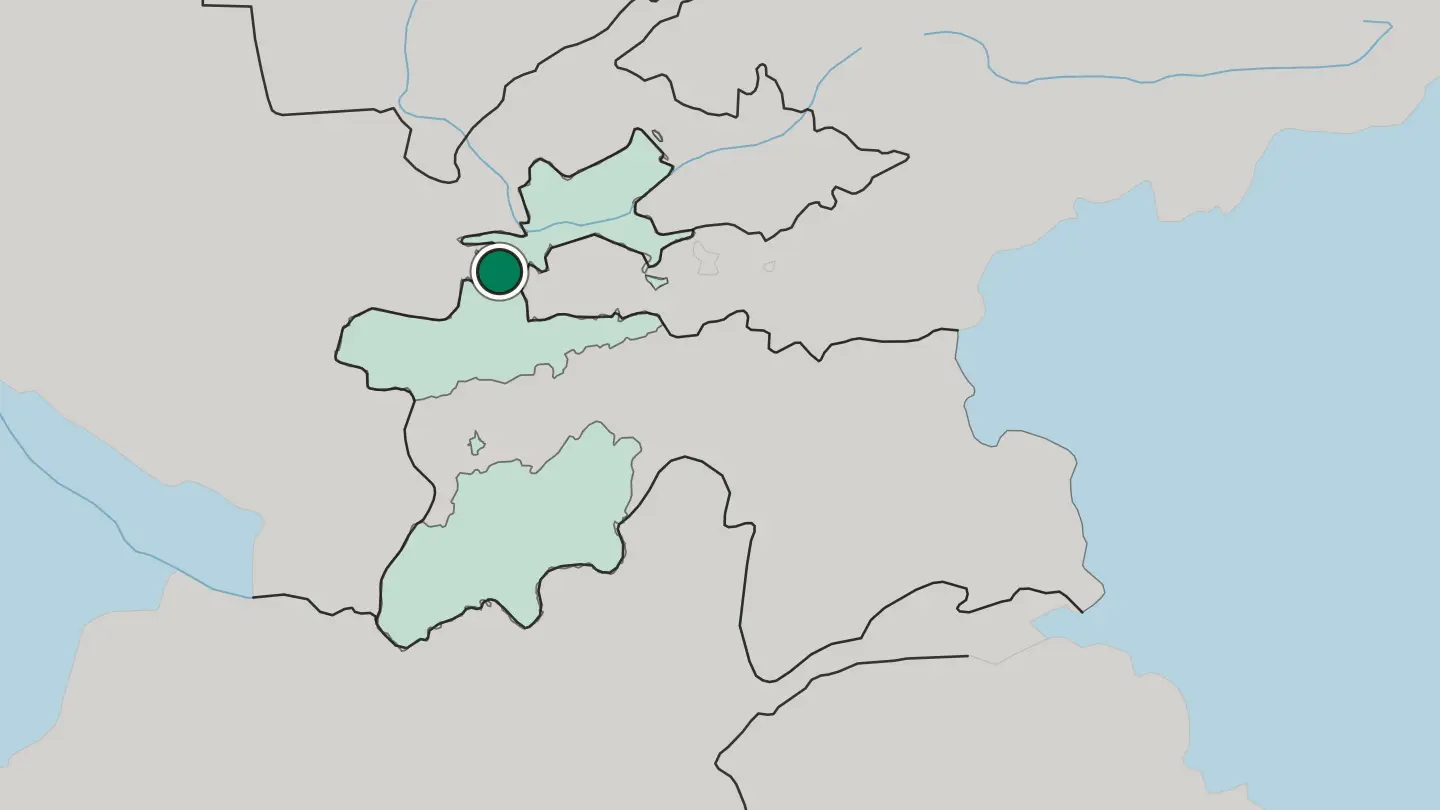 Tajikistan
Isfara
Isfara is a city in Viloyati Sughd, northern Tajikistan, on the Tajik side of the Ferghana Valley and hard against the border with Kyrgyzstan.Where to stay →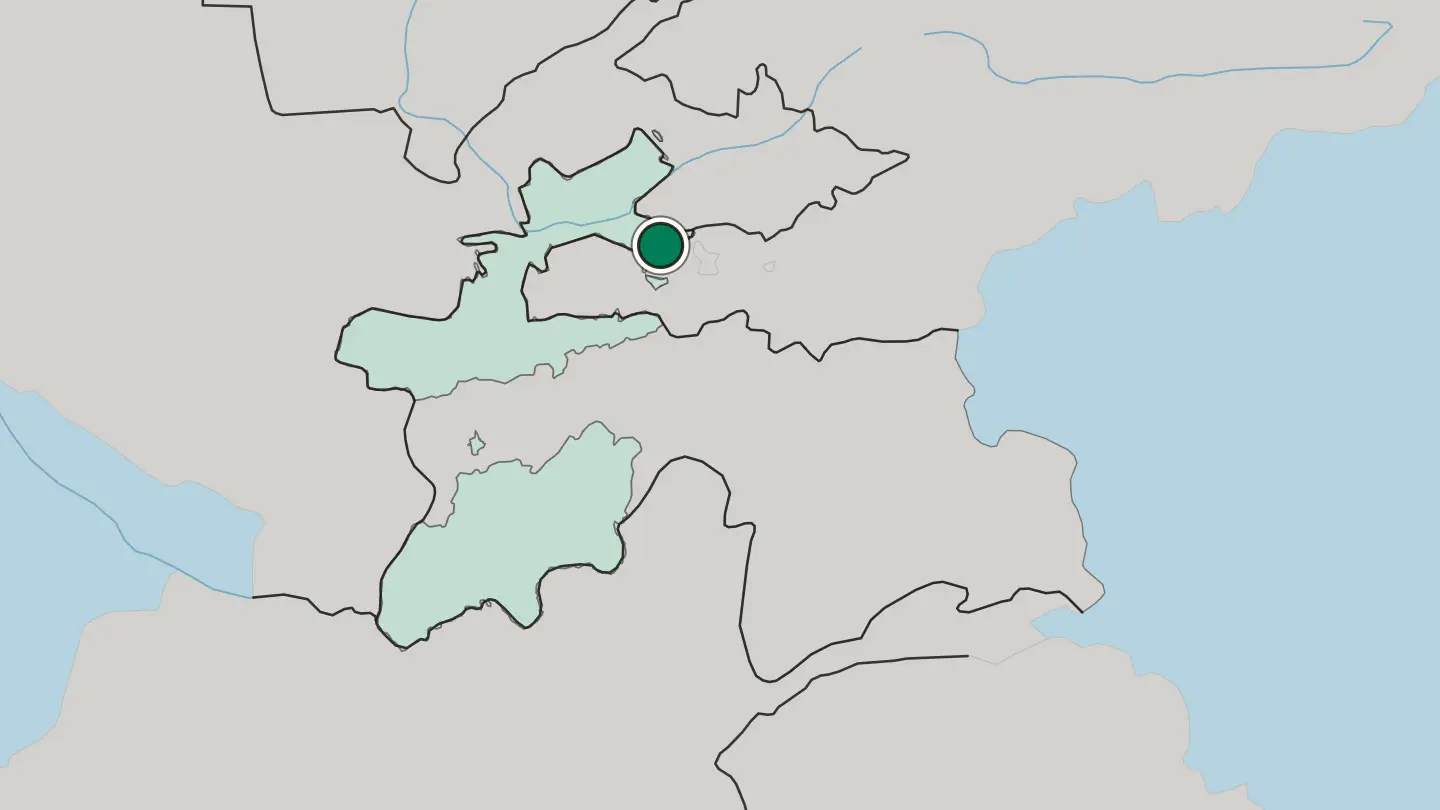
Hotel links are affiliate links: booking through them may earn us a commission, at no extra cost to you. It never affects how places are ranked. How this works
Regions of Tajikistan
Tajikistan
Dushanbe
Dushanbe is the capital of Tajikistan, a city of the Hisar Valley enclosed by the Hisar Range and the mountains that wall the southern side.Towns & cities →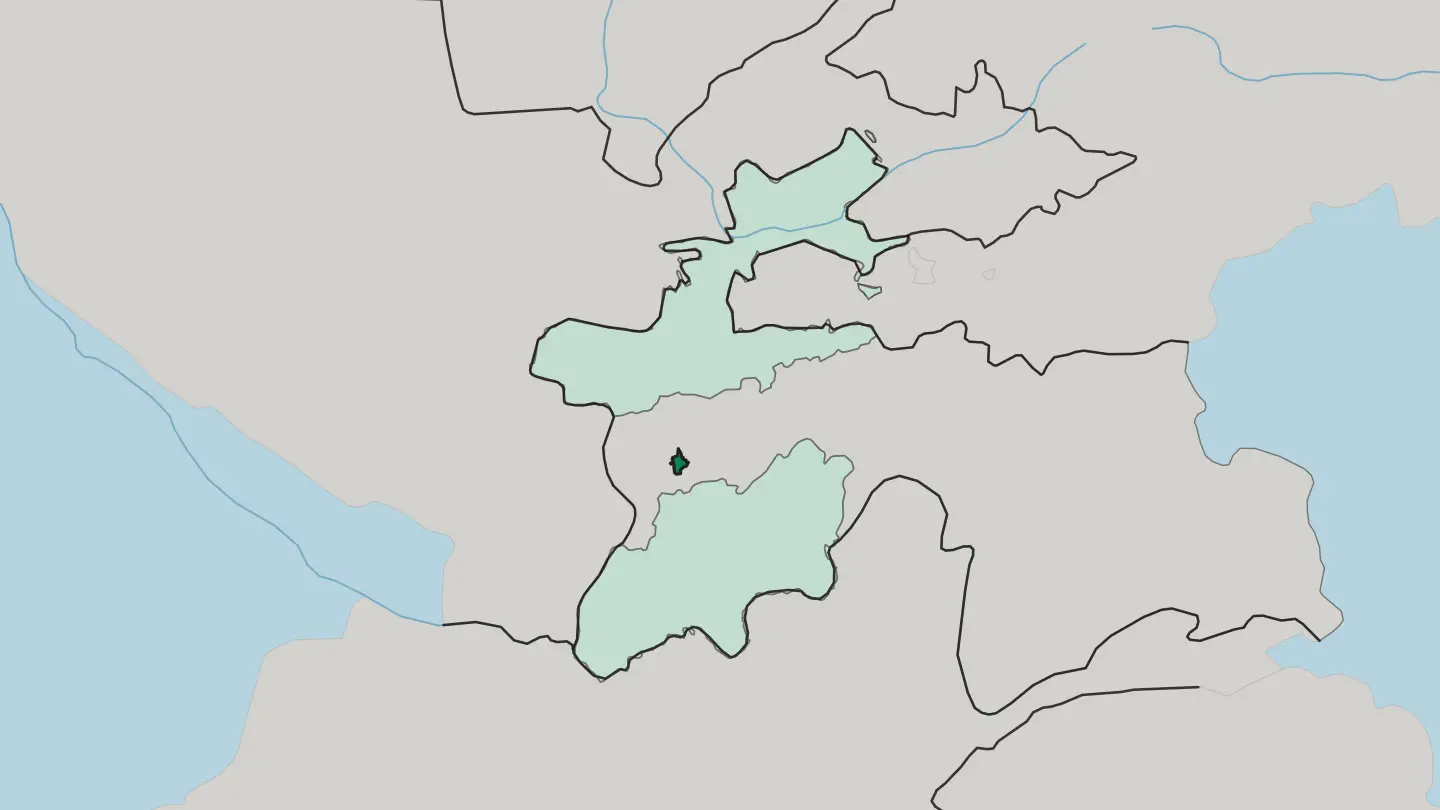 Tajikistan
Viloyati Khatlon
Viloyati Khatlon is the lowland southwest of Tajikistan, running from the Hisor Range down to the river Panj, with Bokhtar as its capital.Towns & cities →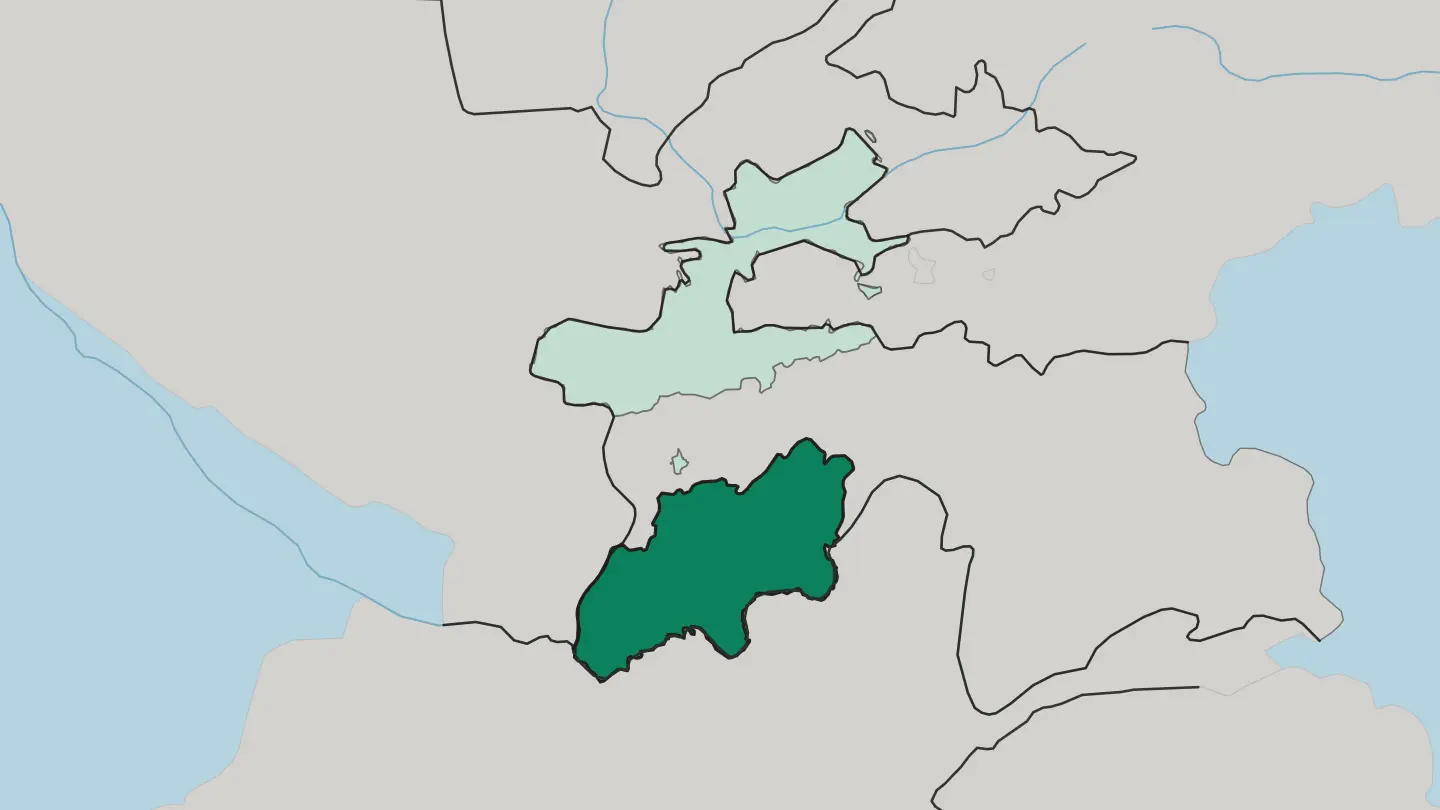 Tajikistan
Viloyati Sughd
Viloyati Sughd is the northwest province of Tajikistan, centred on historical Sogdiana and run from Khujand, and it was called Leninabad until 2001.Towns & cities →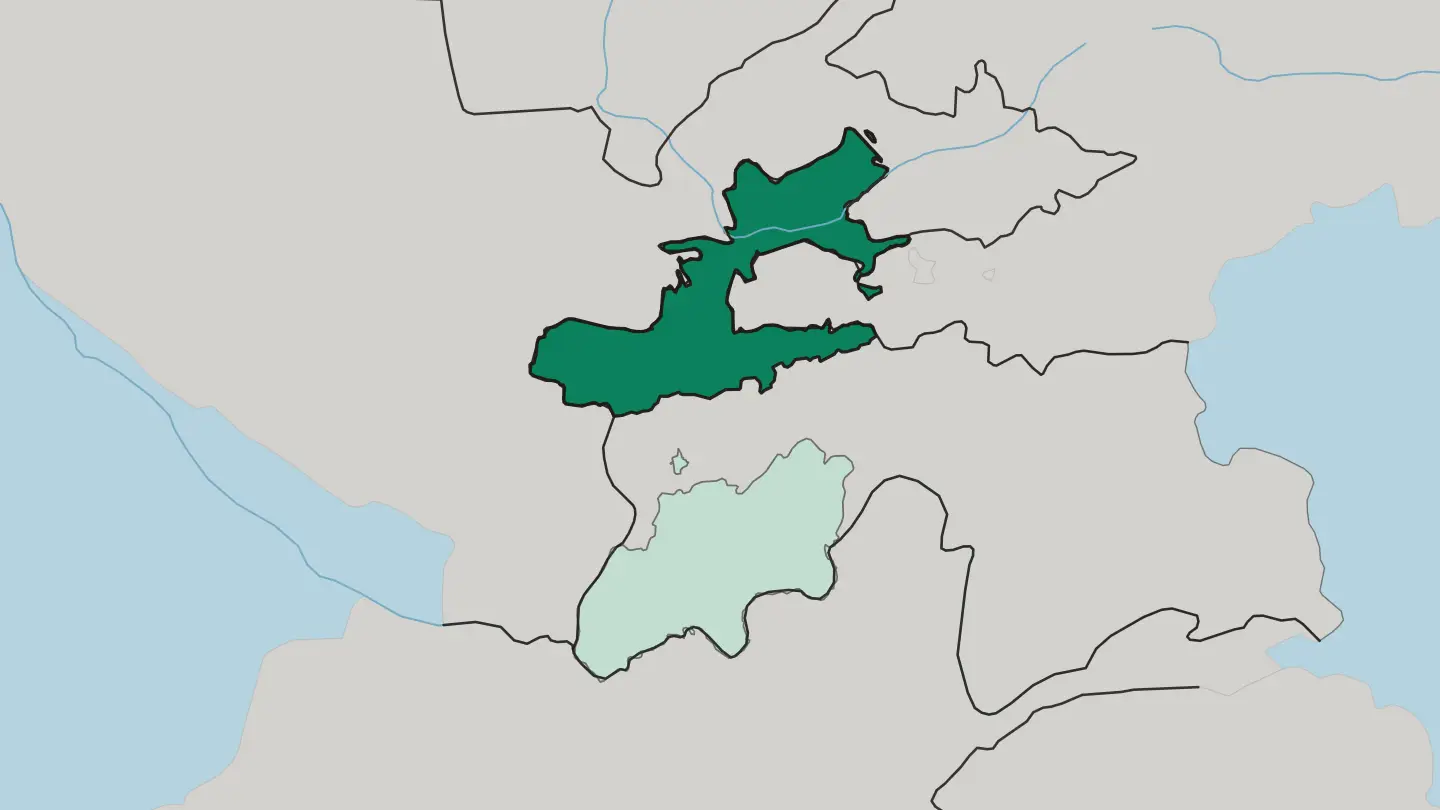
About Tajikistan
Mountains define Tajikistan.
What is Tajikistan known for?
The Pamirs, called the Roof of the World, rise to Ismoil Somoni Peak in the country's east, while the Fann Mountains hold turquoise lakes like Iskanderkul within a day of the capital. Its cities carry the old Persian Silk Road: Khujand in the Fergana Valley, Panjakent near the Sogdian ruins, and Dushanbe below the ridges. Silk Road ruins and glacier lakes sit close together.
Where is Tajikistan?
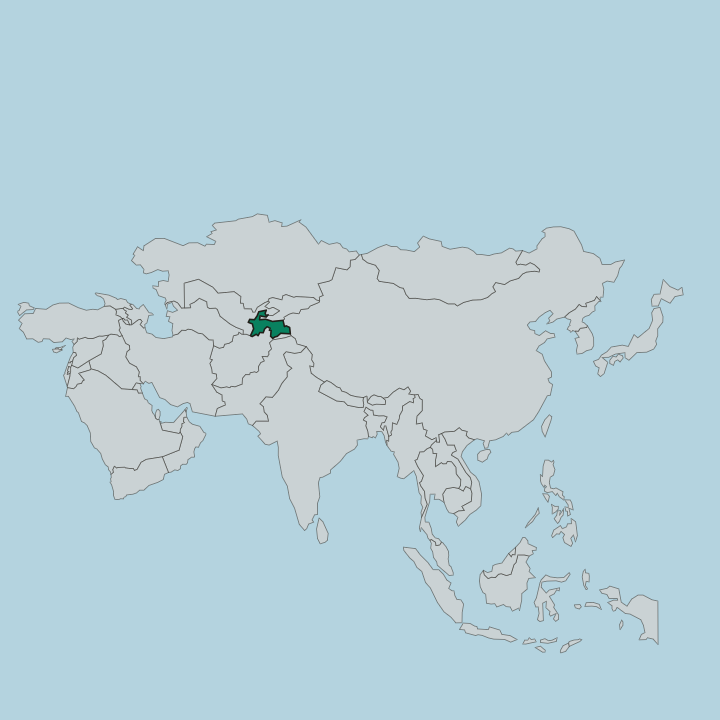
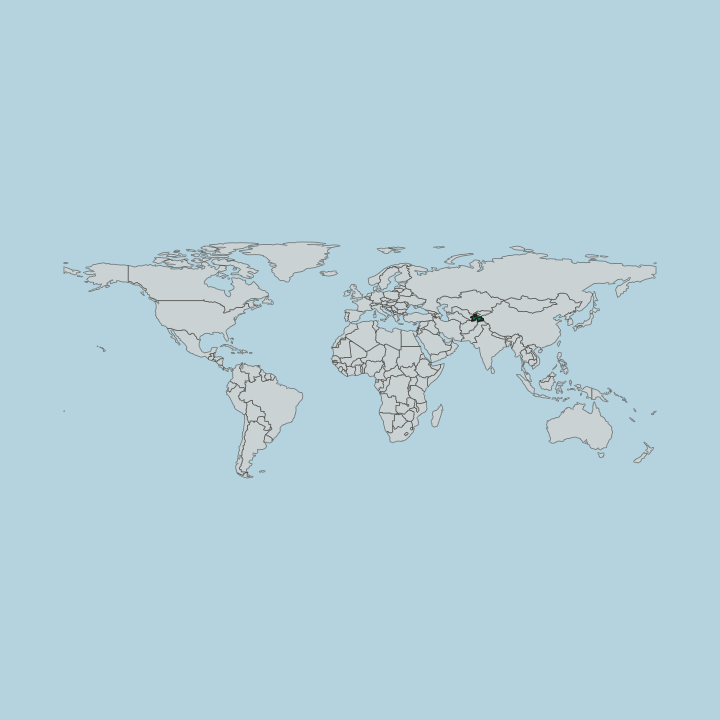
Mountains cover almost all of Tajikistan. The land is landlocked and pinned in Central Asia, wedged between Afghanistan to the south, Uzbekistan to the west, Kyrgyzstan to the north, and China to the east. Two great ranges order everything.
The Pamirs fill the country's east, a high and thinly peopled plateau that climbs to Ismoil Somoni Peak, the tallest summit in the land, while the Fann Mountains and the Gissar range rise closer to the centre above Dushanbe. Glaciers feed the rivers here. The Panj threads the southern border with Afghanistan and joins the Vakhsh to form the Amu Darya, the great artery of Central Asian irrigation, and the Zeravshan runs west past Panjakent toward Samarkand.
In the north the ground falls away. There the Fergana Valley opens into fertile, irrigated lowland around Khujand, the one broad plain in a country that is otherwise vertical. Between the ranges lie glacier lakes like Iskanderkul in the Fann Mountains, ringed by bare rock and reached over rough passes.
From valley floor to icefield the relief is severe.
What is the history of Tajikistan?
Tajikistan's roots reach into ancient Sogdiana, the Persian-speaking land whose merchants and painters left the ruins now dug up outside Panjakent. Caravans on the Silk Road crossed these valleys, and the towns along them traded silk, glass, and ideas between the Han lands and the Mediterranean. The medieval high point came with the Samanids.
From Bukhara the Samanid Empire ruled Transoxiana in the ninth and tenth centuries, patronising the poet Rudaki and the revival of the Persian language, and its founder Ismail Samani lent his name to the country's highest peak. Empires kept changing hands. Turkic and Mongol conquest, then the emirate of Bukhara, governed these mountains before the Russians pushed into Central Asia in the nineteenth century.
Soviet rule redrew the map in 1929, when the Tajik Soviet Socialist Republic was carved out with Dushanbe as its new capital. Independence came in 1991 with the collapse of the Soviet Union. It was followed almost at once by a civil war that tore the country apart from 1992 until a peace accord in 1997.
From Sogdian trade town to mountain republic, the Persian thread runs unbroken.
What is Tajikistan like?
Tajikistan is the one country of former Soviet Central Asia whose people are Persian rather than Turkic. The Tajik language is a form of Persian, and its literature descends directly from Rudaki, the tenth-century poet from the Samanid court remembered as the father of Persian verse. Poetry is not a museum piece here.
Lines of classical verse are quoted in ordinary speech, and the shashmaqam song cycles, played on the dutar and rubab lutes, carry the same courtly tradition into weddings and festivals. Food marks the seasons and the regions. The plov of rice, mutton, and carrot known as osh is the shared table across Central Asia, while qurutob, torn bread soaked in salty yogurt, is claimed as the national dish of the southern valleys.
Spring brings the biggest celebration. Navruz, the Persian new year at the equinox, fills courtyards in Dushanbe and Khujand with cleaning, feasting, and games as the old year is thrown out. The bread called non is treated with care and never set upside down.
Persian words, mountain hospitality, and Silk Road habit hold the culture together.
What is the climate of Tajikistan?
Altitude rules the weather in Tajikistan. The lowlands of the Fergana Valley and the south run hot and dry through summer, with mild winters around Dushanbe and Khujand, while the Pamir plateau in the east stays cold, thin-aired, and snowbound for much of the year. Rain falls mostly in spring.
The high roads into the Pamirs and the Fann Mountains open only from about June to September, when the passes clear and the glacier lakes turn their brightest. One country, many altitudes.
How do you get to Tajikistan?
Most travellers arrive by air into Dushanbe. The capital's airport carries the main international links, with regional flights north to Khujand and, weather permitting, over the ranges to Khorugh in the Pamirs. Overland routes matter here too.
Roads cross from Uzbekistan near Panjakent and from Kyrgyzstan along the Pamir Highway, the high route that traces the Panj past Afghanistan before climbing into Gorno-Badakhshan. Many nationalities enter on an e-visa. The mountain passes set the timetable.
Good for
Updated September 2026