United States · Arizona
Where to Stay in Tucson, Arizona
Tucson is the second-largest city in Arizona, set in the Sonoran Desert and known as the Old Pueblo, seat of the University of Arizona.
Hotel links are affiliate links: booking through them may earn us a commission, at no extra cost to you. It never affects how places are ranked. How this works


Where to stay in Tucson
The practical side of choosing where to sleep.
Tucson spreads its lodging between the historic downtown of the Old Pueblo and the campus blocks near the University of Arizona, all ringed by the Sonoran Desert. Base yourself downtown for the shortest reach to the old adobe core of Arizona. The desert light draws early risers.
Stay in the downtown blocks if the city's Spanish and territorial past draws you, since the Saints-Peter-and-Paul church of Tucson and the Southern Arizona Transportation Museum sit within a short walk there. For a campus base, choose the streets near the University of Arizona, where the Arizona State Museum and the University of Arizona Museum of Art gather the city's collections. Science leads on the next block.
Guests keen on the desert sky do well near the Flandrau Science Center and Planetarium, close to the university core. Families often prefer the eastern parks near the Reid Park Zoo for a shaded day out of the sun. The El Conquistador Water Tower marks the older residential quarter for heritage travellers.
Each of these areas keeps the downtown core and the desert foothills within an easy ride of one another.
Find hotels in Tucson
Direct booking searches for these neighbourhoods.
Downtown Old Pueblo
The downtown Old Pueblo gathers the Saints-Peter-and-Paul church of Tucson and the Southern Arizona Transportation Museum within one walkable stretch of historic Arizona.Find hotels in Downtown Old PuebloMuseum-goers near the University of Arizona and the Arizona State MuseumUniversity District
The campus streets around the University of Arizona put the Arizona State Museum and the Flandrau Science Center and Planetarium a short walk from the room.Find hotels in University DistrictFamilies near the Reid Park Zoo and the eastern desert parksReid Park
The eastern park blocks keep the Reid Park Zoo and the shaded lawns a short ride from the Sonoran Desert foothills of Tucson.Find hotels in Reid ParkHotel links are affiliate links: booking through them may earn us a commission, at no extra cost to you. It never affects how places are ranked. How this works
Things to do in Tucson
Ranked by global recognition; descriptions from Wikidata (CC0).
Museums & Galleries
3- Arizona State Museum Heritage
- University of Arizona Museum of Art
- University of Arizona Mineral Museum
Churches & Religious Sites
3- Saints-Peter-and-Paul church of Tucson
- First Assembly of God (Tucson, Arizona)
- First United Methodist Church (Tucson, Arizona)
Stadiums & Sports
3- McKale Center
- Hi Corbett Field
- Rita Hillenbrand Memorial Stadium
Landmarks & Notable Places
6- Ball-Paylore House Heritage
- Dr. William Austin Cannon House Heritage
- Professor George E. P. Smith House Heritage
- Type A at 2101 E. Water St Heritage
- Type B at 2019 E. Water St Heritage
Show 1 more →
- First Joesler House Heritage
worth knowingacross 4 categories in Tucson
About Tucson
What is Tucson known for?
Tucson is known first as the Old Pueblo and the home of the University of Arizona, second-largest city in the Sonoran Desert reaches of Arizona. Its campus museums draw scholars and visitors alike. Learning fills the streets.
The Arizona State Museum, the University of Arizona Museum of Art, and the University of Arizona Mineral Museum keep the city's leading collections, while the Flandrau Science Center and Planetarium studies the desert sky above. The Reid Park Zoo gives families a green refuge from the heat.
What are the main landmarks in Tucson?
Tucson holds its landmarks between campus museums and old adobe walls. The Arizona State Museum, the University of Arizona Museum of Art, and the University of Arizona Mineral Museum gather the city's leading collections on the university grounds. Science marks the campus edge.
The Flandrau Science Center and Planetarium studies the desert sky, while the Southern Arizona Transportation Museum records the rail history that built the town. Faith and green space close the set. The Saints-Peter-and-Paul church of Tucson anchors an older parish, and the Reid Park Zoo offers a leafy refuge from the Sonoran Desert heat of Arizona.
Tucson keeps its sights in layers.
What is the history of Tucson?
Tucson was founded in 1775 as a Spanish presidio in the Sonoran Desert, giving the settlement its nickname of the Old Pueblo. Its site by a desert river had drawn people for centuries before the walls went up. The presidio made the town.
Spanish, Mexican, and later American rule each left their mark on the growing settlement, and the adobe streets of the old core still trace that layered past. The Saints-Peter-and-Paul church of Tucson stands among the parishes raised by the Catholic settlers who shaped the early city of Arizona. The railroad changed the pace.
Its arrival in the late nineteenth century tied the Old Pueblo to the wider country and spurred the growth that the Southern Arizona Transportation Museum now records beside the old depot. The founding of the University of Arizona brought scholars and museums, turning the desert town into a centre of learning and research. Over the years the city spread outward from its presidio core across the desert basin toward the surrounding mountains.
That founding as a frontier presidio, more than any later boom, shaped how Tucson came to be.
Where is Tucson?
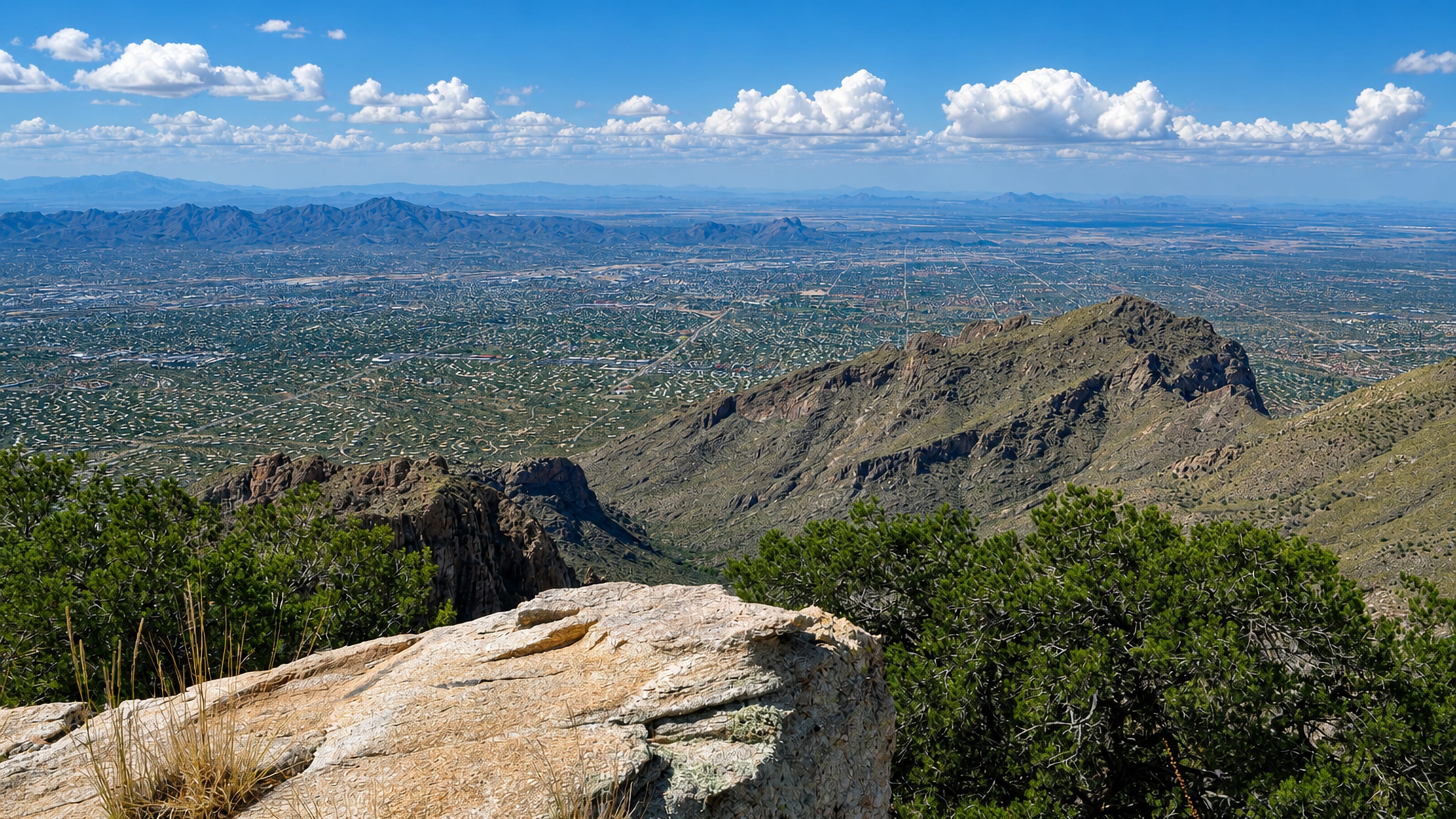
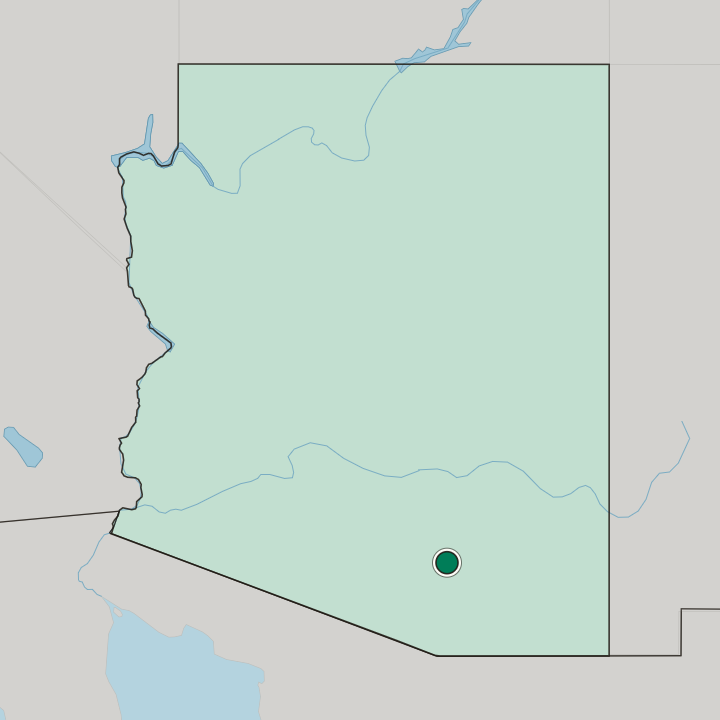
Tucson sits in a broad desert basin in southern Arizona, ringed by rugged mountain ranges on every side. Its streets spread across the flat floor of the Sonoran Desert, rising gently toward the foothills at the edges of town. Mountains fence the valley here.
That high desert setting, cooler than the lower country around Phoenix, gives the Old Pueblo its dry air and sharp light. The University of Arizona anchors the central grid.
What is the climate of Tucson?
Tucson has a hot desert climate softened a little by its higher ground above Phoenix. Summers turn very hot and dry, broken only by the monsoon storms that sweep the Sonoran Desert in late summer. Winters stay mild and sunny.
Rain is scarce most of the year. The clear desert air brings sharp swings between hot days and cool nights, and the mountains around the basin catch what little moisture crosses this corner of Arizona. Spring blooms fill the foothills.
How do you get to Tucson?
Tucson sits on the main interstate south of Phoenix, served by its own international airport near the edge of the Sonoran Desert. Most visitors arrive by road or air. From downtown it is a short drive out to the University of Arizona and the desert foothills.
The flat basin grid makes the city simple to cross by car. Rail and bus lines add further links across Arizona.
Common questions
What is the best area to stay in Tucson?
Downtown Old Pueblo: Heritage travellers wanting the adobe core and the Saints-Peter-and-Paul church of Tucson at the door. University District: Museum-goers near the University of Arizona and the Arizona State Museum. Reid Park: Families near the Reid Park Zoo and the eastern desert parks.
Good for
More cities in Arizona
Updated September 2026