United States · Florida · Orlando
Lake Eola Heights Historic District, Orlando — Area Guide & Where to Stay
Old oaks shade the brick streets of Lake Eola Heights Historic District, a quarter of 487 historic buildings immediately east of Downtown Orlando.
Hotel links are affiliate links: booking through them may earn us a commission, at no extra cost to you. It never affects how places are ranked. How this works



Where to stay in Lake Eola Heights Historic District
The practical side of choosing where to sleep.
Lake Eola Heights Historic District keeps almost all of its ground residential, so the lodging gathers at the western rim along North Magnolia Avenue, a block from the downtown offices. The interior is porches and oaks. Cathcart Avenue and East Amelia Street cross at the geographic center of the district, and the blocks around that crossing stay quiet after dark, with brick paving underfoot and canopy overhead.
Pick the Magnolia edge for a short walk into downtown, or the inner streets if you would rather wake to birds than traffic.
Find hotels in Lake Eola Heights Historic District
Direct booking searches for these neighbourhoods.
The North Magnolia Avenue edge
The western boundary of the district, where the historic streets meet the downtown grid and most of the nearby lodging sits.Find hotels in The North Magnolia Avenue edgeAnyone after porches, oak shade and quiet brick paving.Around Cathcart Avenue and East Amelia Street
The geographic center of the district, where the two streets cross and the canopy is heaviest.Find hotels in Around Cathcart Avenue and East Amelia StreetVisitors who want Lake Eola within a block of the door.The Ridgewood Street side
The southern boundary of the district, one street north of the lake and the park that rings it.Find hotels in The Ridgewood Street sideHotel links are affiliate links: booking through them may earn us a commission, at no extra cost to you. It never affects how places are ranked. How this works
Things to do in and around Orlando
Ranked by global recognition; descriptions from Wikidata (CC0).
Museums & Galleries
3- Orlando Museum of Art
- Orange County Regional History Center
- The Mennello Museum of American Art
Churches & Religious Sites
2- St. George Antiochian Orthodox Church Heritage
- First United Methodist Church of Orlando
Landmarks & Notable Places
3- Jack Kerouac House Heritage
- Dr. P. Phillips House Heritage
- John N. Huttig Estate Heritage
worth knowingacross 3 categories in and around Orlando
About Lake Eola Heights Historic District
What are the main landmarks in Lake Eola Heights Historic District?
Lake Eola Heights Historic District holds churches and schools rather than museums. Trinity Lutheran Church rises in red brick on East Livingston Street, its battlemented bell tower and rose window carrying the Gothic Revival of 1926, the same year Broadway United Methodist Church raised its colossal Ionic portico on North Broadway Avenue. St. James Cathedral School runs a whole block of East Ridgewood Street.
Barrel tile covers it. Howard Middle School closes the southeastern corner, built as Orlando High School behind a portico of the same order. Lake Eola itself lies one block south of the boundary, on the northeast edge of downtown.
What is the history of Lake Eola Heights Historic District?
Lake Eola Heights Historic District began as citrus. Jacob Summerlin, president of the first Orlando city council, bought 200 acres of this ground late in the nineteenth century, and the Great Freeze of 1894-95 killed the grove and left the land to be cut into house lots. Building quickened after 1905, and the district filled in as a patchwork of small plats with no overall plan, the Lake Eola subdivision of 1914 and Eola Heights of 1919 among them.
Brick paving arrived about 1915. Construction ran on until about 1940, and a federal moratorium on building stopped it the year after.
Where is Lake Eola Heights Historic District?
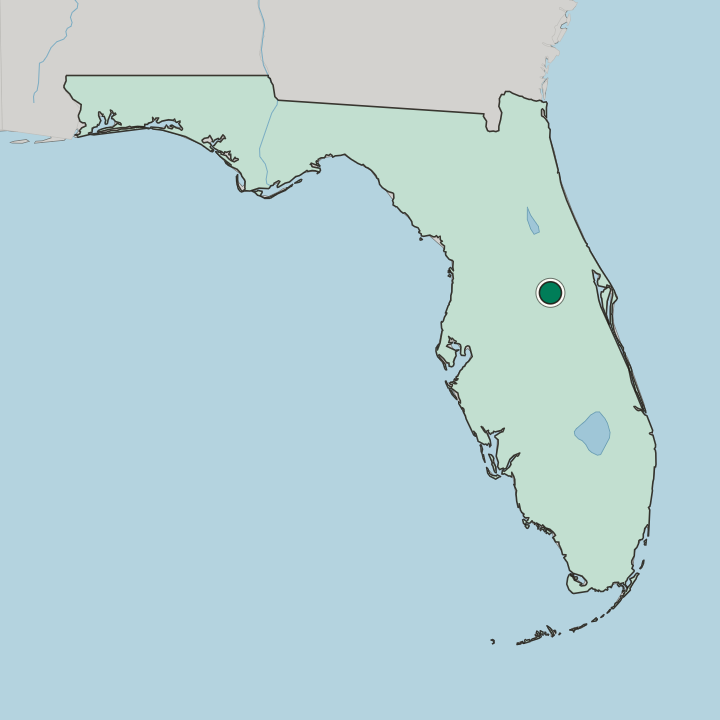
Lake Eola Heights Historic District runs east from North Magnolia Avenue to North Hyer Avenue, and north from Ridgewood Street to Hillcrest Street.
Common questions
What is the best area to stay in Lake Eola Heights Historic District?
The North Magnolia Avenue edge: Walkers who want the downtown blocks one street away.. Around Cathcart Avenue and East Amelia Street: Anyone after porches, oak shade and quiet brick paving.. The Ridgewood Street side: Visitors who want Lake Eola within a block of the door..
Good for
More areas in Orlando
Updated October 2026