United States · Florida
Where to Stay in Orlando, Florida
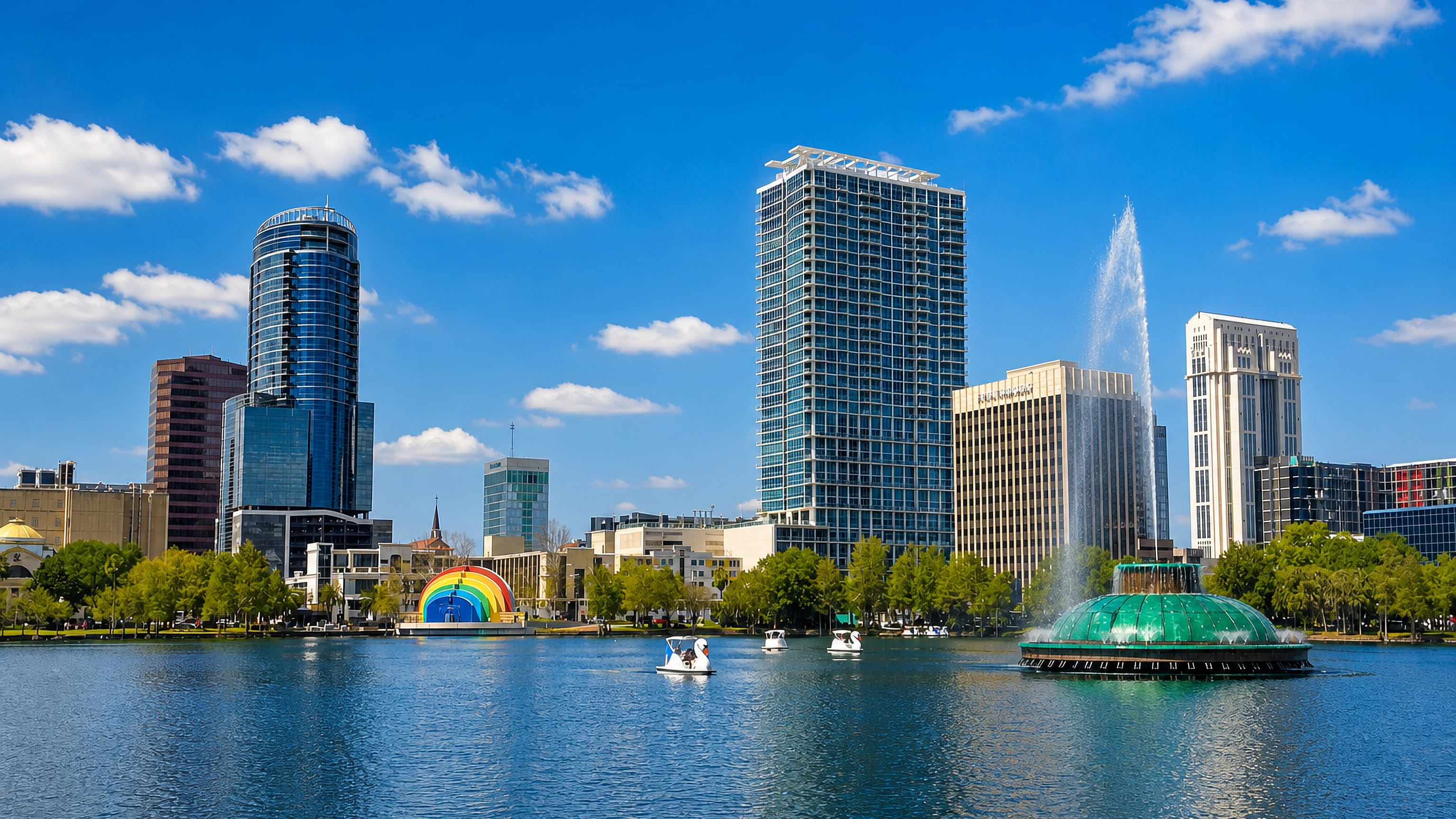
Lakes scatter through Orlando, a city in central Florida known for the Orange County Regional History Center.
Hotel links are affiliate links: booking through them may earn us a commission, at no extra cost to you. It never affects how places are ranked. How this works


Where to stay in Orlando
The right area depends on your trip — here's what each neighbourhood is best for.
 OrlandoUnited States
Parramore
Interstate 4 walls Parramore off from downtown Orlando, a historically Black quarter west of Division Avenue, known for the Wells'Built Museum.Where to stay →OrlandoUnited StatesDowntown Orlando
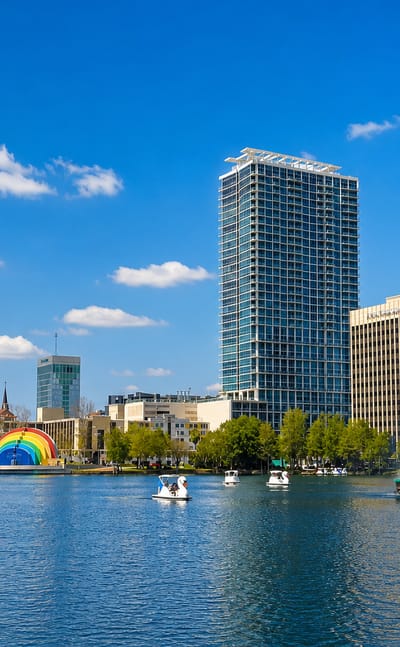
Downtown Orlando is the historic core and central business district of Orlando, wrapped around Lake Eola between Marks Street and Kaley Avenue.Where to stay →OrlandoUnited StatesDelaney Park
Brick streets run through Delaney Park, a district of Orlando south of downtown, edged by Delaney Avenue, East Kaley Street and Summerlin Avenue.Where to stay →OrlandoUnited StatesLake Eola Heights Historic District
Old oaks shade the brick streets of Lake Eola Heights Historic District, a quarter of 487 historic buildings immediately east of Downtown Orlando.Where to stay →OrlandoUnited StatesHolden Heights
Lake Holden fills the middle of Holden Heights, an unincorporated census place in Orange County, Florida, just south of downtown Orlando.Where to stay →OrlandoUnited StatesCollege Park
Street signs read Princeton, Harvard, and Yale in College Park, a residential district of Orlando strung along Edgewater Drive north of Lake Ivanhoe.Where to stay →OrlandoUnited StatesConway
Water breaks the street grid at Conway, an old Orlando neighbourhood on Conway Road, with Lake Anderson, Lake Margaret and Bass Lake inside its lines.Where to stay →OrlandoUnited StatesAzalea Park
Azalea Park is a census-designated place in Orange County, Florida, bounded by Colonial Drive, Goldenrod Road and Curry Ford Road east of Orlando.Where to stay →OrlandoUnited StatesMetroWest
MetroWest spreads over rolling ground in southwest Orlando, a master-planned community built around the MetroWest Golf Club with frontage on Turkey Lake.Where to stay →OrlandoUnited StatesLake Nona
Lake Nona is a planned mixed-use community inside Orlando's city limits, seventeen square miles south-east of Orlando International Airport.Where to stay →Hotel links are affiliate links: booking through them may earn us a commission, at no extra cost to you. It never affects how places are ranked. How this works
Find hotels in Orlando
Direct booking searches for these neighbourhoods.
Downtown lakes
The Orange County Regional History Center stands among the downtown streets near the lakes of Orlando.Find hotels in Downtown lakesA base among older residential streetsHistoric homes quarter
The Dr. P. Phillips House and the Jack Kerouac House keep an earlier city along the tree-lined streets away from the core.Find hotels in Historic homes quarterHotel links are affiliate links: booking through them may earn us a commission, at no extra cost to you. It never affects how places are ranked. How this works
Things to do in Orlando
Ranked by global recognition; descriptions from Wikidata (CC0).
Museums & Galleries
2- Orlando Museum of Art
- Orange County Regional History Center
Churches & Religious Sites
2- St. George Antiochian Orthodox Church Heritage
- First United Methodist Church of Orlando
Stadiums & Sports
3- Tinker Field Heritage
- Eagle Creek Golf Club
- Warden Stadium
Landmarks & Notable Places
5- Jack Kerouac House Heritage
- Dr. P. Phillips House Heritage
- S. Howard Atha House Heritage
- Thomas Picton Warlow, Sr., House Heritage
- John N. Huttig Estate Heritage
worth knowingacross 4 categories in Orlando
About Orlando
What is Orlando known for?
Orlando is known as an inland city of Florida, set on a low plain scattered with lakes. Water dots the whole city. The Orange County Regional History Center keeps its past downtown, while the Well'sbuilt Hotel and the Jack Kerouac House mark chapters of its cultural story.
Old homes survive among the streets, among them the Dr. P. Phillips House and the John N. Huttig Estate. Tinker Field brings baseball to the city, and the First United Methodist Church of Orlando stands through the centre. The lakes shape it.
What are the main landmarks in Orlando?
Orlando's landmarks range from museums to old homes. The Orange County Regional History Center gathers the city's past downtown, while Tinker Field and Warden Stadium carry its sporting history in the stands. Older buildings survive through the quarters, among them the Well'sbuilt Hotel, the Dr. P. Phillips House, and the John N. Huttig Estate.
The Jack Kerouac House marks a literary chapter, and the First United Methodist Church of Orlando and the St. George Antiochian Orthodox Church stand among the city's places of worship. History fills the centre.
What is the history of Orlando?
Orlando was founded in 1875 on the lake-dotted plain of central Florida, a young inland town grown from a frontier settlement among the pines. It began small. A community took hold on the high ground between the lakes, and citrus groves spread across the surrounding country as the town found its trade.
Growth came slowly at first. The Orange County Regional History Center now records those early decades, and old homes like the Dr. P. Phillips House and the John N. Huttig Estate survive from the years when the city built up around its downtown. Churches served the growing town, among them the First United Methodist Church of Orlando and the St. George Antiochian Orthodox Church.
The twentieth century widened the city. New quarters spread across the plain, and buildings like the Well'sbuilt Hotel carried the social history of a changing community while Tinker Field brought crowds to its baseball stands. The Jack Kerouac House kept a literary chapter of those years in one modest bungalow.
From a frontier settlement among the lakes to a wide inland city, Orlando has grown across the heart of Florida.
Where is Orlando?
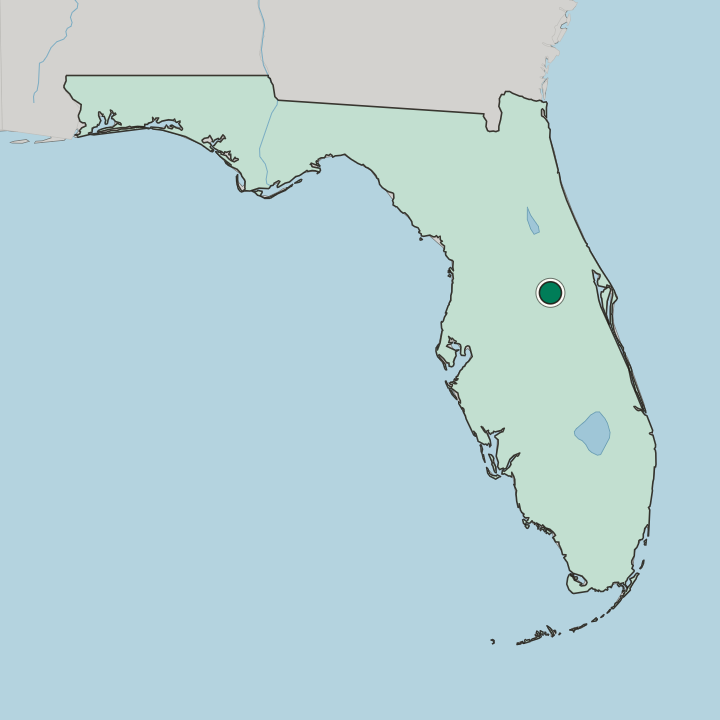
Orlando lies inland on a low plain of central Florida, scattered with lakes. Water fills the hollows everywhere. Dozens of small lakes dot the city and its surroundings, left in the low ground between gentle rises where the land barely lifts above them.
Away from the coast on every side, the city sits at the heart of the state, its flat plain reaching out across the middle of Florida. Lake and level ground shape the whole of Orlando.
What is the climate of Orlando?
Orlando has a warm humid climate over the inland plain of Florida. Summers turn hot and stormy. Long humid afternoons build heavy thunderstorms through the summer months, rolling across the lakes and breaking over the city before the sky clears again.
The cool months stay gentle over central Florida. Frost comes only rarely to central Florida, where the lakes and the low ground keep the air gentle through the cooler months around Orlando.
How do you get to Orlando?
Most travellers reach Orlando by air or road. A large airport serves the city on its edge. Interstate highways cross at Orlando, tying the inland city to the coasts of Florida and the wider South, and rail lines run through the centre past the old ground of Tinker Field.
The routes converge on the plain. Road, rail, and air all lead into the heart of the city.
Common questions
What is the best area to stay in Orlando?
Downtown lakes: The city museum by the water. Historic homes quarter: A base among older residential streets.
Good for
More cities in Florida
Updated October 2026