United States · Massachusetts
Where to Stay in New Bedford, Massachusetts
New Bedford is a Bristol County harbour city founded in 1640, abutting Buzzards Bay, with the New Bedford Whaling Museum at its centre.
Hotel links are affiliate links: booking through them may earn us a commission, at no extra cost to you. It never affects how places are ranked. How this works


Where to stay in New Bedford
How the choice of base plays out on the ground.
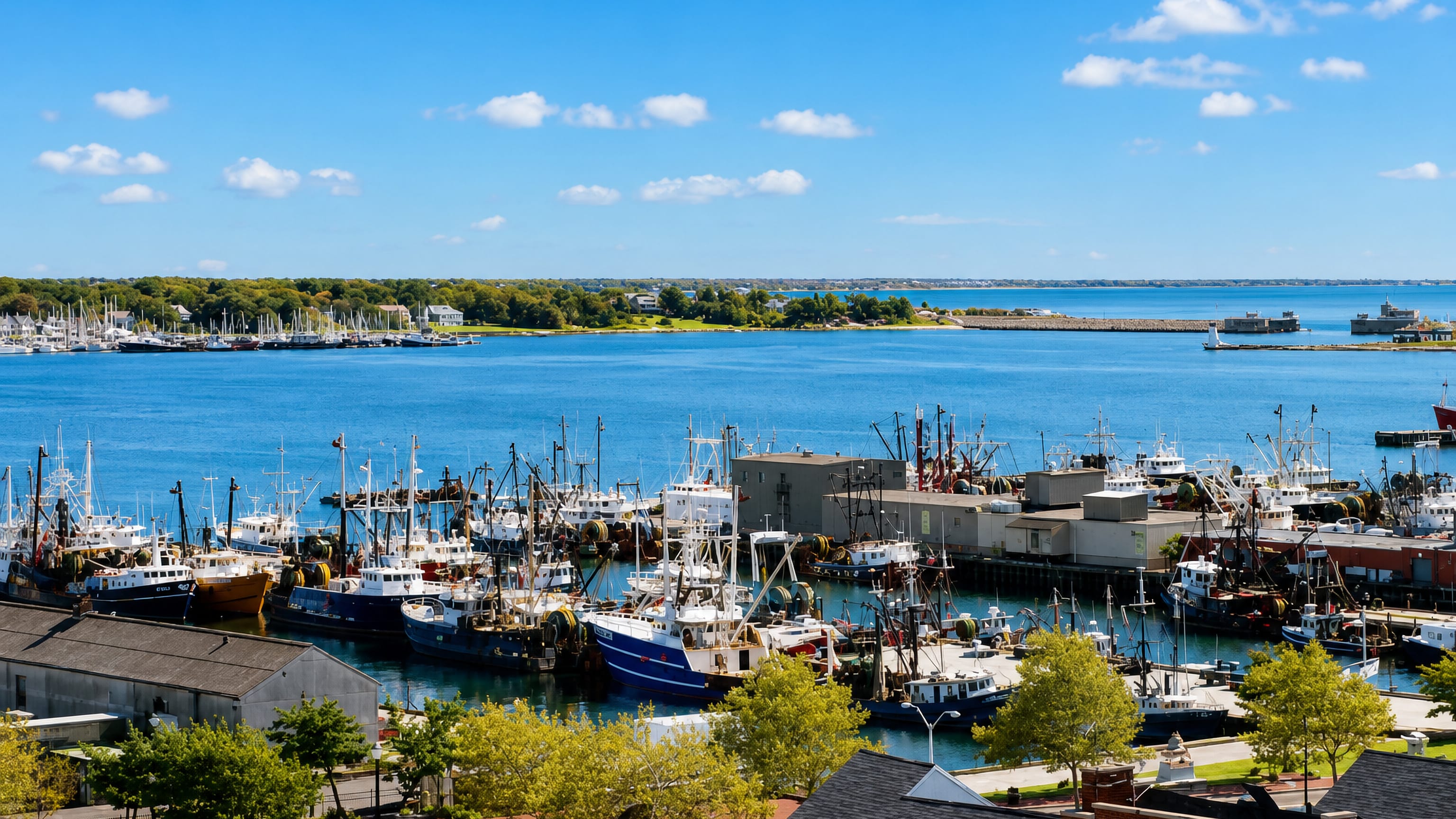
The harbour decides the trip. Rooms toward the Acushnet River waterfront put the New Bedford Whaling Museum, the New Bedford Meeting House and the Old Third District Courthouse within a few blocks of one another, which is the reason most visitors come to this corner of Bristol County at all. That district is compact.
Anyone who wants to walk from a merchant's house to a working fish pier inside a single morning books here and nowhere else. Buttonwood Park is the alternative. The streets around Buttonwood Park Zoo lie back from the harbour traffic, with easier parking and quieter nights, and they suit families who would rather drive down to the water than sleep beside it.
A third choice sits around St. Anthony of Padua Church, whose parish blocks keep their own life after the day visitors have gone, trading walking distance to the museums for a neighbourhood that does not empty. Providence is the fallback. New Bedford belongs to that city's wider metropolitan area, so a bed in the larger place is a genuine option on a summer weekend when the South Coast region has filled every waterfront room.
Find hotels in New Bedford
Direct booking searches for these neighbourhoods.
Acushnet River waterfront
The waterfront blocks along the Acushnet River hold the New Bedford Whaling Museum, the New Bedford Meeting House and the Old Third District Courthouse within a few streets of each other.Find hotels in Acushnet River waterfrontFamilies building a day around the Buttonwood Park ZooButtonwood Park
Streets by the Buttonwood Park Zoo sit well back from the harbour traffic, with easier parking, quieter nights and a short run down to Buzzards Bay. Lodging is scarce in this area; reserve in advance.Find hotels in Buttonwood ParkStays wanting a working New Bedford parish street rather than the museum quarterAround St. Anthony of Padua Church
The blocks around St. Anthony of Padua Church keep their own life once the day visitors have gone, and the Rotch-Jones-Duff House and Garden Museum stays an easy walk away. Beds are limited here, so book early.Find hotels in Around St. Anthony of Padua ChurchHotel links are affiliate links: booking through them may earn us a commission, at no extra cost to you. It never affects how places are ranked. How this works
Things to do in New Bedford
Ranked by global recognition; descriptions from Wikidata (CC0).
Museums & Galleries
1- New Bedford Museum of Glass
Churches & Religious Sites
3- Unitarian Memorial Church Heritage
- St. Anthony of Padua Church
- New Bedford Meeting House
Stadiums & Sports
1- Paul Walsh Field
Landmarks & Notable Places
4- Rotch-Jones-Duff House and Garden Museum Heritage
- Nathan and Mary (Polly) Johnson properties Heritage
- Sgt. William H. Carney House Heritage
- Ezekiel Sawin House Heritage
worth knowingacross 4 categories in New Bedford
About New Bedford
What is New Bedford known for?
New Bedford stood first in the world for whaling through the nineteenth century, and the fortunes landed on the Acushnet River paid for the Rotch-Jones-Duff House and Garden Museum and for the Unitarian Memorial Church. Whale oil did the lighting. Contemporaries called this the city that lit the world, an epithet the New Bedford Whaling Museum sets out in full, and the harbour open to Buzzards Bay has gone on working for the fishing fleet ever since.
What are the main landmarks in New Bedford?
New Bedford's draw is its museums. The New Bedford Whaling Museum leads, and the New Bedford Museum of Glass, the New Bedford Fire Museum and the Rotch-Jones-Duff House and Garden Museum fill out a list longer than most cities of this size manage. Named households hold the register.
The Nathan and Mary (Polly) Johnson properties, the Sgt. William H. Carney House and the Ezekiel Sawin House each carry a family name forward, while the Unitarian Memorial Church, St. Anthony of Padua Church, the New Bedford Meeting House, the Old Third District Courthouse, Paul Walsh Field and the Buttonwood Park Zoo complete the roll.
What is the history of New Bedford?
New Bedford was founded in 1640. For its first century the settlement on the Acushnet River differed little from the other colonial foundings of Bristol County, and the New Bedford Meeting House survives from the years before the trade that would remake everything. Then came the whaleships.
Through the nineteenth century this port stood first in the world for whaling, and oil brought back to Buzzards Bay lit lamps far beyond Massachusetts. Wealth reshaped the streets. The Rotch-Jones-Duff House and Garden Museum was raised for one of the merchant families of that era, the Unitarian Memorial Church and the Old Third District Courthouse followed as the civic face of the same money, and the Ezekiel Sawin House belongs among the houses of those decades.
Names on the register carry the rest. The Nathan and Mary (Polly) Johnson properties and the Sgt. William H. Carney House stand for households whose place in the city's record outlasted the trade that had paid for the town around them.
Whaling ended. Fishing did not, and the harbour that had carried the oil went on working for the fleet, which is why the New Bedford Whaling Museum reads as history while the piers of the South Coast region do not. Later arrivals left their own mark, St. Anthony of Padua Church among the largest of them.
Where is New Bedford?
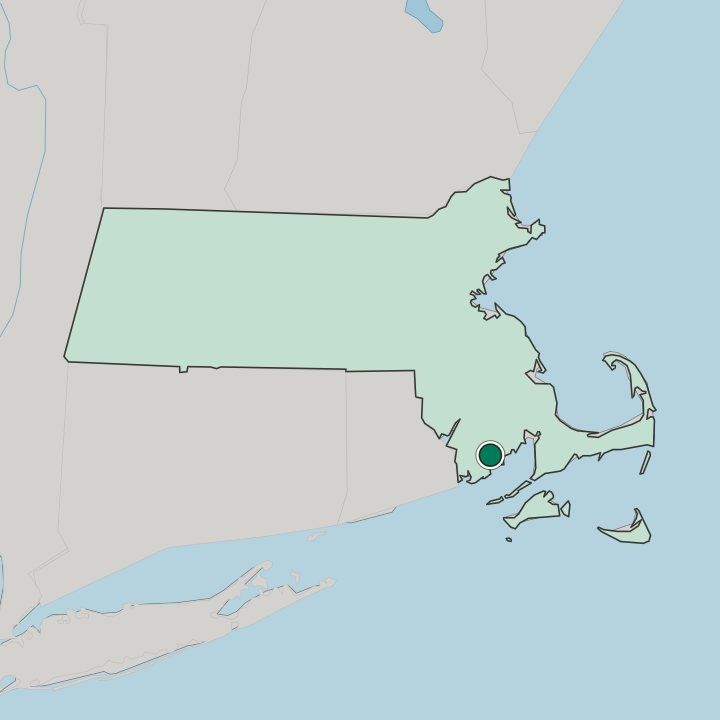
The waterfront came first. New Bedford lies along the Acushnet River where it opens into Buzzards Bay, and that harbour, rather than any road, is the axis the whole Bristol County city was laid out against. The ground runs to some sixty-two square kilometres.
Inland the streets run back from the piers toward Buttonwood Park, so a visitor crossing town moves in one stretch from working waterfront to the residential blocks of the South Coast region.
What is the climate of New Bedford?
Buzzards Bay softens the year. Open water off the bay holds New Bedford's winters a shade above the inland towns of Bristol County and takes the edge off its summers, and fog comes with that bargain more often than a visitor expects. Moisture stays in the air year round.
Anyone walking the Acushnet River waterfront in spring wants a layer against a wind that nothing on the water side breaks.
How do you get to New Bedford?
Wheels, not rails, bring travellers to New Bedford. New Bedford keeps no long-distance terminal of its own, so travellers come in by road from Providence or across Massachusetts from Boston, each of which counts the city inside its wider metropolitan reach. Then walking serves.
The museum blocks, the New Bedford Meeting House and the Old Third District Courthouse stand near enough together that a car left once by the Acushnet River need not move again that day.
Common questions
What is the best area to stay in New Bedford?
Acushnet River waterfront: Museum-first visitors wanting the New Bedford Whaling Museum on the doorstep. Buttonwood Park: Families building a day around the Buttonwood Park Zoo. Around St. Anthony of Padua Church: Stays wanting a working New Bedford parish street rather than the museum quarter.
Good for
More cities in Massachusetts
Updated September 2026