United States · Massachusetts
Where to Stay in Somerville, Massachusetts
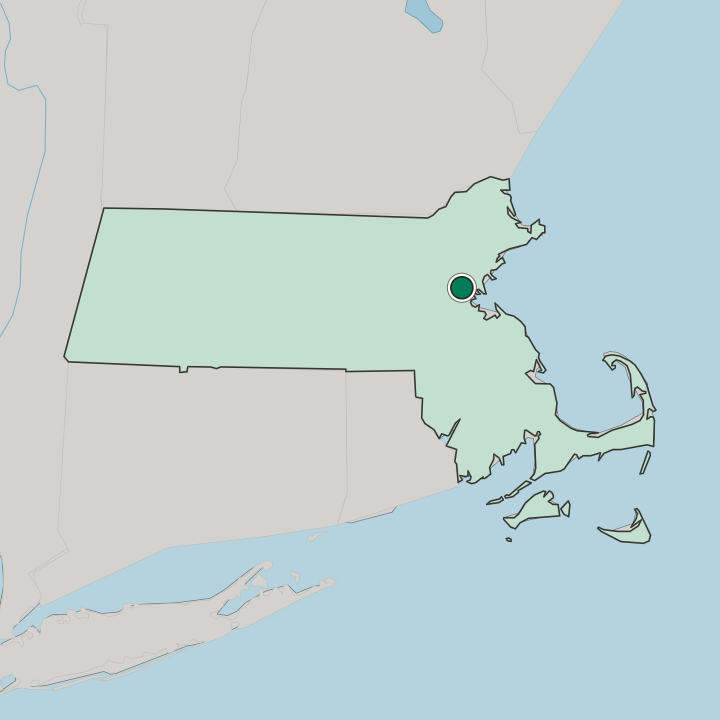
Somerville is a Middlesex County city northwest of Boston and north of Cambridge, the densest municipality in New England, a separate town since 1842.
Hotel links are affiliate links: booking through them may earn us a commission, at no extra cost to you. It never affects how places are ranked. How this works


Where to stay in Somerville
Where visitors usually base themselves, and why.
Somerville rewards walking. A bed anywhere in a city this tight stands within a few minutes of dinner and a drink, which is the practical argument for sleeping inside the boundary rather than beyond it. The Medford border is one choice.
Rooms along the Tufts University frontage serve anyone whose week runs on the campus calendar, and they occupy the quietest end of a place that is otherwise busy from breakfast until late. The Cambridge side answers a different trip. Somerville lies north of Cambridge, so a room toward that boundary cuts the walk to the Harvard Art Museums, the Fogg Museum and the Peabody Museum of Archaeology and Ethnology without the cost of a bed in the university city itself.
Distances in Somerville are measured in minutes. The Sean Collier Memorial, the Margaret Fuller House and the Maria Baldwin House all fall inside one afternoon of wandering, and both Boston and Cambridge stay available as fallbacks on a graduation weekend when Middlesex County has run out of rooms.
Find hotels in Somerville
Direct booking searches for these neighbourhoods.
The Medford border at Tufts University
The Tufts University campus follows the line Somerville shares with Medford, and the streets on the Somerville side stay quieter than anywhere else in this dense city. Few places to stay nearby — book ahead.Find hotels in The Medford border at Tufts UniversityMuseum days built around the Harvard Art Museums and the Fogg MuseumThe Cambridge boundary
Somerville lies north of Cambridge, so a bed along that boundary cuts the walk to the Harvard Art Museums, the Fogg Museum and the Peabody Museum of Archaeology and Ethnology.Find hotels in The Cambridge boundaryWalkers wanting Somerville's own parish streets and its restaurant rowsAround Christ the King Presbyterian Church
The blocks near Christ the King Presbyterian Church and the Church of the New Jerusalem carry the residential grain of the densest municipality in New England, with dinner a few doors along. Few places to stay nearby — book ahead.Find hotels in Around Christ the King Presbyterian ChurchHotel links are affiliate links: booking through them may earn us a commission, at no extra cost to you. It never affects how places are ranked. How this works
About Somerville
Density is the defining fact.
What is Somerville known for?
Somerville fits its whole street grid into under eleven square kilometres of Middlesex County, which makes it the densest municipality in New England and gives the place a walking scale its larger neighbours cannot match. Tufts University holds one edge. The campus runs along the border Somerville shares with Medford, while the city itself lies northwest of Boston and north of Cambridge, near enough that the Harvard Art Museums and the Museum of Science count as ordinary afternoon outings.
What are the main landmarks in Somerville?
The landmark list runs past the city boundary. The Sean Collier Memorial, the Margaret Fuller House, the Maria Baldwin House, the Percy W. Bridgman House and the William M. Davis House each attach to a person rather than to an institution. Museums crowd the same ground.
The Harvard Art Museums, the Fogg Museum, the Busch-Reisinger Museum, the Harvard Museum of Natural History and the Peabody Museum of Archaeology and Ethnology stand within reach of a Somerville room, while the Bunker Hill Monument and the USS Constitution Museum lie a little further off.
What is the history of Somerville?
Somerville began as part of Charlestown. Settlement on this ground dates from 1630, and for two centuries the land belonged administratively to its neighbour, with Christ Church, the Church of the New Jerusalem and North Avenue Congregational Church standing among the older institutional fabric in and around the modern city. Independence came in 1842.
The town was set off from Charlestown in that year, and everything municipal here, the wards and the squares and the government itself, dates from after that separation. The nineteenth century filled the grid. Houses recorded under the names of Margaret Fuller, Maria Baldwin, Percy W. Bridgman and William M. Davis mark the decades in which this corner of Middlesex County turned from open land into the densest street pattern in New England, and the Sacred Heart Church, Rectory, School and Convent shows how completely one parish could equip itself.
Tufts University arrived on the edge. Its campus follows the border with Medford, giving Somerville an academic frontage the city had not built for itself. Civic reputation came later still.
Somerville took the All-America City Award in 1972, again in 2009 and once more in 2015, and the Sean Collier Memorial belongs to the city's later memory.
Where is Somerville?
Somerville is small and packed. The city covers about eleven square kilometres of Middlesex County, lying northwest of Boston and north of Cambridge, which leaves it the densest municipality in New England by a wide margin. Borders do the framing.
Tufts University straddles the line with Medford, and the built fabric crosses every other boundary without a visible break, so a walker leaves this city by street sign rather than by any change underfoot.
What is the climate of Somerville?
Snow has nowhere to go here. Somerville lies in the temperate band of the northern hemisphere, so winter brings real accumulation, and in the densest municipality in New England every centimetre of it ends up banked along kerbs laid out for narrower centuries. Summer turns humid.
Streets packed this tight hold the day's heat well into the evening, and shade is worth choosing for on a July afternoon in Middlesex County.
How do you get to Somerville?
Boston and Cambridge do the arriving. Somerville keeps no terminal of its own, so travellers reach it through the larger cities it adjoins, and the final stage is short whichever of them a journey starts from. Then the city walks.
Eleven square kilometres of dense grid puts the Sean Collier Memorial, the Margaret Fuller House and the Tufts University frontage on the Medford border all within range of anyone without a car.
Common questions
What is the best area to stay in Somerville?
The Medford border at Tufts University: Guests whose week runs on the Tufts University calendar from the Somerville side. The Cambridge boundary: Museum days built around the Harvard Art Museums and the Fogg Museum. Around Christ the King Presbyterian Church: Walkers wanting Somerville's own parish streets and its restaurant rows.
Good for
More cities in Massachusetts
Updated October 2026