United States · Massachusetts
Where to Stay in Newton, Massachusetts
Newton is a Middlesex County city of thirteen villages, a western suburb of Boston nicknamed the Garden City, with a founding year of 1688.
Hotel links are affiliate links: booking through them may earn us a commission, at no extra cost to you. It never affects how places are ranked. How this works


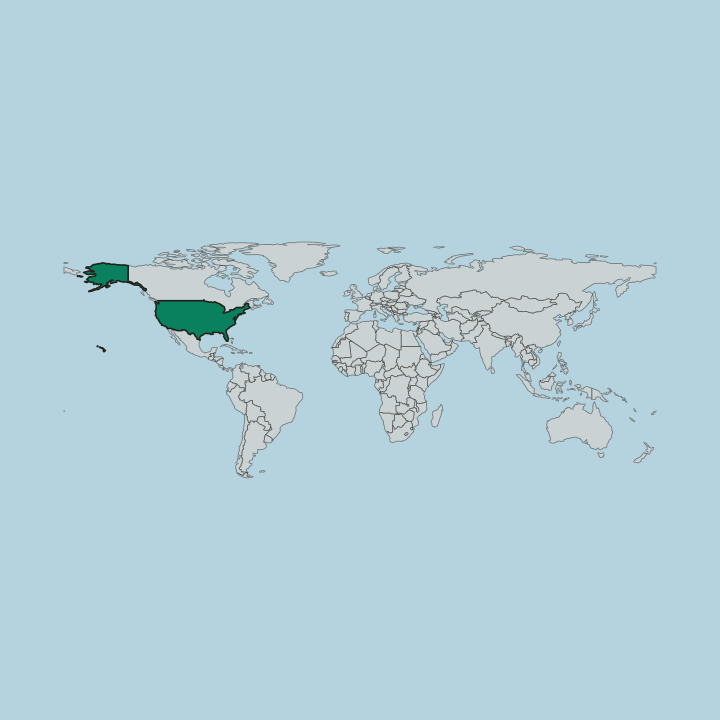
Where to stay in Newton
How the choice of base plays out on the ground.
No single quarter holds the beds. Newton spreads its rooms across village squares instead of a downtown, so the real question is which of the thirteen villages puts a traveller nearest the reason for the trip. Auburndale is one of them.
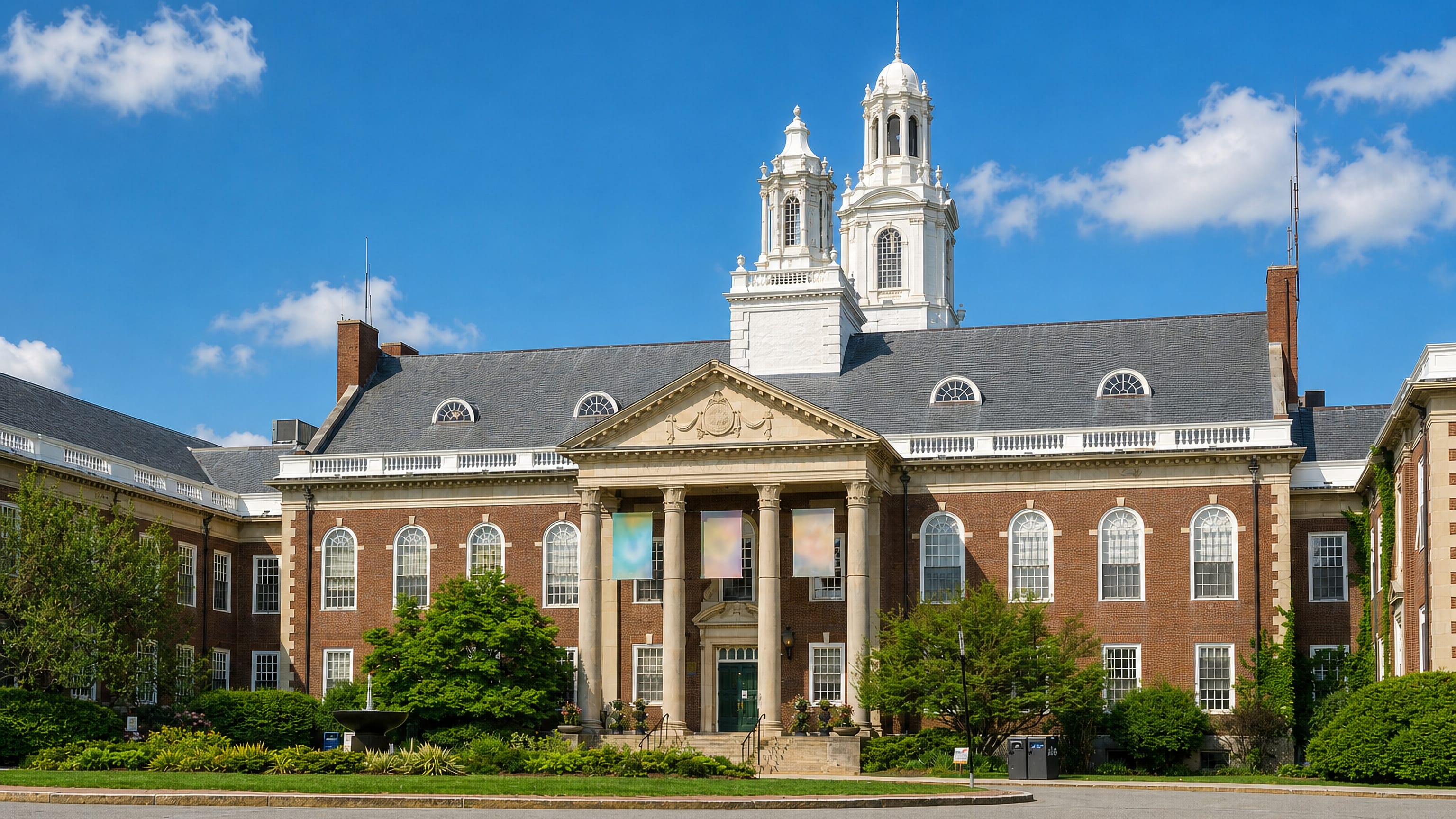
The United Parish of Auburndale marks the pattern the whole city repeats, a church and a short parade of shops with streets of large houses running back behind it. Downtown Boston lies eight miles east. That nearness is the point of a Newton booking at all, since a room out here buys quiet and parking while leaving the larger city inside a short run.
The neighbours widen the field. Brookline sits along the eastern boundary, Watertown and Waltham to the north, and Weston, Wellesley and Needham to the west, any of which can absorb a booking on a weekend when Newton itself has nothing free. Waban Hill Road and Suffolk Road show the residential grain a visitor is choosing, and Newton City Hall and War Memorial is the one address in the city that reads unmistakably as a centre.
Find hotels in Newton
Direct booking searches for these neighbourhoods.
Auburndale
The United Parish of Auburndale anchors one of the thirteen villages, where a church and a short parade of shops stand in for any downtown at all. Lodging is scarce in this area; reserve in advance.Find hotels in AuburndaleVisitors who want Newton's civic address and the Jackson Homestead in one dayAround Newton City Hall and War Memorial
Newton City Hall and War Memorial gives the city its single unmistakable civic frontage, and the Jackson Homestead keeps the municipal collection a short drive from it. Lodging is scarce in this area; reserve in advance.Find hotels in Around Newton City Hall and War MemorialCommuters needing Brookline and Downtown Boston inside a short runThe Brookline boundary
Newton meets Brookline along its eastern boundary, so a bed on that side cuts every journey into Downtown Boston without giving up the quiet of the villages.Find hotels in The Brookline boundaryHotel links are affiliate links: booking through them may earn us a commission, at no extra cost to you. It never affects how places are ranked. How this works
Things to do in Newton
Ranked by global recognition; descriptions from Wikidata (CC0).
Museums & Galleries
3- Capt. Edward Durant House Heritage
- Armenian Museum of America
- McMullen Museum of Art
Churches & Religious Sites
7- First Baptist Church in Newton Heritage
- Second Church in Newton Heritage
- First Unitarian Society in Newton Heritage
- Central Congregational Church Heritage
- Evangelical Baptist Church Heritage
Show 2 more →
- First Church of Christ, Scientist Heritage
- United Parish of Auburndale Heritage
Landmarks & Notable Places
8- Browne House Heritage
- Jackson Homestead Heritage
- Reginald A. Fessenden House Heritage
- House at 41 Middlesex Road Heritage
- House at 511 Watertown Street Heritage
Show 3 more →
- House at 152 Suffolk Road Heritage
- House at 107 Waban Hill Road Heritage
- Galen Merriam House Heritage
worth knowingacross 3 categories in Newton
About Newton
Thirteen villages make one city.
What is Newton known for?
Newton has no single downtown, and anyone hunting for a centre finds instead a patchwork of village squares laid across a western suburb of Boston that has answered to the nickname the Garden City for generations. Museums sit among the houses. The Armenian Museum of America and the McMullen Museum of Art both stand in Middlesex County rather than in the larger city next door, while Gore Place and the Jackson Homestead hold the older record.
What are the main landmarks in Newton?
Newton keeps its landmarks village by village. Gore Place, the Browne House, the John Ward House and the Capt. Edward Durant House carry the colonial and federal record, while the Jackson Homestead holds the city's own historical collection.
Steeples crowd Newton's villages. The Second Church in Newton, the First Baptist Church in Newton, the First Unitarian Society in Newton, the Central Congregational Church, the Evangelical Baptist Church, the First Church of Christ, Scientist and the United Parish of Auburndale together outnumber the museums, though the Armenian Museum of America and the McMullen Museum of Art take most of the visiting traffic.
What is the history of Newton?
The first settlement here dates from 1630. Newton counts 1688 as its founding year, and the John Ward House and the Browne House survive from the colonial decades around it, the oldest fabric a city of thirteen villages has to show. Estates preceded streets.
Gore Place and the Jackson Homestead carry names from an era of country properties rather than of suburbs, and both stand inside a western suburb of Boston that had not yet been imagined at the time they were built. The nineteenth century made the suburb. Houses raised for named households, the Galen Merriam House, the Charles Byam House, the Stephen L. Bartlett House, the Charles B. Fillebrown House and the Charles E. Eddy House among them, record the decades in which Newton filled with families whose work lay in Boston.
Congregations multiplied alongside. The Second Church in Newton, the First Baptist Church in Newton, the First Unitarian Society in Newton and the United Parish of Auburndale each served a different village, which is exactly why the parish buildings of this Middlesex County city ended up scattered rather than massed at one centre. Civic ceremony arrived last.
Newton City Hall and War Memorial gave the villages a shared address, and addresses catalogued as the House at 511 Watertown Street and the House at 41 Middlesex Road show how far the register reaches into ordinary streets, alongside the Reginald A. Fessenden House and the Capt. Edward Durant House.
Where is Newton?
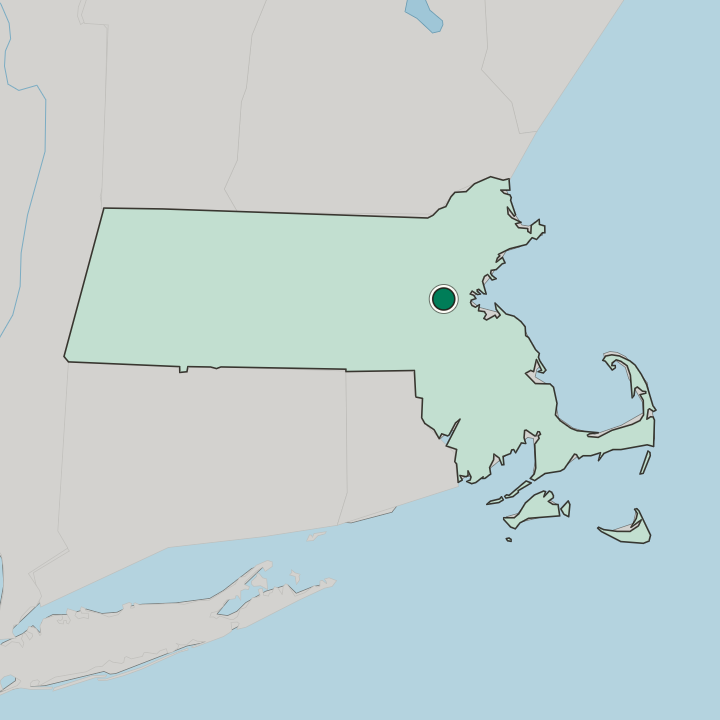
Newton lies eight miles from Downtown Boston. Its ground covers some forty-seven square kilometres of Middlesex County, and the city borders Boston to the northeast and southeast, Brookline to the east, Watertown and Waltham to the north, and Weston, Wellesley and Needham to the west. Boundaries do all the work.
Nothing on the ground separates one Newton village from the next, so the city reads to a driver as a single continuous run of residential streets from one town line to the following one.
What is the climate of Newton?
The Garden City earns its nickname in May. Newton lies in the temperate band of the northern hemisphere, so the year runs from a hard winter through a short and crowded spring into a humid summer, with the tree-lined village streets doing their best work at either end of that curve. Winter is the long part.
Anyone visiting Middlesex County between December and March should plan for snow and for early dark.
How do you get to Newton?
Everything comes through Boston. Newton keeps no terminal of its own, so a traveller lands in the larger city and covers the last eight miles west by road, a short run except at the hours when everyone else is attempting it. Then a car helps.
Thirteen villages spread this wide do not walk into one another, and taking in Gore Place and the Armenian Museum of America on the same day means driving between them.
Common questions
What is the best area to stay in Newton?
Auburndale: Travellers who want a Newton village square instead of a city centre. Around Newton City Hall and War Memorial: Visitors who want Newton's civic address and the Jackson Homestead in one day. The Brookline boundary: Commuters needing Brookline and Downtown Boston inside a short run.
Good for
More cities in Massachusetts
Updated October 2026