United States · New York
Where to Stay in Albany, New York
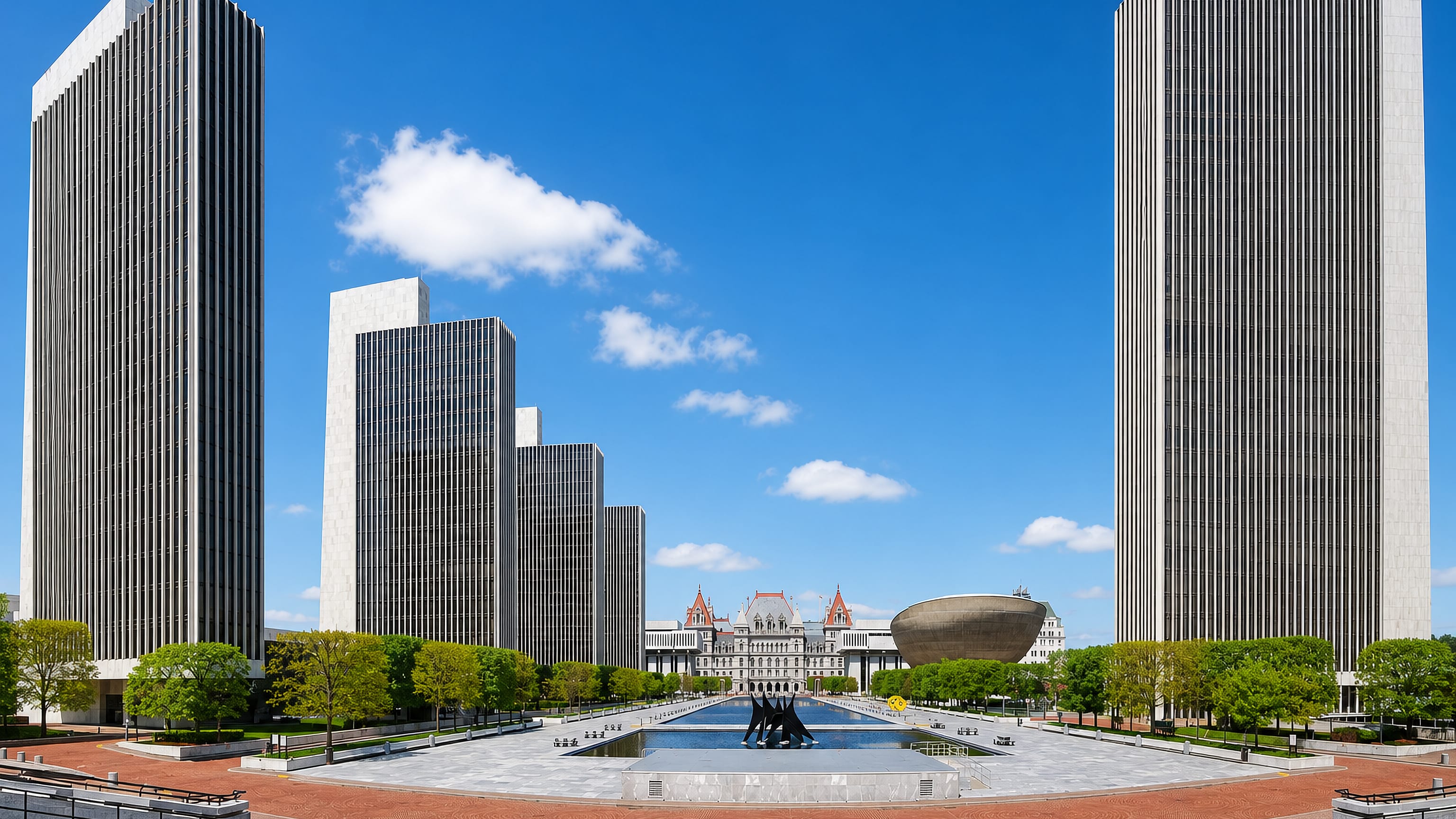
Grown from the Dutch trading post of Fort Orange, Albany is the capital of the State of New York, home to the New York State Museum.
Hotel links are affiliate links: booking through them may earn us a commission, at no extra cost to you. It never affects how places are ranked. How this works


Where to stay in Albany
The practical side of choosing where to sleep.
The centre of Albany is the natural base, gathered around the capitol district of the State of New York. From here the walk reaches the New York State Museum and the Albany Institute of History & Art, and the old streets around the First Church in Albany carry the city's long past. You stand at the capital's heart.
The core holds the government buildings, the museums, and the colonial churches within a compact grid, so a first visit works well from the middle of it. The Schuyler Mansion stands just south of the centre. Beyond the core, Albany spreads into older residential streets where the Ten Broeck Mansion and the Stephen and Harriet Myers House recall the city's earlier centuries.
The USS Slater, a wartime escort ship, is moored at the waterfront below the downtown. For a first visit, the centre suits best, since it keeps the capitol, the museums, and the oldest churches within reach on foot. Stay near the capitol district if you want the heart of the State of New York's capital.
The centre holds the most within an easy walk.
Find hotels in Albany
Direct booking searches for these neighbourhoods.
Capitol district
The compact core around the State of New York capitol, steps from the New York State Museum and the Albany Institute of History & Art.Find hotels in Capitol districtTravellers drawn to the colonial mansions and churchesHistoric quarter
Older residential streets holding the Ten Broeck Mansion and the Stephen and Harriet Myers House near the First Church in Albany.Find hotels in Historic quarterHotel links are affiliate links: booking through them may earn us a commission, at no extra cost to you. It never affects how places are ranked. How this works
Things to do in Albany
Ranked by global recognition; descriptions from Wikidata (CC0).
Museums & Galleries
3- Fort Crailo Heritage
- Albany Institute of History & Art Heritage
- New York State Museum
Churches & Religious Sites
6- First Church in Albany Heritage
- St. Peter's Episcopal Church Heritage
- St. Mary's Church Heritage
- Church of the Holy Innocents Heritage
- St. Andrew's Episcopal Church Heritage
Show 1 more →
- First Congregational Church of Albany Heritage
Castles & Historic Sites
1- Fort Orange Heritage
Stadiums & Sports
2- Bleecker Stadium
- Bob Bellizzi Field
Parks & Gardens
1- Huck Finn's Playland
Landmarks & Notable Places
1- Stephen and Harriet Myers House Heritage
worth knowingacross 6 categories in Albany
About Albany
What is Albany known for?
Albany is known as the capital of the State of New York and one of the oldest cities in the country. It grew from Fort Orange, the Dutch trading post that stood here, and its name comes from Alba, the Gaelic word for Scotland. The New York State Museum and the Schuyler Mansion draw visitors.
Albany's history reaches back to its Dutch founding.
What are the main landmarks in Albany?
Albany's landmarks reach back to its Dutch and colonial past. The New York State Museum holds the state's great collection, while the Albany Institute of History & Art and the Irish American Heritage Museum stand nearby. Colonial Albany survives in the Schuyler Mansion, the Ten Broeck Mansion, and Fort Crailo, and the First Church in Albany rises among them.
Below the downtown lies the USS Slater.
What is the history of Albany?
Albany grew from Fort Orange, the Dutch trading post founded here in the early colonial years. The name comes from Alba, the Gaelic word for Scotland, given by the English who followed the Dutch. Commerce came before all else at Albany.
The settlement rose as a meeting point of colonial commerce, and Fort Crailo across the way still recalls the Dutch families who held the land in those first generations. Through the centuries Albany became the capital of the State of New York, and its government drew people and building to the growing city. The Schuyler Mansion housed one of the leading colonial families, while the First Church in Albany kept the old Dutch congregation.
Its museums record that past. The New York State Museum and the Albany Institute of History & Art trace the story from Fort Orange onward, and the Ten Broeck Mansion preserves a later chapter. The capital anchored it all.
Albany grew into the seat of the State of New York. The old walls are gone.
Where is Albany?
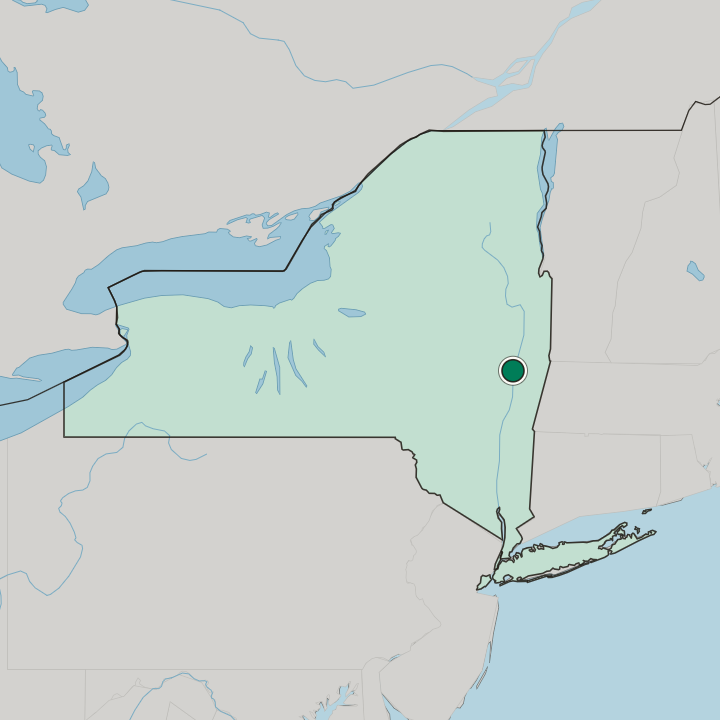
Albany lies in the State of New York, at the head of the navigable water that carried colonial trade inland. It stands where the old Dutch fort of Fort Orange once guarded the crossing. The city spreads over rising ground above the waterfront.
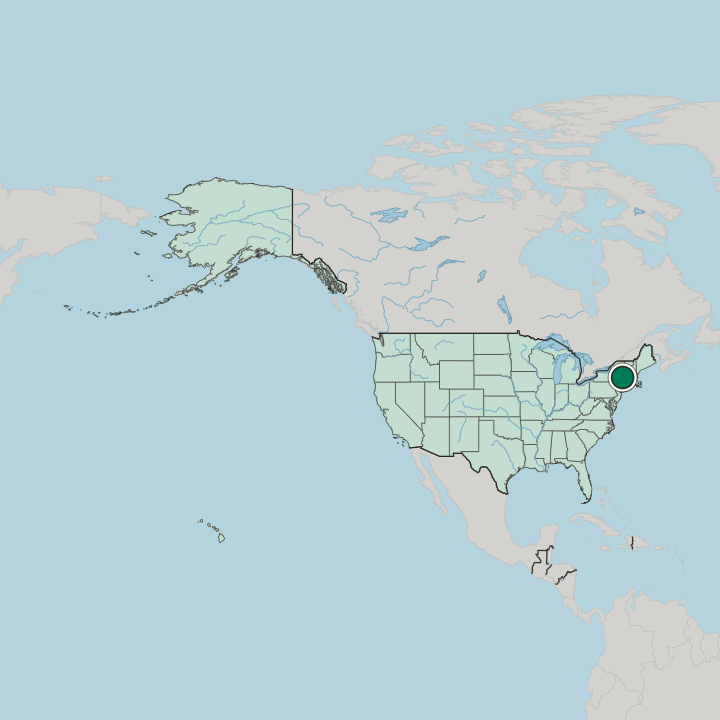
Its centre holds the capitol. From the low landing where the USS Slater is moored, Albany climbs westward into the residential streets, in the United States.
What is the climate of Albany?
Albany has a humid continental climate with sharp seasons. Summers are warm and often humid across upstate New York, with thunderstorms building on the hottest days. Winters are cold and snowy.
Heavy snow and hard frost hold the city for months, and the cold settles deep before the thaw and the return of milder weather to the capital in spring.
How do you get to Albany?
Albany is reached by rail, road, and air as the capital of the State of New York. Interstate highways meet here, and frequent trains link the city south toward the larger cities of the state, while a regional airport serves the wider area. The waterfront still carries traffic.
Long a hub of upstate travel, Albany draws routes from every direction into the seat of New York government.
Common questions
What is the best area to stay in Albany?
Capitol district: First-time visitors who want the capital's museums on foot. Historic quarter: Travellers drawn to the colonial mansions and churches.
Good for
More cities in New York
Updated October 2026