United States · New York
Where to Stay in Syracuse, New York
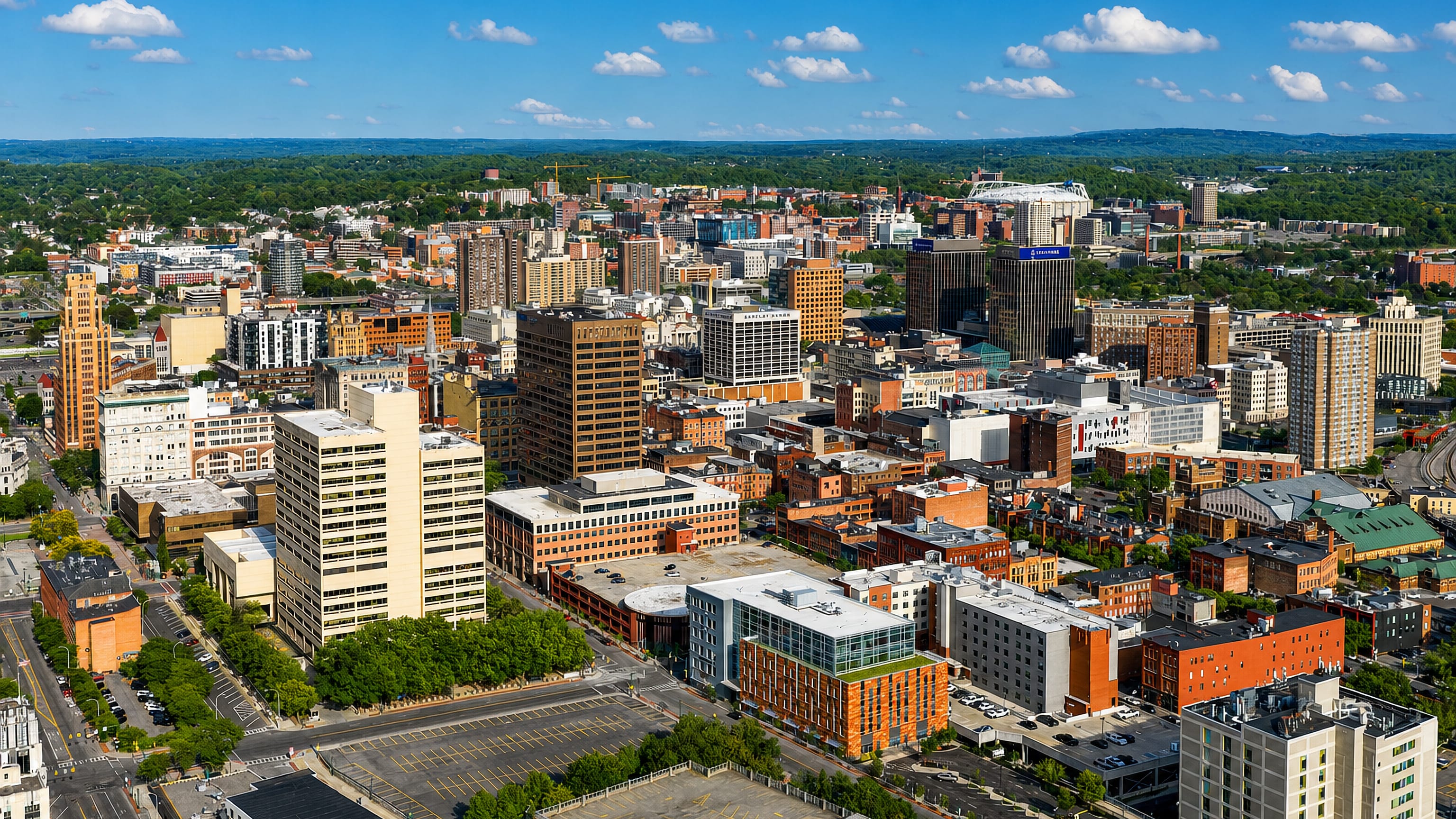
Old canal water and brick mark Syracuse, a city in New York known for the Erie Canal Museum and the Everson Museum of Art.
Hotel links are affiliate links: booking through them may earn us a commission, at no extra cost to you. It never affects how places are ranked. How this works




Where to stay in Syracuse
Where visitors usually base themselves, and why.
Where a traveller stays in Syracuse turns on the split between the downtown core and the university hill, because the museums and the old canal district sit in the center while the campus rises to the southeast. Downtown and the university hill pull very different stays. Downtown gathers the most.
Around the Erie Canal Museum and the Everson Museum of Art, hotels sit within walking reach of the civic buildings and the old commercial blocks, and the Milton J. Rubenstein Museum of Science and Technology lies close by the inner harbor. The university quarter climbs the hill above the center, where Hendricks Chapel, the Syracuse University Art Museum, and the Syracuse University Gateway mark the campus and its visitor life, so a bed there keeps the college on the doorstep. Rooms there fill on game days.
West of downtown, the streets run out toward the Rosamond Gifford Zoo and the park lakes, giving a quieter base a short ride from the center. Downtown, the hill, and the western streets each hold their own tempo. A traveller who wants the museums near the door stays downtown by the Erie Canal Museum, while the hill by Hendricks Chapel suits a stay tied to the university.
Find hotels in Syracuse
Direct booking searches for these neighbourhoods.
Downtown canal district
The center gathers hotels around the Erie Canal Museum, the Everson Museum of Art, and the Milton J. Rubenstein Museum of Science and Technology by the inner harbor.Find hotels in Downtown canal districtBest if you want the campus at the door and don't mind game-day crowds filling the hill above the center.University hill
The hill southeast of downtown carries Hendricks Chapel, the Syracuse University Art Museum, and the Syracuse University Gateway across the campus grounds.Find hotels in University hillHotel links are affiliate links: booking through them may earn us a commission, at no extra cost to you. It never affects how places are ranked. How this works
Things to do in Syracuse
Ranked by global recognition; descriptions from Wikidata (CC0).
Museums & Galleries
3- Erie Canal Museum Heritage
- Everson Museum of Art
- Milton J. Rubenstein Museum of Science and Technology
Churches & Religious Sites
7- Hendricks Chapel Heritage
- Grace Episcopal Church Heritage
- People's African Methodist Episcopal Zion Church Heritage
- St. Paul's Armenian Apostolic Church Heritage
- Plymouth Congregational Church Heritage
Show 2 more →
- First English Lutheran Church Heritage
- Trinity Episcopal Church Heritage
Stadiums & Sports
3- John A. Lally Athletics Complex
- Carmelo K. Anthony Basketball Center
- Women's Building
Landmarks & Notable Places
2- Hamilton White House Heritage
- John G. Ayling House Heritage
worth knowingacross 4 categories in Syracuse
About Syracuse
What is Syracuse known for?
Syracuse is known as a canal and university city in central New York, a place whose downtown grew where the Erie Canal once passed through. The Erie Canal Museum keeps that record. Art and learning shape its draw, with the Everson Museum of Art holding a noted ceramics collection and Syracuse University crowning the hill above the center, where Hendricks Chapel and the Syracuse University Art Museum stand, while the Rosamond Gifford Zoo and the Milton J. Rubenstein Museum of Science and Technology round out the city's public life.
What are the main landmarks in Syracuse?
The main landmarks of Syracuse split between the downtown center and the university hill. Museums lead downtown. The Erie Canal Museum stands in the old weighlock building, the Everson Museum of Art holds its ceramics near the civic core, and the Milton J. Rubenstein Museum of Science and Technology sits by the inner harbor, while up the hill Hendricks Chapel and the Syracuse University Art Museum mark the campus, and the Rosamond Gifford Zoo and the Onondaga Historical Association keep the city's wildlife and past to the west.
What is the history of Syracuse?
Syracuse grew from the salt springs and the canal country of central New York, founded in 1848 as the settlements around the marsh drew together into one city. Salt and the canal made it. The town rose where the Erie Canal crossed the Onondaga lowland, and the brine boiled from the springs gave the early city its first trade before the canal traffic and the railroads carried its goods across the state.
Buildings and institutions from the founding century still stand across the center and the hill. The Erie Canal Museum keeps the old weighlock where boats were once weighed for their tolls, and the Onondaga Historical Association records the salt years and the growth of the city. Grace Episcopal Church and Trinity Episcopal Church mark the early congregations, while Syracuse University crowned the southeast hill in the decades after the founding, adding Hendricks Chapel to the skyline above the town.
Where is Syracuse?
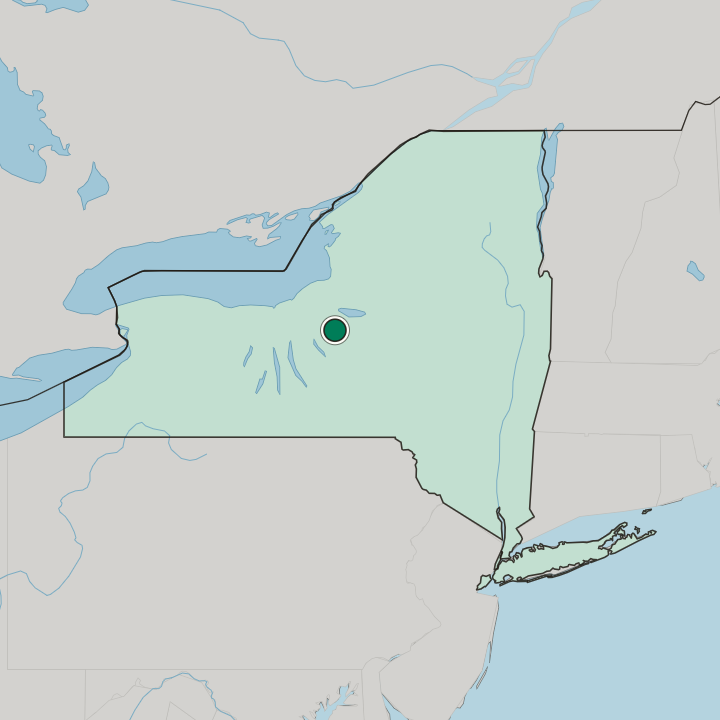
Syracuse sits in the lowland of central New York, where the flat downtown gives way to the hills that rise to the south and east. The land climbs from the center. The old canal line ran across the level ground where the city core now stands, and the university hill lifts above it to the southeast, while the park lakes and the Rosamond Gifford Zoo lie west of downtown on the lower ground.
What is the climate of Syracuse?
Syracuse has a cold temperate climate in central New York, with long snowy winters and warm summers. Snow defines the winter. Heavy lake-driven snowfall settles over the city through the cold months, one of the snowiest records among American cities, while the summers turn warm and green across the lowland and the hills, and the spring thaw runs off the higher ground toward the center.
How do you get to Syracuse?
Syracuse is reached by road, rail, and air, a hub of central New York where the state routes cross. Most visitors roll in off the interstate corridors that cross near the city. Interstate corridors meet near the city where the east-west route crosses the road running north and south, and the downtown center with the Erie Canal Museum sits a short distance from the interchange and the approaches into the city.
Common questions
What is the best area to stay in Syracuse?
Downtown canal district: Best if you want the Erie Canal Museum and the old commercial blocks a short walk from bed, near the inner harbor.. University hill: Best if you want the campus at the door and don't mind game-day crowds filling the hill above the center..
Good for
More cities in New York
Updated September 2026