United States · Ohio · Cincinnati
Ninth Street Historic District, Cincinnati — Area Guide & Where to Stay
Brick and sandstone fronts line three blocks in the Ninth Street Historic District, 44 contributing buildings on the northern side of Downtown Cincinnati.
Hotel links are affiliate links: booking through them may earn us a commission, at no extra cost to you. It never affects how places are ranked. How this works


Where to stay in Ninth Street Historic District
How the choice of base plays out on the ground.
The Ninth Street Historic District runs three blocks of Ninth Street, so the choice here is which end of the row you want. Vine Street closes the east end. From that corner the rest of Downtown Cincinnati is a few minutes on foot, while the western end at Plum Street faces Cincinnati City Hall across the district line.
Elm Street and Race Street cut the row into thirds. Piatt Park, the oldest park in Cincinnati, lies one block south on Garfield Place, outside the district. If you want a nineteenth-century front door rather than a tower lobby, aim for the Race Street corner.
Things to do in and around Cincinnati
Ranked by global recognition; descriptions from Wikidata (CC0).
Museums & Galleries
3- Cincinnati Museum Center at Union Terminal Heritage
- Taft Museum of Art Heritage
- Cincinnati Art Museum
Churches & Religious Sites
8- Immaculata Church Heritage
- Old St. Mary's Church Heritage
- St. Francis Xavier Church Heritage
- St. George Parish and Newman Center Heritage
- St. Paul Church Heritage
Show 3 more →
- Covenant First Presbyterian Church Heritage
- Pilgrim Presbyterian Church Heritage
- Salem Methodist Episcopal Church and Parsonage Heritage
Stadiums & Sports
2- Cincinnati Athletic Club Heritage
- Bank Street Grounds
Landmarks & Notable Places
3- George Hunt Pendleton House Heritage
- Bellevue Heritage
- Betts House
worth knowingacross 4 categories in and around Cincinnati
About Ninth Street Historic District
What are the main landmarks in Ninth Street Historic District?
Two Samuel Hannaford apartment houses share one block of the Ninth Street Historic District, the Brittany Apartment Building of 1885 and the Saxony of 1891. Five brick stories of the Saxony Apartment Building turn the corner at Race Street, semicircular balconies on both fronts. The Brittany runs six stories at 100-104 West Ninth Street under massive end chimneys, built for Thomas Emery's Sons.
Six years separate them. The Abraham J. Friedlander House at 8 West Ninth Street is far older, a sandstone house of 1830 with its Greek Revival transom and sidelights intact. The Phoenix Club entered the National Register on March 3, 1980.
What is the history of Ninth Street Historic District?
The Ninth Street Historic District rose mainly between 1840 and 1890, the decades of Cincinnati's heaviest growth, though one building on the row predates that run. The Abraham J. Friedlander House went up in 1830 as a shared home for tradesmen, its unknown architect drawing on Minard Lafever's Classical Revival designs. Shops, houses and apartment blocks went up side by side, on a street the city walked rather than drove.
Forty-four still contribute. The Friedlander house was entered on the National Register on May 7, 1979, the Saxony and the Brittany on March 3, 1980, and the district itself on November 25, 1980.
Where is Ninth Street Historic District?
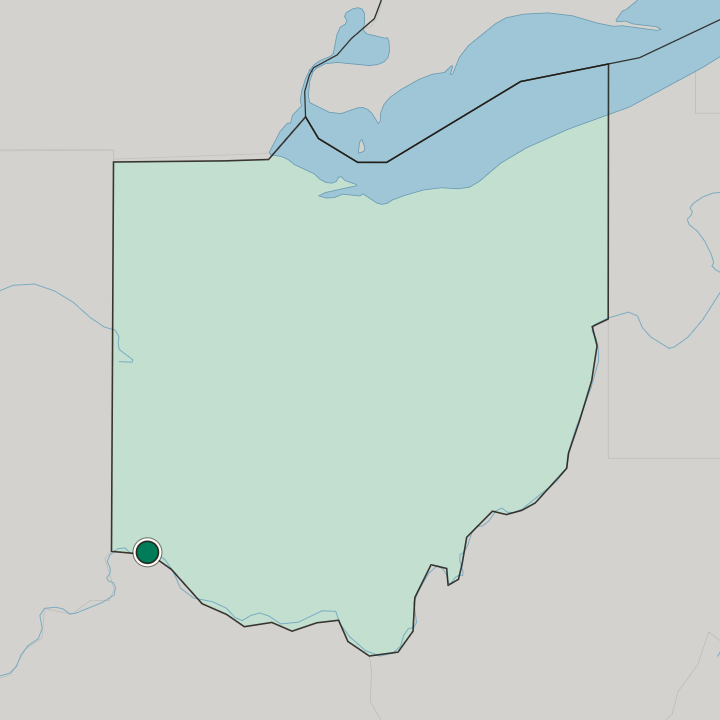
The Ninth Street Historic District runs from Plum Street east to Vine Street, crossing Elm Street and Race Street on the northern side of Downtown Cincinnati.
Good for
More areas in Cincinnati
Updated October 2026