United States · Virginia
Where to Stay in Leesburg, Virginia
Leesburg, a Loudoun County town dating from 1758, once served as a temporary capital of the United States while Washington was occupied.
Hotel links are affiliate links: booking through them may earn us a commission, at no extra cost to you. It never affects how places are ranked. How this works


Where to stay in Leesburg
Where the beds are, and what that means for the visit.
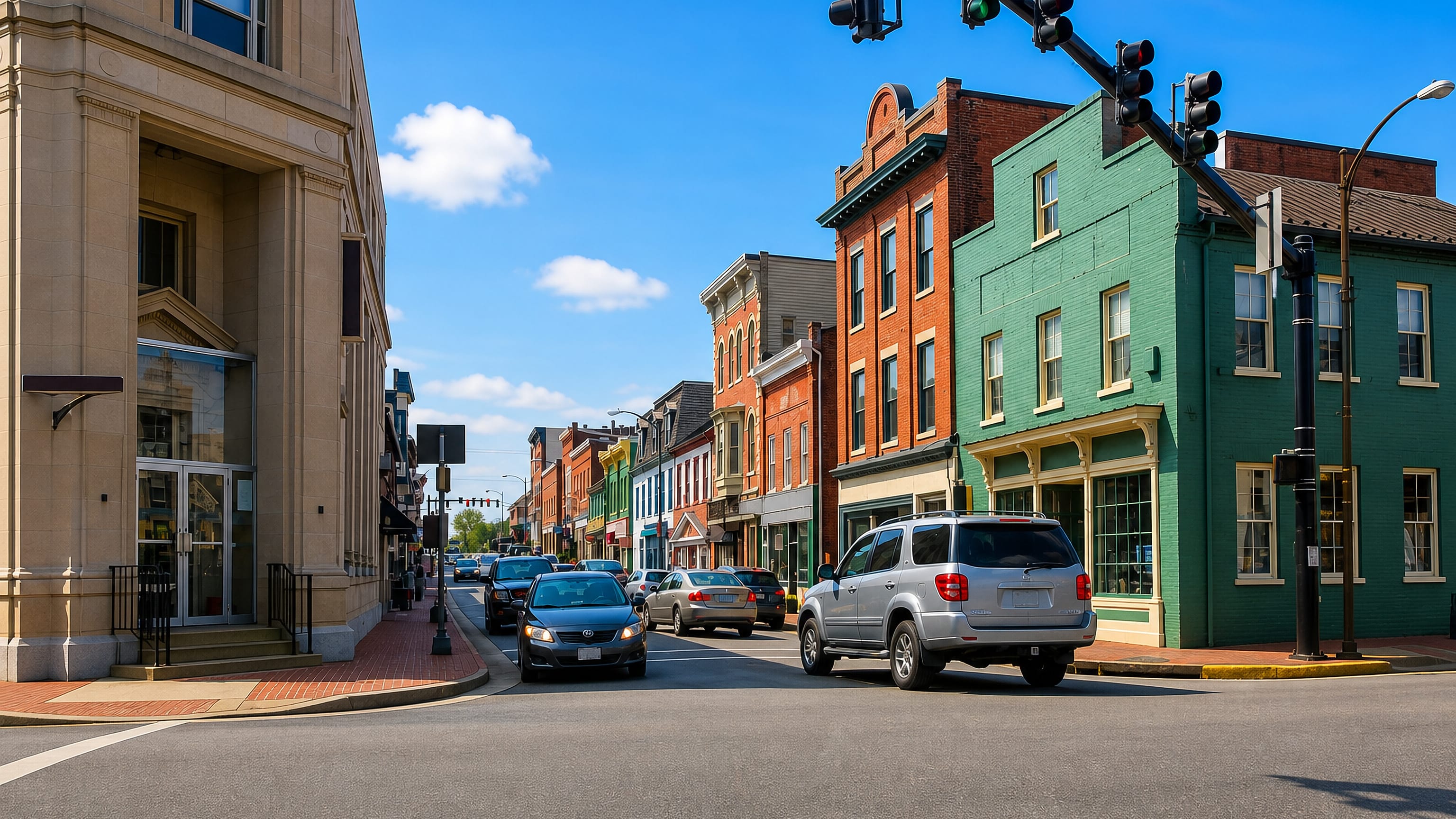
The courthouse blocks come first. Leesburg is the county seat and its centre is small enough to cross on foot, with Dodona Manor standing among the brick fronts rather than out in the countryside where most of the famous houses sit. Twelve square kilometres contain the whole town.
That compactness is the argument for staying central, since everything a visitor does inside Leesburg itself is then a walk, and only the estates need a car. Oatlands Plantation is the other pull. Beds out in that estate country are scattered and few, and they suit you when the grounds and the house are the point of the trip rather than the town at all.
Goose Creek country is quieter still. The Goose Creek Meetinghouse Complex marks the plainest corner of Loudoun County, well clear of the Washington traffic, and a night out there is as far from the metropolitan area as this county gets. Hamilton lies along the same roads, with the William Smith House there and the Ashburn Presbyterian Church further on, so a car-based stay can string the county together in a way that a central one cannot.
Find hotels in Leesburg
Direct booking searches for these neighbourhoods.
The courthouse blocks
Dodona Manor stands inside the town among the brick fronts, a short walk from the Loudoun County courthouseFind hotels in The courthouse blocksEstate-country stays where the Oatlands Plantation grounds are the whole itineraryOut by Oatlands Plantation
Oatlands Plantation sits in open Loudoun County farmland, with beds few and the grounds the reason for coming. Lodging is scarce in this area; reserve in advance.Find hotels in Out by Oatlands PlantationThe plainest corner of the county, near the Goose Creek Meetinghouse ComplexGoose Creek meetinghouse country
The Goose Creek Meetinghouse Complex marks ground kept clear of the Washington traffic, where nights are as quiet as Loudoun County gets. Rooms are few around here — worth securing early.Find hotels in Goose Creek meetinghouse countryDrivers stringing together the William Smith House at Hamilton and the Ashburn Presbyterian ChurchToward Hamilton and Ashburn
Hamilton and the Ashburn Presbyterian Church sit along the county roads out of Leesburg, where beds trade walking for space. Lodging is scarce in this area; reserve in advance.Find hotels in Toward Hamilton and AshburnHotel links are affiliate links: booking through them may earn us a commission, at no extra cost to you. It never affects how places are ranked. How this works
Things to do in Leesburg
Ranked by global recognition; descriptions from Wikidata (CC0).
Churches & Religious Sites
3- Ashburn Presbyterian Church Heritage
- Goose Creek Meetinghouse Complex Heritage
- Mt. Olive Methodist Episcopal Church Heritage
Castles & Historic Sites
1- Old Stone Church Archeological Site Heritage
Landmarks & Notable Places
5- Dodona Manor Heritage
- Murray Hill Heritage
- Janney House Heritage
- William Virts House Heritage
- William Smith House (Hamilton, Virginia) Heritage
worth knowingacross 3 categories in Leesburg
About Leesburg
Country houses define the visit.
What is Leesburg known for?
Oatlands Plantation, Dodona Manor and Carlheim survive within reach of the town and give Leesburg a run of estate architecture that few places of twelve square kilometres can match. Selma and Annington add two more. The Goose Creek Meetinghouse Complex works at the other end of the scale, plain where the manors are grand, and it records a religious community whose meeting ground sits apart from the estates entirely.
What are the main landmarks in Leesburg?
Oatlands Plantation heads the list. Dodona Manor sits in the town rather than out in the county, Carlheim and Selma hold their own grounds, and Waverly and Annington complete a set of estate houses unusual for a place this size. Churches balance it.
The Mount Olive Methodist Episcopal Church, the Ashburn Presbyterian Church and the Old Stone Church Archeological Site mark three different strands of religious building in Loudoun County.
What is the history of Leesburg?
Leesburg dates from 1758. The Old Stone Church Archeological Site and the Goose Creek Meetinghouse Complex both belong to the early religious settlement of Loudoun County, and the Janney House stands from the same period of plain building before the estates arrived. Then war intervened.
During the War of 1812 the town was used as a temporary capital of the United States while the British occupied Washington, which remains the single national fact in its record. Estates followed, and they multiplied. Oatlands Plantation, Selma, Annington, Carlheim and Waverly each took a piece of the county's farmland into private ownership, and the run of names alone shows how much wealth passed through Loudoun County in the century after the town was laid out.
Smaller houses tell the other half. The William Virts House, the Nathan Dickerson Poole House and the William Smith House at Hamilton are the plainer survivals from the same decades, and the Mount Olive Methodist Episcopal Church and the Ashburn Presbyterian Church served the congregations that filled them. Dodona Manor belongs to the town itself rather than the countryside, and Murray Hill keeps its own ground, so the town that grew up around the courthouse ended with an inheritance of estates, meeting houses and modest brick fronts.
Where is Leesburg?
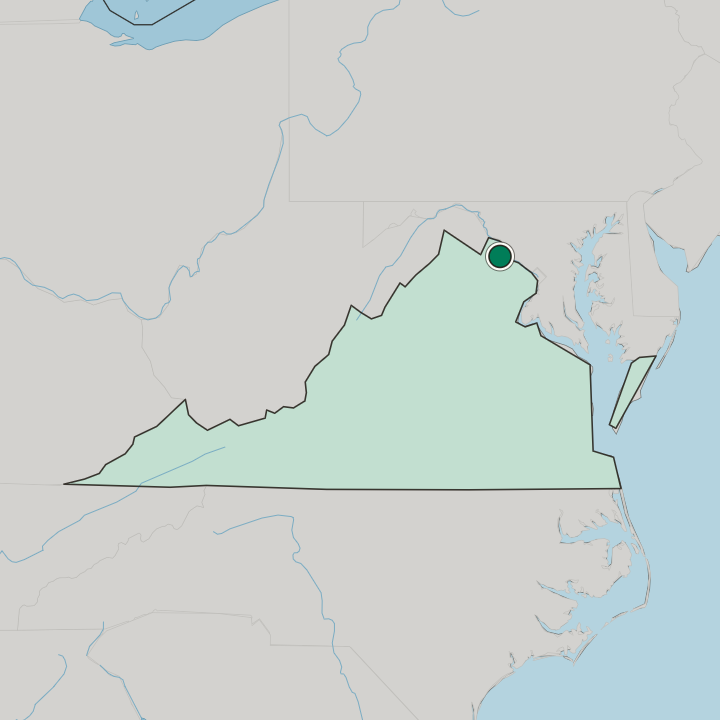
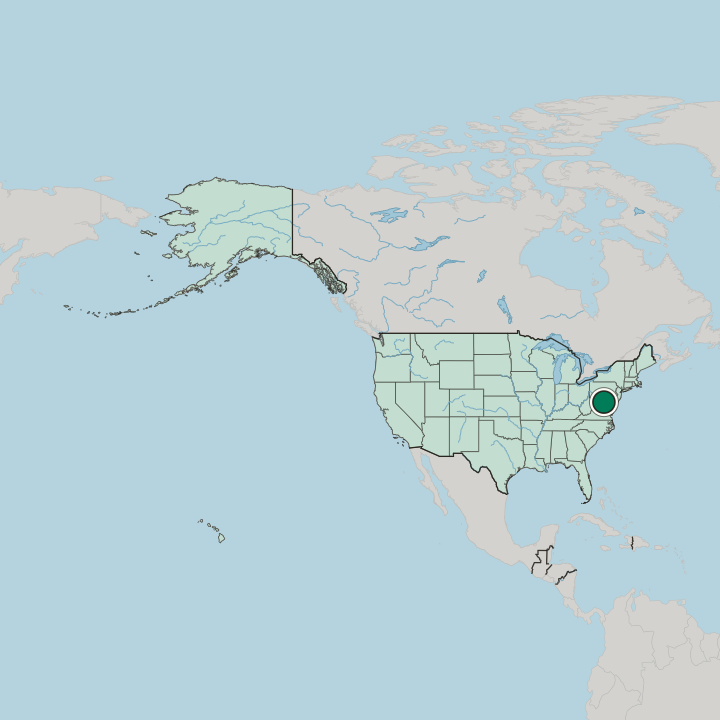
Loudoun County surrounds the town. Leesburg covers a little over twelve square kilometres inside it, close enough to the Washington metropolitan area that the capital's pull is constant and far enough out that Oatlands Plantation and the Goose Creek Meetinghouse Complex still stand in open country. Estate land begins at the edge.
Waverly, Selma and Annington sit out in that country rather than in the streets, so the town itself stays compact while its best-known buildings are spread across the county around it.
What is the climate of Leesburg?
The seasons here follow the capital's. Leesburg sits in the temperate band and close enough to Washington that its summers and winters run to the same pattern, though the open Loudoun County ground around the town cools further on clear nights than the built-up areas nearer in ever do. The estate grounds at Oatlands Plantation and Carlheim reward the mild stretches of spring and autumn far more than the heavy middle of summer, and the same holds for any walk out to the Goose Creek Meetinghouse Complex.
How do you get to Leesburg?
Leesburg belongs to the Washington metropolitan area. That places the town inside the orbit of the capital, so most arrivals come out from Washington rather than in from anywhere else, and the drive is a matter of leaving the built-up ground behind. Loudoun County spreads out from there.
Roads run on to Hamilton and past Oatlands Plantation, and once the estate country begins a car stops being optional.
Common questions
What is the best area to stay in Leesburg?
The courthouse blocks: Nights on foot between the Loudoun County courthouse and Dodona Manor. Out by Oatlands Plantation: Estate-country stays where the Oatlands Plantation grounds are the whole itinerary. Goose Creek meetinghouse country: The plainest corner of the county, near the Goose Creek Meetinghouse Complex. Toward Hamilton and Ashburn: Drivers stringing together the William Smith House at Hamilton and the Ashburn Presbyterian Church.
Good for
More cities in Virginia
Updated October 2026