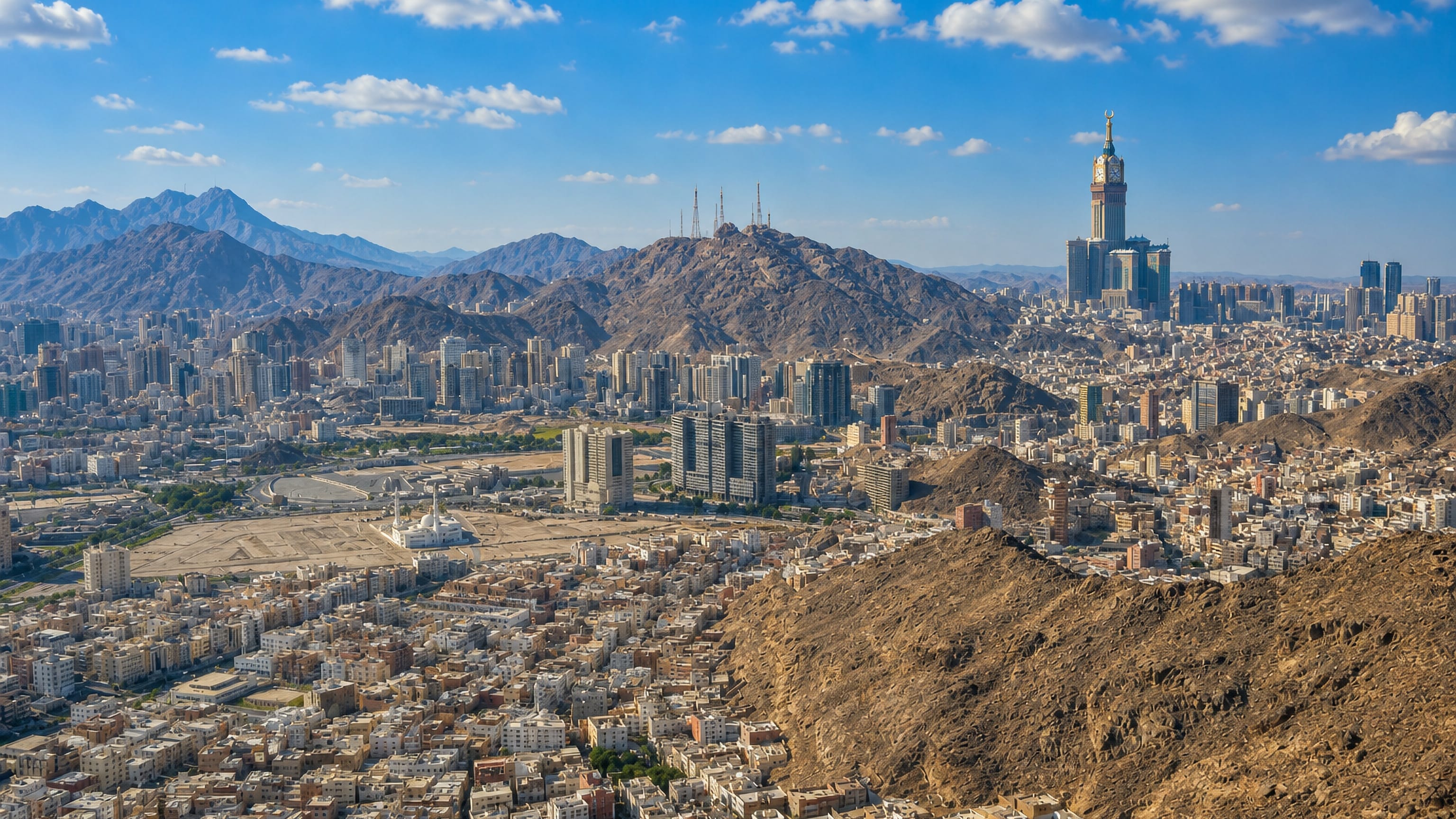
Saudi Arabia: Regions, Cities & Travel Guide
Desert and two seas frame Saudi Arabia, a kingdom across the Arabian Peninsula, known for Riyadh, Jeddah, and the holy cities of Mecca and Medina.
Hotel links are affiliate links: booking through them may earn us a commission, at no extra cost to you. It never affects how places are ranked. How this works


Top destinations in Saudi Arabia
Cities to start from, then drill into areas and hotels.
 Saudi Arabia
Makkah
Makkah stands in the Hejaz around Al-Masjid Al-Haram, the holiest city in Islam and, for Muslims, the birthplace of the faith and the Prophet Muhammad.Where to stay →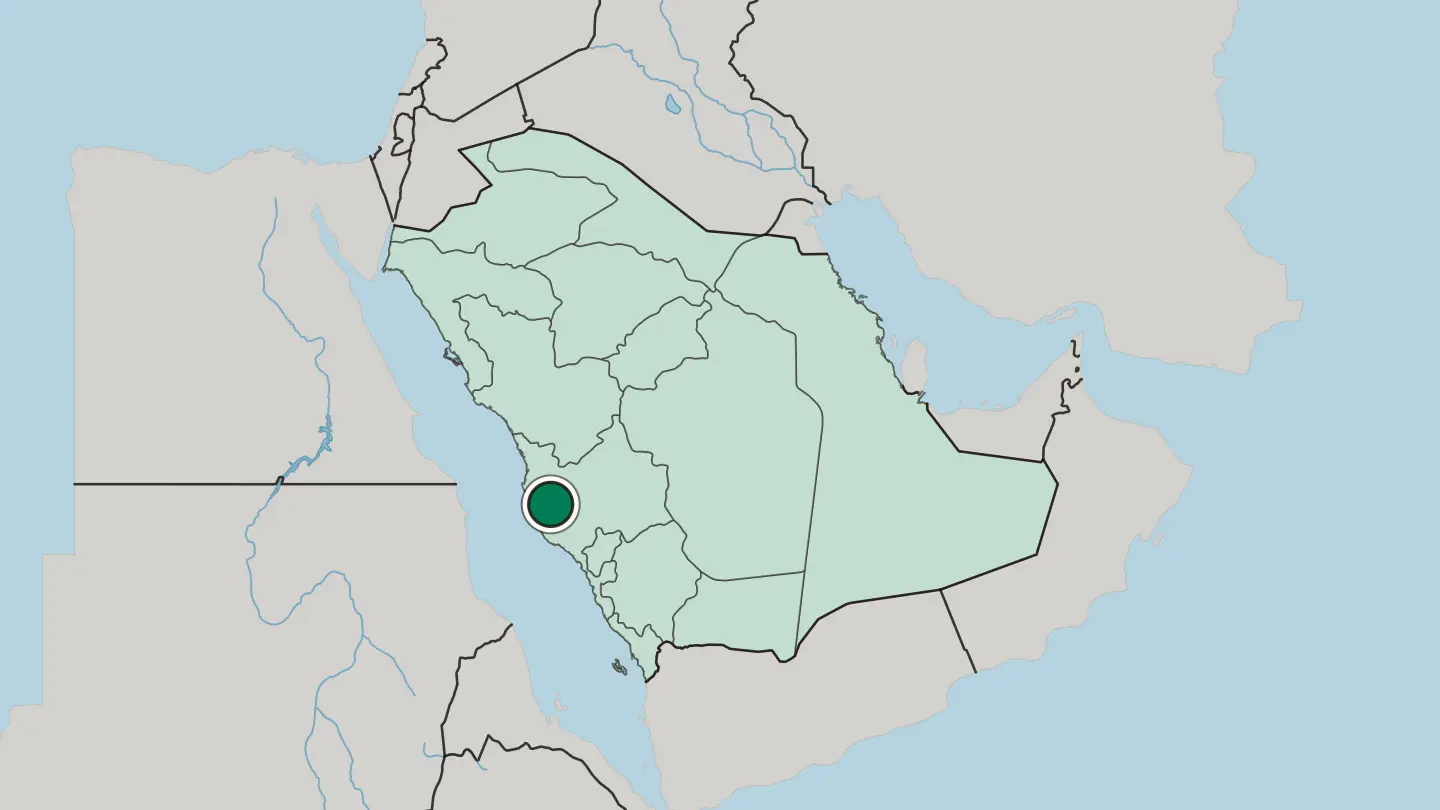
 Saudi Arabia
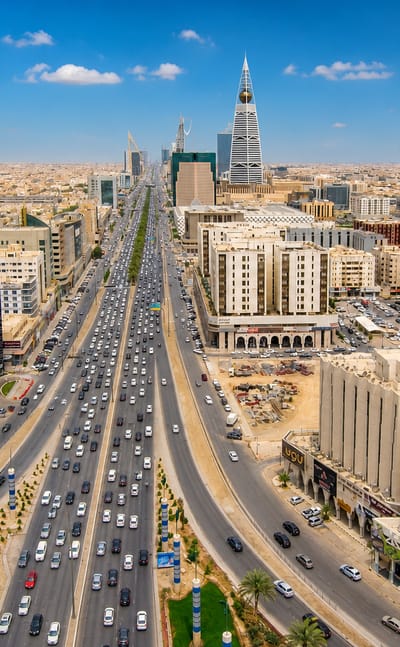
Riyadh
Riyadh rises above Wadi Hanifa on the Tuwaig escarpment, the capital and largest city of Saudi Arabia, known for Masmak Fort and its glass towers.Where to stay →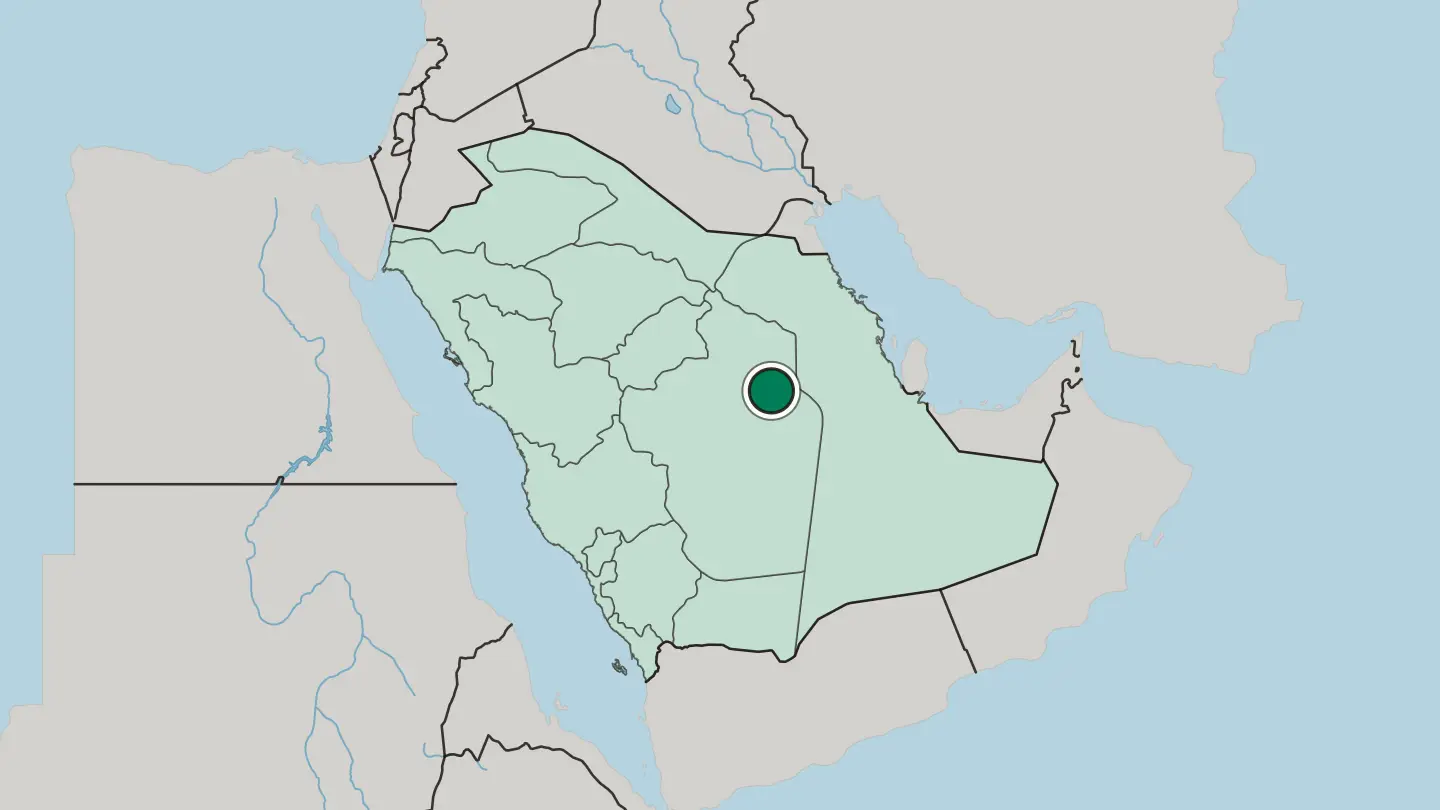
 Saudi Arabia
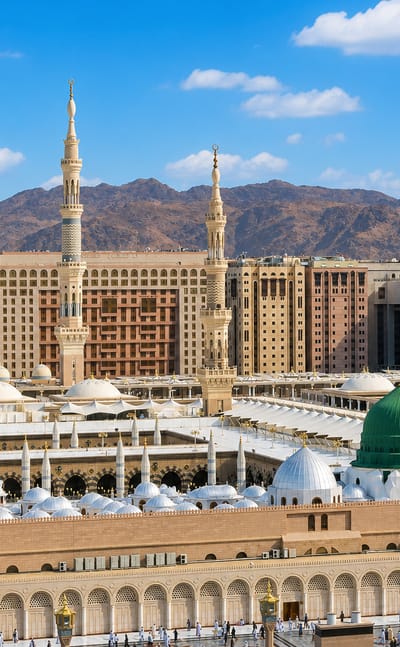
Madinah
The Prophet's Mosque anchors Madinah, a city of the Hejaz in western Saudi Arabia, the second holiest place in Islam and capital of Medina Province.Where to stay →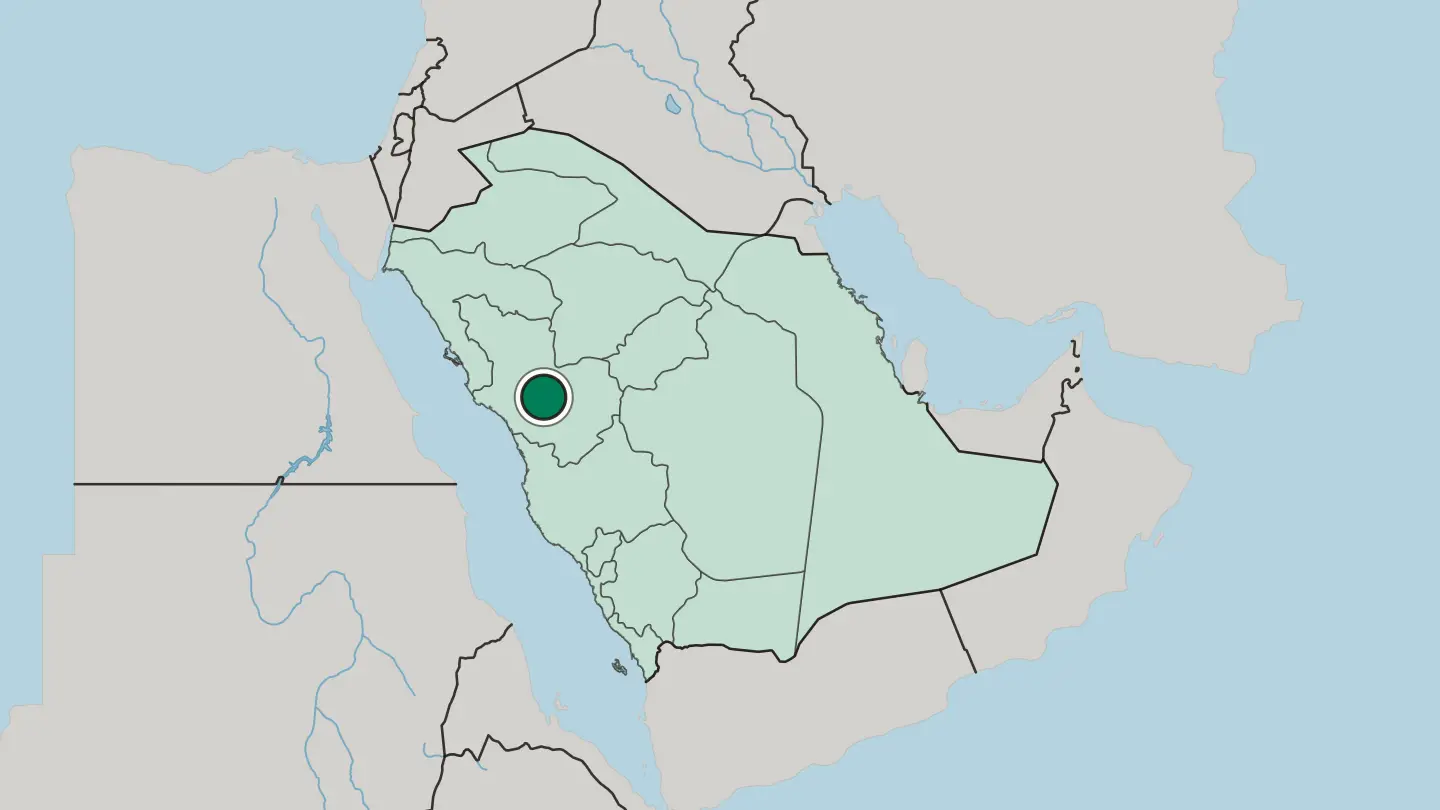
 Saudi Arabia
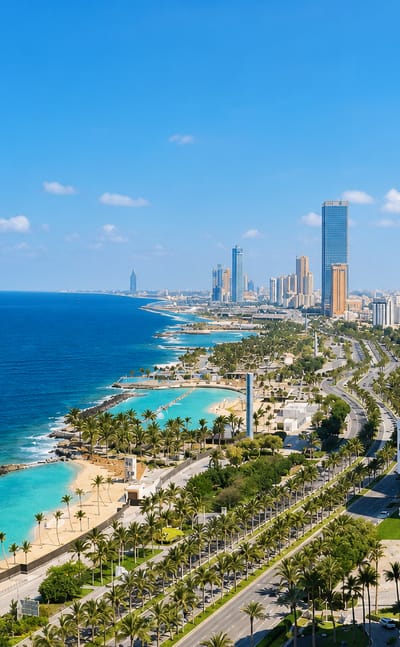
Jeddah
The Red Sea and the old lanes of Al-Balad mark Jeddah, the port of the Hejaz, second city of Saudi Arabia and the arrival point for pilgrims to Mecca.Where to stay →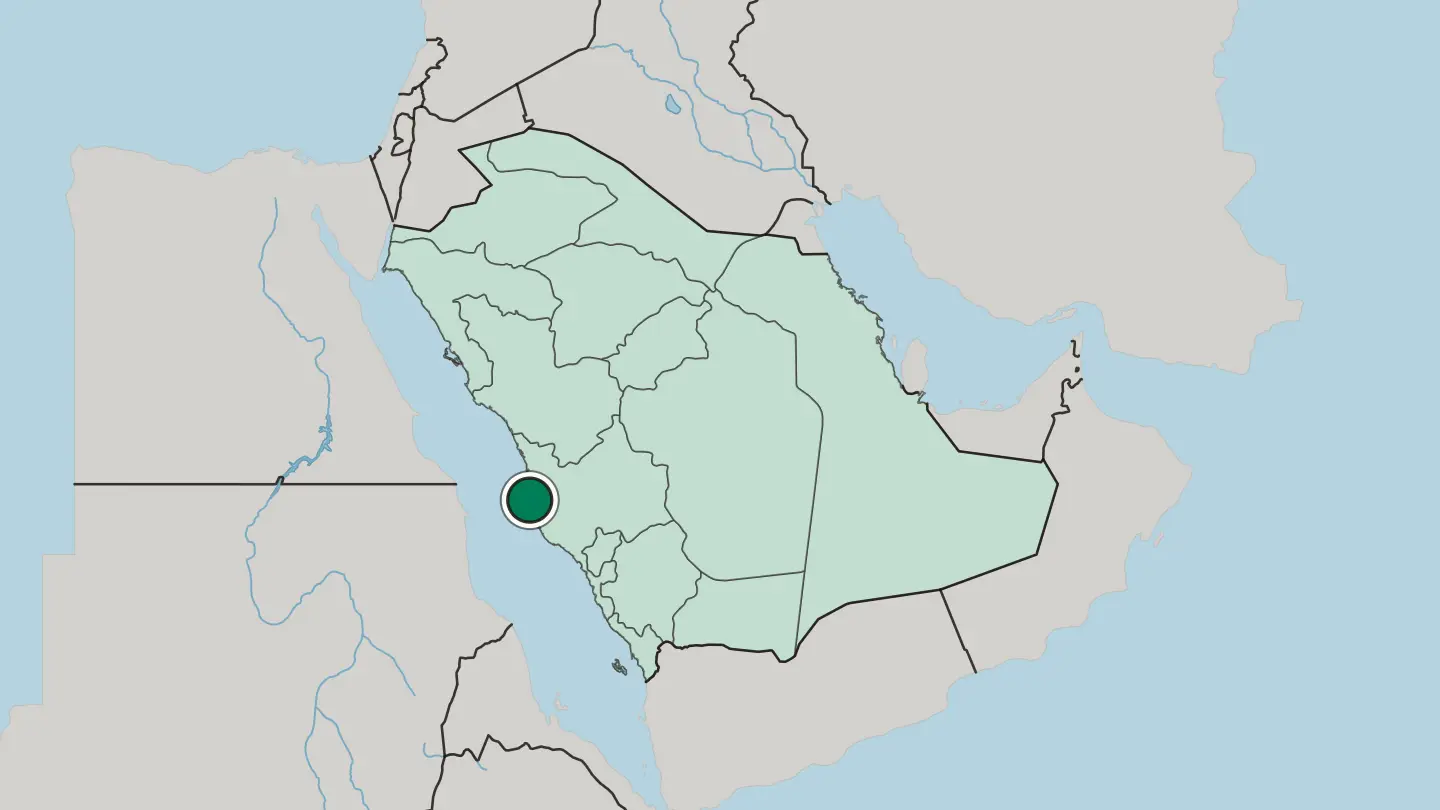
 Saudi Arabia
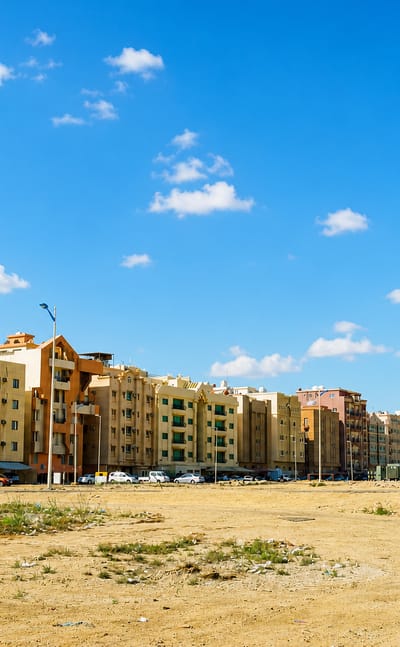
Khobar
Khobar sits on the Persian Gulf shore of the Eastern Province, a coastal city that forms part of the Dammam metropolitan area.Where to stay →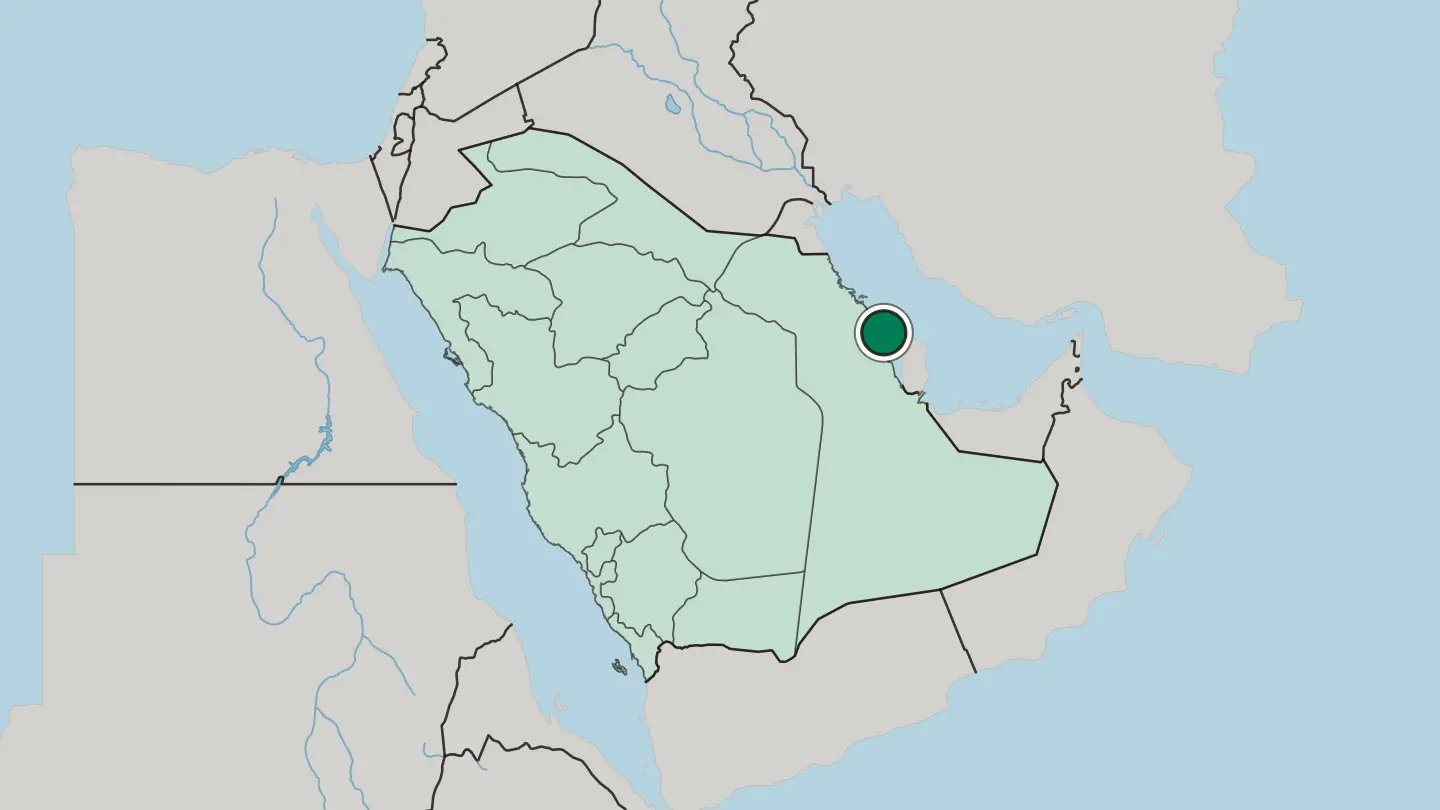
 Saudi Arabia
Dammam
Cranes and quays line the Persian Gulf at Dammam, the port city and seat of the Eastern Province of Saudi Arabia, known for The Green Hall.Where to stay →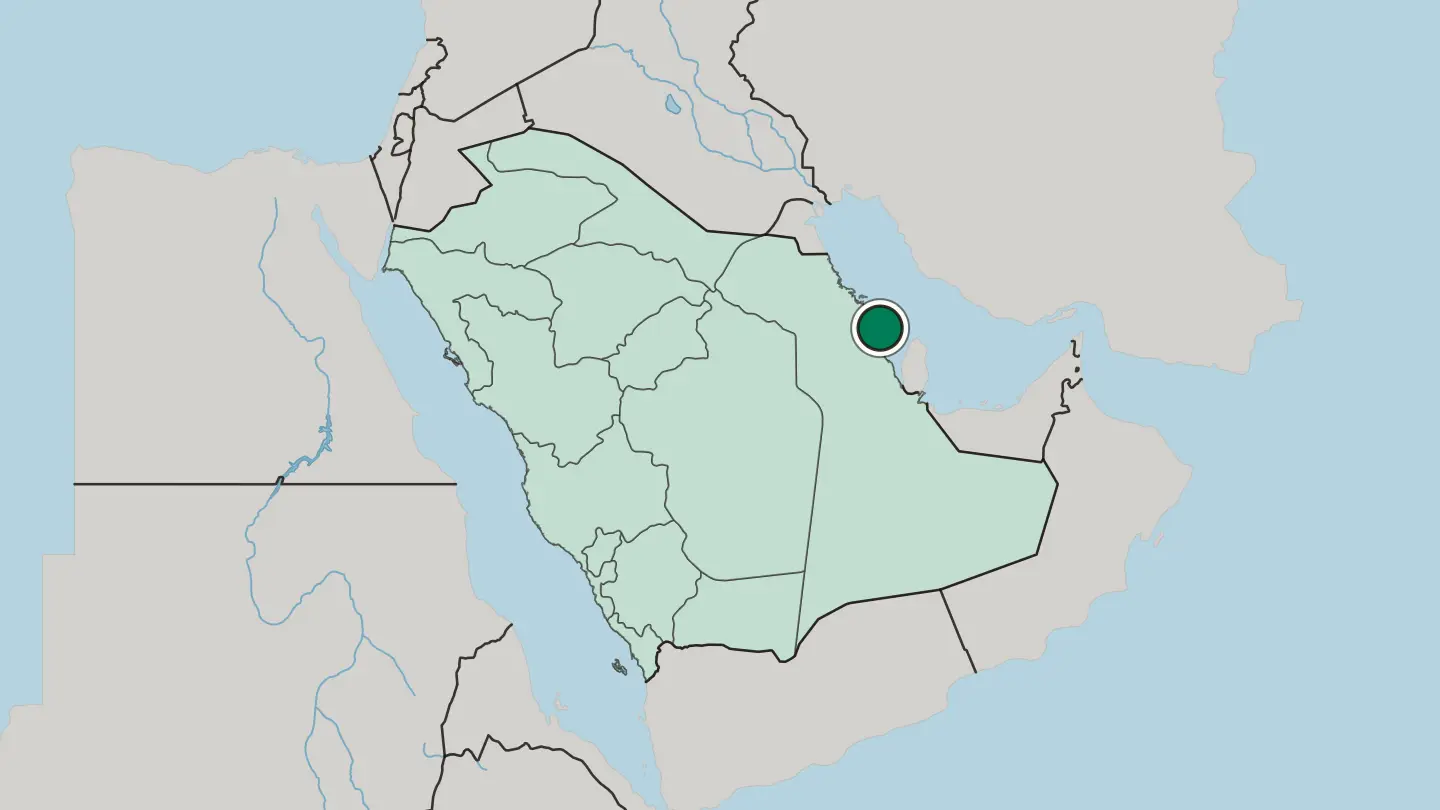 Saudi Arabia
Ta’if
Cool mountain air settles over Ta'if, a highland city of the Mecca Region in Saudi Arabia, high in the Hijaz Mountains, known for Shubra Palace.Where to stay →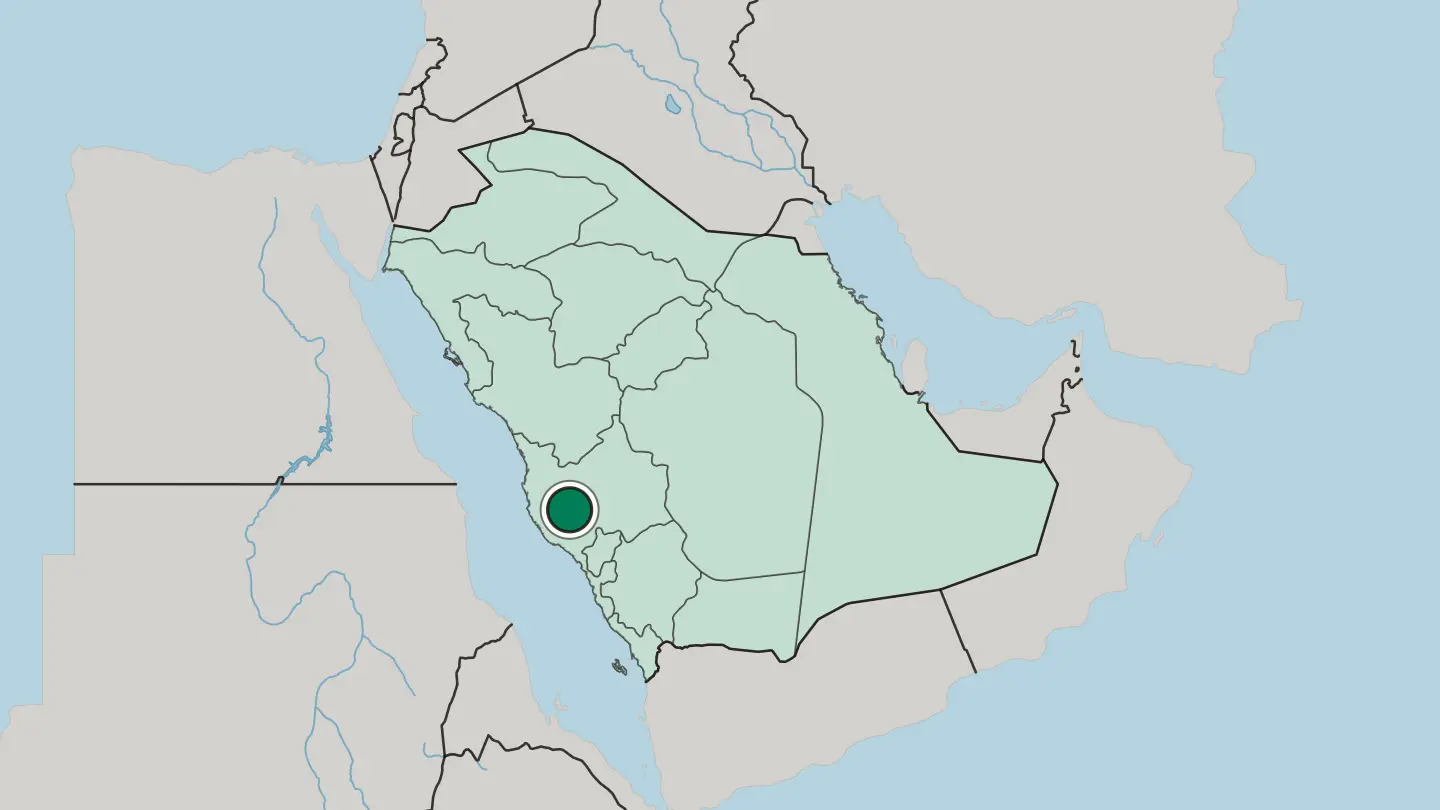
 Saudi Arabia
Abha
Abha is a highland city of southwestern Saudi Arabia, the capital of Asir, a cool mountain resort of green terraces high in the Sarawat range.Where to stay →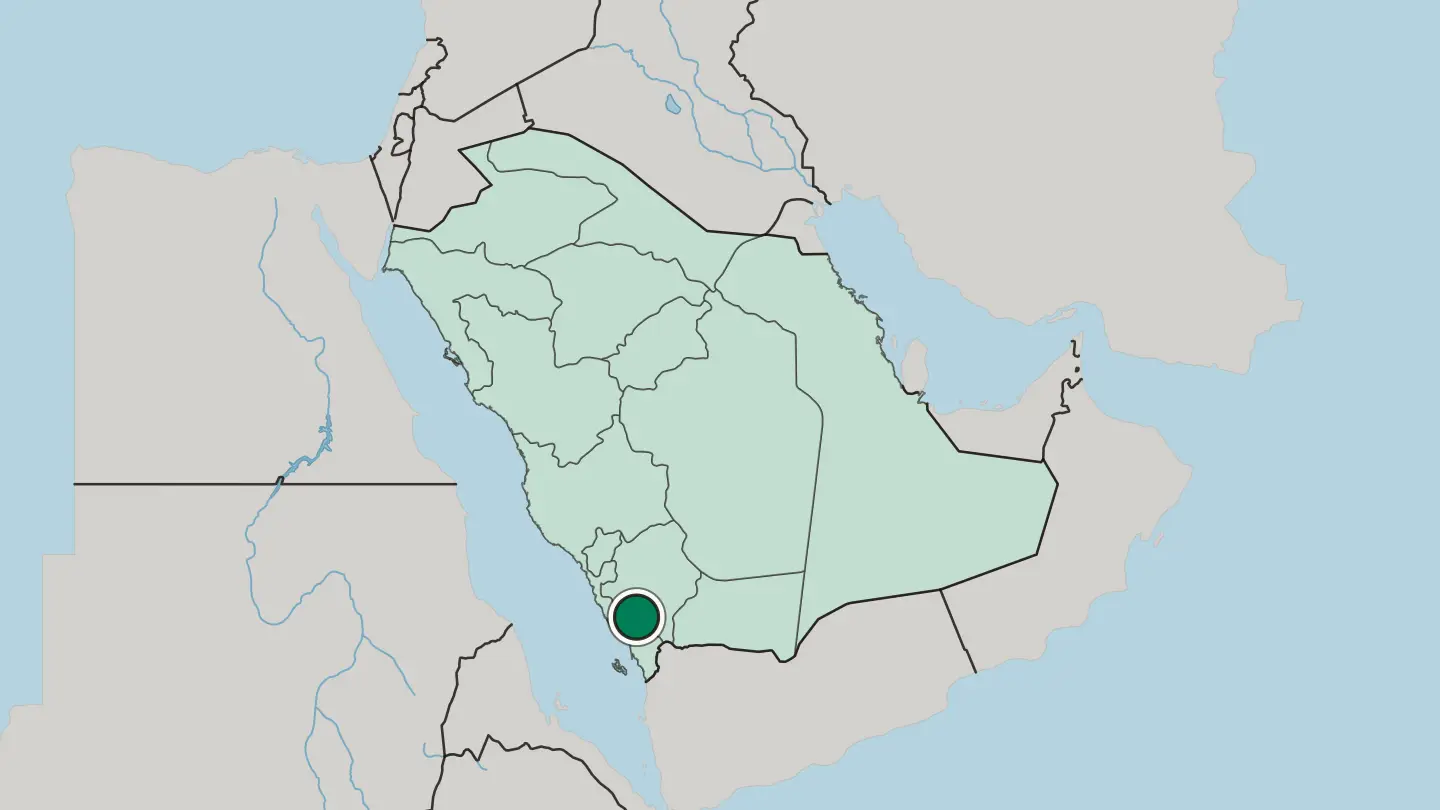 Saudi Arabia
Tabuk
Tabuk is the seat city of Tabuk Province near the Jordan-Saudi Arabia border, holding Tabuk Castle and Tabuk Museum.Where to stay →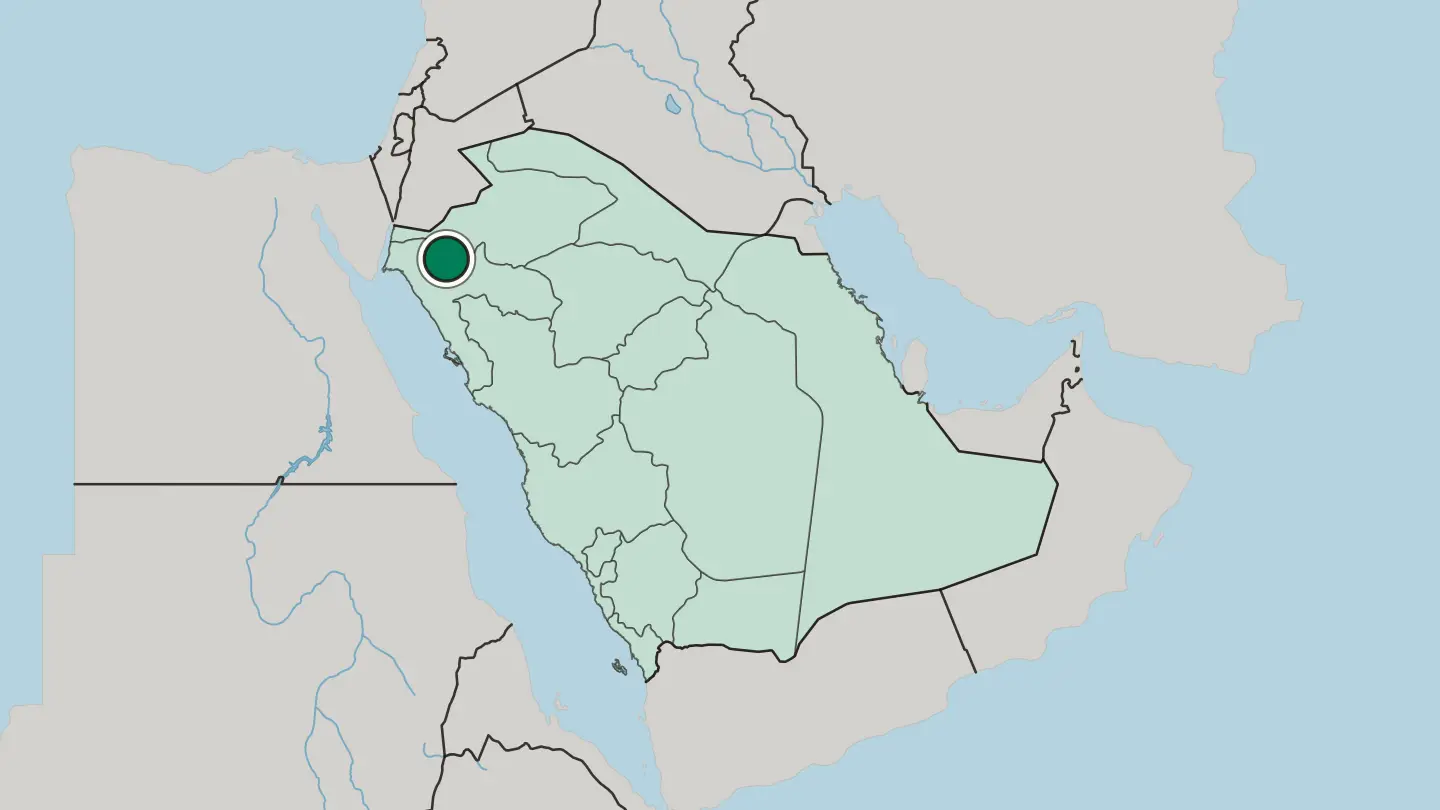
Hotel links are affiliate links: booking through them may earn us a commission, at no extra cost to you. It never affects how places are ranked. How this works
Regions of Saudi Arabia
Saudi Arabia
'Asir Region
'Asir is Saudi Arabia's mountain province in the south-west, where the Sarawat range climbs to the kingdom's highest peaks above the Red Sea.Towns & cities →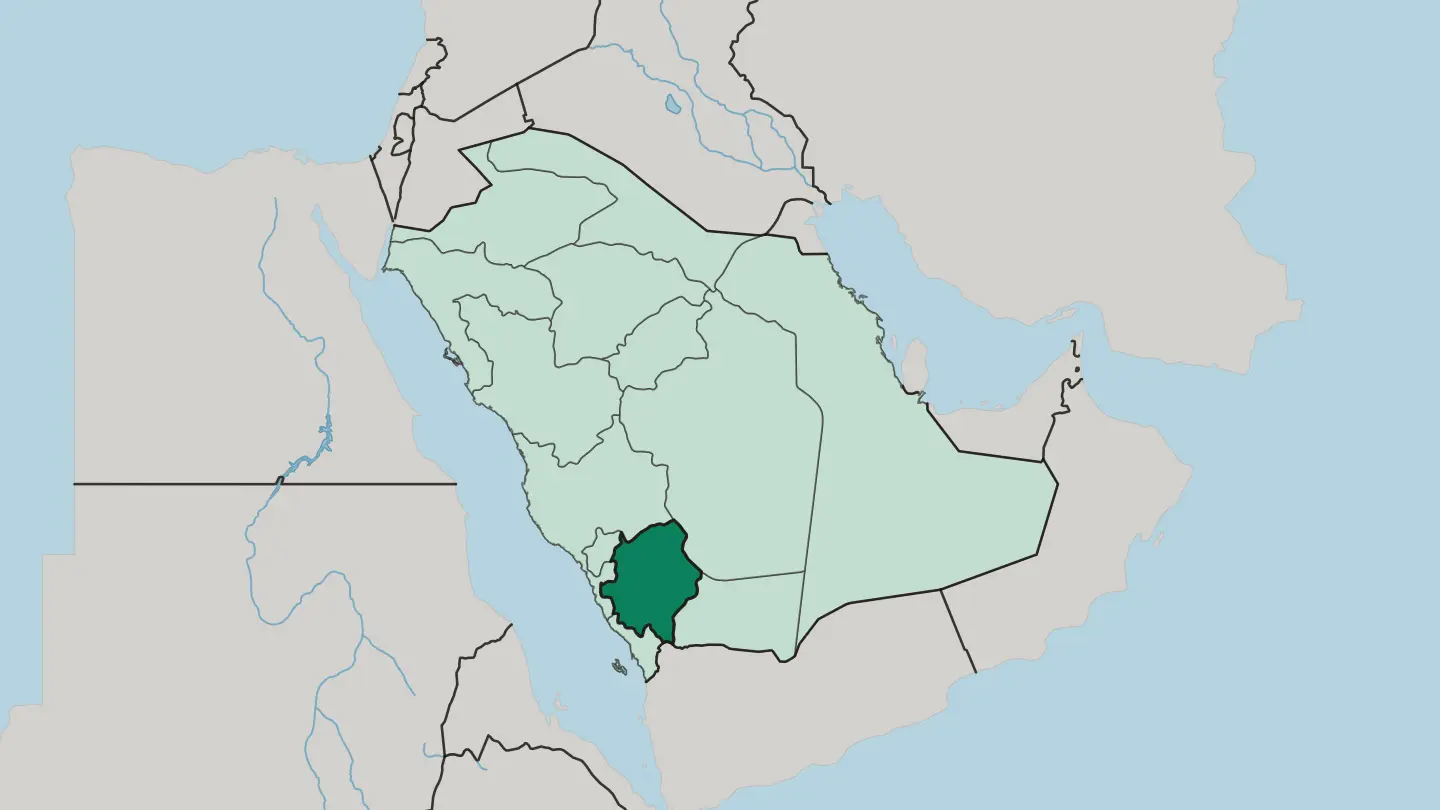 Saudi Arabia
Al Bahah Region
Al Bahah is Saudi Arabia's smallest region, a cool highland of forests and stone towers above the Tihamah.Towns & cities →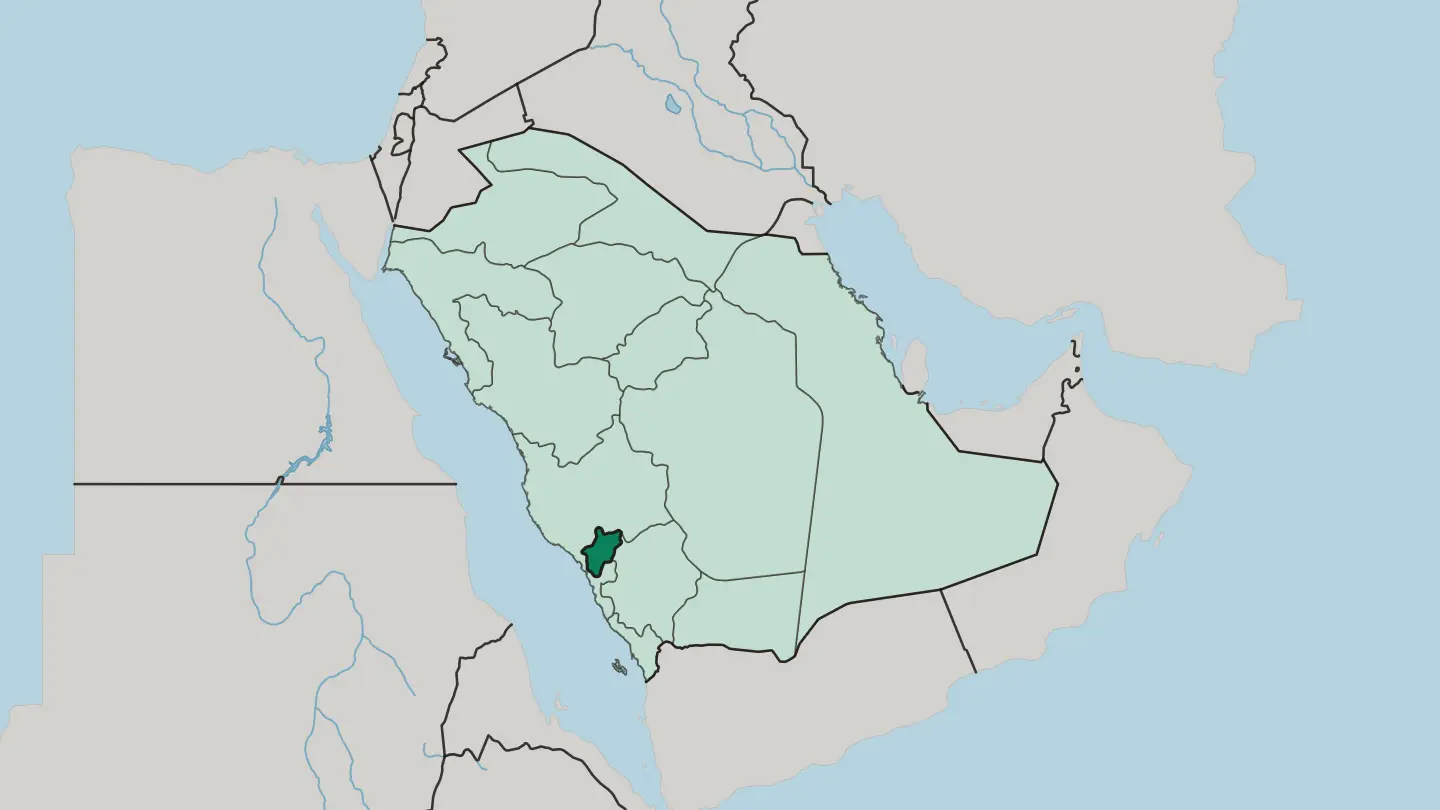
 Saudi Arabia
Al Jawf Region
Al Jawf is Saudi Arabia's olive-growing north, where Sakaka's oasis and the ruins of Dumat al-Jandal edge the An Nafud desert.Towns & cities →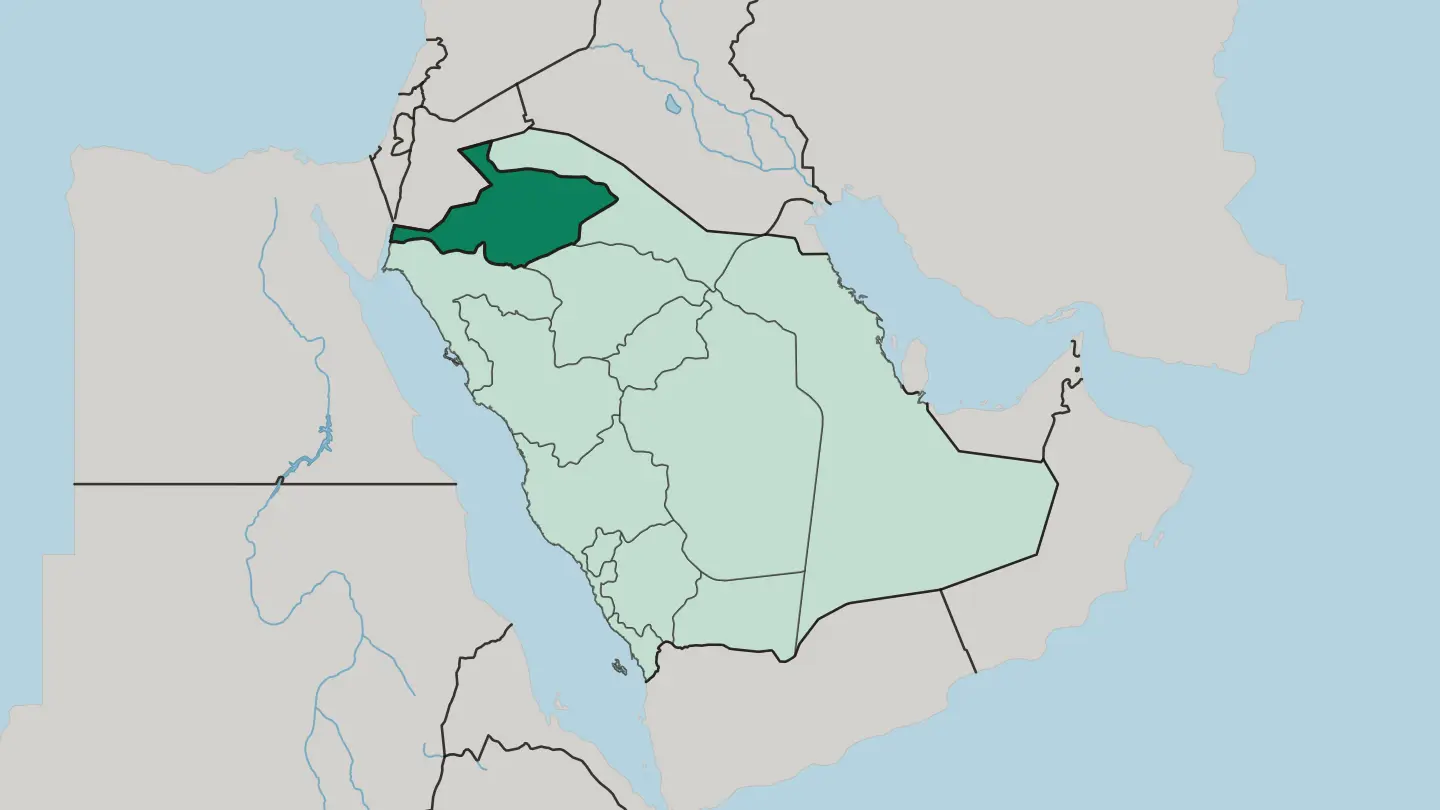 Saudi Arabia
Al-Qassim Region
Al-Qassim is Saudi Arabia's date-country: a green farming province on the Najd plateau, split by the long Wadi al-Rummah.Towns & cities →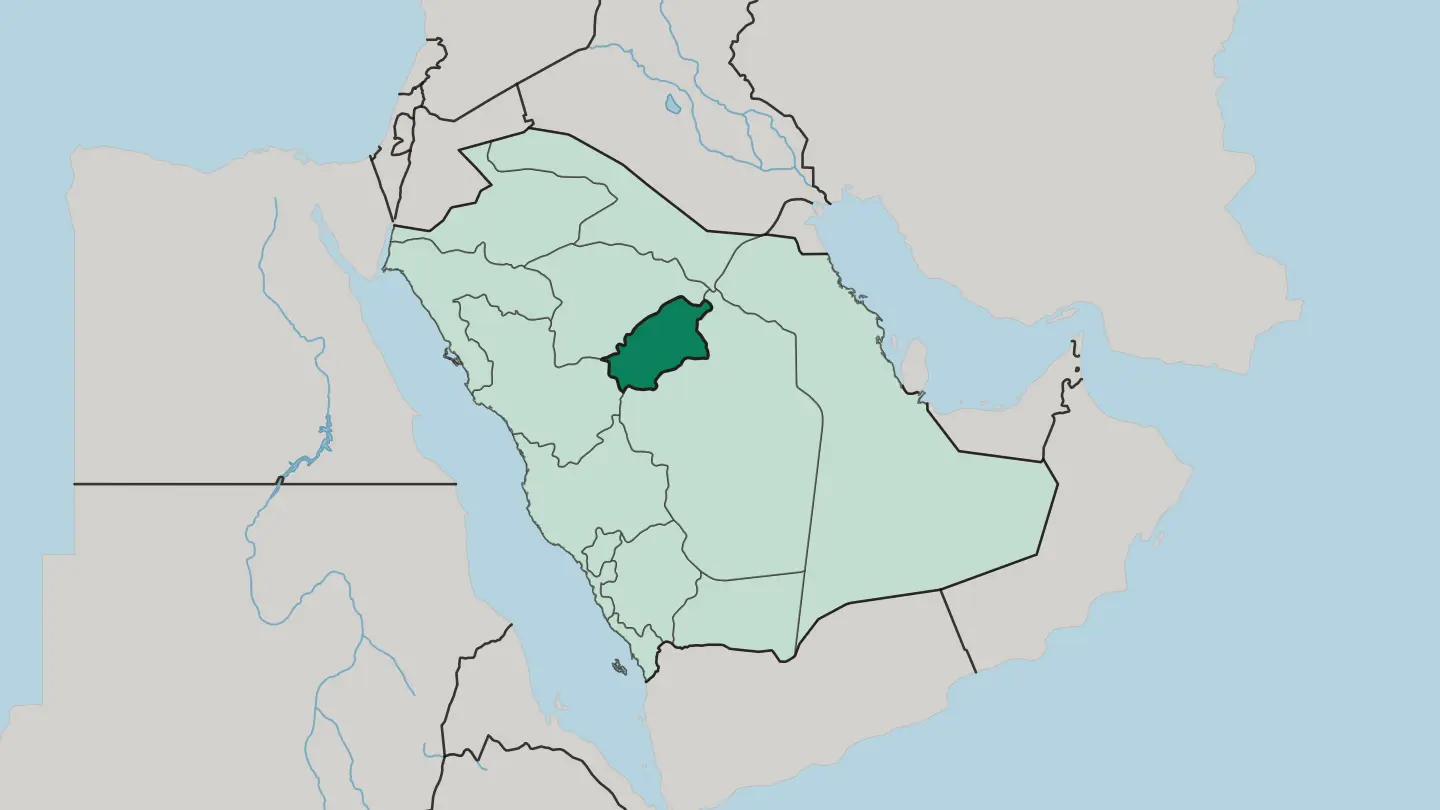 Saudi Arabia
Eastern Province
Eastern Province is Saudi Arabia's largest region, running the whole Persian Gulf coast from the oil cities to the Al-Ahsa oasis.Towns & cities →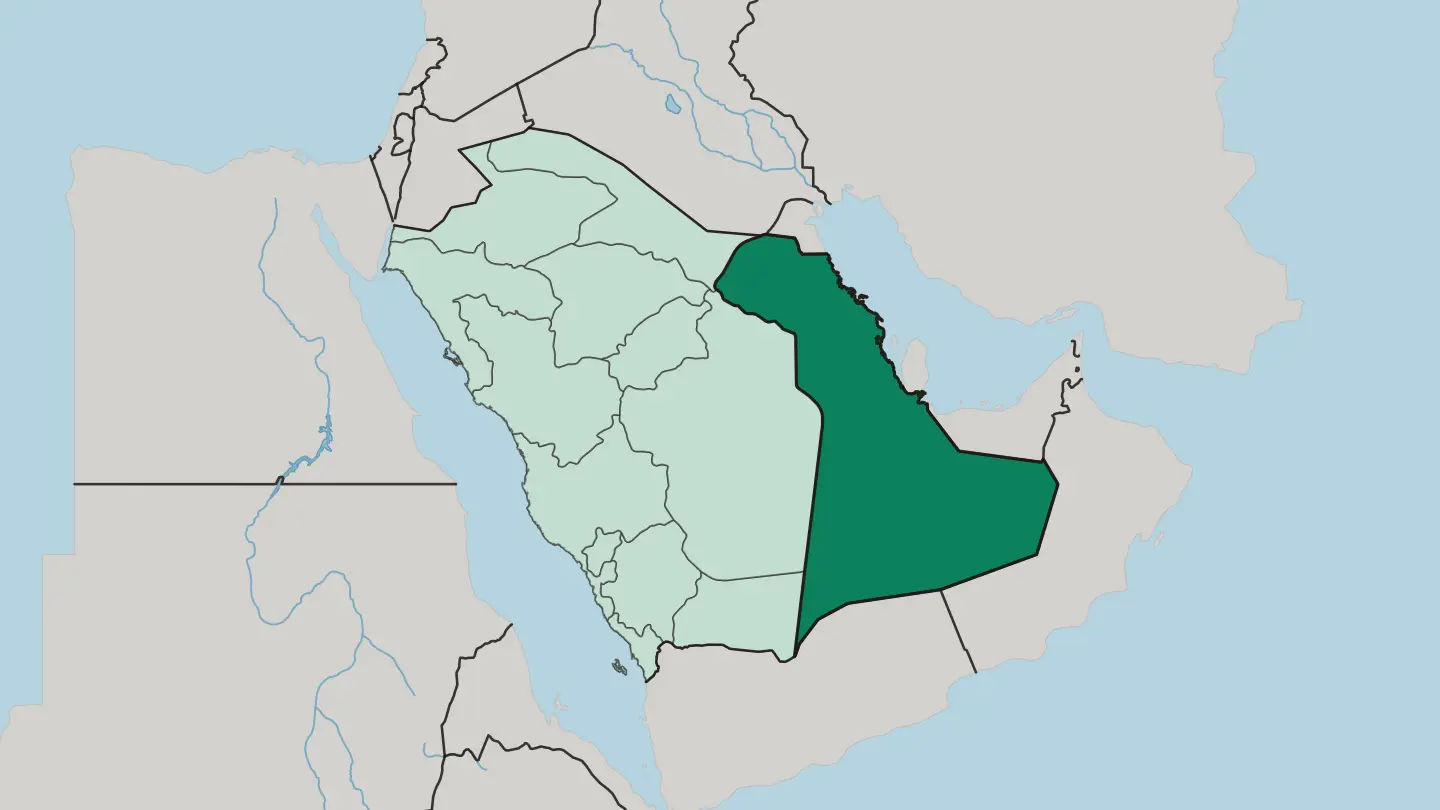 Saudi Arabia
Ha'il Region
Ha'il Region fills north-central Saudi Arabia, its granite Aja peaks rising straight from the red sands of the Nafud desert.Towns & cities →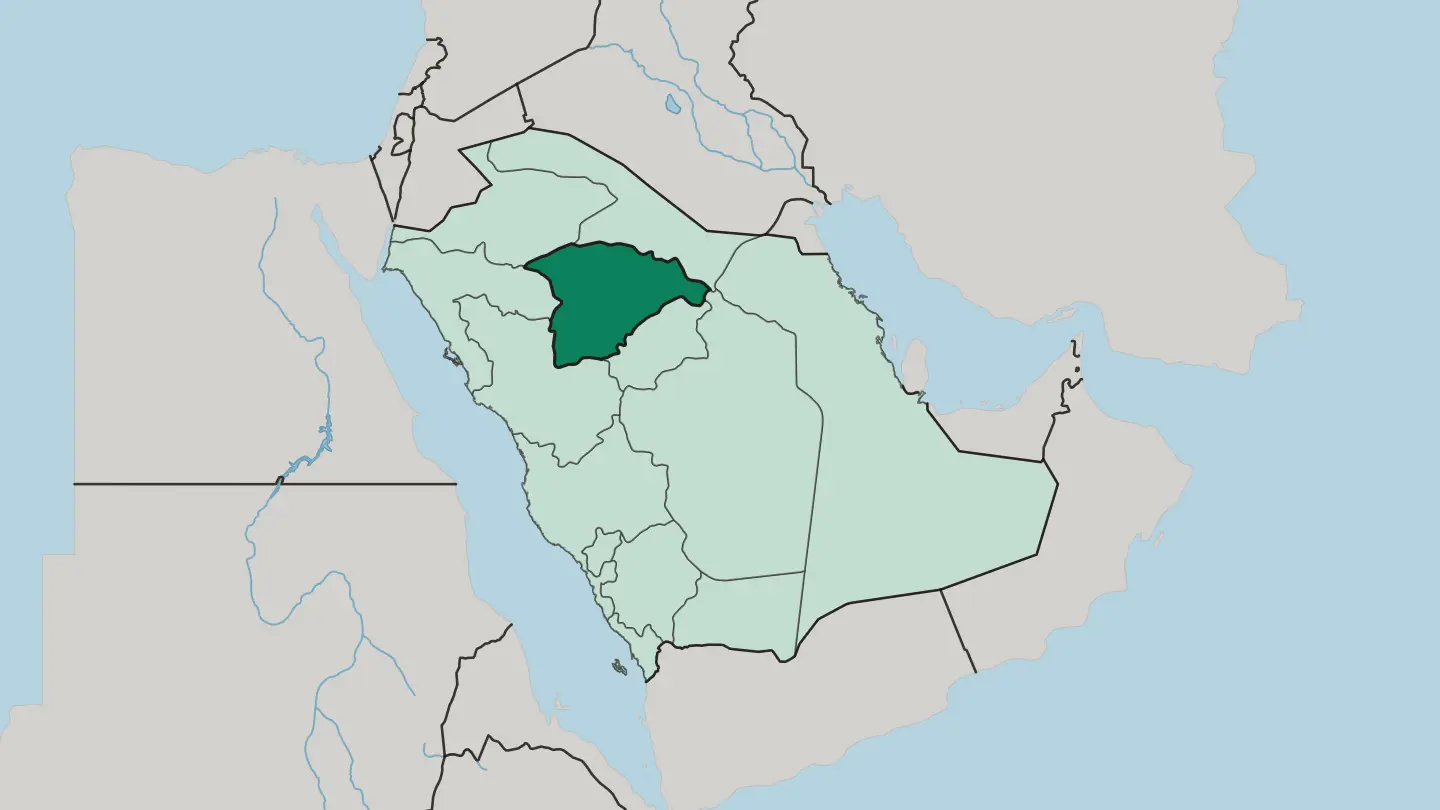 Saudi Arabia
Jazan Region
Jazan Region is Saudi Arabia's humid south-western corner: the Red Sea, the Tihamah plain and terraced coffee peaks, up against the Yemen border.Towns & cities →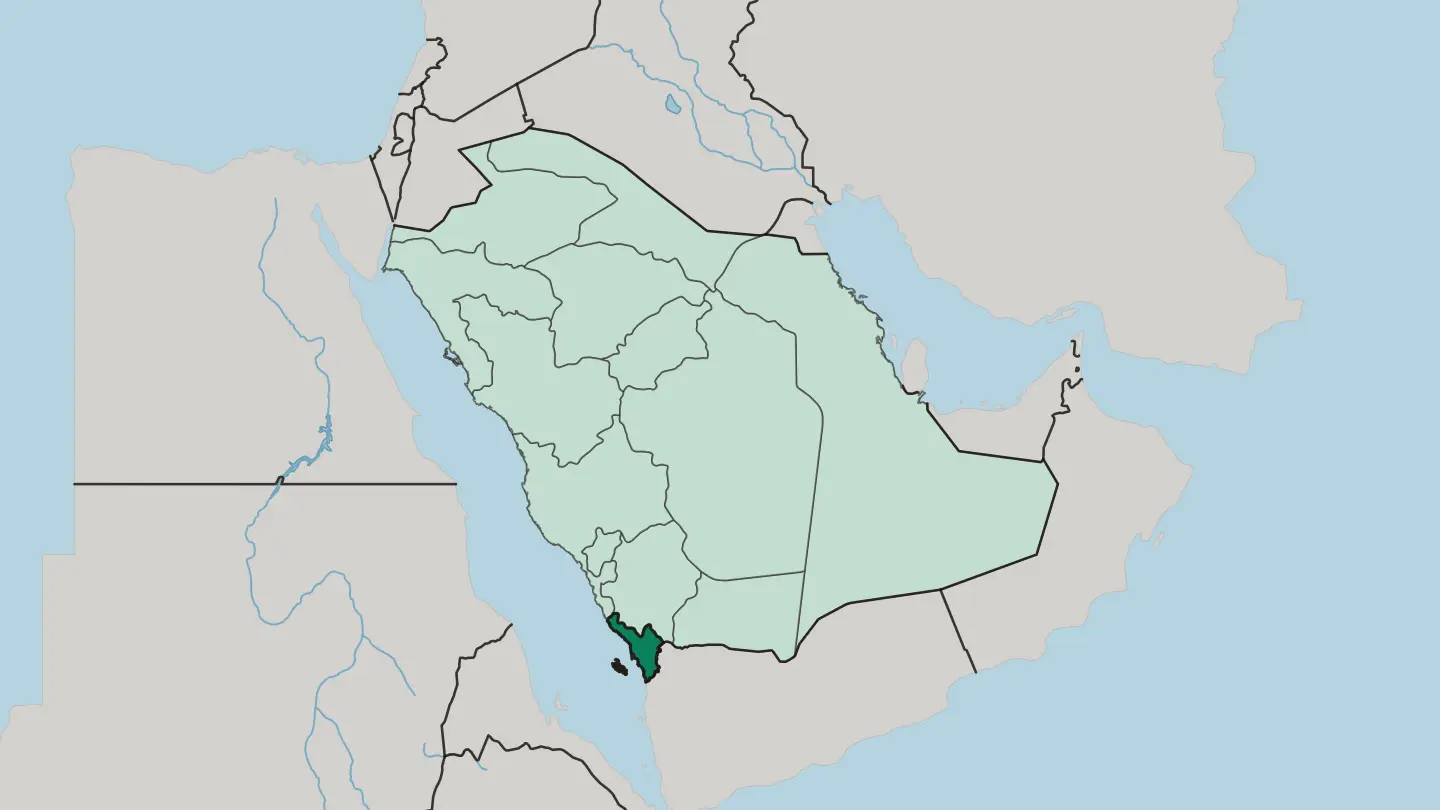 Saudi Arabia
Mecca Region
The Hejaz opens onto the Red Sea in Mecca Region, the Saudi province holding Mecca, the holiest city in Islam, and the port of Jeddah.Towns & cities →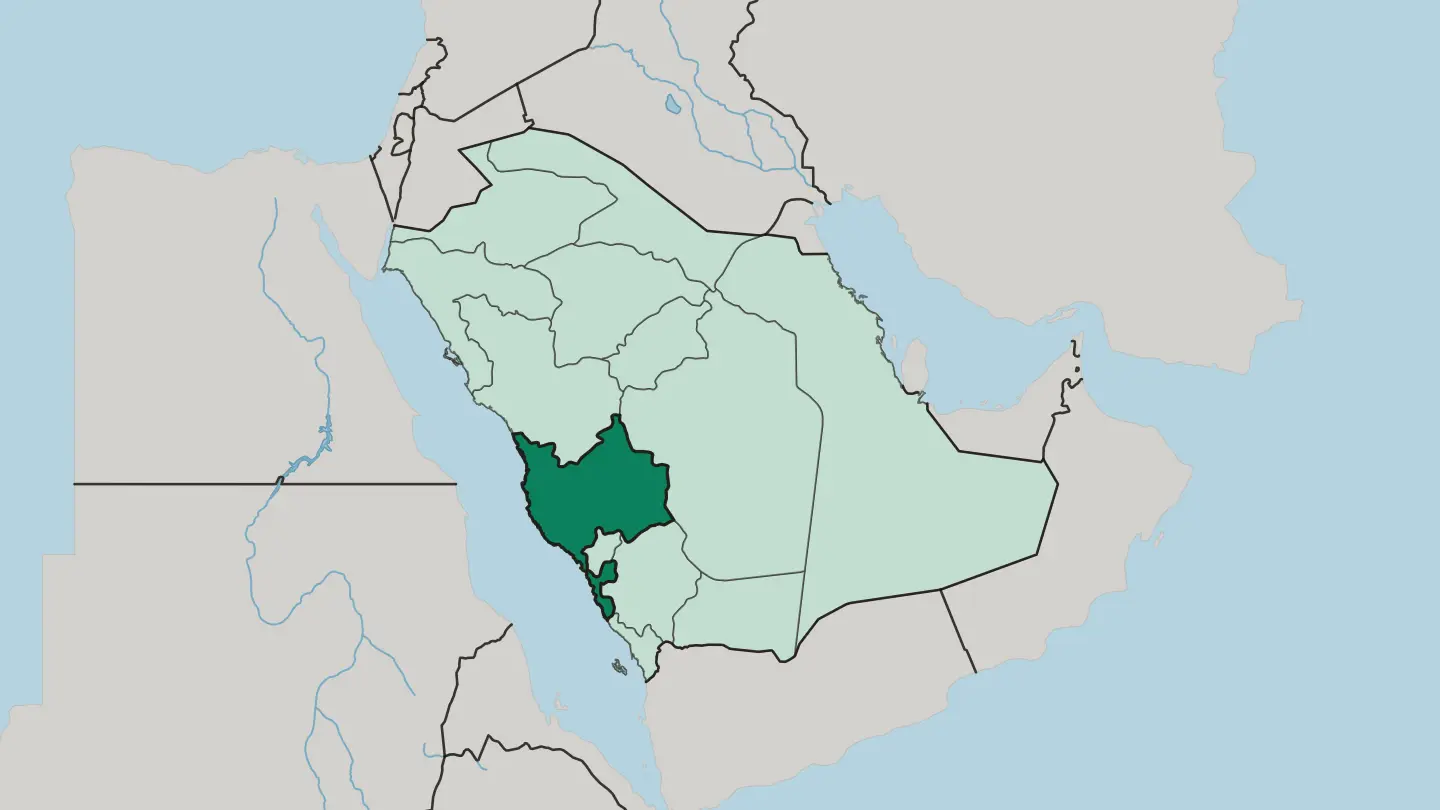 Saudi Arabia
Medina Region
Medina Region spreads across the Hejaz of western Saudi Arabia, holding Islam's second city, the Red Sea port of Yanbu, and the tombs of Hegra.Towns & cities →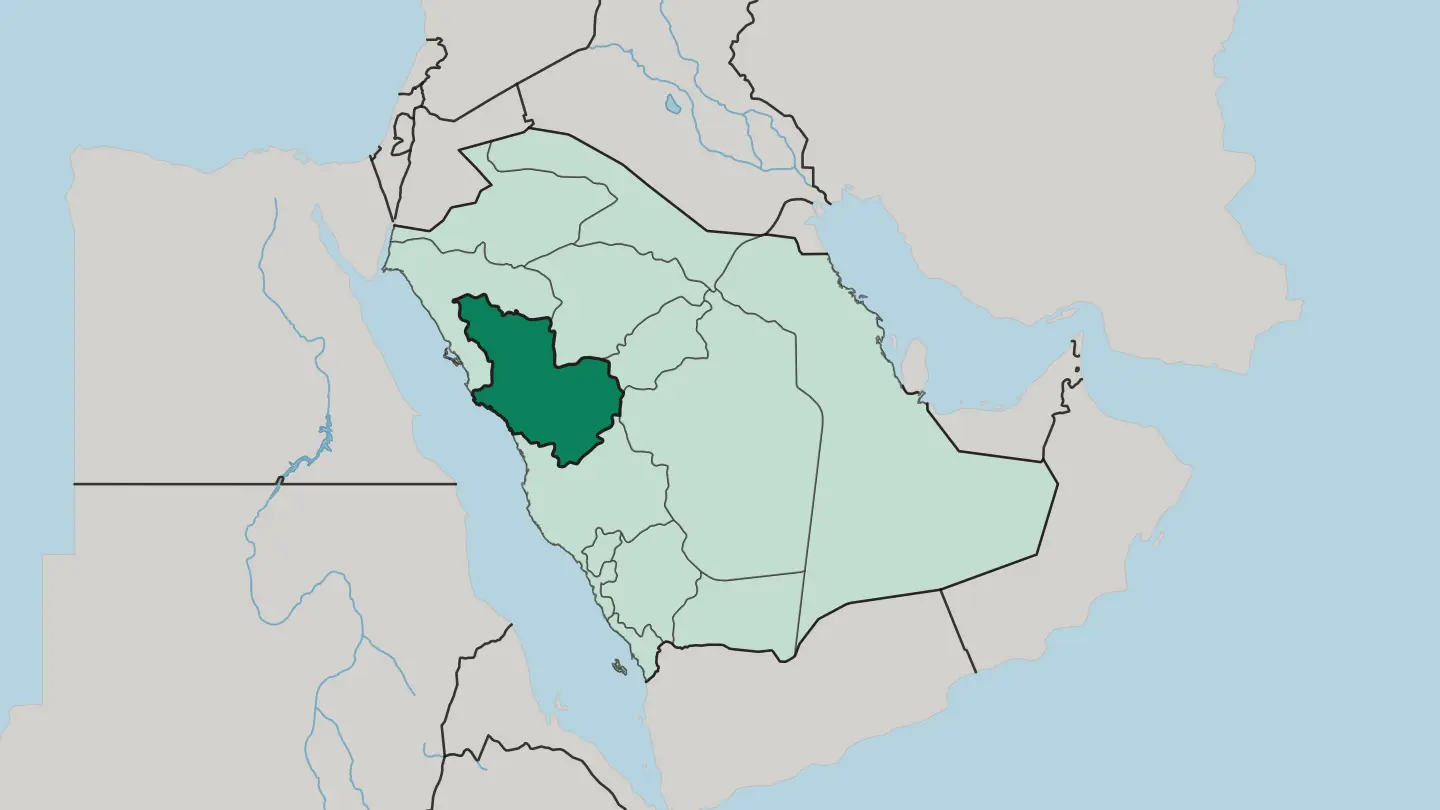
 Saudi Arabia
Najran Region
Najran Region is Saudi Arabia's southwestern corner, an ancient oasis where the Empty Quarter meets the Yemeni border.Towns & cities →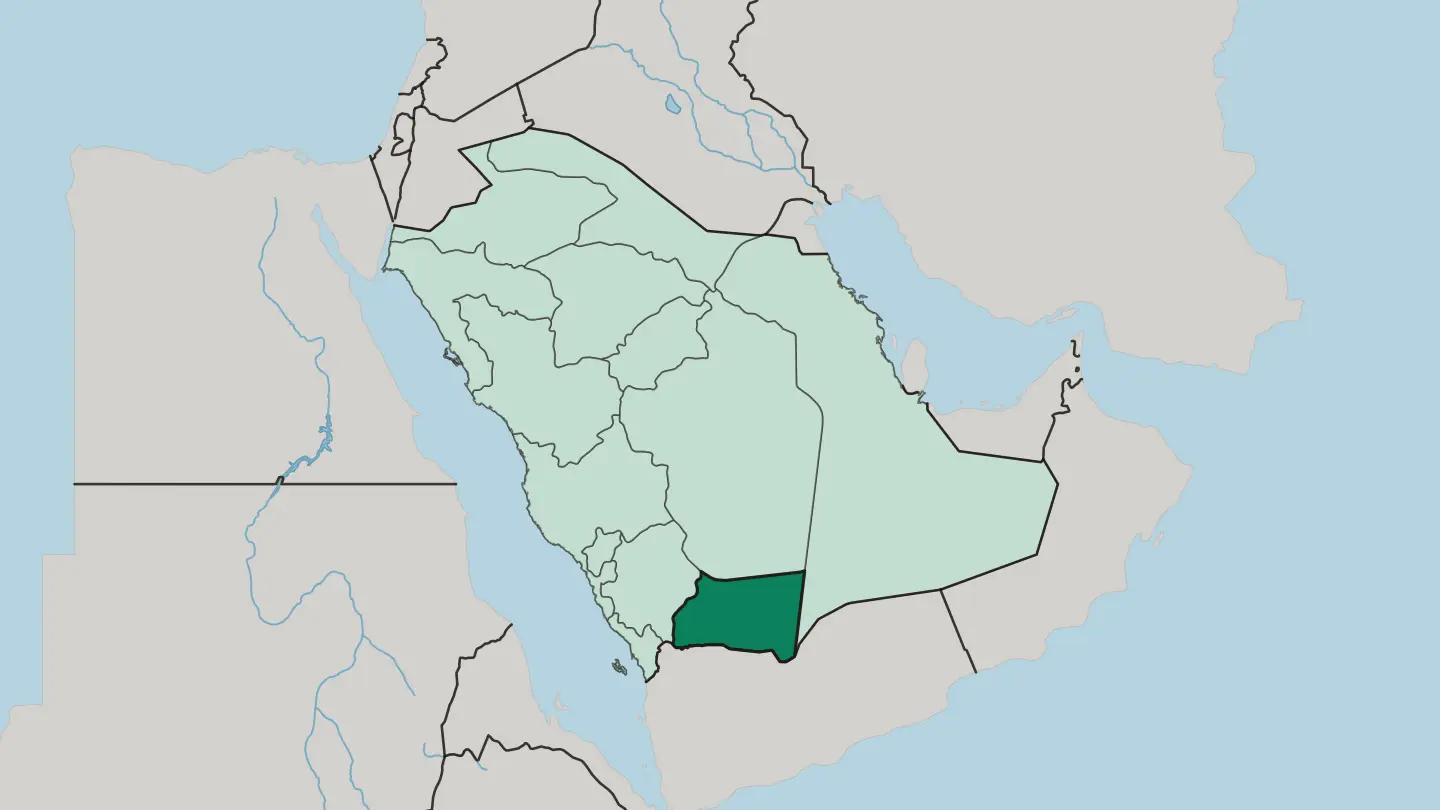 Saudi Arabia
Northern Borders Region
Saudi Arabia's far-northern desert province, where the old Tapline oil road built the frontier towns of Arar, Rafha and Turaif.Towns & cities →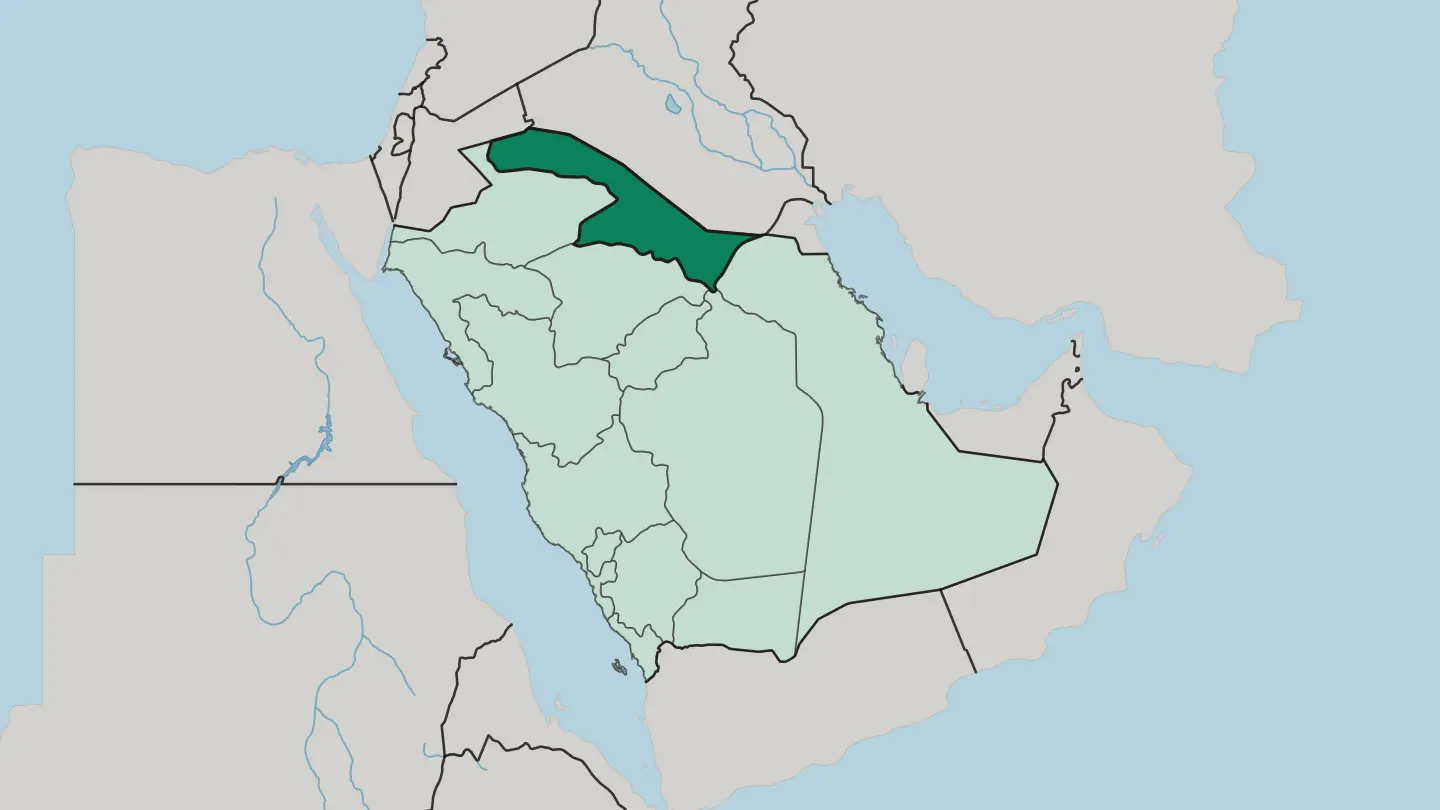 Saudi Arabia
Riyadh Region
Riyadh Region spreads across the historic Najd, the interior Saudi province built around Riyadh, capital of the kingdom on the Arabian Peninsula.Towns & cities →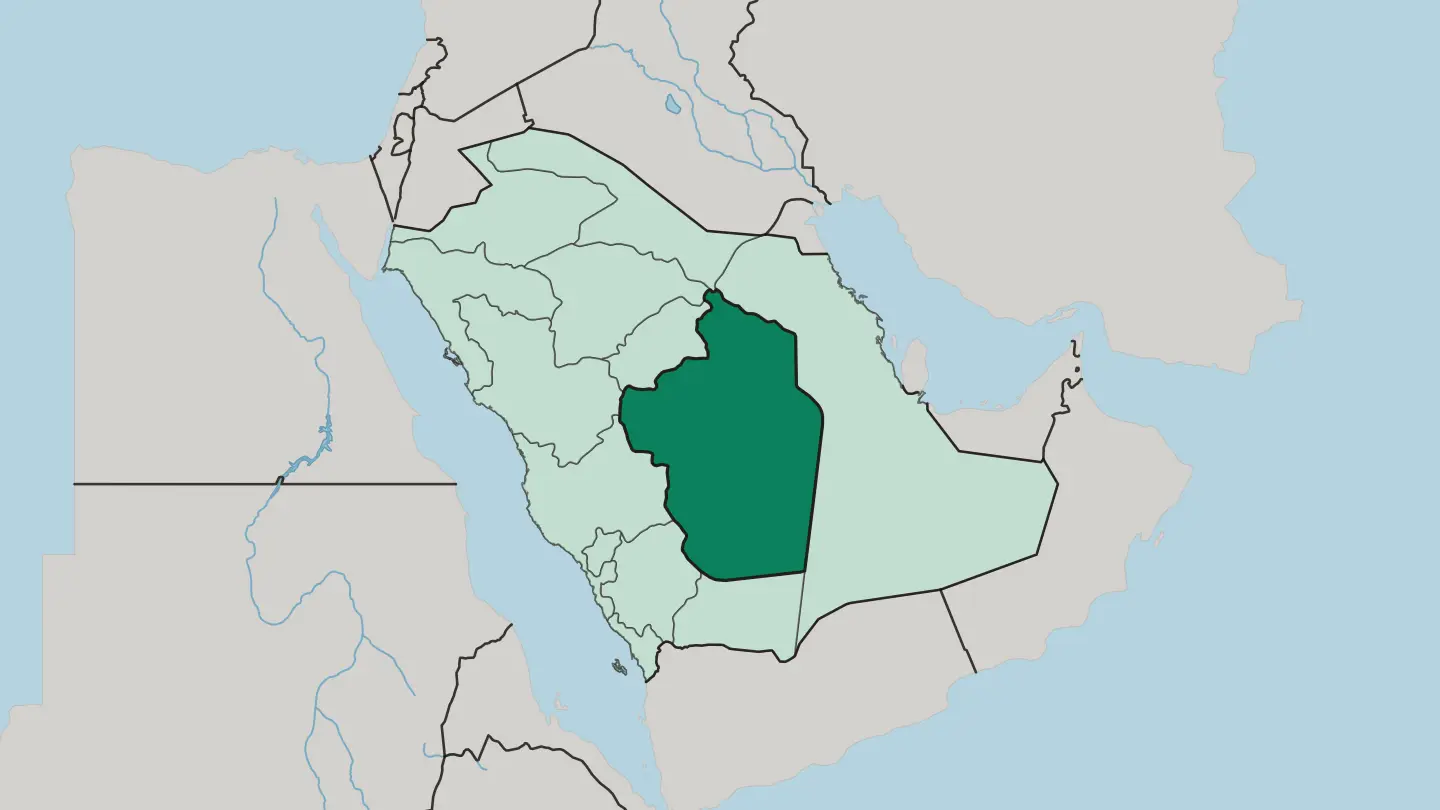 Saudi Arabia
Tabuk Region
Tabuk Region fills the far north-west of Saudi Arabia, where the Red Sea coast meets sandstone canyons and the Jordan border.Towns & cities →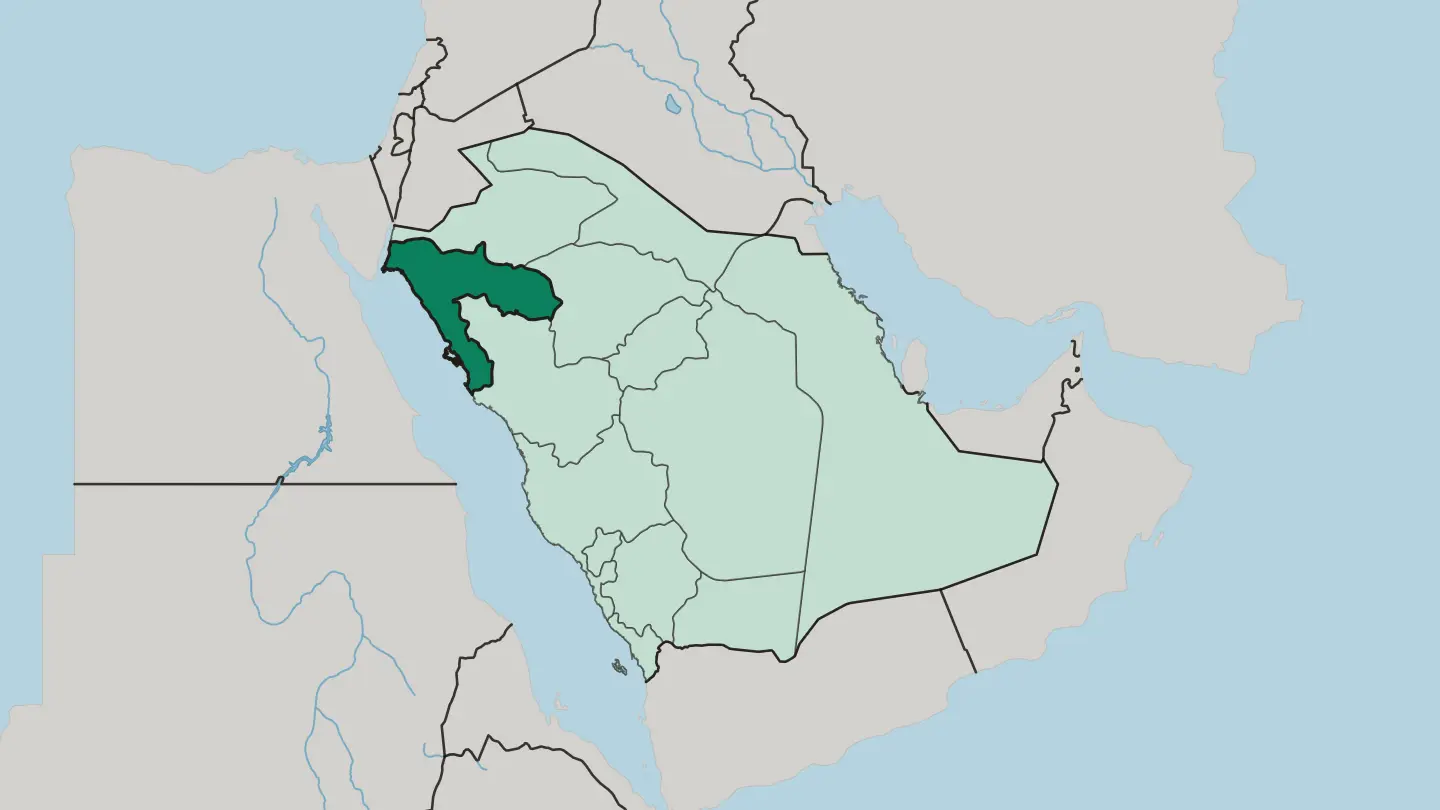
Explore by experience
Not sure which place? Start from how you want to travel.

About Saudi Arabia
What is Saudi Arabia known for?
Saudi Arabia is known for Mecca and Medina, the two holiest cities in Islam, and for the oil fields that made the kingdom a global energy power. Pilgrims have crossed the Arabian Peninsula toward Mecca for centuries. Beyond the sanctuaries, the country is defined by vast deserts, the traditional souq markets of Riyadh and Jeddah, camel racing, and a shopping culture that fills modern malls.
Desert dominates. The Red Sea rims the western coast.
Where is Saudi Arabia?
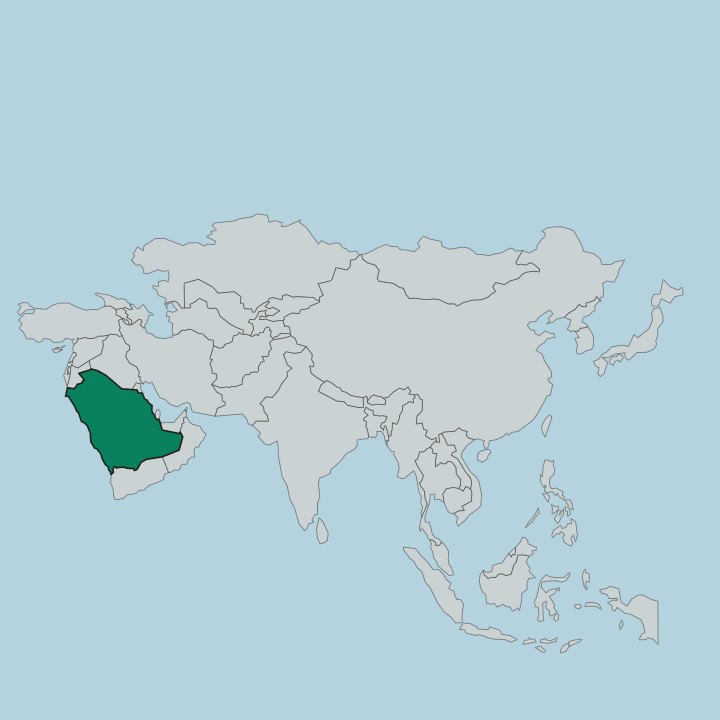
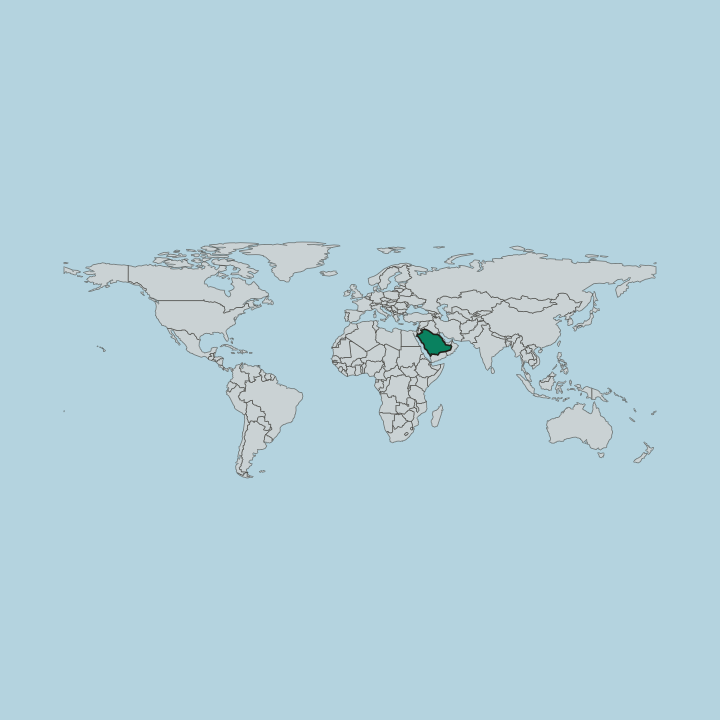
Saudi Arabia covers most of the Arabian Peninsula, in West Asia at the centre of the Middle East. The Red Sea forms its western coast, and the Persian Gulf its eastern one. It is the only country with a shoreline on both. Jordan, Iraq, and Kuwait border it to the north.
Bahrain, Qatar, and the United Arab Emirates lie along the eastern gulf; Oman occupies the southeast; and Yemen runs the length of the south. In the northwest, the Gulf of Aqaba separates the kingdom from Egypt and Israel. Much of the north is open desert running toward those inland borders.
The interior is overwhelmingly dry. Its terrain runs from arid desert and gravel steppe to lowland plains and mountains, with almost no permanent rivers. Riyadh, the capital, stands inland, away from both coasts.
Jeddah lies on the Red Sea coast. Mecca and Medina, the two holiest cities in Islam, rank among the kingdom's principal cities. Deserts define the land.
The kingdom ranks as the twelfth-largest country on Earth. By area, Saudi Arabia is the largest country in the Middle East and the fifth-largest in Asia, most of that expanse uninhabited sand and rock.
What is the history of Saudi Arabia?
Saudi Arabia traces its statehood to 1727, when the first Saudi state took shape on the Arabian Peninsula. Long before that, the peninsula was the cradle of Islam. Mecca and Medina grew into the faith's two holiest cities, and pilgrims have converged on them across the deserts ever since.
The two sanctuaries anchored the peninsula's identity long before any modern border. Caravans and pilgrimage routes crossed the interior for generations. Jeddah, on the Red Sea, served as a port of arrival from overseas.
The discovery of oil reshaped the country in the twentieth century, turning a sparse desert realm into one of the world's leading energy producers. Wealth followed. Riyadh grew into a vast capital.
Jeddah expanded along the Red Sea, and new roads and airports pushed out across the once-empty interior. For decades the kingdom stayed closed to travellers who came for anything but pilgrimage. That changed in 2019, when the government reversed its long-standing policy and began welcoming tourists, opening the deserts, the coast, and the old cities to outside visitors.
The past still sets the calendar. Pilgrimage seasons continue to shape life in Mecca and Medina.
What is Saudi Arabia like?
Saudi Arabia is shaped above all by Islam, whose two holiest cities, Mecca and Medina, sit within its borders and draw pilgrims from across the world. Arabic is the language of daily life, of the mosque, and of the marketplace. Faith orders the week.
Non-Muslim visitors may not enter Mecca or Medina, a restriction as old as the sanctuaries themselves. The kingdom is deeply conservative, and its customs and calendar follow Islamic practice. Daily rhythms bend around prayer and, each year, around the pilgrimage seasons that fill Mecca and Medina.
Everyday culture folds the old and the new together without much friction. Traditional souq markets trade a few streets from glass shopping malls, and camel racing survives as both sport and heritage out in the deserts. The souqs endure.
Faith and the desert frame the year more than any passing fashion. The desert itself stays central to how the kingdom sees itself, a land of sand and scorching heat that shaped its people long before oil arrived. Riyadh and Jeddah wear the modern face of the kingdom, while Mecca and Medina hold its spiritual centre.
What is the climate of Saudi Arabia?
Saudi Arabia has one of the hottest, driest climates on Earth. Summers across the interior are long and scorching, with searing daytime heat and little relief until night. Little rain falls across Saudi Arabia.
Most of the country is arid desert where dry air and clear skies prevail for much of the year, while the Red Sea coast stays warm and humid. Winters are short and mild, with cold nights out in the open desert.
How do you get to Saudi Arabia?
For most travellers, the way into Saudi Arabia is by air. International airports at Riyadh and Jeddah handle the bulk of arrivals, and Jeddah, the Red Sea port, has long been the coastal entry for pilgrims travelling to Mecca and Medina. Overland routes cross the northern borders from Jordan, Iraq, and Kuwait.
Roads run east toward Qatar and the United Arab Emirates, while sea traffic works both the Red Sea and the Persian Gulf coasts. Tourist visas came with the 2019 opening.
Good for
Updated September 2026