Austria · Wien · Vienna
Gersthof, Vienna — Area Guide & Where to Stay
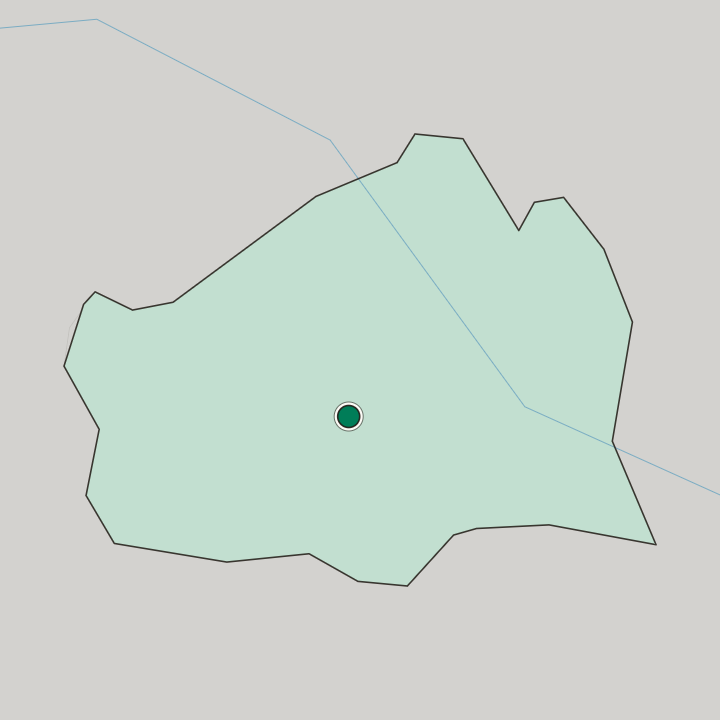
A 1497 deed names the Gerstlerhof, the farm whose owner handed Gersthof its name; the quarter fills 87.85 hectares of Währing, Vienna's 18th district.
Hotel links are affiliate links: booking through them may earn us a commission, at no extra cost to you. It never affects how places are ranked. How this works


Where to stay in Gersthof
Where visitors usually base themselves, and why.
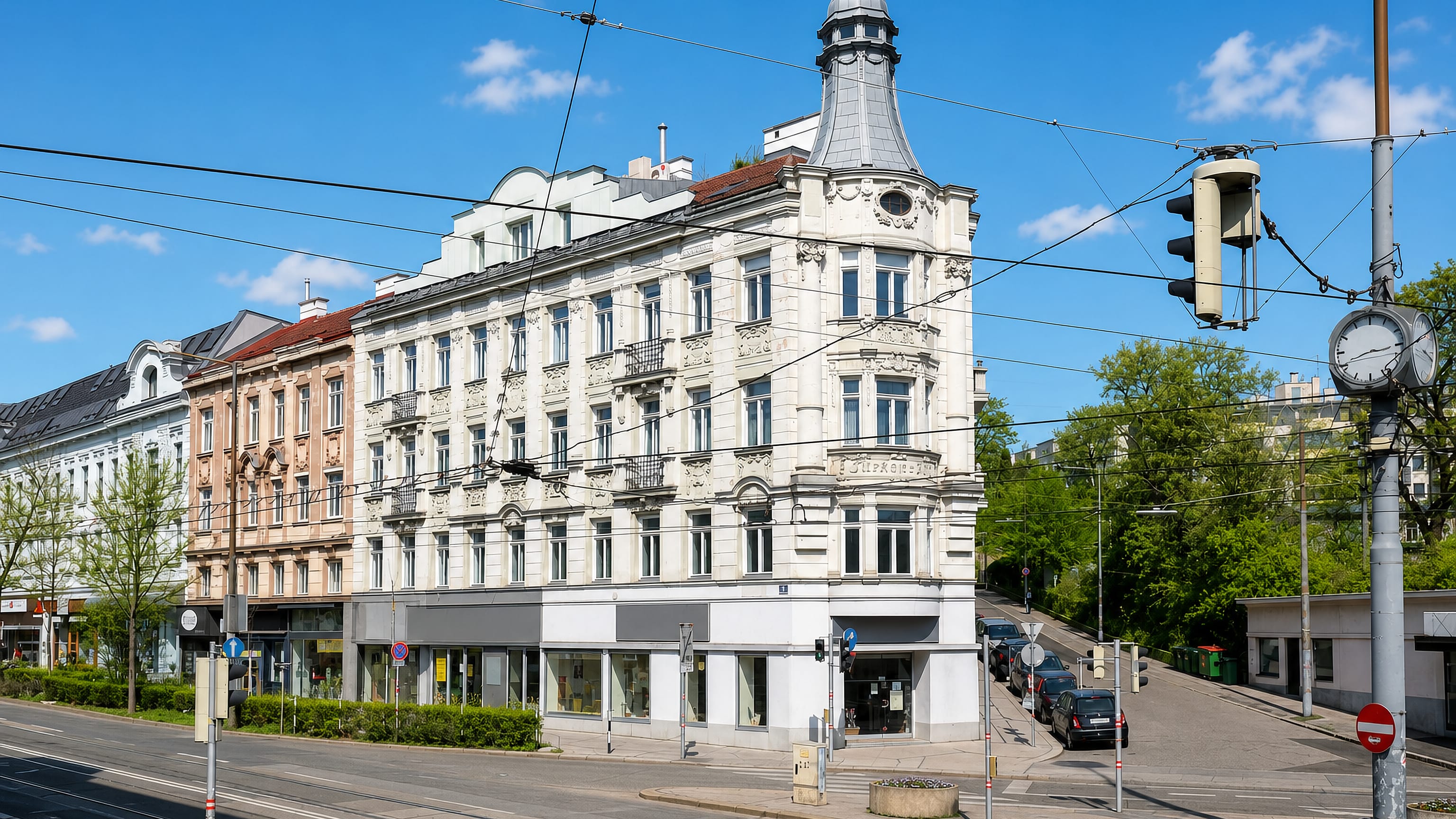
Wien Gersthof is the hinge. Otto Wagner drew the station for the Vorortelinie and it opened on 11 May 1898 at Gersthofer Straße 2; the S45, trams 9, 40 and 41, and the 10A bus all call there. Beds are thin.
Gersthof is flats and villa gardens rather than hotels, so a room usually means the grid blocks between Bastiengasse and Alseggerstraße. For quiet, look at the top of Gersthofer Straße in Alt-Gersthof, where the Maria-Theresien-Schlössel and the Johannes-Nepomuk-Kapelle stand fourteen house numbers apart.
Find hotels in Gersthof
Direct booking searches for these neighbourhoods.
Around Wien Gersthof
The S45, trams 9, 40 and 41 and the 10A bus all stop at Gersthofer Straße 2, so the corner works even without a car. Lodging is scarce in this area; reserve in advance.Find hotels in Around Wien Gersthofquiet at the top of the Gersthofer StraßeAlt-Gersthof
The old village core sits on the buried Währingerbach between Scheibenbergstraße and Erndtgasse, and keeps its baroque frontages. Lodging is scarce in this area; reserve in advance.Find hotels in Alt-GersthofHotel links are affiliate links: booking through them may earn us a commission, at no extra cost to you. It never affects how places are ranked. How this works
About Gersthof
What are the main landmarks in Gersthof?
Four buildings carry Gersthof. The Pfarrkirche Gersthof rises in bare brick on the Bischof-Faber-Platz, begun in 1887 to designs by Richard Jordan and consecrated on 15 November 1891 under the patronage of St. Leopold; Kaplan Heinrich Maier preached here and was executed in 1945, and a statue inside the nave remembers him. Two doors of the old village survive on the upper Gersthofer Straße: the baroque Johannes-Nepomuk-Kapelle at number 129, once the parish's own seat, and the Maria-Theresien-Schlössel at number 143, a single-storey country house whose imperial name the city's own records do not support.
The Gersthofer Friedhof opened at Möhnergasse 1 on 27 October 1880 and covers 31,714 square metres.
What is the history of Gersthof?
Gersthof stayed small for three centuries. The Dorotheerstift gathered the whole hamlet into its hands, and when that foundation was dissolved in 1786 the village passed to Klosterneuburg; a map drawn in 1684 leaves Gersthof off altogether, a year after the second Ottoman siege of Vienna. Fifteen houses stood here in 1750.
Growth waited for the second half of the nineteenth century: Johann Schwarz took office as first mayor on 5 July 1850, Karl Bastien held the post for 28 years and has the Bastiengasse to show for it, and the Wiener Wohnungsreform-Verein, founded in 1871, began laying out Neu-Gersthof in 1874. By 1890 the place counted 317 houses. Amalgamation with Vienna took effect on 1 January 1892, and the Semmelweis-Frauenklinik followed at Hockegasse 37 in 1908.
Where is Gersthof?
Two Gersthofs sit inside one cadastral commune. Alt-Gersthof, the old core, lies in the north-west along the buried Währingerbach between Scheibenbergstraße and Erndtgasse; Neu-Gersthof is the grid laid out after 1874 in the east, boxed in by Bastiengasse, Gersthofer Straße, Schindlergasse and Alseggerstraße. The Dürwaringbrücke crosses on the Bastiengasse.
Ground rises to the west: the Scheibenberg reaches 252 m on the Pötzleinsdorf boundary, and an unnamed rise in the south-west tops out at 265 m.
Common questions
What is the best area to stay in Gersthof?
Around Wien Gersthof: one change to anywhere in Vienna. Alt-Gersthof: quiet at the top of the Gersthofer Straße.
More areas in Vienna
Updated October 2026