Brazil · Paraná
Where to Stay in Guarapuava, Paraná
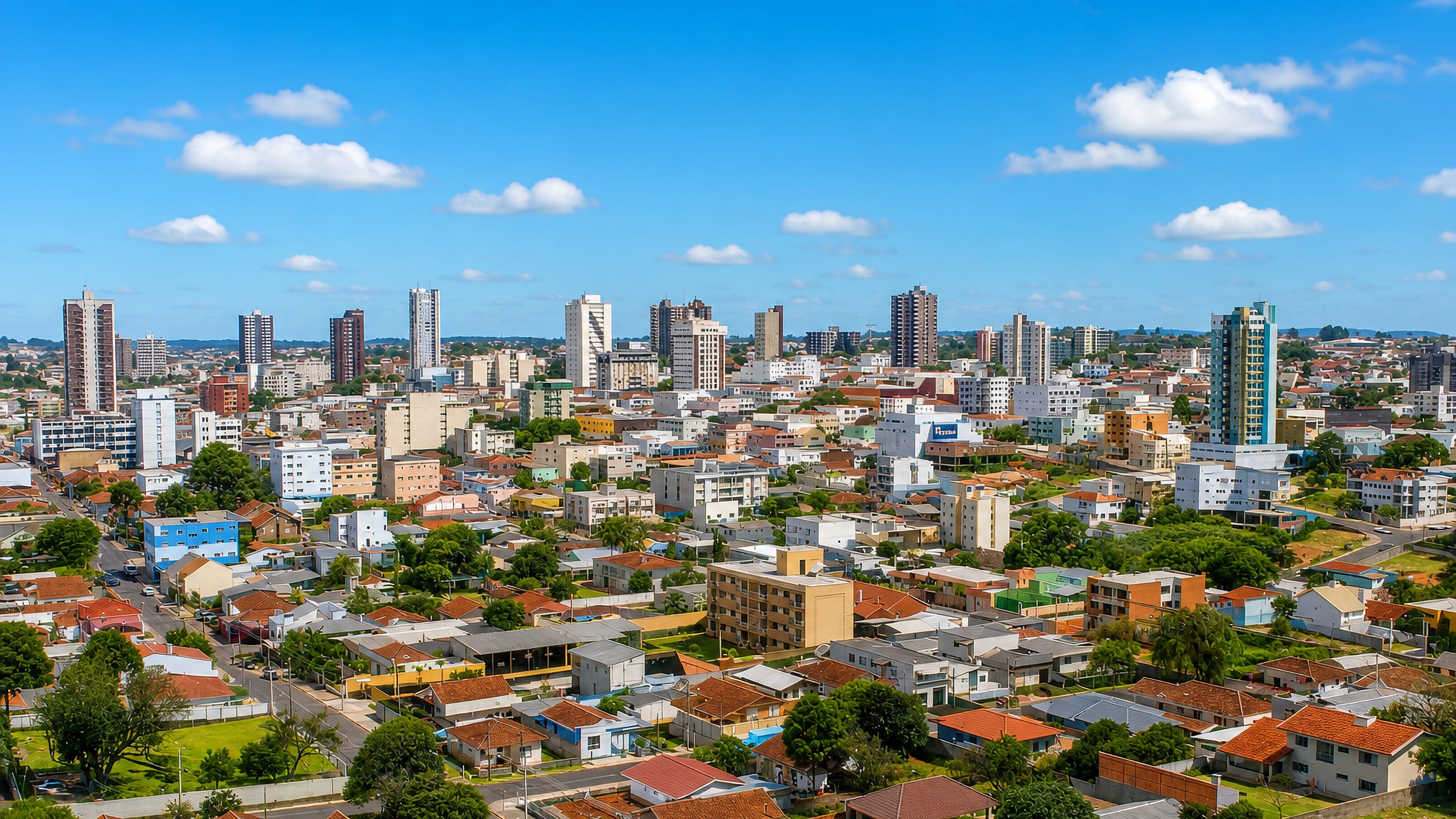
Guarapuava is Paraná's largest municipality by area, founded in 1810 and set on the Mercosur corridor between Curitiba and Foz do Iguaçu.
Hotel links are affiliate links: booking through them may earn us a commission, at no extra cost to you. It never affects how places are ranked. How this works


Where to stay in Guarapuava
How the choice of base plays out on the ground.
Beds cluster near the cathedral. Our Lady of Bethlehem Cathedral marks the older core of Guarapuava, and the streets around it put the Museu Municipal Visconde de Guarapuava, the Casa do Visconde de Guarapuava and the Casa Benjamin C. Teixeira within an easy walk of one another. That compactness is the centre's argument.
Anyone here for the museums and the parish church will spend far less time driving by taking a room in those few blocks, because the rest of this municipality is genuinely distant. Entre Rios is the other option. The district sits out in the farming country that gives the municipality its size, and the Museu de Entre Rios is the reason to stay overnight there rather than drive back to town.
Past Entre Rios, rooms grow scarce. Travellers moving along the Mercosur corridor between Foz do Iguaçu and Curitiba break the journey in Guarapuava because it is the service centre for the municipalities around it, and both the Museu Entomológico Hipólito Schneider and the quilombo of Invernada Paiol de Telha are easier from a base inside the municipality than from Paraná's larger cities. Pick the centre for museums.
Entre Rios answers the farm country.
Find hotels in Guarapuava
Direct booking searches for these neighbourhoods.
Cathedral quarter
Our Lady of Bethlehem Cathedral, the Casa do Visconde de Guarapuava and the Museu Municipal Visconde de Guarapuava stand a few blocks apart.Find hotels in Cathedral quarterNights out in Guarapuava's farm districtsEntre Rios
The Museu de Entre Rios sits among the fields that make this the largest municipality in Paraná by area. Beds are limited here, so book early.Find hotels in Entre RiosHotel links are affiliate links: booking through them may earn us a commission, at no extra cost to you. It never affects how places are ranked. How this works
Things to do in Guarapuava
Ranked by global recognition; descriptions from Wikidata (CC0).
Museums & Galleries
3- Museu Municipal Visconde de Guarapuava
- Casa Benjamin C. Teixeira
- Museu Entomológico Hipólito Schneider
Churches & Religious Sites
1- Our Lady of Bethlehem Cathedral, Guarapuava
worth knowingacross 2 categories in Guarapuava
About Guarapuava
Agribusiness carries Guarapuava.
What is Guarapuava known for?
Grain and livestock from the surrounding municipalities move through it, and the town works as a regional hub whose influence reaches well past its own boundaries and into the farms and small centres around it. The Mercosur corridor running between Foz do Iguaçu and Curitiba passes through here, making the town a junction of national weight. Museums do the rest of the talking, from the Museu Municipal Visconde de Guarapuava to the Museu Entomológico Hipólito Schneider.
What are the main landmarks in Guarapuava?
Museums outnumber monuments in Guarapuava. The Museu Municipal Visconde de Guarapuava anchors the set, with the Museu Entomológico Hipólito Schneider holding insect collections and the Museu de Entre Rios covering the district it is named for, so a visitor can work through most of them in a day. Two houses survive as exhibits in themselves.
Casa do Visconde de Guarapuava and Casa Benjamin C. Teixeira put names to the town's older residential fabric, and Our Lady of Bethlehem Cathedral gives the centre its principal church.
What is the history of Guarapuava?
Guarapuava dates from 1810. The title of the Visconde de Guarapuava attaches to two surviving institutions, the Casa do Visconde de Guarapuava and the Museu Municipal Visconde de Guarapuava, which between them keep the documentary record of the settlement's first century. The municipality grew outward.
Expansion from that early nucleus eventually gave Guarapuava the largest territory of any municipality in Paraná, a boundary wide enough to enclose farming districts and communities founded well away from the original streets. Faith and settlement left their own markers. Our Lady of Bethlehem Cathedral holds the ground of the older parish, while the Casa Benjamin C. Teixeira stands among the named houses the town has kept from its earlier building stock.
Not every history here is urban. The quilombo of Invernada Paiol de Telha carries a rural community's own long claim on the land, and the Museu de Entre Rios keeps the record of that outlying district, while the Museu Entomológico Hipólito Schneider collects the natural history of the surrounding country. The railway that forms part of the Mercosur corridor between Foz do Iguaçu and Curitiba made the town a junction rather than an endpoint.
Where is Guarapuava?
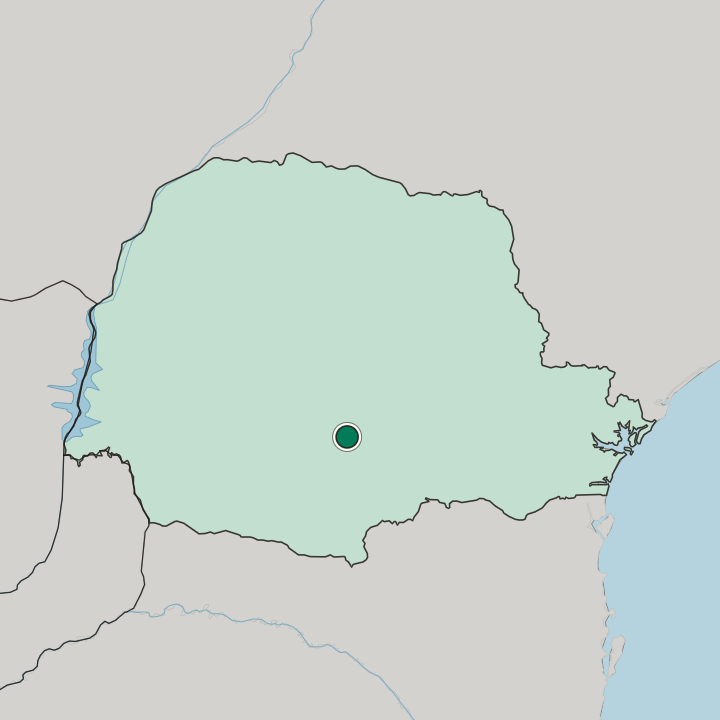
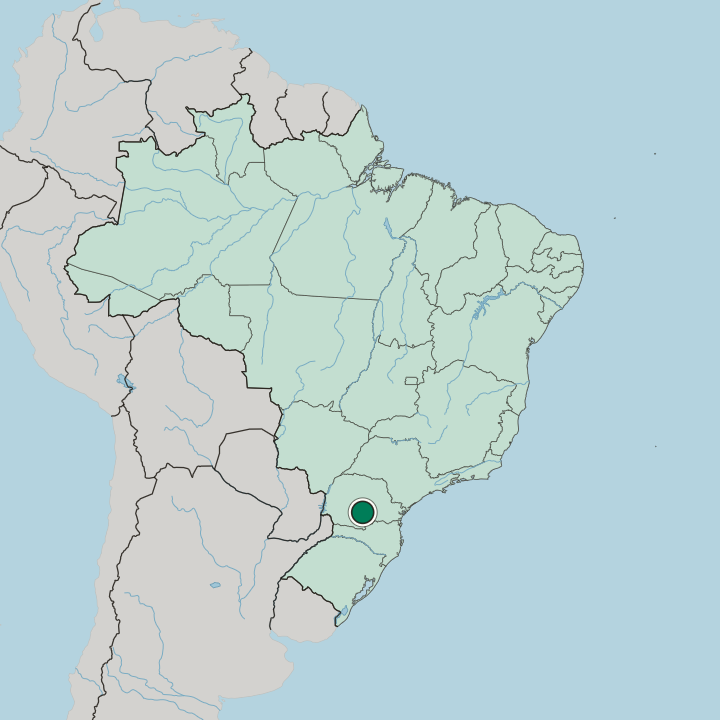
Founded in 1810, Guarapuava spreads far past its own streets. No municipality in Paraná covers more ground, and its boundary takes in farmland, pasture and outlying communities such as Entre Rios and the quilombo of Invernada Paiol de Telha far from the built-up core. Distances inside the municipality are real.
The town itself stays compact, with Our Lady of Bethlehem Cathedral standing at the centre of the older streets, while the farms that feed the local economy spread out on every side.
What is the climate of Guarapuava?
Winter has weight here. Guarapuava belongs to the subtropical belt below the equator, where the coldest stretch falls mid-year and the warm months arrive at the turn of the calendar, an inversion that governs the whole farming round. Frost is a working concern.
Grain and livestock across the surrounding municipalities follow that rhythm, and so do the trucks and trains that carry the harvest out.
How do you get to Guarapuava?
Rail explains the town's position. Guarapuava stands on the Mercosur corridor, the railroad line linking Foz do Iguaçu and Curitiba, which gives the municipality a junction of national importance rather than a branch-line stop. Curitiba lies at one end.
Traffic from the neighbouring municipalities that use Guarapuava as their service centre converges here as well, which is what a regional hub in the middle of a farming state ends up doing.
Common questions
What is the best area to stay in Guarapuava?
Cathedral quarter: Walkable days at the Visconde museums. Entre Rios: Nights out in Guarapuava's farm districts.
Good for
More cities in Paraná
Updated October 2026