Brazil · Paraná
Where to Stay in Pato Branco, Paraná
Pato Branco is a young city in Paraná, founded in 1952, with the Historical Museum José Zanella holding its record.
Hotel links are affiliate links: booking through them may earn us a commission, at no extra cost to you. It never affects how places are ranked. How this works


Where to stay in Pato Branco
Where visitors usually base themselves, and why.
The Historical Museum José Zanella sets the reference point. Rooms in the middle of Pato Branco put a guest within reach of it and of the ordinary commercial streets that a municipality of this size keeps close together, which is the whole practical argument for staying central. There is no old quarter to choose instead.
A municipality this young has a centre of one period, so the difference between one block and another is small, and the choice comes down to how far a bed sits from the museum and the working streets around it. Beyond the centre the municipality is farmland. Staying out there means driving in for everything, which suits someone whose business is with the surrounding agriculture rather than with the town, and makes no sense for a visitor here to see Pato Branco itself. Paraná's larger cities are a long way off.
Anyone using the town as a stop on a longer route through the state will find the calculation simple, since a night here costs less time than pushing on and the Historical Museum José Zanella can absorb whatever is left of an afternoon. Stay central for the museum. Stay out only for the fields.
Find hotels in Pato Branco
Direct booking searches for these neighbourhoods.
Centre
The Historical Museum José Zanella and the working commercial streets of Pato Branco sit in the same few blocks.Find hotels in CentreBusiness with the farms around Pato BrancoOutlying farmland
Ground beyond the built-up area is agricultural, and every errand there starts with a drive back into town. Few places to stay nearby — book ahead.Find hotels in Outlying farmlandHotel links are affiliate links: booking through them may earn us a commission, at no extra cost to you. It never affects how places are ranked. How this works
About Pato Branco
Pato Branco is a twentieth-century foundation.
What is Pato Branco known for?
The municipality dates only from 1952, which puts its entire recorded life inside a single lifetime and leaves it without the colonial churches that older towns in Paraná keep at their centre. One museum carries the local record. The Historical Museum José Zanella gathers what survives of that short past, and for a visitor it is the one named point of reference in the city.
What are the main landmarks in Pato Branco?
One landmark carries the list. The Historical Museum José Zanella is the single named institution in Pato Branco's heritage record, and it does the work that a cathedral, a fort and a market hall divide between them in an older municipality. Its subject is recent.
A city founded in 1952 has a past measured in decades, so what the museum shows is the making of the surrounding farmland and the building of the streets that carry the town's short life.
What is the history of Pato Branco?
Pato Branco was created in 1952. That date is recent enough that the municipality carries no colonial layer, and what the town holds as heritage was made within the span of a few generations rather than accumulated across centuries. The founding is the first fact.
Accounts of the place begin from it, and the institutions that keep the record were established after it rather than inherited from anything older. The Historical Museum José Zanella holds that record. A museum in a city of this age documents a past that its own founders could describe from memory, which gives the collection a character quite different from the archaeological and religious holdings of the older towns of Paraná.
The name is carried forward. José Zanella is attached to the institution that keeps the story of the first decades, the settlement of the surrounding farmland and the growth of the town on it. Brazil has many municipalities of the same vintage. A century of records is not required to make a history, and a place founded in 1952 simply keeps its past closer to hand than one founded three hundred years earlier.
Where is Pato Branco?
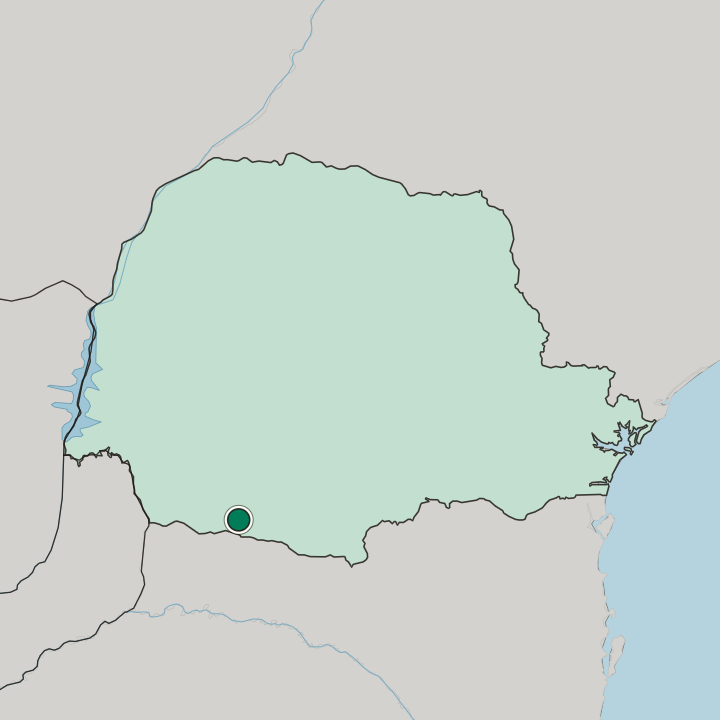
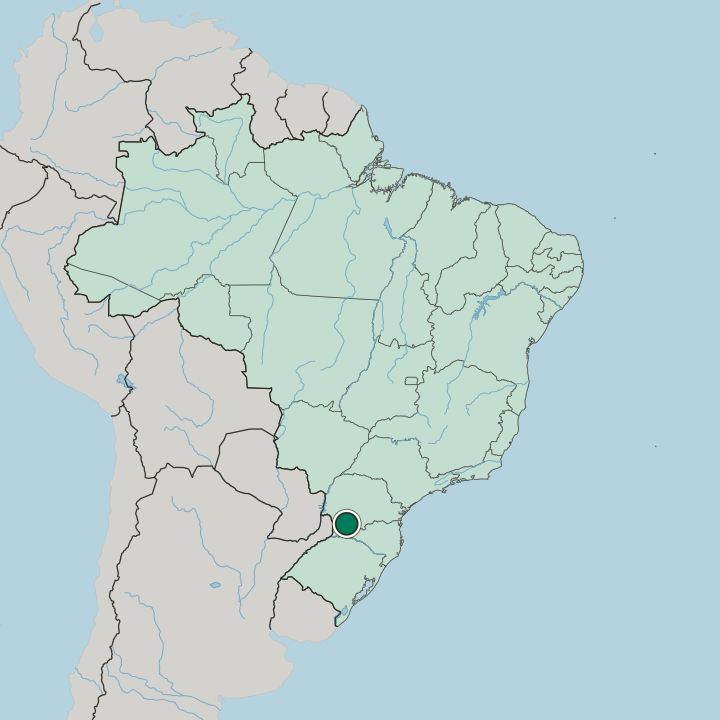
Farm country surrounds Pato Branco. The municipality covers about five hundred and thirty-nine square kilometres of Paraná, with the built-up area a small part of a boundary that mostly encloses fields and the roads between them. Its centre stays small.
It lies south of the equator. A subtropical setting gives the surrounding land a growing season across the warmer half of the year, and the town sits at the centre of what that land produces.
What is the climate of Pato Branco?
Pato Branco keeps a subtropical year. Seasons here run on the southern hemisphere calendar. Its coldest weeks fall near the middle of the calendar and its warmest at either end, which is the ordering that farming across this part of Paraná has always worked to.
Cool spells reach the town. The growing season still runs generously through the warm half of the year, and the whole short history of the municipality has been lived on that cycle.
How do you get to Pato Branco?
Roads are the way in. The municipality sits inland in Paraná among farming country, so any approach crosses that farmland first, and the built-up area appears only at the end of a drive rather than announcing itself from a distance. Its centre is modest in size.
Once a visitor has arrived, crossing the centre takes far less time than getting to it from anywhere else in the state.
Common questions
What is the best area to stay in Pato Branco?
Centre: Nights within walking reach of the José Zanella museum. Outlying farmland: Business with the farms around Pato Branco.
Good for
More cities in Paraná
Updated September 2026