China · Shandong
Where to Stay in Linyi, Shandong
Linyi is a prefecture-level city in the south of Shandong whose name means close to the Yi River, and the province's largest by area.
Hotel links are affiliate links: booking through them may earn us a commission, at no extra cost to you. It never affects how places are ranked. How this works


Where to stay in Linyi
The practical side of choosing where to sleep.
The Yi River decides most of it. Rooms concentrate on the banks through the central districts, which puts the Linyi Confucian Temple, the Linyi museum, and the Former residence of Wang Xizhi within an easy walk or a short taxi ride of one another. That is the default base.
The Yinqueshan Han Tombs Bamboo Slips Museum sits on the same side of town, so a first-time visit can be built around the river without ever needing a car. Beds are plentiful there. The prefecture is enormous.
Linyi covers more ground than any other prefecture-level city in Shandong, so the Yinan tombs, the Mengliang Mesa Battle Site, and the Site of Feixian Ancient City each mean a proper day out rather than an afternoon. County towns near those sites carry limited lodging, and anyone planning to sleep close to them should arrange it before setting off. Two other buildings shape the choice.
The Cathedral of Our Lady of the Assumption, Linyi and the Matou Mosque stand well apart from each other. Rizhao lies east and Jiangsu south, which matters for anyone stitching this prefecture into a longer route. Most visitors stay central and drive out.
Find hotels in Linyi
Direct booking searches for these neighbourhoods.
Linyi city centre
The Linyi Confucian Temple, the Linyi museum, and the Former residence of Wang Xizhi all sit in the riverside districts.Find hotels in Linyi city centrea night beside the Yinan tombsYinan
A county town chosen almost entirely for the Yinan tombs rather than for anything on its own streets. Beds are limited here, so book early.Find hotels in Yinanthe Site of Feixian Ancient City and the country around itFeixian
Well away from the Yi River and thin on rooms, but the nearest bed to the Site of Feixian Ancient City. Lodging is scarce in this area; reserve in advance.Find hotels in Feixianvisitors making for the Mengliang Mesa Battle SiteMengliang Mesa
Out in the prefecture, where the Mengliang Mesa Battle Site is the single reason to stay overnight. Rooms are few around here — worth securing early.Find hotels in Mengliang MesaHotel links are affiliate links: booking through them may earn us a commission, at no extra cost to you. It never affects how places are ranked. How this works
Things to do in Linyi
Ranked by global recognition; descriptions from Wikidata (CC0).
Museums & Galleries
3- Linyi Confucian Temple Heritage
- Yinqueshan Han Tombs Bamboo Slips Museum
- Linyi museum
Churches & Religious Sites
2- Cathedral of Our Lady of the Assumption, Linyi Heritage
- Matou Mosque Heritage
Castles & Historic Sites
5- Capital of the Tan State Heritage
- 跋山遗址 Heritage
- Beigoutou Site Heritage
- 马陵山遗址 Heritage
- 中丘故城 Heritage
worth knowingacross 3 categories in Linyi
About Linyi
Archaeology carries this one.
What is Linyi known for?
The Yinqueshan Han Slips and the Yinqueshan Han Tombs Bamboo Slips Museum sit at the centre of what visitors come for, with the Yinan tombs and the Xiyanchi Tombs adding further burial ground across the prefecture. Wang Xizhi kept a house in the city. Older ground goes back further, to the Capital of the Tan State and the Site of Capital of the Zeng State.
The Yi River runs through it all.
What are the main landmarks in Linyi?
Tombs outnumber temples here. The Yinan tombs, the Xiyanchi Tombs, and the Beigoutou Site record burial and settlement across the prefecture, while the Site of Nanwucheng Ancient City and the Ancient City of Xiaogucheng mark two more old city sites. Faith left three very different buildings.
The Linyi Confucian Temple, the Cathedral of Our Lady of the Assumption, Linyi, and the Matou Mosque stand within the same prefecture. The Linyi Revolutionary Martyrs' Cemetery and the Mengliang Mesa Battle Site belong to a much later layer.
What is the history of Linyi?
The river named the place. Linyi means close to the Yi River, and the prefecture is described as one of the birthplaces of Chinese civilization, with the Beigoutou Site among its earliest recorded ground. Small states followed.
The Capital of the Tan State and the Site of Capital of the Zeng State mark two of them, and the Site of Nanwucheng Ancient City, the Ancient City of Xiaogucheng, and the Site of Feixian Ancient City record further old city sites. Han-era material survives in quantity. The Yinqueshan Han Slips are the best known of it, and the Yinqueshan Han Tombs Bamboo Slips Museum was built around them, while the Yinan tombs and the Xiyanchi Tombs sit elsewhere in the prefecture.
A former residence of Wang Xizhi stands in the city. Later layers are political and military. The Mengliang Mesa Battle Site and the Linyi Revolutionary Martyrs' Cemetery both belong to that record.
Two religious buildings stand apart from the Confucian line, the Cathedral of Our Lady of the Assumption, Linyi and the Matou Mosque. The Linyi Confucian Temple holds that line. The prefecture-level city in its current shape dates from 1994, and it takes in more territory than any other prefecture-level city in Shandong, reaching from Jining in the west to Rizhao in the east.
Where is Linyi?
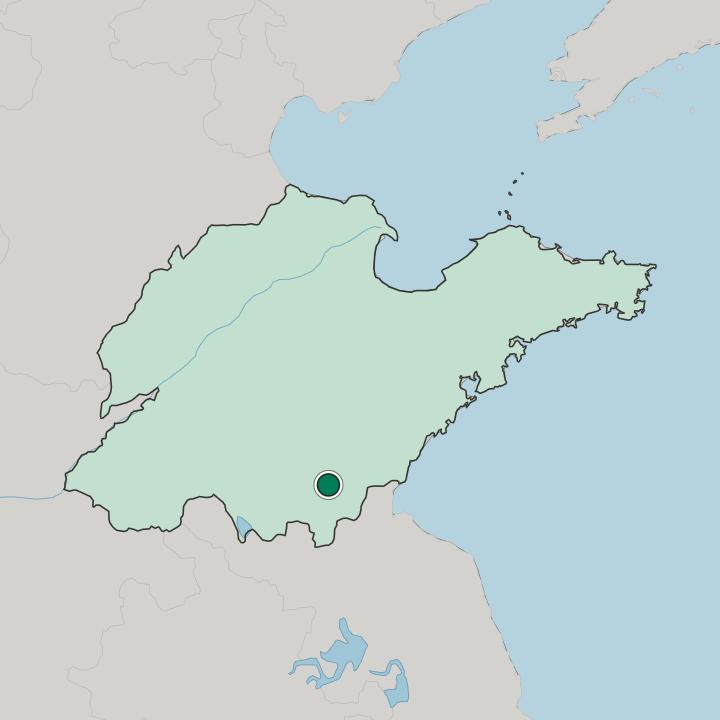
The Yi River gives the city its name and its axis. Linyi occupies the south of Shandong and borders Rizhao to the east, Weifang to the northeast, Zibo to the north, Tai'an to the northwest, Jining to the west, Zaozhuang to the southwest, and Jiangsu to the south. No other prefecture in the province covers as much ground.
Country stretches out. Sites such as the Site of Feixian Ancient City and the Yinan tombs lie well out from the centre.
What is the climate of Linyi?
Temperate is the band. Warmth arrives in the middle of the calendar and drains away at both ends, the ordinary northern-hemisphere pattern, which decides when the open sites along the Yi River are worth a long day on foot. Winter sits at either end of the year.
The Yinan tombs and the Site of Feixian Ancient City are outdoor visits, and the season matters more for them than for the Linyi museum. Mild months suit the far corners best.
How do you get to Linyi?
Seven neighbours ring the prefecture. Approaches come from Rizhao on the east, Weifang and Zibo to the northeast and north, Tai'an and Jining to the northwest and west, Zaozhuang to the southwest, and Jiangsu across the southern border. The Yi River threads the middle.
Central Linyi is where arrivals concentrate, and the outlying county sites, among them the Yinan tombs and the Mengliang Mesa Battle Site, are reached from there by road. Distances out are long.
Common questions
What is the best area to stay in Linyi?
Linyi city centre: the Yi River banks and the city collections. Yinan: a night beside the Yinan tombs. Feixian: the Site of Feixian Ancient City and the country around it. Mengliang Mesa: visitors making for the Mengliang Mesa Battle Site.
Good for
More cities in Shandong
Updated October 2026