Germany · Baden-Württemberg
Where to Stay in Heilbronn, Baden-Württemberg
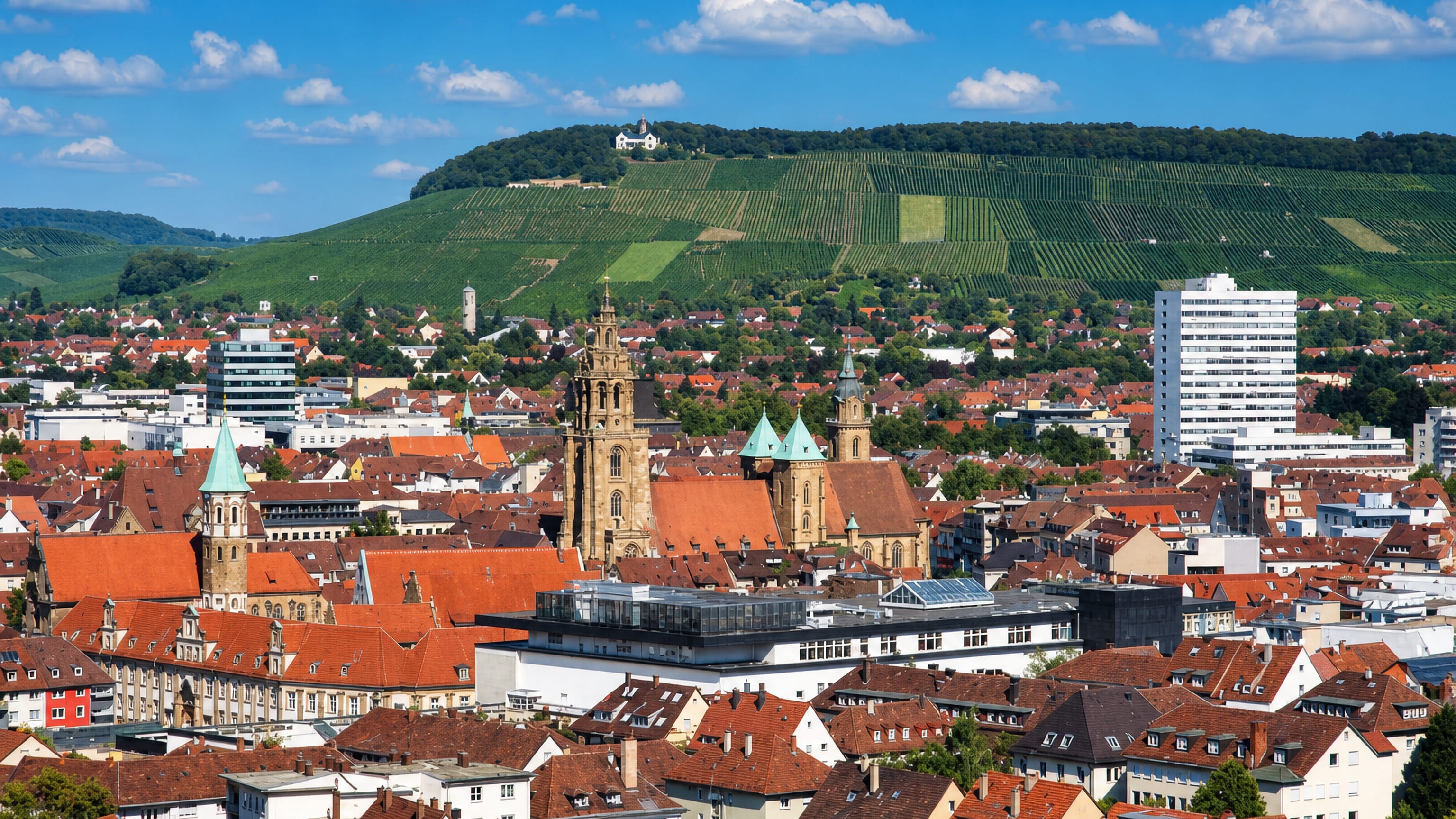
Heilbronn is a city of Baden-Württemberg, more than twelve centuries old, where experimenta and the Museum im Deutschhof anchor a compact centre.
Hotel links are affiliate links: booking through them may earn us a commission, at no extra cost to you. It never affects how places are ranked. How this works


Where to stay in Heilbronn
Not every neighbourhood fits every trip — here's what each one is good for.

 HeilbronnGermanyGuests tracing the Castra of Heilbronn-Böckingen and its Samian ware
Böckingen
Christuskirche and the Wichernkirche give Böckingen a centre apart from the Heilbronn coreBöckingen → HeilbronnGermany
Neckargartach
Churches give Neckargartach its landmarks: the Peterskirche, the Methodistenkapelle and a Neuapostolische Kirche, all inside one Heilbronn district.Where to stay → HeilbronnGermany
Heilbronn-Frankenbach
Frankenbach has belonged to Heilbronn since 1974, a Baden-Württemberg borough marked by the Albanskirche and the Heiligkreuzkirche.Where to stay →Hotel links are affiliate links: booking through them may earn us a commission, at no extra cost to you. It never affects how places are ranked. How this works
Find hotels in Heilbronn
Direct booking searches for these neighbourhoods.
The Deutschhof and Klostergasse core
The Haus der Stadtgeschichte, Klostergasse 4, and the Karmeliterkloster stand inside the same few streets as experimentaFind hotels in The Deutschhof and Klostergasse coreDrivers starting the Keuperweg walk before breakfastThe Wartbergturm and Theresienturm edge
The Wartbergturm and the Theresienturm stand where the Heilbronn streets give out and open ground beginsFind hotels in The Wartbergturm and Theresienturm edgeHotel links are affiliate links: booking through them may earn us a commission, at no extra cost to you. It never affects how places are ranked. How this works
Things to do in Heilbronn
Ranked by global recognition; descriptions from Wikidata (CC0).
Museums & Galleries
2- Haus der Stadtgeschichte (Heilbronn)
- Museum im Deutschhof
Churches & Religious Sites
7- Deutschordenskommende Heilbronn Heritage
- St. Nicholas Church Heritage
- Wichernkirche Heritage
- Matthäuskirche Heritage
- Peterskirche Heritage
Show 2 more →
- Methodistenkapelle Heritage
- St.-Martins-Kirche Heritage
Castles & Historic Sites
3- Castra of Heilbronn-Böckingen Heritage
- Burgmal Heritage
- Bismarck-Denkmal (Heilbronn)
Landmarks & Notable Places
3- Theresienturm Heritage
- Fernmeldeturm Heilbronn
- Klostergasse 4 (Heilbronn)
worth knowingacross 4 categories in Heilbronn
About Heilbronn
Churches count the centuries here.
What is Heilbronn known for?
The tower of St. Kilian's Church carries the old skyline, while the Peterskirche, the St.-Martins-Kirche, and the Matthäuskirche spread the same habit into quarters well outside the middle of town. experimenta pulls the other way, into hands-on science. The South German Railway Museum keeps locomotives. Kunsthalle Vogelmann and the Museum im Deutschhof hold the art and the town's own record, and the Fernmeldeturm Heilbronn marks the far edge of the built-up ground.
What are the main landmarks in Heilbronn?
St. Kilian's Church is the one every visitor names. Its tower rises over a centre that also holds the Museum im Deutschhof, the Haus der Stadtgeschichte, and the Karmeliterkloster, so a single walk covers the town's church, its museum, and its cloister. experimenta answers with glass and experiments. The Fernmeldeturm Heilbronn, the Wartbergturm, and the Theresienturm each stand clear of the roofline, while the Burgmal and the Castra of Heilbronn-Böckingen mark far older ground.
Kunsthalle Vogelmann keeps the paintings.
What is the history of Heilbronn?
Roman ground came first. The Castra of Heilbronn-Böckingen and the Samian ware discovery site beside it put a garrison and its imported pottery under Böckingen long before the town held a charter. Burgmal marks earlier ground still.
The record runs more than twelve centuries, and St. Kilian's Church, the Karmeliterkloster, and the Deutschordenskommende Heilbronn are what the medieval town left standing above it. Peterskirche belongs to that same age. Later centuries built outward and sideways.
Christ Church, the Methodistenkapelle, and the Wichernkirche record congregations that arrived after the medieval parishes were long settled, while Christuskirche and the Matthäuskirche served quarters the old walls never enclosed. The Bismarck-Denkmal fixed a later civic mood in stone. St. Nicholas Church and the St.-Martins-Kirche kept their own parishes going.
Rail and radio then rewrote the skyline: the South German Railway Museum preserves the locomotives that changed how the town moved, and the Fernmeldeturm Heilbronn answered with a mast visible from every approach. Klostergasse 4 survives from the older fabric. Haus der Stadtgeschichte and the Museum im Deutschhof keep the documents, and Kunsthalle Vogelmann and experimenta carry the town's newer public buildings, one for pictures and one for experiments.
Where is Heilbronn?
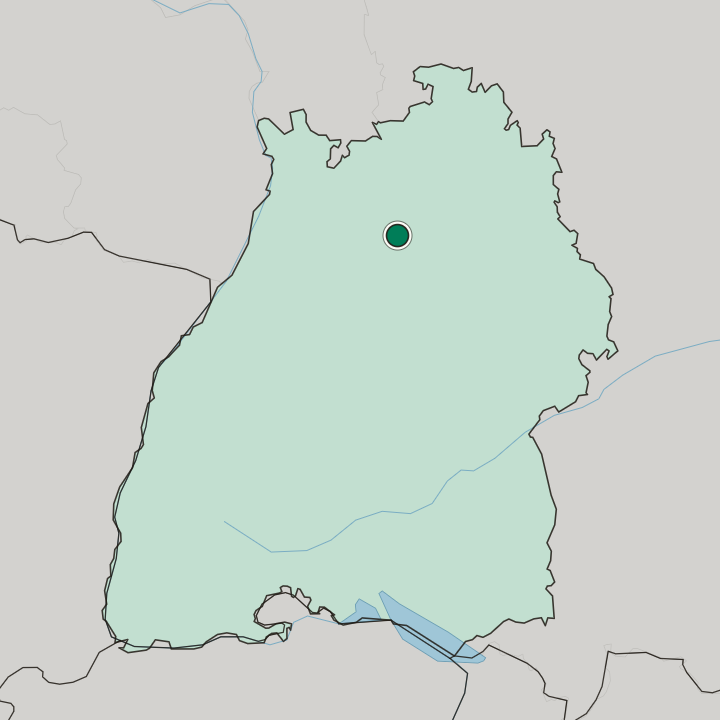
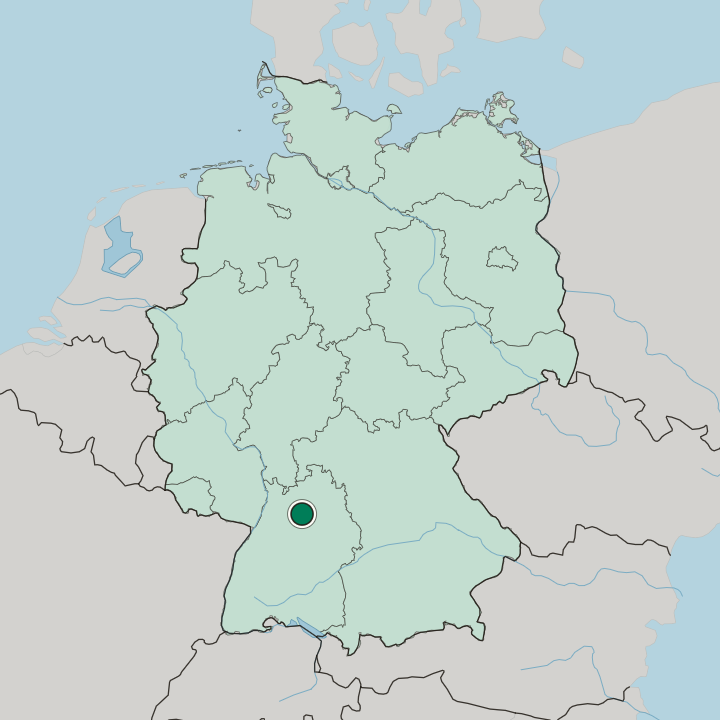
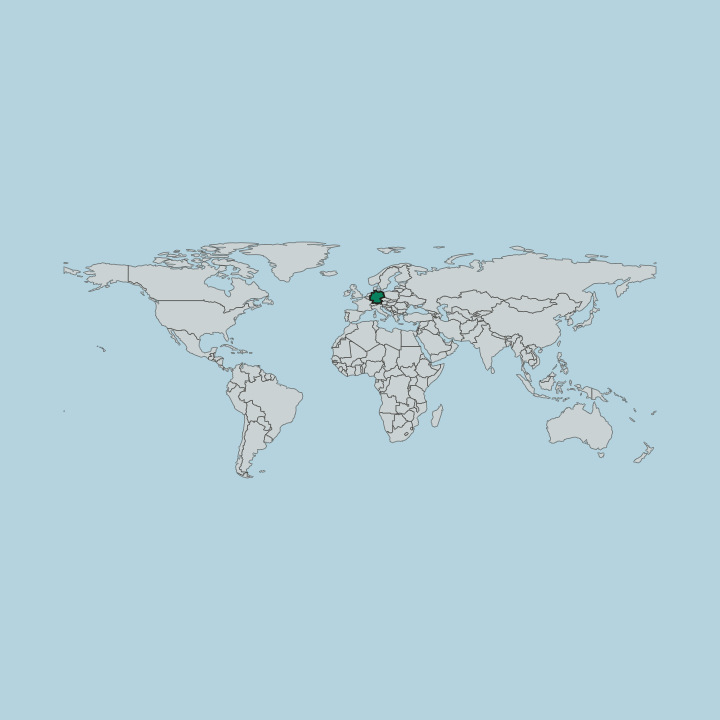
The Heilbronn District wraps the city on every side. Baden-Württemberg is the state around that, and the town's built-up ground runs from the Böckingen quarter across to the edge the Wartbergturm and the Theresienturm mark. Keuperweg leads out through it.
The Fernmeldeturm Heilbronn stands over the approach, and the Castra of Heilbronn-Böckingen sits away from the middle of town, out among the Böckingen streets. Heilbronn lies in the temperate band.
What is the climate of Heilbronn?
Four seasons arrive in full here. The temperate band gives Heilbronn warm summers and cold, grey winters, with rain spread thinly enough across the calendar that no single stretch dominates the walking. Exposure differs across the town.
Down among the Klostergasse streets and the Deutschhof courtyard the air sits still, while the Wartbergturm and the open ground out past Böckingen take whatever wind is going.
How do you get to Heilbronn?
Rail is the obvious way in. The South German Railway Museum is a reminder of how long the tracks have run through this part of Baden-Württemberg, and the line still brings arrivals into the middle of town. Böckingen lies out on the same side.
Drivers come off the roads ringing the built-up ground and park short of the middle, while walkers on the Keuperweg reach the Wartbergturm before the centre comes into view. experimenta and Kunsthalle Vogelmann sit a few minutes apart once inside the centre.
Common questions
What is the best area to stay in Heilbronn?
The Deutschhof and Klostergasse core: Walkers pairing the Museum im Deutschhof with Kunsthalle Vogelmann. Böckingen: Guests tracing the Castra of Heilbronn-Böckingen and its Samian ware. The Wartbergturm and Theresienturm edge: Drivers starting the Keuperweg walk before breakfast.
Good for
More cities in Baden-Württemberg
Updated October 2026