Germany · Baden-Württemberg
Where to Stay in Karlsruhe, Baden-Württemberg
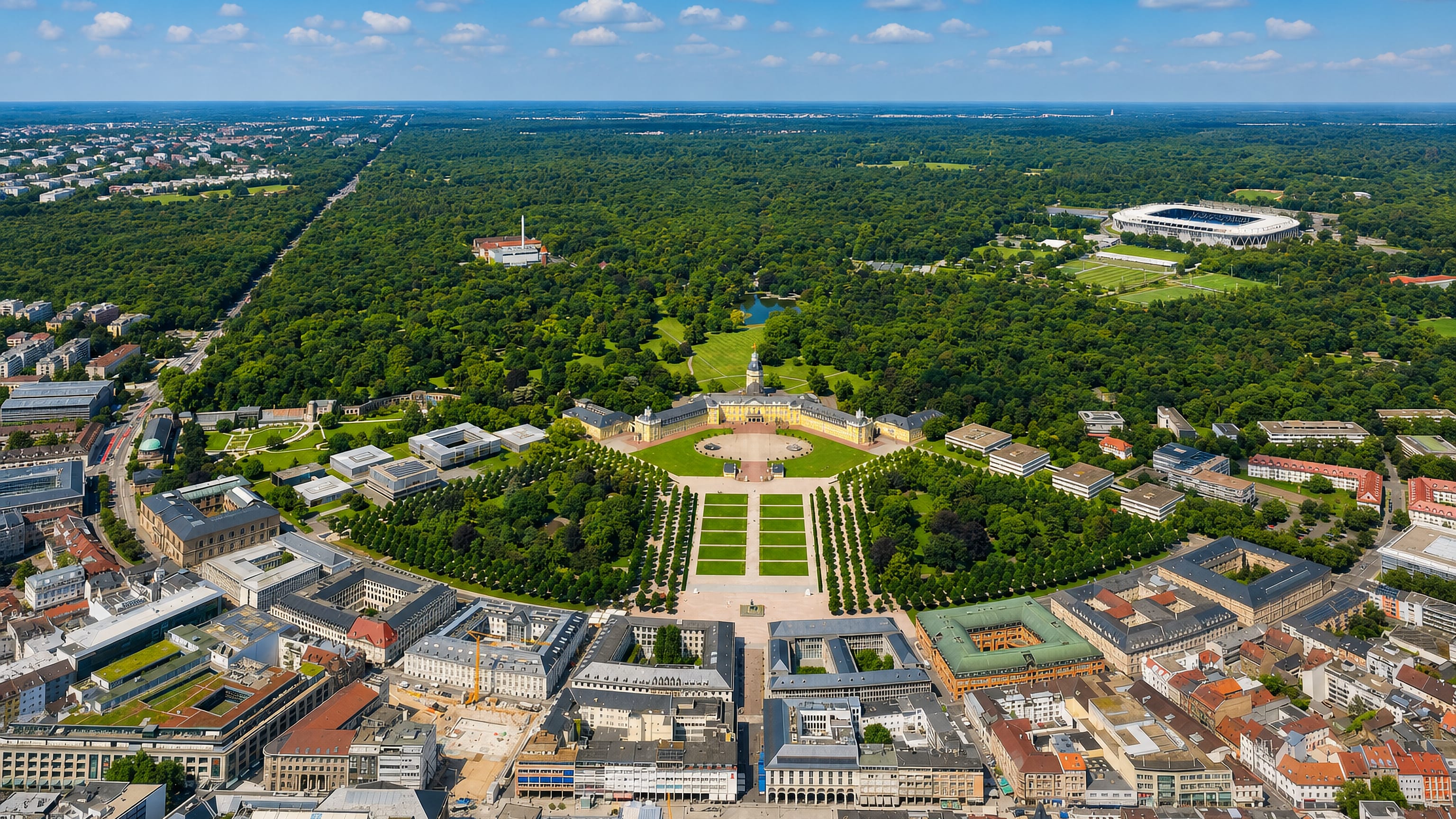
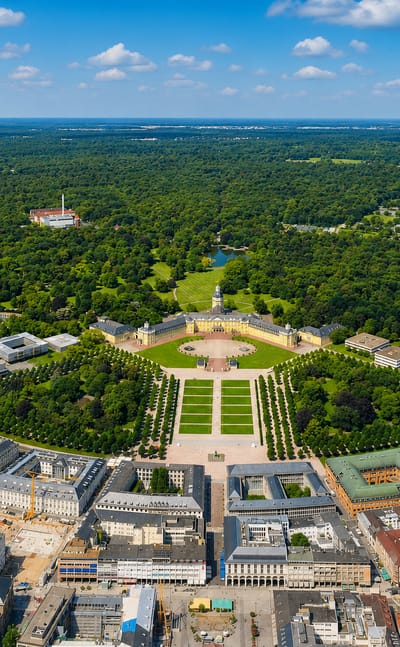
Streets fan out like spokes from the palace tower at Karlsruhe, a planned city on the Rhine in Baden-Württemberg and the seat of Germany's highest courts.
Hotel links are affiliate links: booking through them may earn us a commission, at no extra cost to you. It never affects how places are ranked. How this works


Where to stay in Karlsruhe
Where you base yourself shapes the visit — here's the character of each area.
 KarlsruheGermany
Weststadt
Kaiserallee runs through Weststadt, the part of Karlsruhe between the city centre and the older district of Mühlburg.Weststadt →KarlsruheGermanyNordstadt
The Nordstadt is the newest district of Karlsruhe, Germany, formed in 1996 out of the barracks and housing the United States Army left behind.Nordstadt → KarlsruheGermany
Südstadt
Südstadt runs between Oststadt and the main train station, a Karlsruhe borough within reach of the Karlsruhe Zoo and the Staatliche Kunsthalle.Südstadt → KarlsruheGermany
Südweststadt
Südweststadt runs between Kriegsstraße and the main station, the Karlsruhe quarter holding the ZKM Center for Art and Media Karlsruhe.Südweststadt →KarlsruheGermanyOststadt
Oststadt runs east from the Durlacher Tor to the edge of Durlach, a slice of Karlsruhe marked by the Lutherkirche and the Seilerhäuschen.Oststadt → KarlsruheGermany
Mühlburg
The Karl-Friedrich-Gedächtniskirche gives Mühlburg its landmark within Karlsruhe, one district among many in Baden-Württemberg.Mühlburg →KarlsruheGermanyWaldstadt
Waldstadt was built in 1957 inside the Hardtwald, a planned residential district north of the Karlsruhe city centre.Waldstadt →KarlsruheGermanyNordweststadt
Nordweststadt is the borough of Karlsruhe holding the Karlsruhe Municipal Hospital, the city authorities beside it, and the RetroGames collection.Nordweststadt → KarlsruheGermany
Beiertheim
Beiertheim and Bulach sit either side of the Alb, the paired halves of a Karlsruhe district running from Ebertstraße to Hofgut Scheibenhardt.Beiertheim →KarlsruheGermanyRintheim
Rintheim sits between Hagsfeld and Oststadt with the Autobahn 5 on its eastern side, and holds the Technologiepark Karlsruhe.Rintheim →KarlsruheGermanyDammerstock
Dammerstock is a district of Karlsruhe in Germany, with the Protestant Peace Church and St. Franziskus its two named buildings.Dammerstock →KarlsruheGermanyNeureut
Neureut joined Karlsruhe in 1975 and keeps the Waldenserkirche Neureut at the outer edge of the city, in Baden-Württemberg.Neureut →All neighbourhoods (20)
KarlsruheGermanyKnielingen
On the Rhine in the northwest of Karlsruhe, Knielingen is the city's oldest documented district and its second largest by area.Knielingen → KarlsruheGermany
Grünwinkel
Grünwinkel is a district in the south-west of Karlsruhe, Germany, founded in 1710 as a customs village called Krähwinkel on the site of a Roman vicus.Grünwinkel →KarlsruheGermanyOberreut
Oberreut is a planned Stadtteil in the south of Karlsruhe, Baden-Württemberg, drawn on paper in 1926 and first occupied in the summer of 1964.Oberreut → KarlsruheGermany
Hagsfeld
Hagsfeld sits in the north east of Karlsruhe, the Laurentiuskirche its one named building, with Durlach and Waldstadt alongside.Hagsfeld → KarlsruheGermany
Daxlanden
Daxlanden is a former fishing village west of the Karlsruhe city centre, set near the Rhine on the river Alb.Daxlanden →KarlsruheGermanyRüppurr
Rüppurr sits in the south of Karlsruhe, an affluent residential district bordering Ettlingen, marked by the Auferstehungskirche.Rüppurr → KarlsruheGermany
Durlach
Durlach holds the Karlsburg Castle, Burg Turmberg and a listed old town inside Karlsruhe, in Baden-Württemberg.Durlach →KarlsruheGermanyGrötzingen
Grötzingen holds the Augustenburg Castle church and a Jewish cemetery, a Karlsruhe district reaching out toward Pfinztal.Grötzingen →Hotel links are affiliate links: booking through them may earn us a commission, at no extra cost to you. It never affects how places are ranked. How this works
Things to do in Karlsruhe
Ranked by global recognition; descriptions from Wikidata (CC0).
Museums & Galleries
3- Staatliche Kunsthalle Karlsruhe
- The Badisches Landesmuseum
- Karlsruhe Art Museum
Churches & Religious Sites
8- St. Stephan (Karlsruhe) Heritage
- Protestant Town Church Heritage
- Christuskirche Heritage
- Lutherkirche Heritage
- Paul Gerhardt church Heritage
Show 3 more →
- Kleine Kirche (Karlsruhe) Heritage
- Emmauskirche Heritage
- Town Church Durlach Heritage
Castles & Historic Sites
6- Karlsburg Castle Heritage
- Leibdragonerdenkmal Heritage
- Burg Turmberg Heritage
- Leibgrenadierdenkmal Heritage
- Wilhelm-Lübke-Denkmal Heritage
Show 1 more →
- Train-Denkmal Heritage
Stadiums & Sports
1- Traugott-Bender-Sportpark
Landmarks & Notable Places
2- Karlsruhe Pyramid Heritage
- Schlossturm Karlsruhe
worth knowingacross 5 categories in Karlsruhe
About Karlsruhe
What is Karlsruhe known for?
Karlsruhe is known for its fan-shaped plan, a city laid out in radiating avenues that spread from the palace and its Schlossturm across the Rhine plain of Baden-Württemberg. It is Germany's legal capital. The Federal Constitutional Court and the Federal Court of Justice both sit here, giving the city national weight.
Karlsruhe pairs that authority with a strong art scene, from the Staatliche Kunsthalle Karlsruhe to the media-focused ZKM Center for Art and Media, and it holds the memory of Baden, the historic state it once served as capital.
What are the main landmarks in Karlsruhe?
The main landmarks in Karlsruhe centre on the palace and the arts. At the heart of the fan of avenues stand the Schloss and its Schlossturm, with the Badisches Landesmuseum inside and the Karlsruhe Pyramid marking the market square nearby. Its galleries carry real weight.
The Staatliche Kunsthalle Karlsruhe holds old-master painting, the ZKM Center for Art and Media leads in digital art, and the Karlsruhe Zoo and the State Museum of Natural History Karlsruhe round out the city's attractions on the Rhine plain of Baden-Württemberg.
What is the history of Karlsruhe?
Karlsruhe is a planned city with an exact birthday: it was founded in 1715 when the margrave of Baden-Durlach laid out a new residence around a palace on the Rhine plain. The design was radical for its time. Thirty-two avenues were drawn to radiate outward from the Schloss like the ribs of a fan, so that every road pointed back to the ruler's tower, and the town grew to fill the wedges between them.
From this palace Karlsruhe served as the capital of Baden, first as a margraviate and later as a grand duchy, and the Badisches Landesmuseum still keeps the treasures of that court. The modern era reshaped the city's role. When the German states were reorganised, Karlsruhe lost its position as a capital, but it gained a new one as the country's legal heart.
The Federal Constitutional Court and the Federal Court of Justice were established here, making Karlsruhe the place where Germany's highest legal questions are decided. Wartime bombing struck the old centre, and postwar rebuilding preserved the radial plan while filling it anew. The Rhine, on whose right bank the city stands near the French border, has kept Karlsruhe tied to trade and to its neighbours across the water toward Strasbourg.
Where is Karlsruhe?
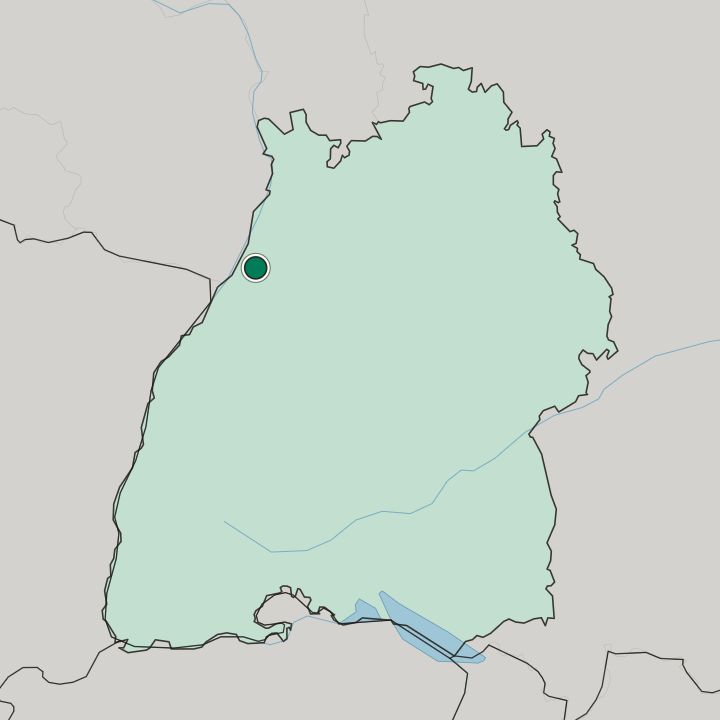
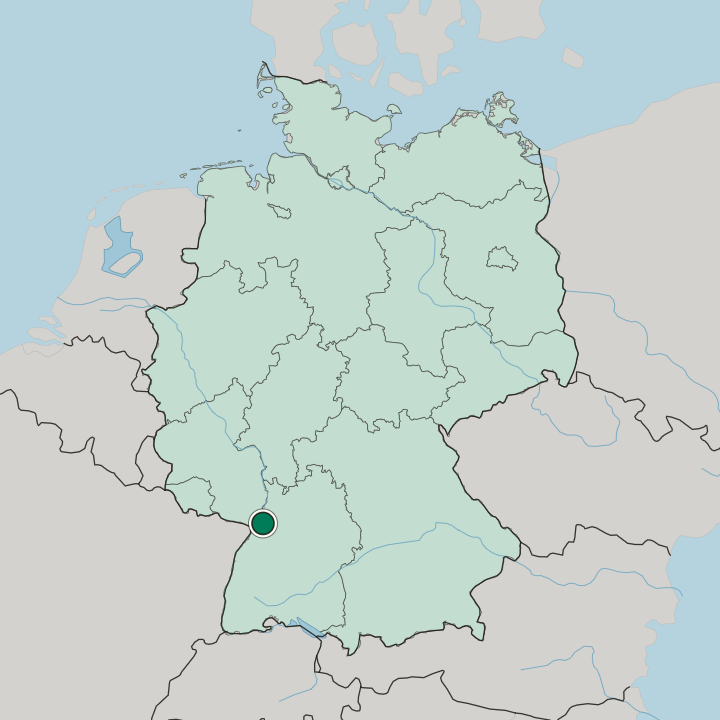
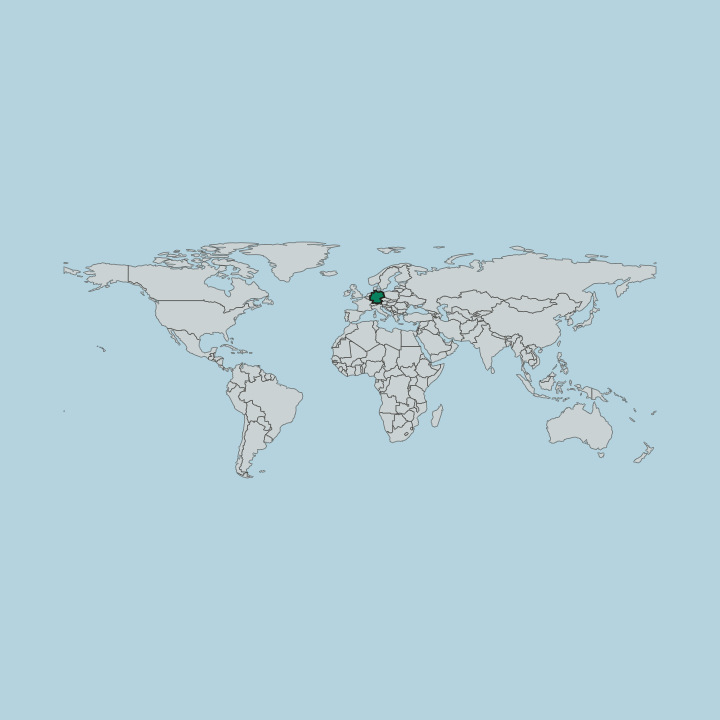
Karlsruhe stands on the right bank of the Rhine in Baden-Württemberg, on the flat Upper Rhine plain near the French border. It lies between the Mannheim conurbation to the north and Strasbourg to the south. The setting is low and level.
Woodland and the palace park break up the built fan of avenues, and the Rhine forms the western edge of the plain that carries the city toward Baden-Baden and the foothills beyond.
What is the climate of Karlsruhe?
Karlsruhe has one of the mildest climates in Germany, warmed by its position on the sheltered Upper Rhine plain in Baden-Württemberg. Winters are gentle and short, with little lasting snow in the lowland. Summers turn genuinely hot.
The Rhine valley funnels warm air up from the south, and the flat ground near the French border ripens vineyards and gardens in long, dry spells that set the city apart from the colder Germany to the north.
How do you get to Karlsruhe?
Getting to Karlsruhe is easy along the Upper Rhine corridor. The Hauptbahnhof sits on major north-south rail lines linking the city to Mannheim, Strasbourg across the French border, and the wider German network by fast train. Motorways meet here as well.
Karlsruhe joins the autobahn spine that runs down the Rhine, and its pioneering tram-train system reaches out from the centre into the surrounding towns of Baden-Württemberg and back toward the river.
Good for
More cities in Baden-Württemberg
Updated October 2026