Germany
Baden-Württemberg, Germany — Towns & Travel Guide
Baden-Württemberg fills Germany's south-west corner, home to the Black Forest, the Neckar, and carmaking Stuttgart.
Hotel links are affiliate links: booking through them may earn us a commission, at no extra cost to you. It never affects how places are ranked. How this works


Towns & cities in Baden-Württemberg
Pick a town or city — each links to where to stay.

 Germany
Stuttgart
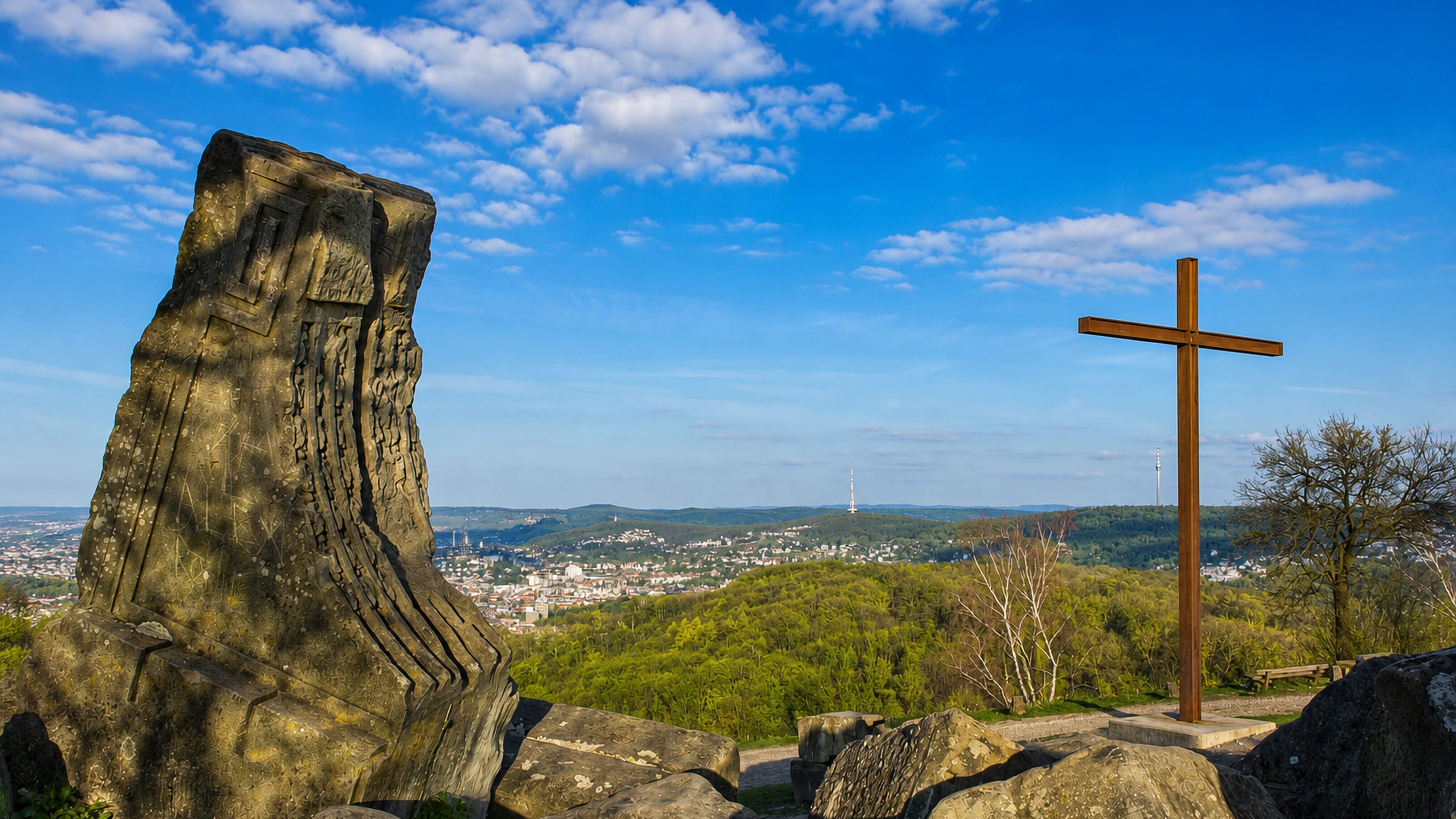
Vineyards climb the slopes above Stuttgart, capital of Baden-Württemberg in the valley of the Neckar, known for the Fernsehturm and its car works.Where to stay →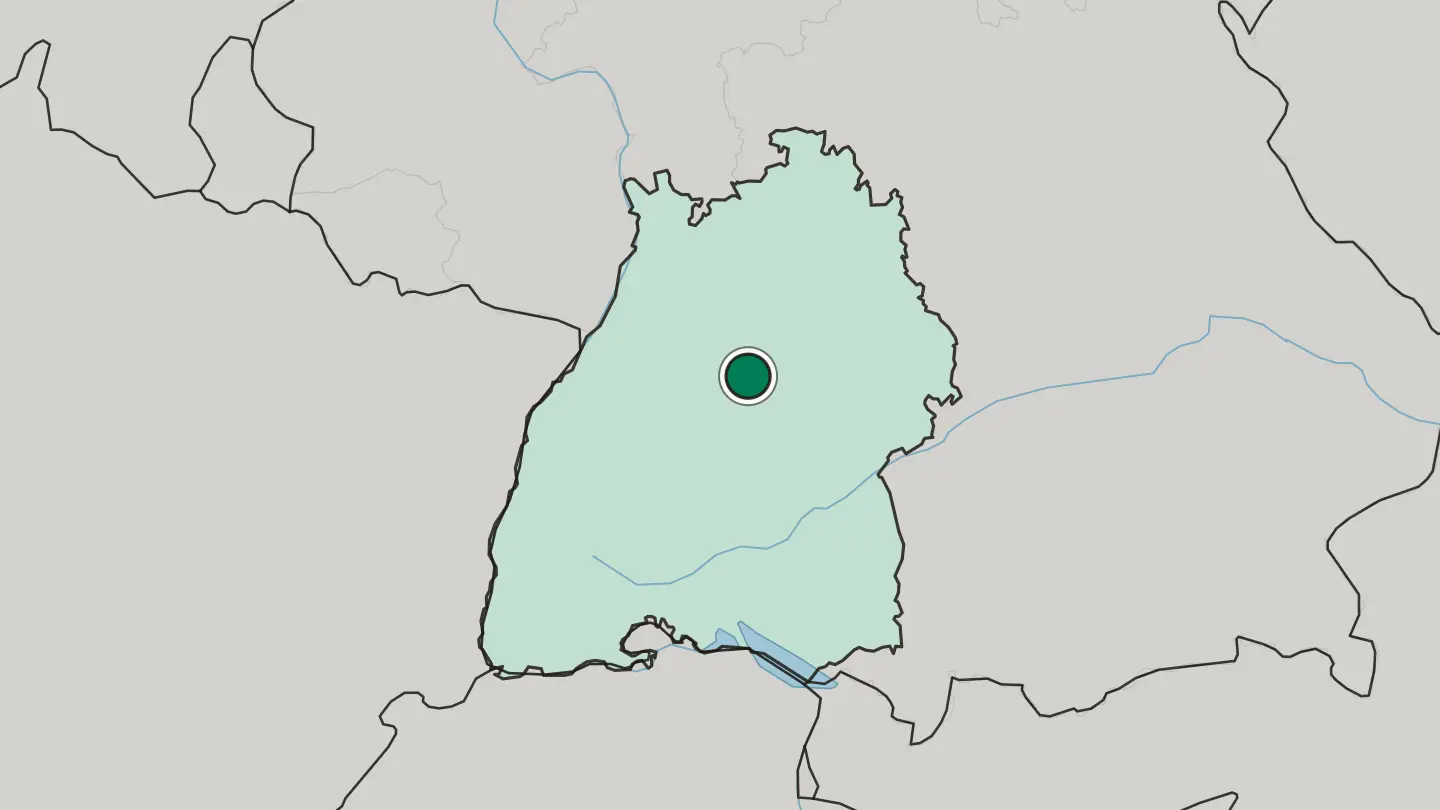
 Germany
Mannheim
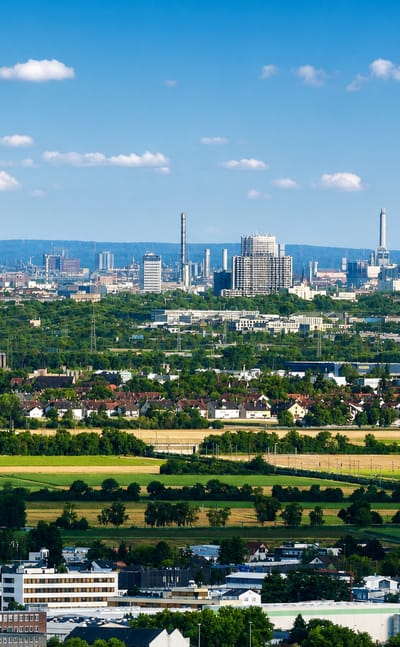
Mannheim stands where the Neckar meets the Rhine in Baden-Württemberg, a planned Baroque city known for the vast Mannheim Palace and the Kunsthalle.Where to stay →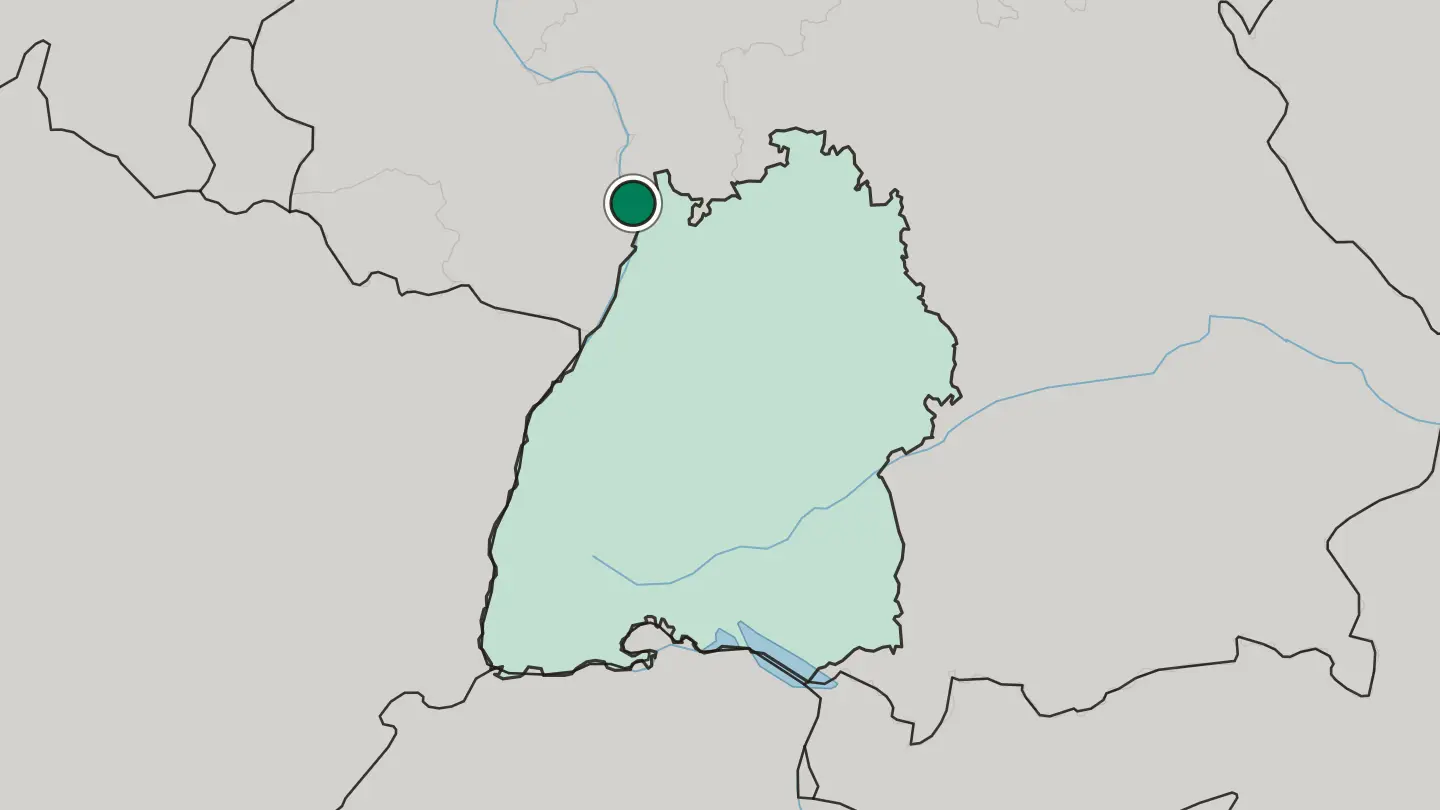
 Germany
Karlsruhe
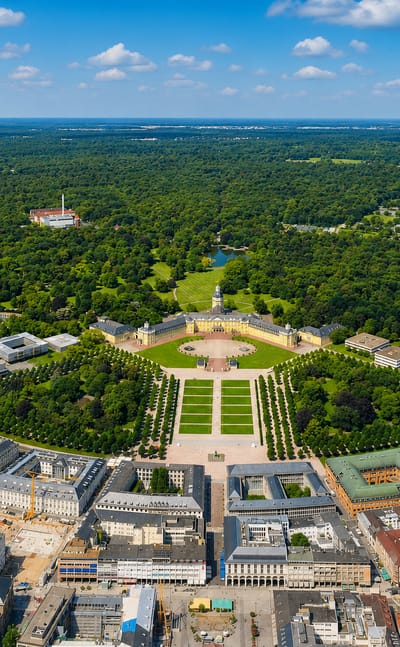
Streets fan out like spokes from the palace tower at Karlsruhe, a planned city on the Rhine in Baden-Württemberg and the seat of Germany's highest courts.Where to stay →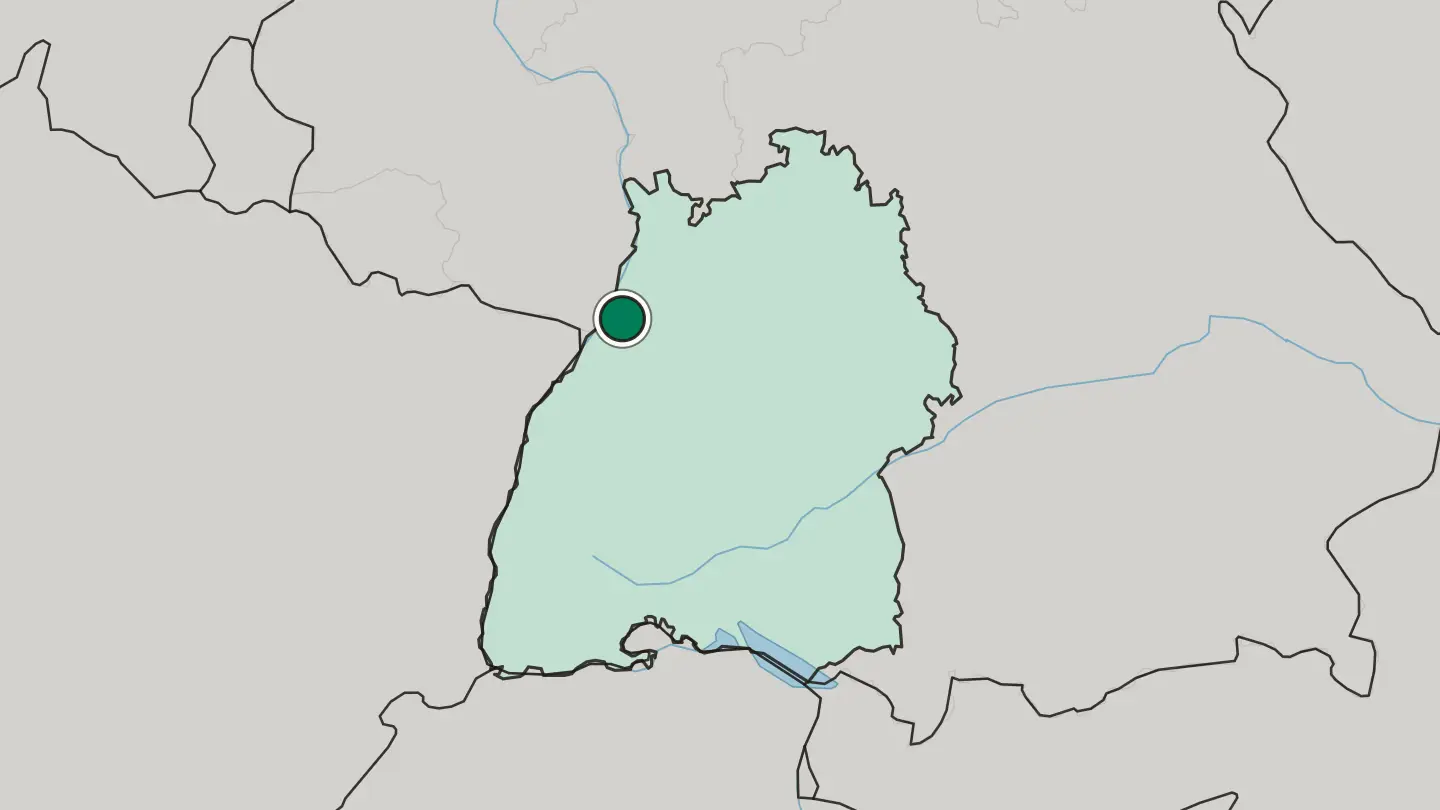
 Germany
Freiburg
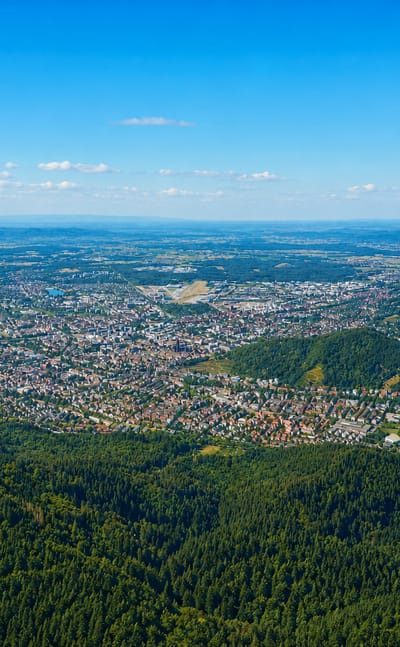
Freiburg im Breisgau sits on the Dreisam at the edge of the Black Forest, a sunlit city in southwest Baden-Württemberg crowned by its Minster.Where to stay →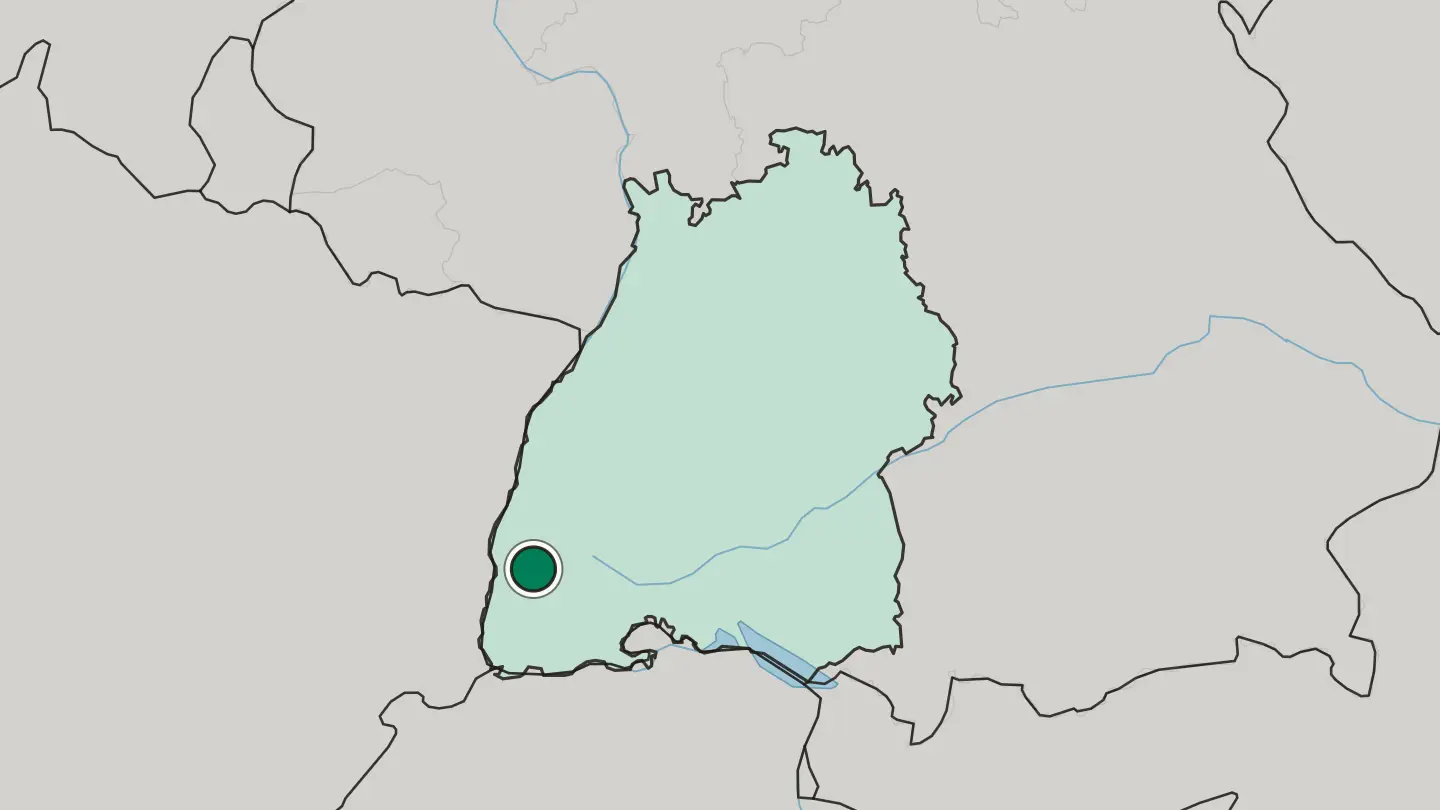
 Germany
Heidelberg
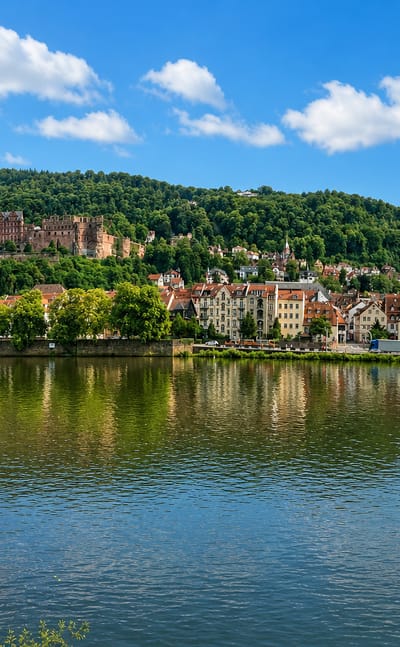
Red sandstone ruins crown the slope above Heidelberg, a city on the Neckar in Baden-Württemberg, where the oldest university in Germany still teaches.Where to stay →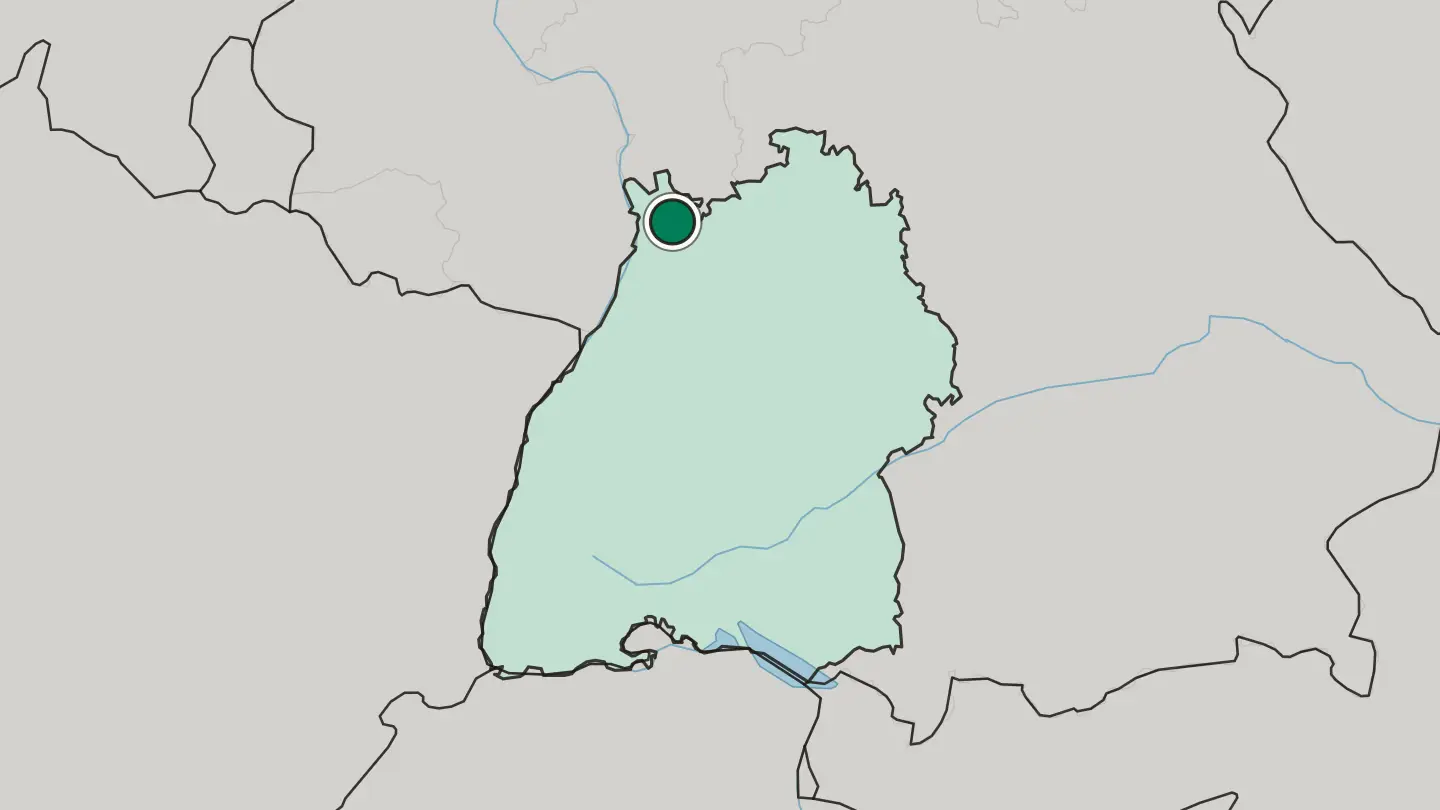
 Germany
Heilbronn
Heilbronn is a city of Baden-Württemberg, more than twelve centuries old, where experimenta and the Museum im Deutschhof anchor a compact centre.Where to stay →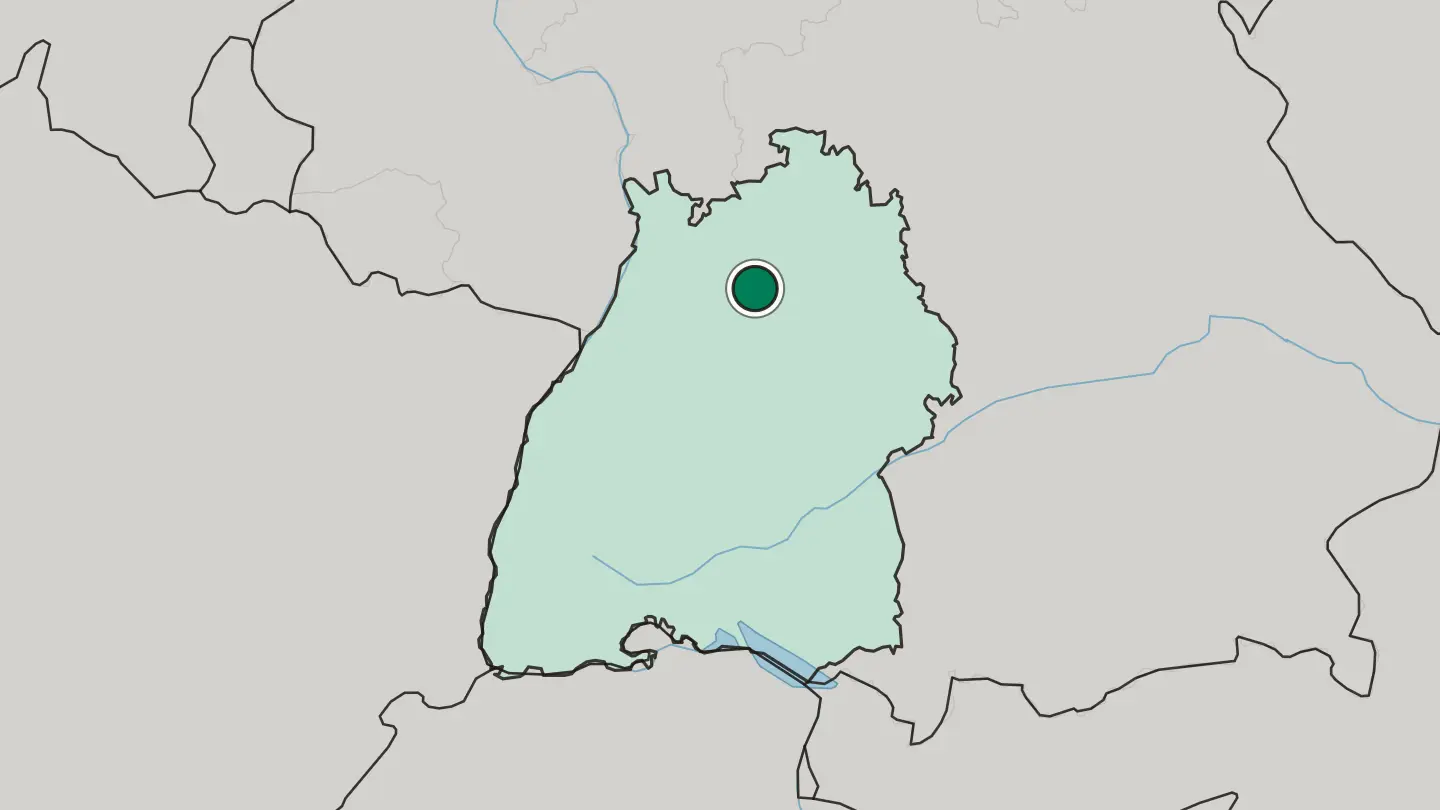
 Germany
Ulm
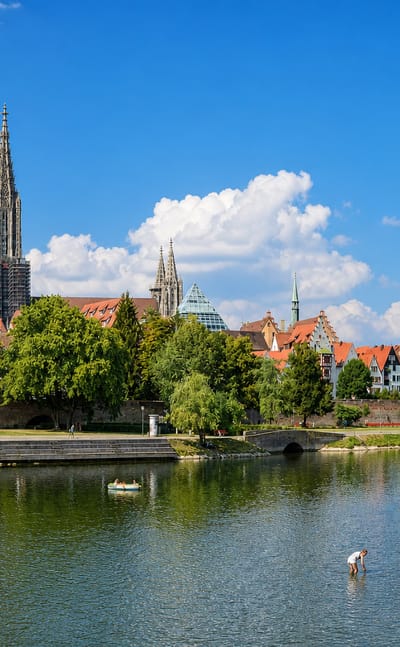
The Ulm Minster carries the tallest church steeple in the world above Ulm, a Danube city in Baden-Württemberg at the edge of Bavaria.Where to stay →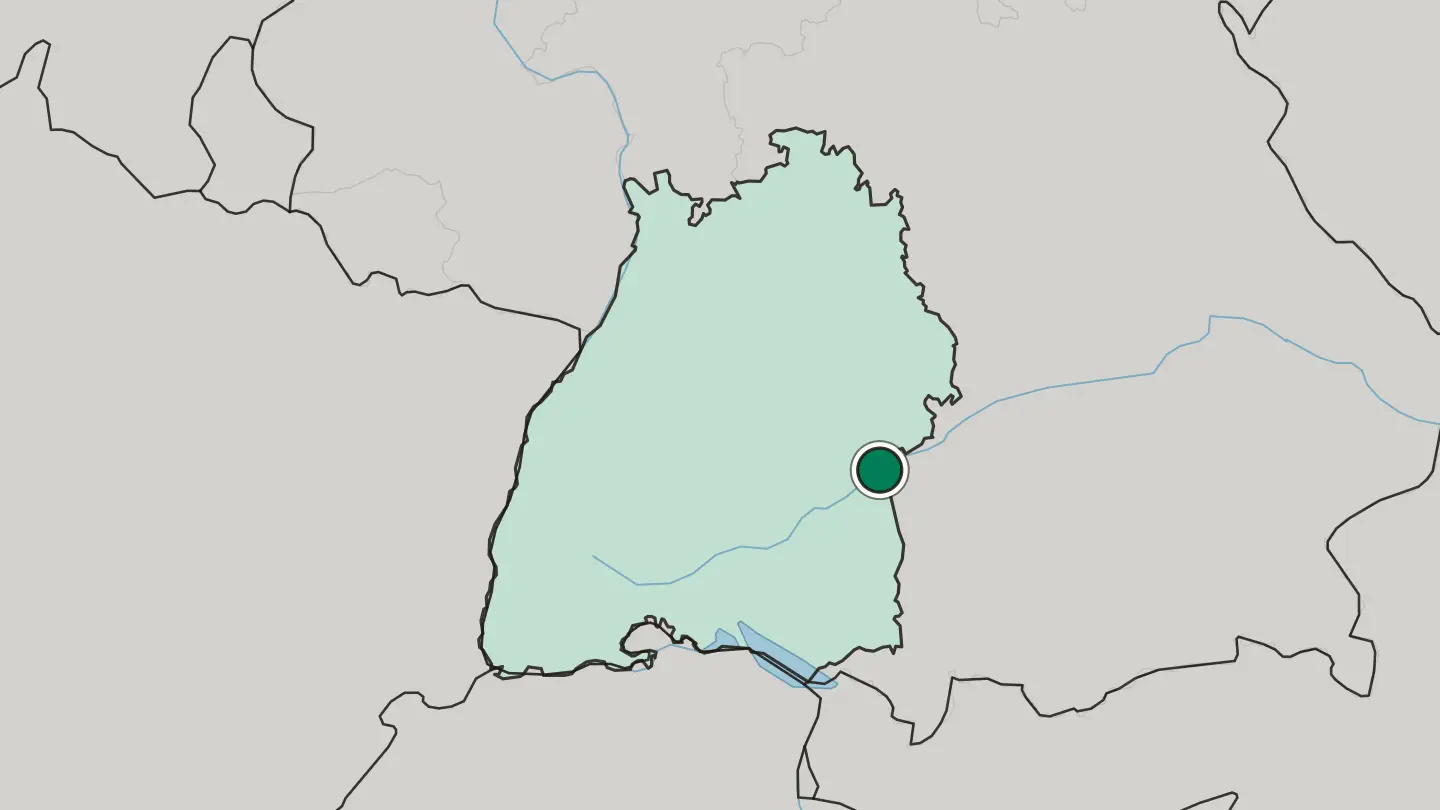
 Germany
Pforzheim
Pforzheim, the Goldstadt of Baden-Württemberg, gathers the Enz, Nagold and Würm at the northern edge of the Black Forest.Where to stay →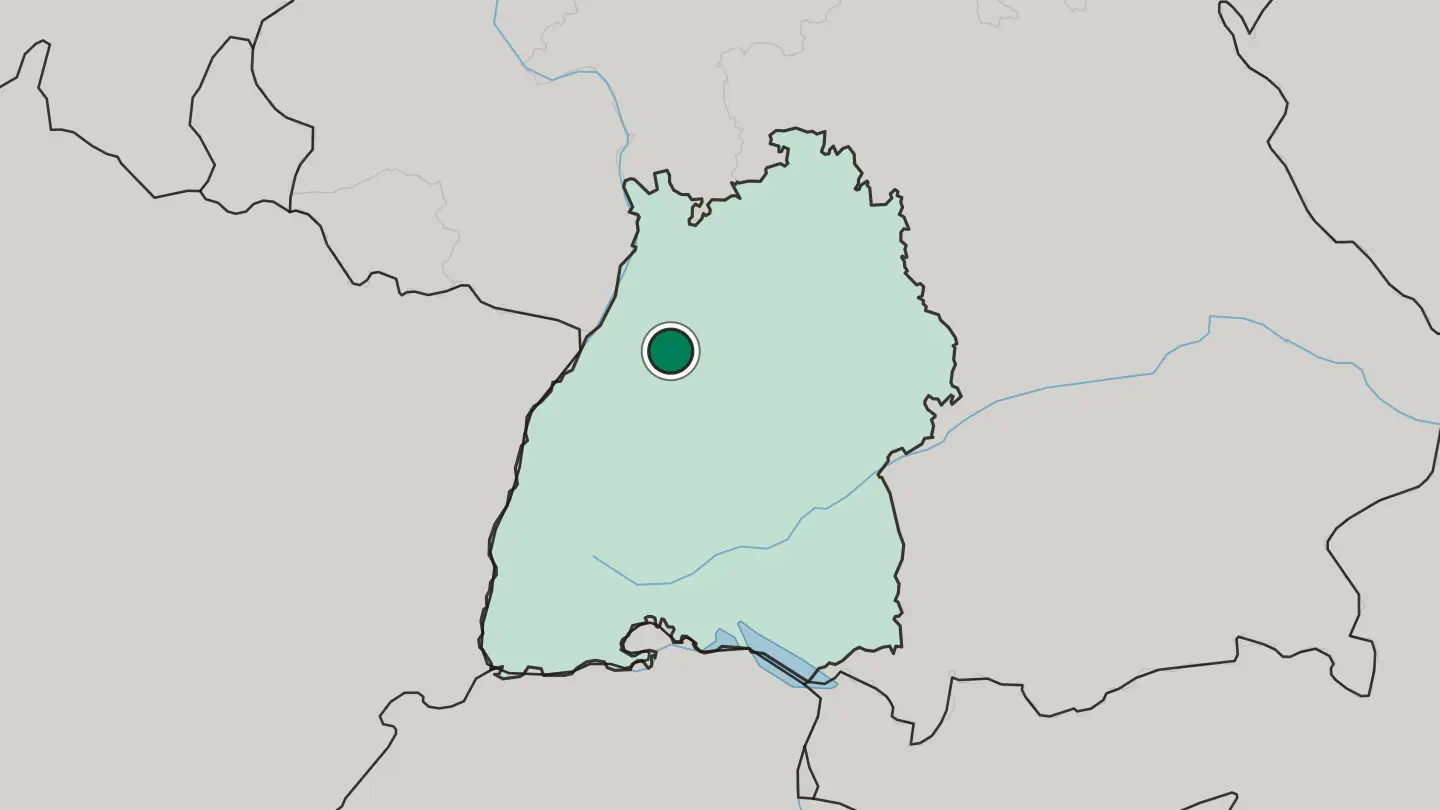
All towns & cities (25)
 Germany
Reutlingen
Reutlingen, a former Free Imperial City in Baden-Württemberg chartered in 1240, keeps its old streets between St Mary's Church and the Tübinger Tor.Where to stay →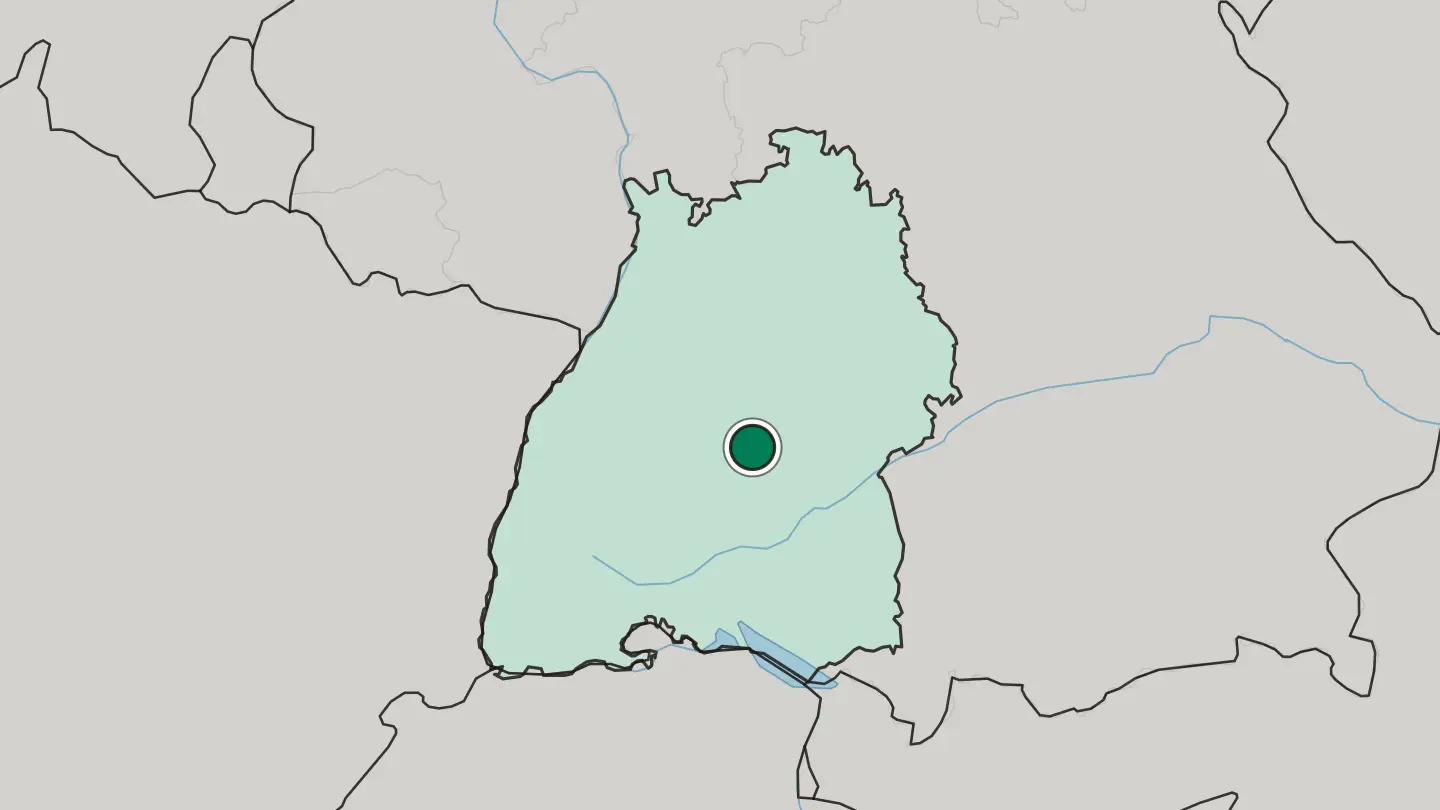
 Germany
Esslingen
Esslingen am Neckar is a former free imperial city in Baden-Württemberg, with vineyards climbing behind the Mélacturm and the Stadtkirche St. Dionys.Where to stay →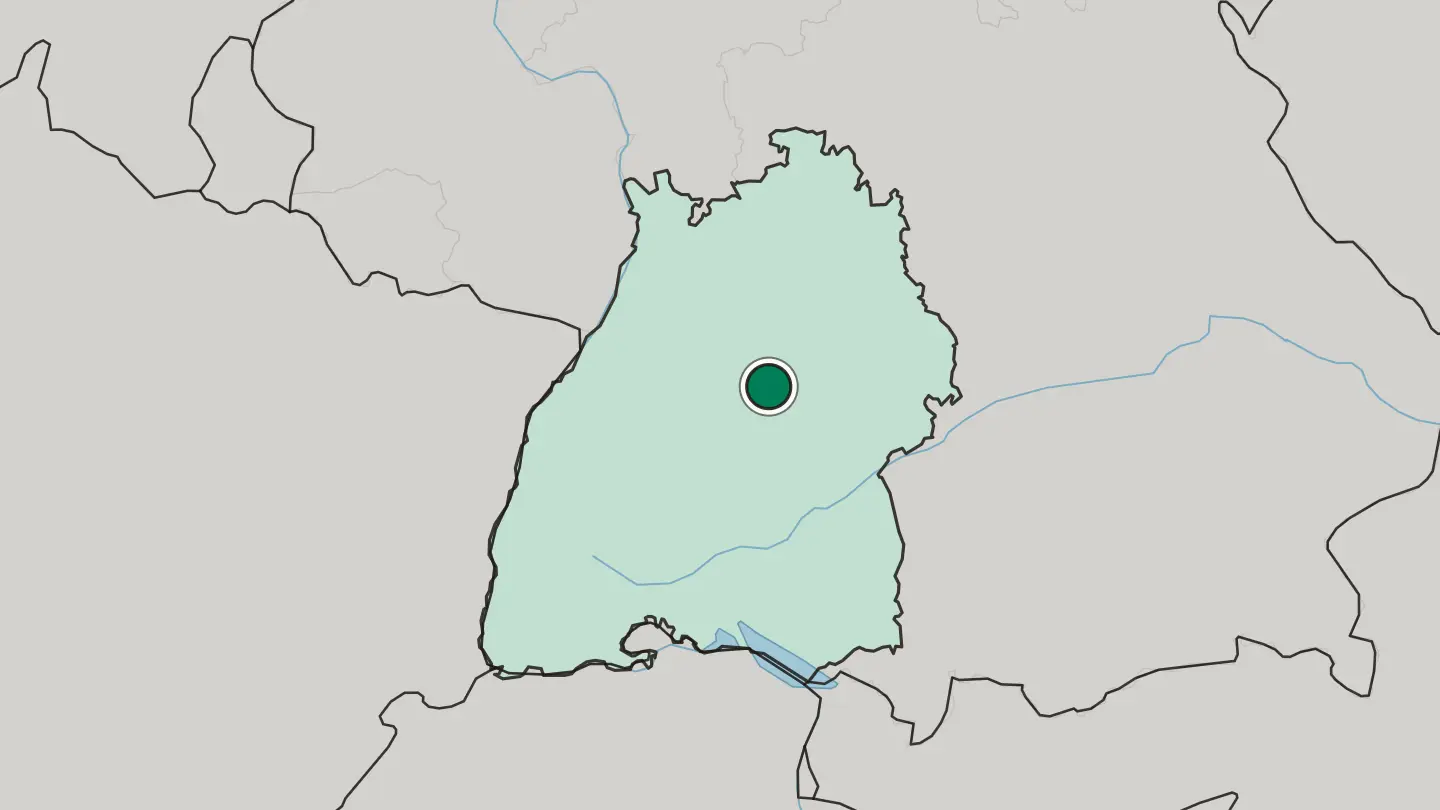
 Germany
Tübingen
Tübingen is a university city in Baden-Württemberg, founded in 1078, with St George's Collegiate Church and the Hölderlinturm at its core.Where to stay →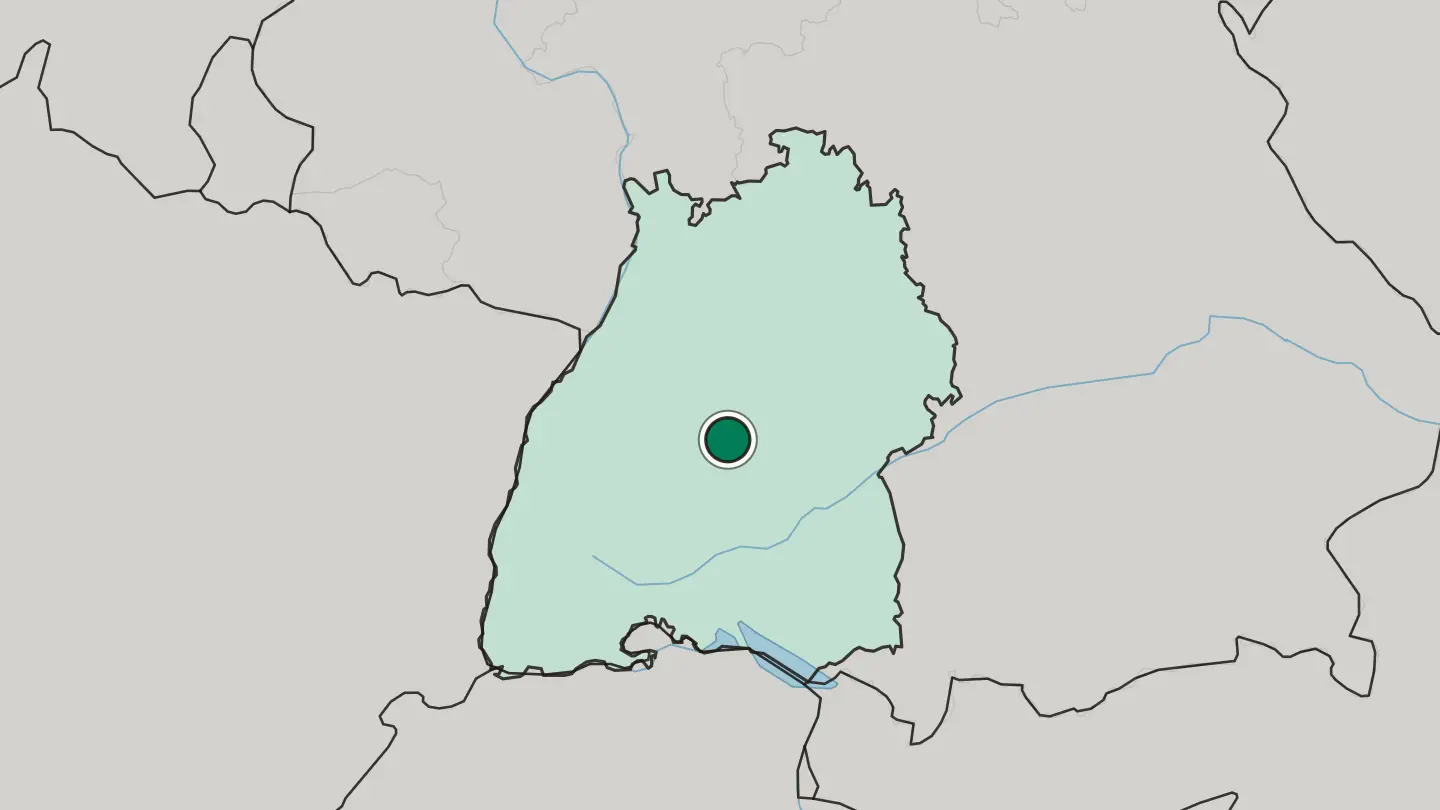
 Germany
Ludwigsburg
Ludwigsburg, founded in 1704 north of Stuttgart, gathers the Cottahaus, the Ludwigsburger Torhäuser and the Ludwigsburg Museum into one centre.Where to stay →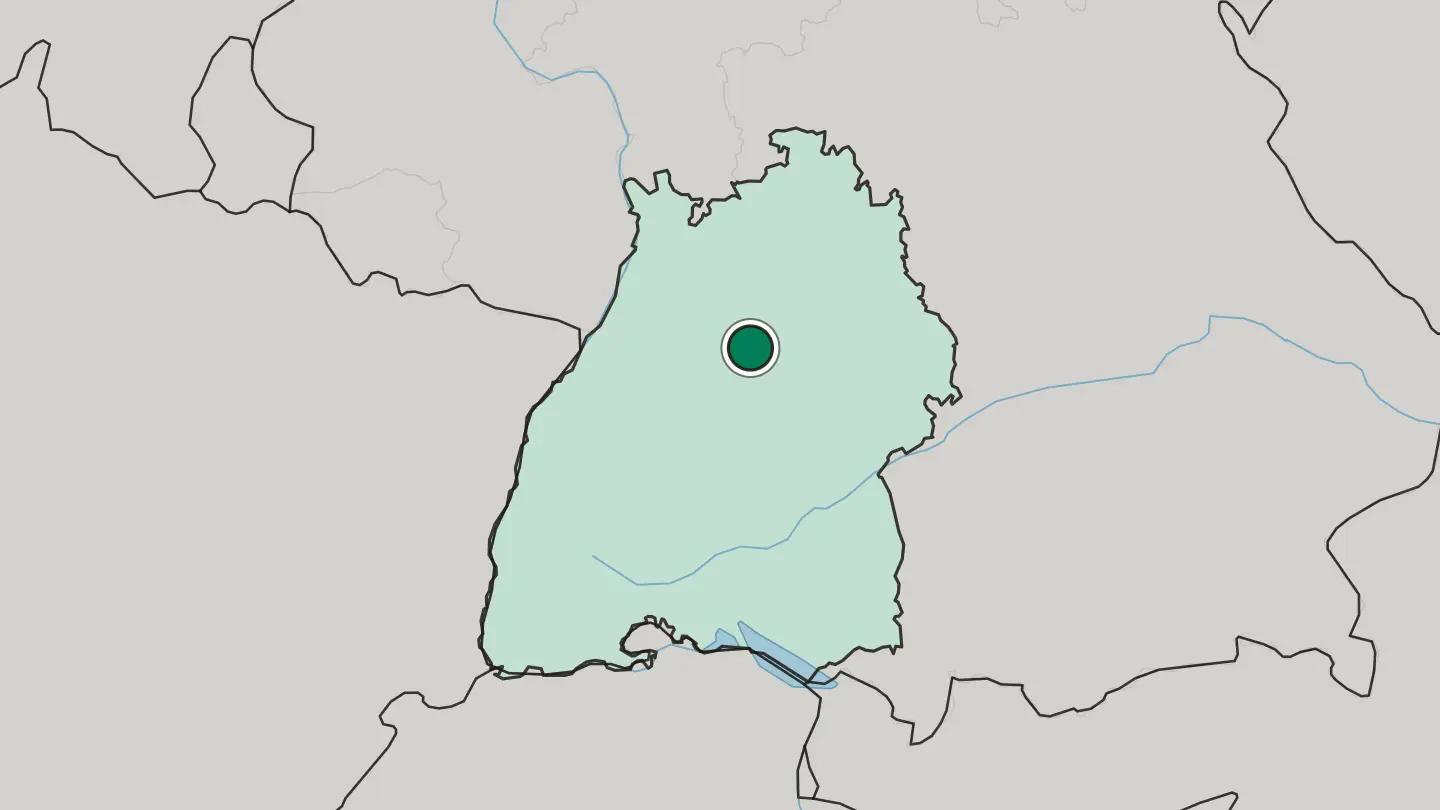
 Germany
Villingen-Schwenningen
Villingen-Schwenningen pairs two old towns at the east side of the Black Forest, joined in 1972 and split between carnival and clockmaking.Where to stay →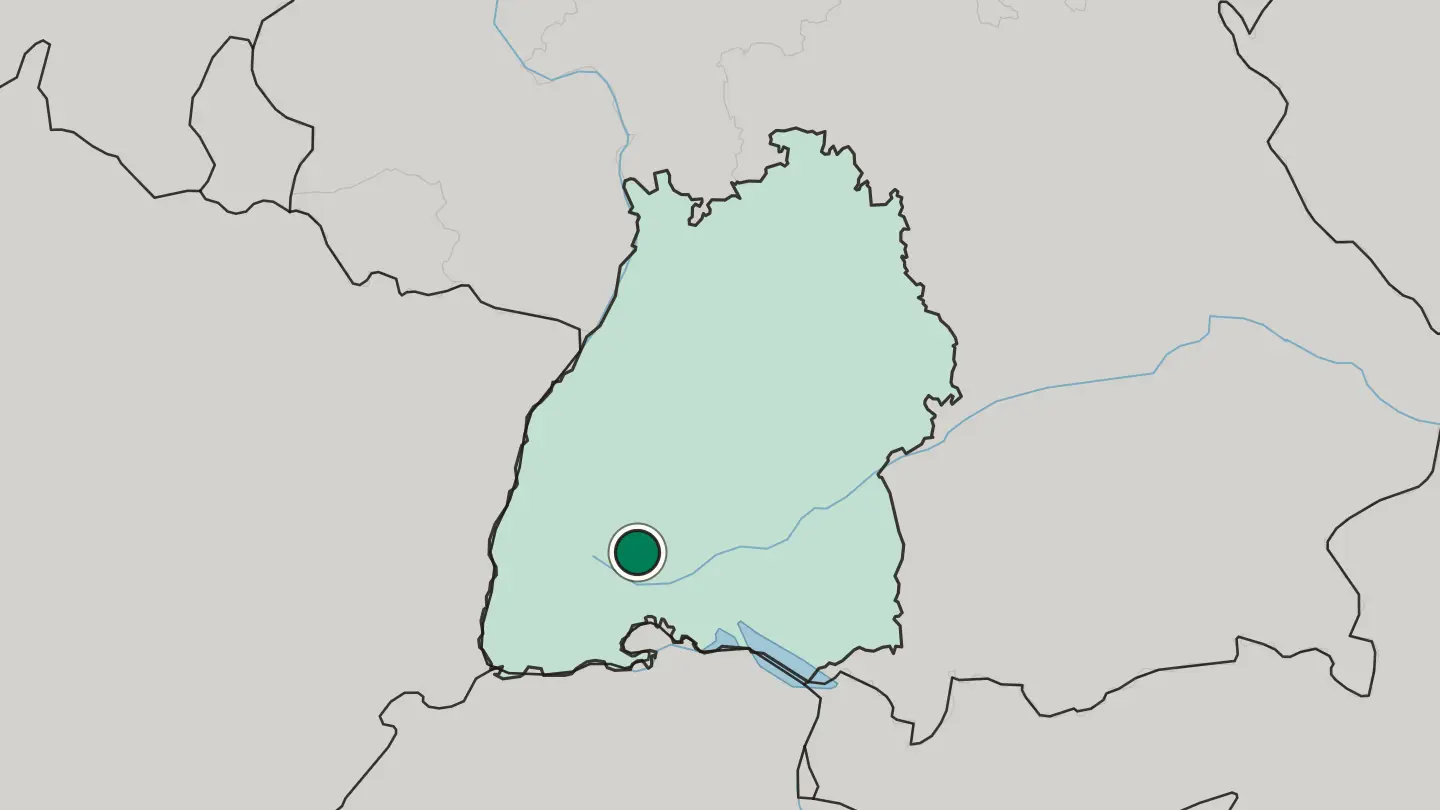
 Germany
Konstanz
Konstanz, a Große Kreisstadt of Baden-Württemberg, gathers its old quarter around Konstanz Minster and the old houses along Hussenstraße.Where to stay →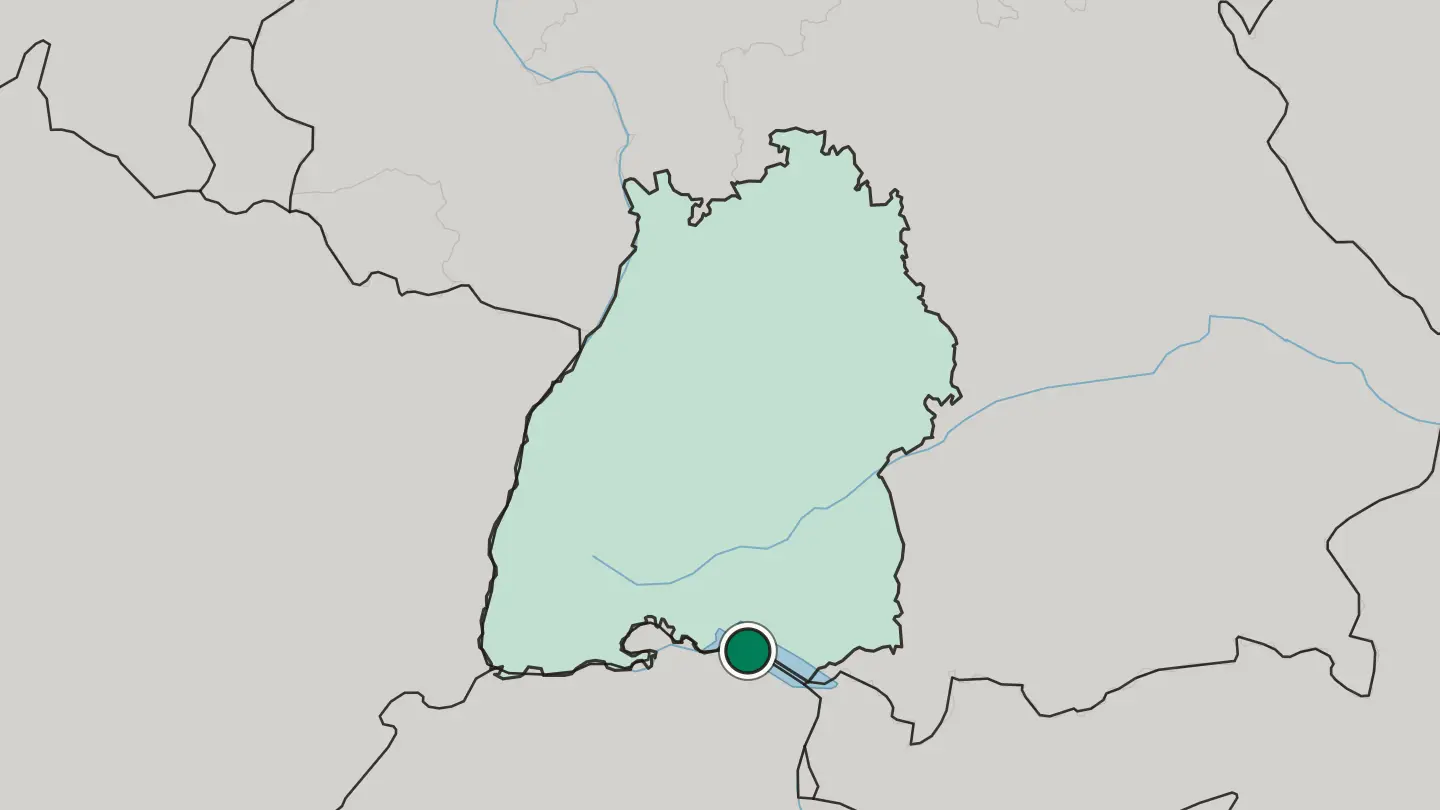
 Germany
Aalen
Aalen is a town of eastern Baden-Württemberg in Germany, set on the Swabian Jura around the largest Roman cavalry fort north of the Alps.Where to stay →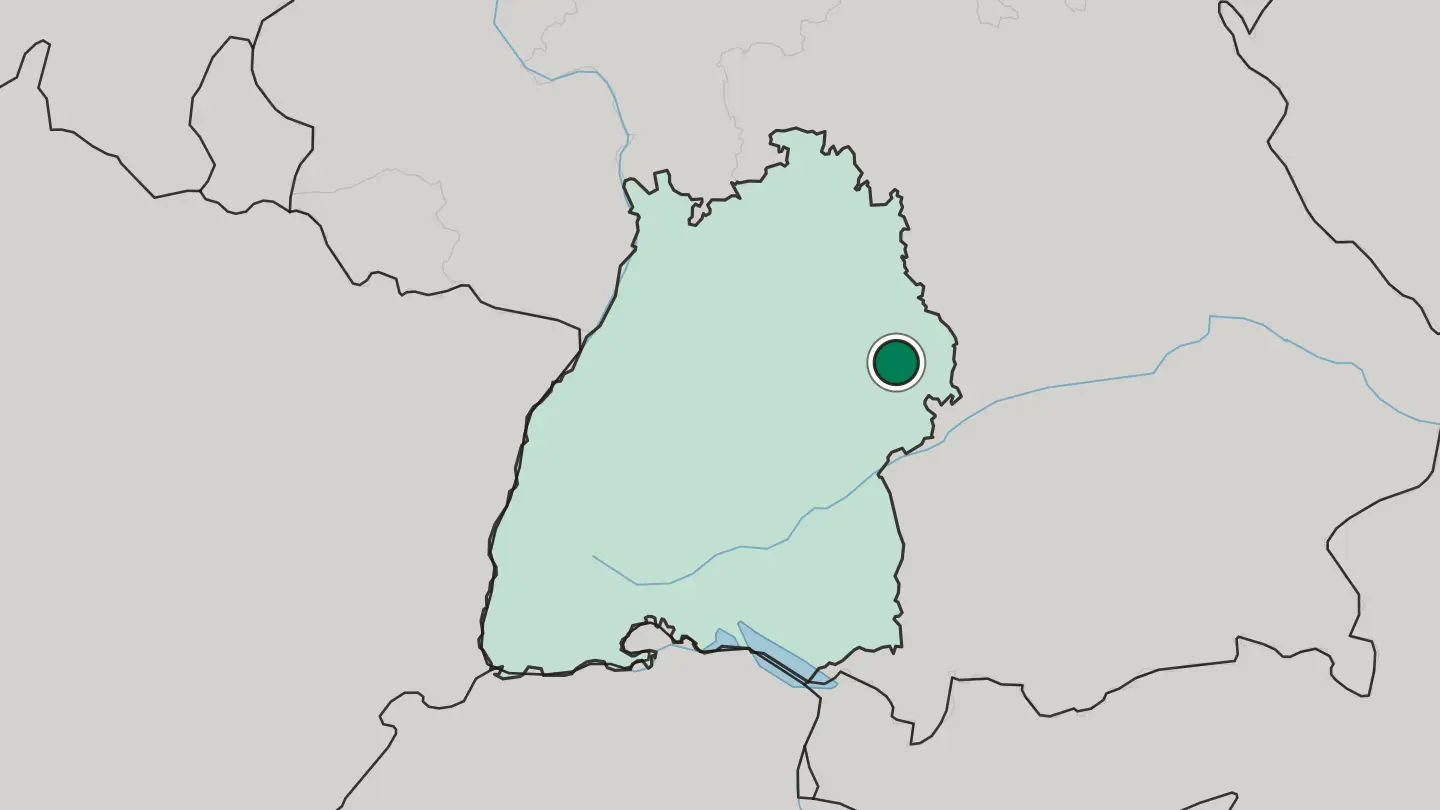
 Germany
Sindelfingen
Sindelfingen adjoins Böblingen near Stuttgart, a working city known for its Mercedes Benz plant and the art at Schauwerk Sindelfingen.Where to stay →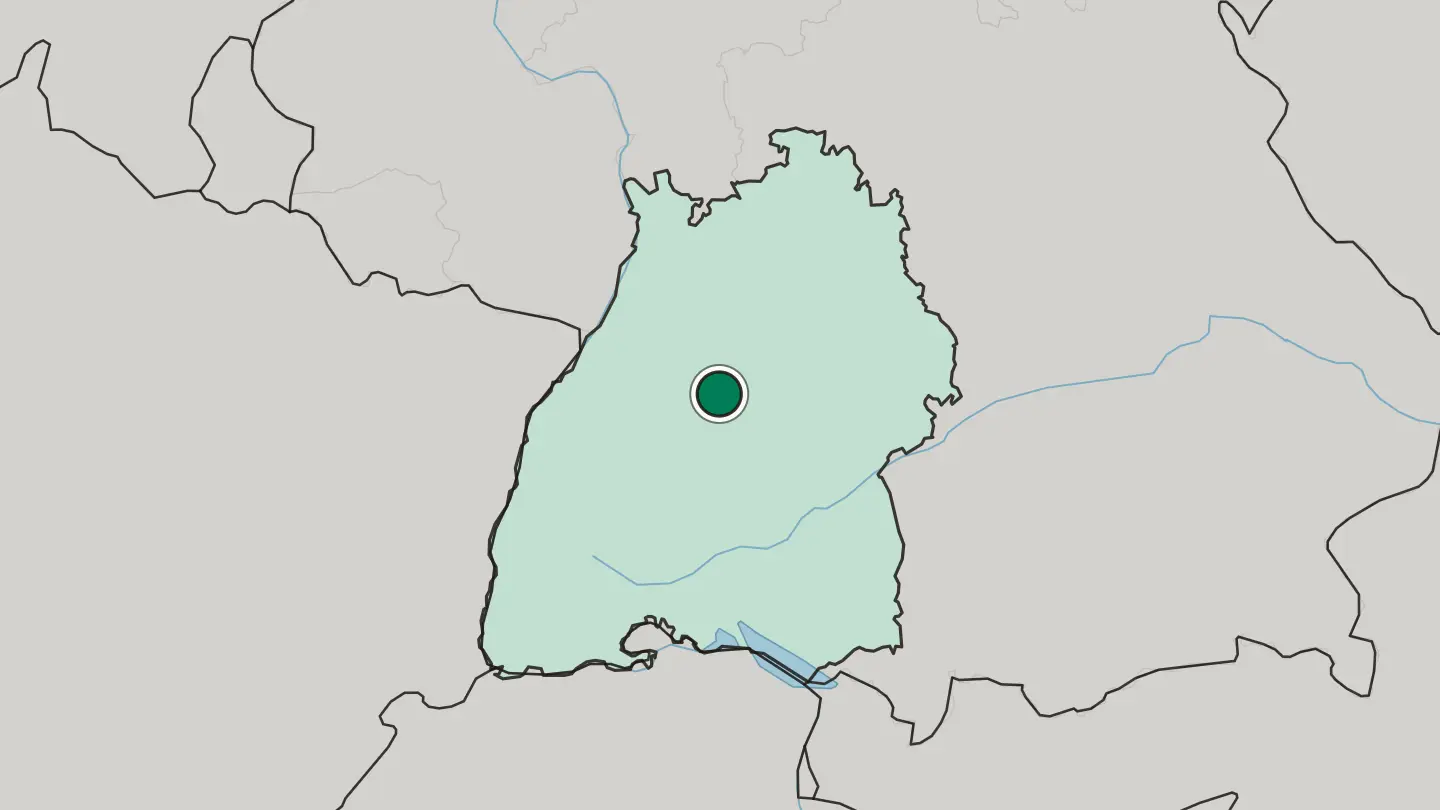
 Germany
Schwäbisch Gmünd
Schwäbisch Gmünd grew around the Holy Cross Minster in the Ostalb district of Baden-Württemberg, a church town with roots reaching back to 1200.Where to stay →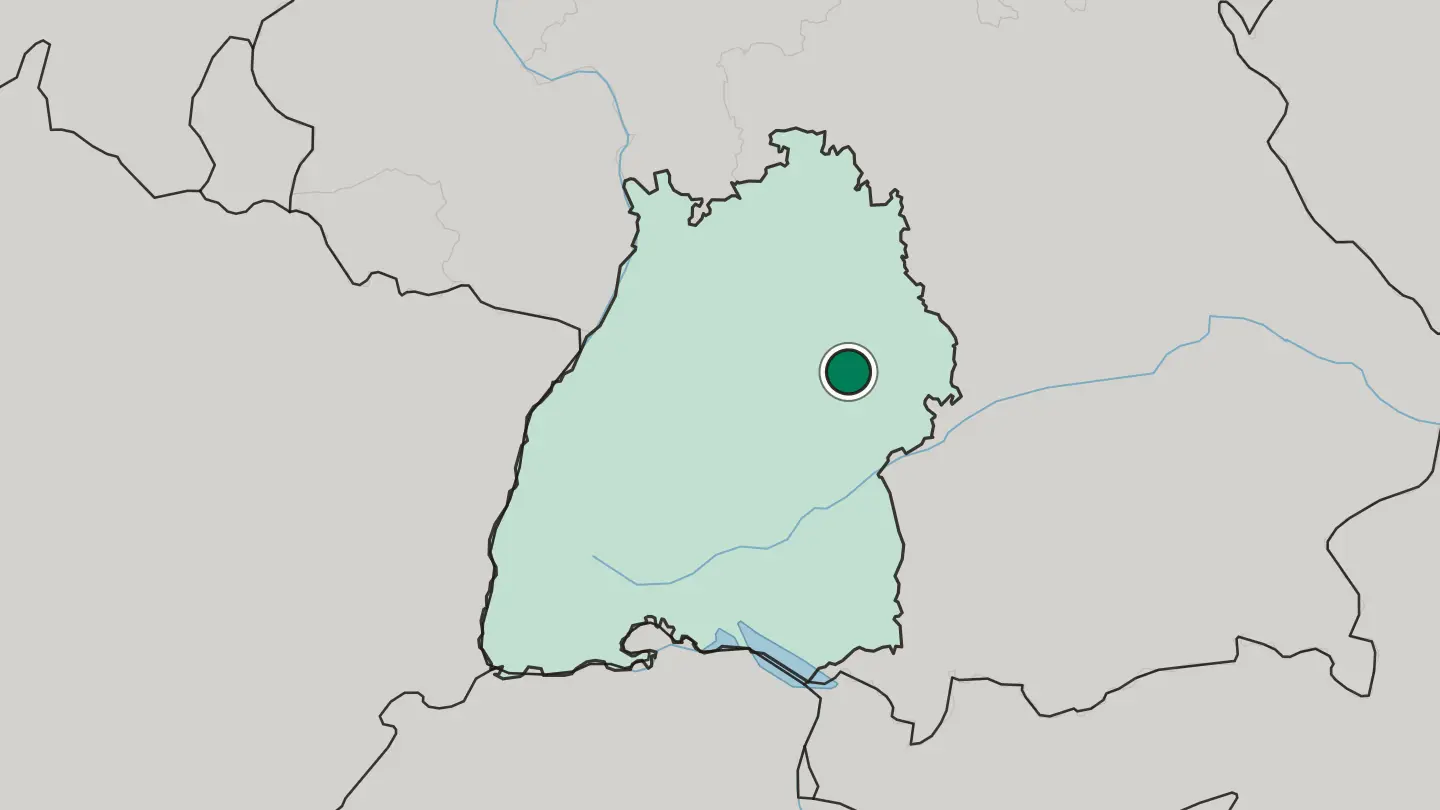
 Germany
Offenburg
Offenburg, dating from 1148, sits at the junction of the Rhine Valley and the Kinzig Valley as capital of the Ortenaukreis.Where to stay →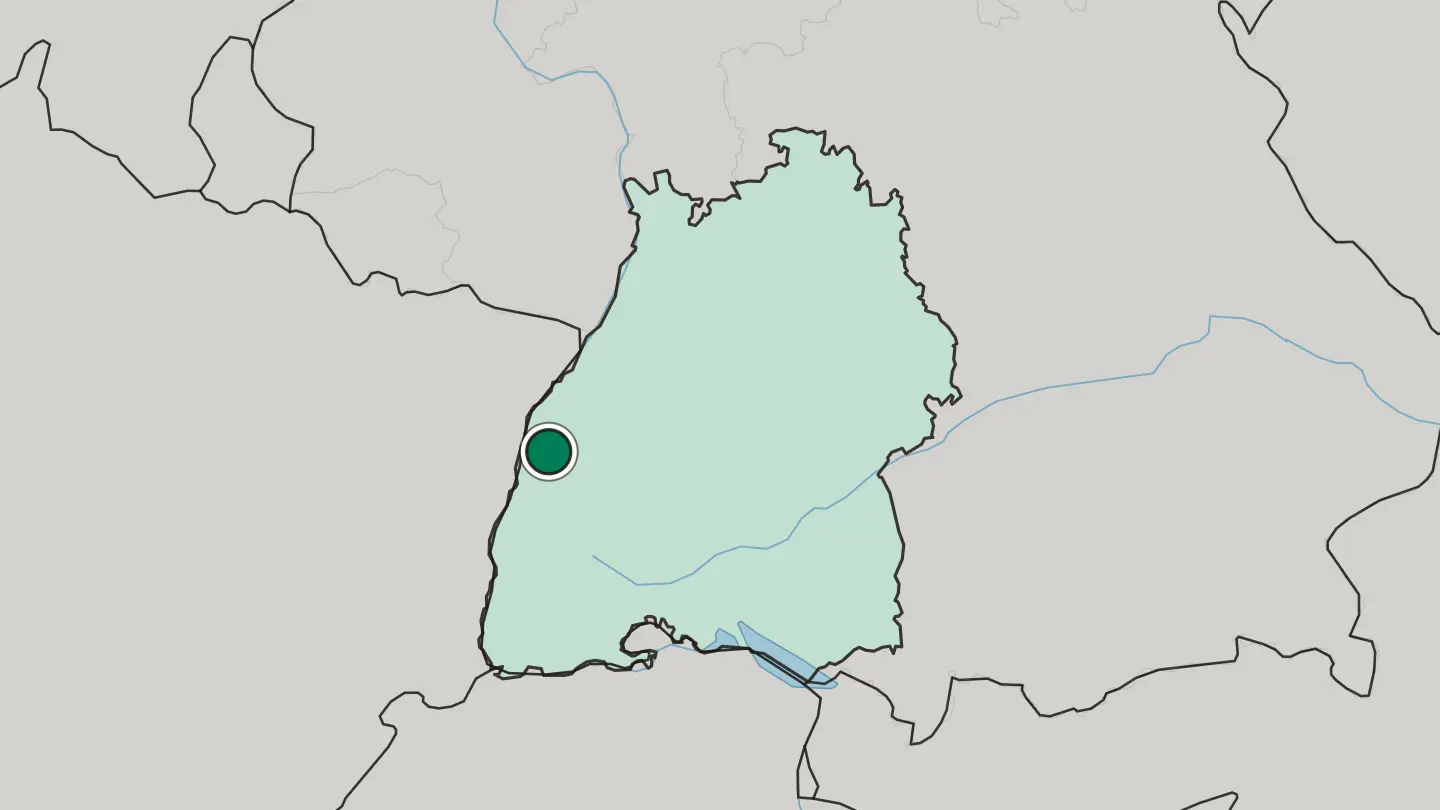
 Germany
Friedrichshafen
Friedrichshafen is a Bodensee city founded in 1811, with the Zeppelin Museum Friedrichshafen and the Dornier Museum beside the water.Where to stay →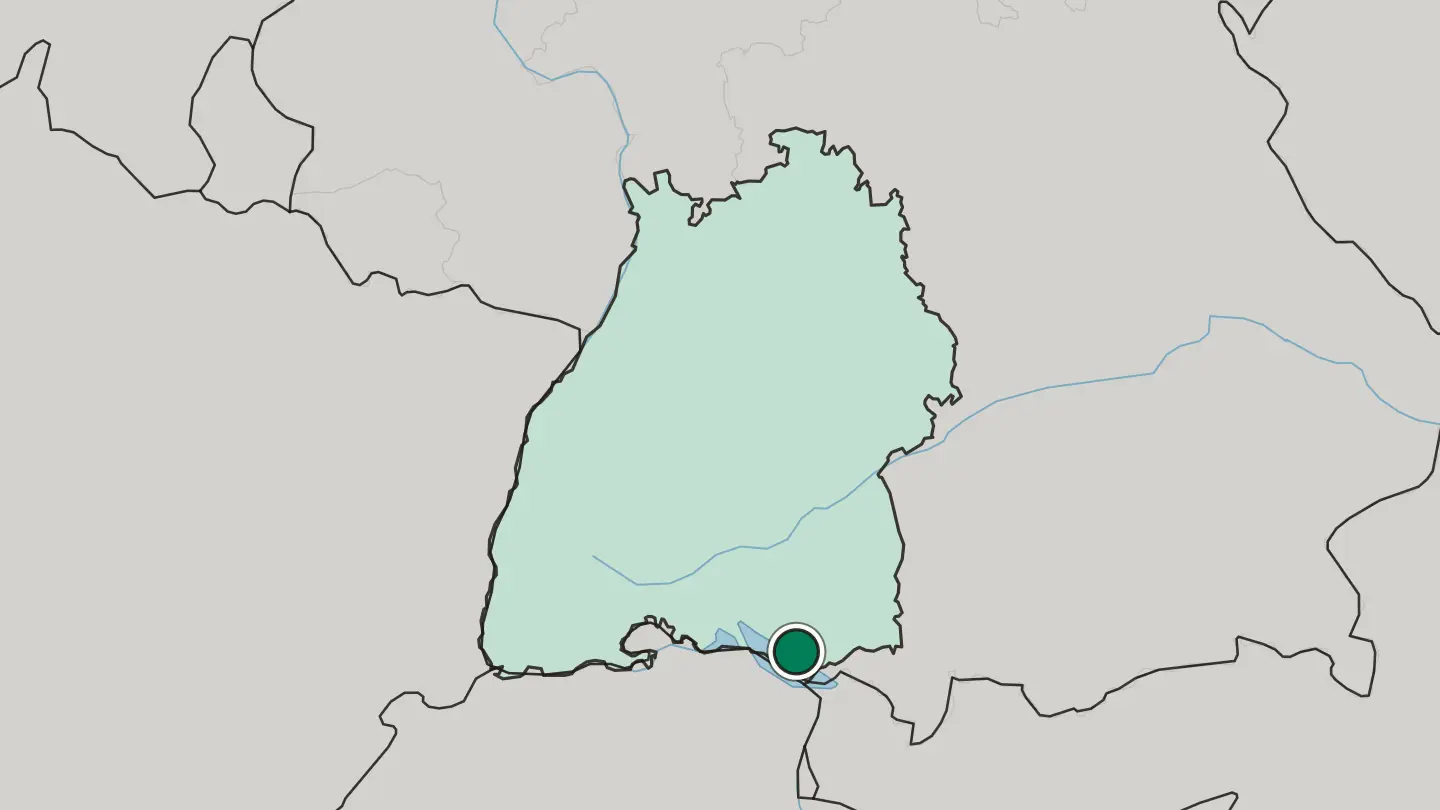
 Germany
Göppingen
Göppingen is the district capital of the Stuttgart Region, with the Märklineum, the Kunsthalle Göppingen, and Stadtkirche Göppingen at its centre.Where to stay →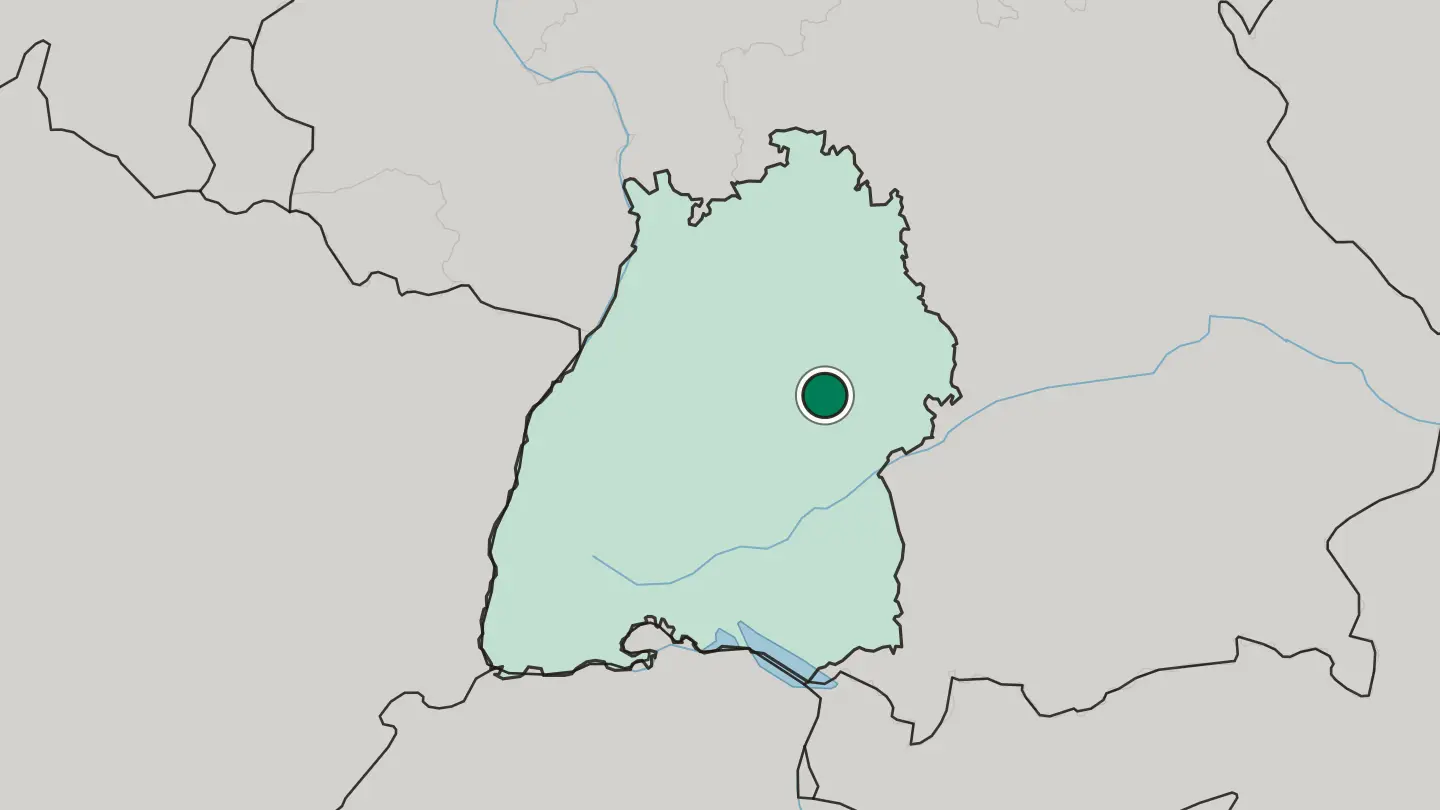
 Germany
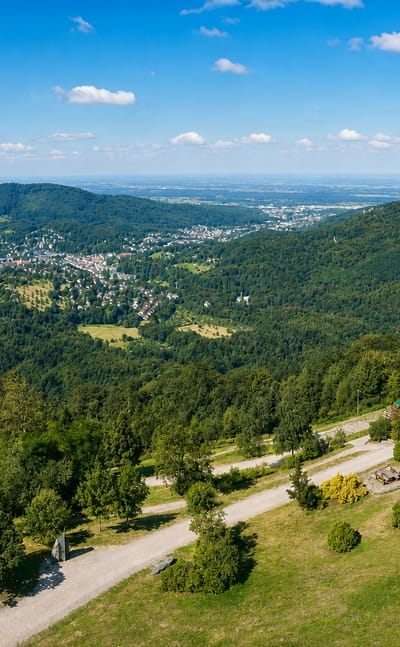
Baden-Baden
Warm springs rise beneath Baden-Baden, a spa town on the river Oos in Baden-Württemberg, known for its Roman bath ruins and the Museum Frieder Burda.Where to stay →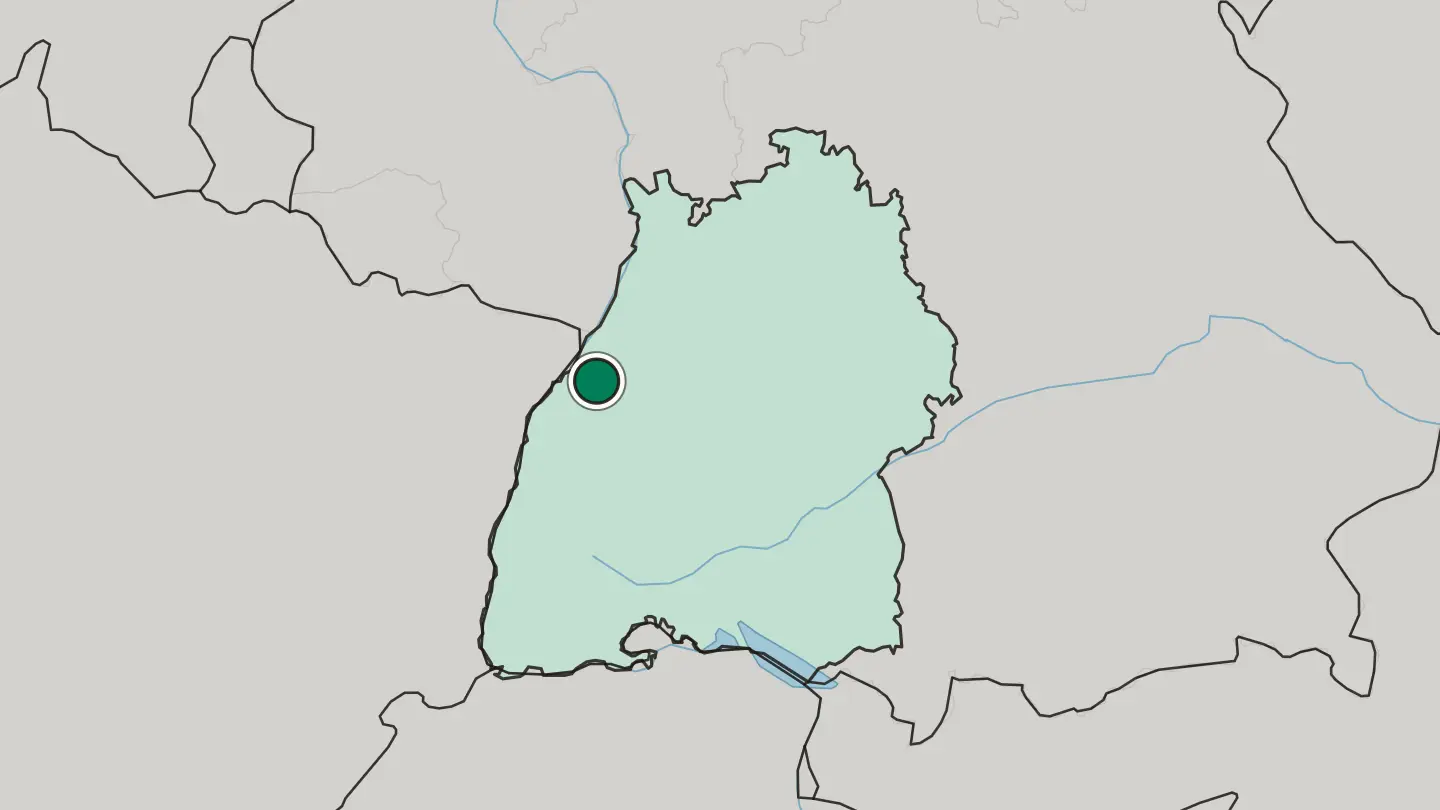
 Germany
Waiblingen
Waiblingen stands on the Rems in the Stuttgart region, a walled town whose Beinsteiner Torturm and Hochwachtturm still mark the old circuit.Where to stay →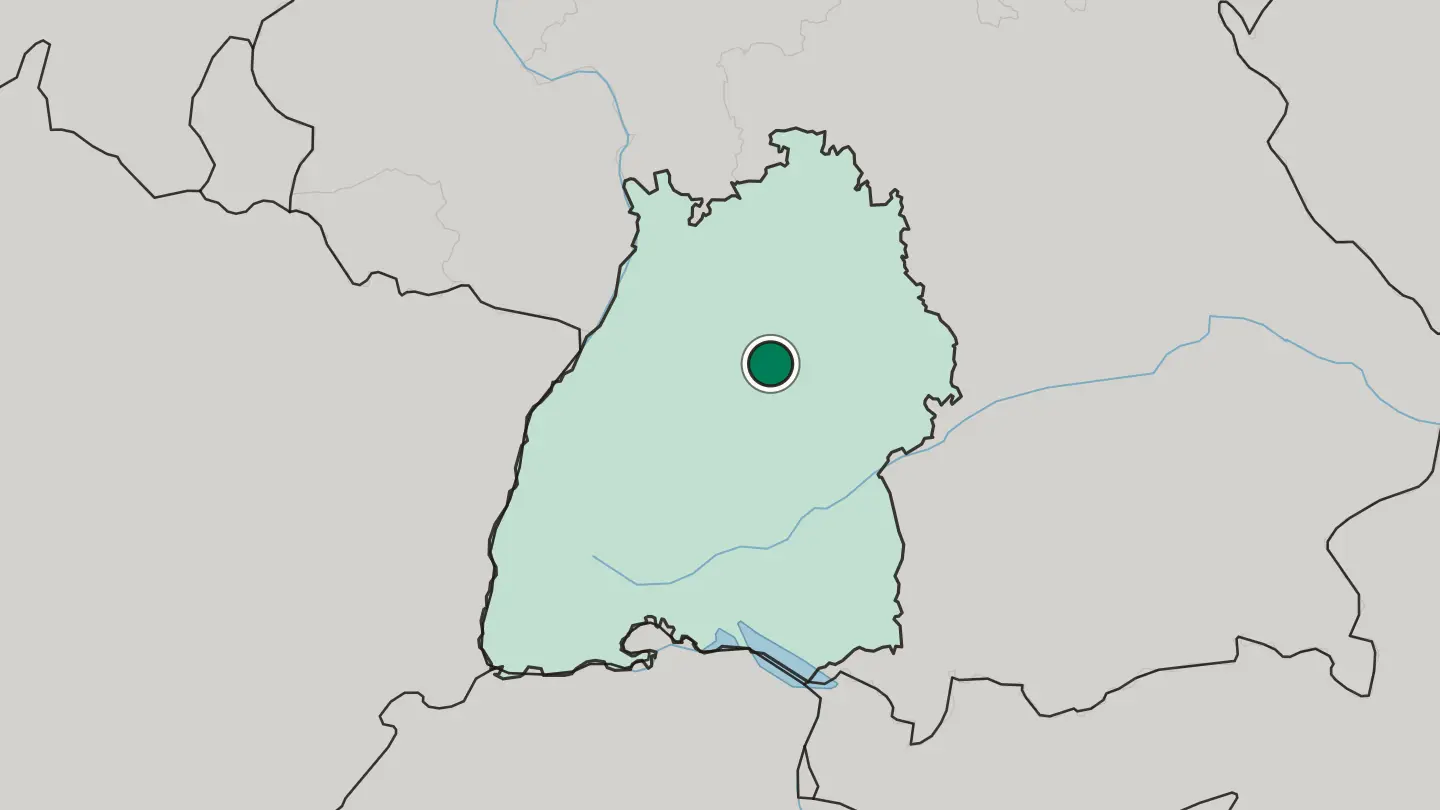
 Germany
Lahr
Lahr, founded in 1201, is a Baden-Württemberg town whose Stiftskirche Lahr and Römische Straßenstation bracket more than a thousand years.Where to stay →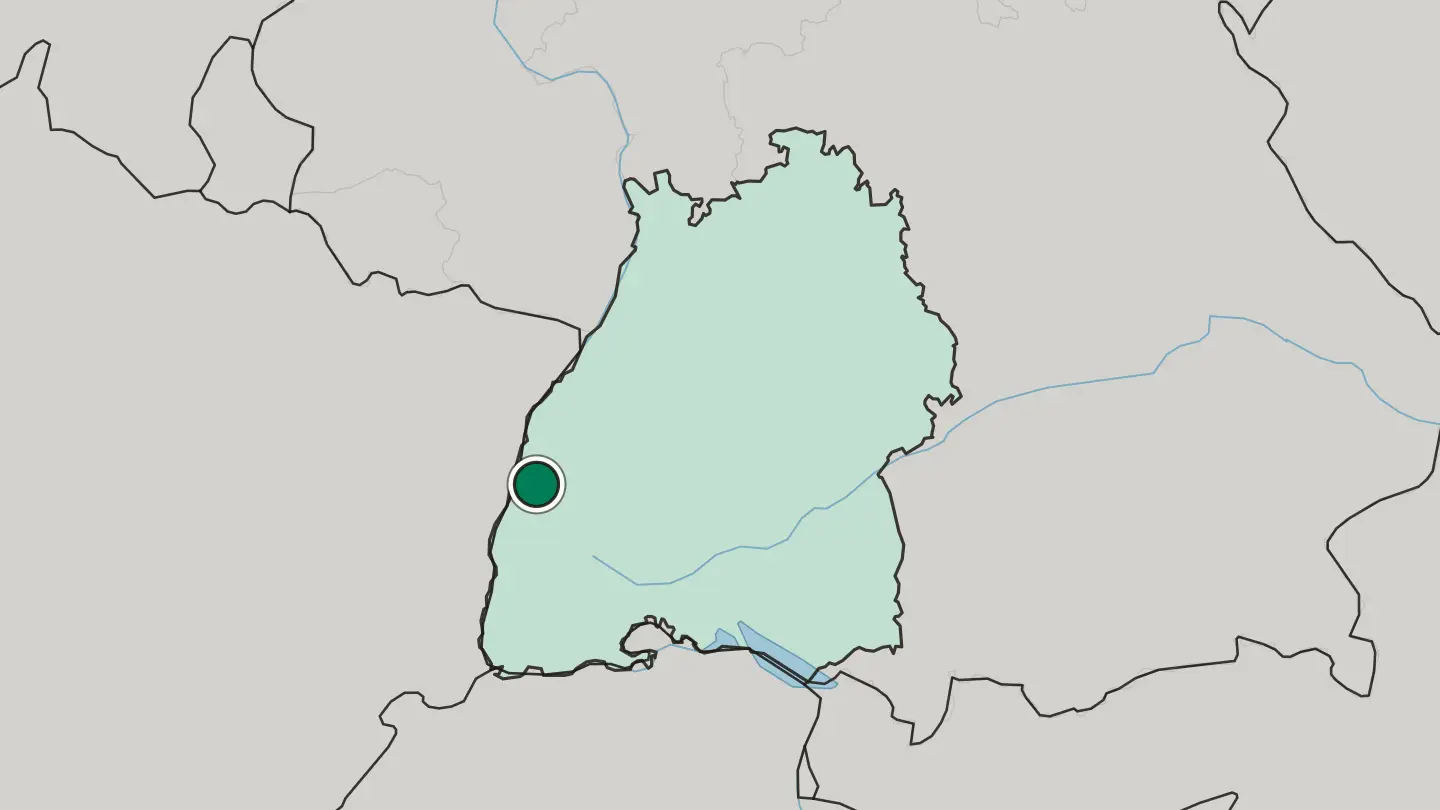 Germany
Heidenheim an der Brenz
Heidenheim an der Brenz sits on the Brenz in the Schwäbische Alb, seat of its district and headquarters of the Voith industrial company.Where to stay →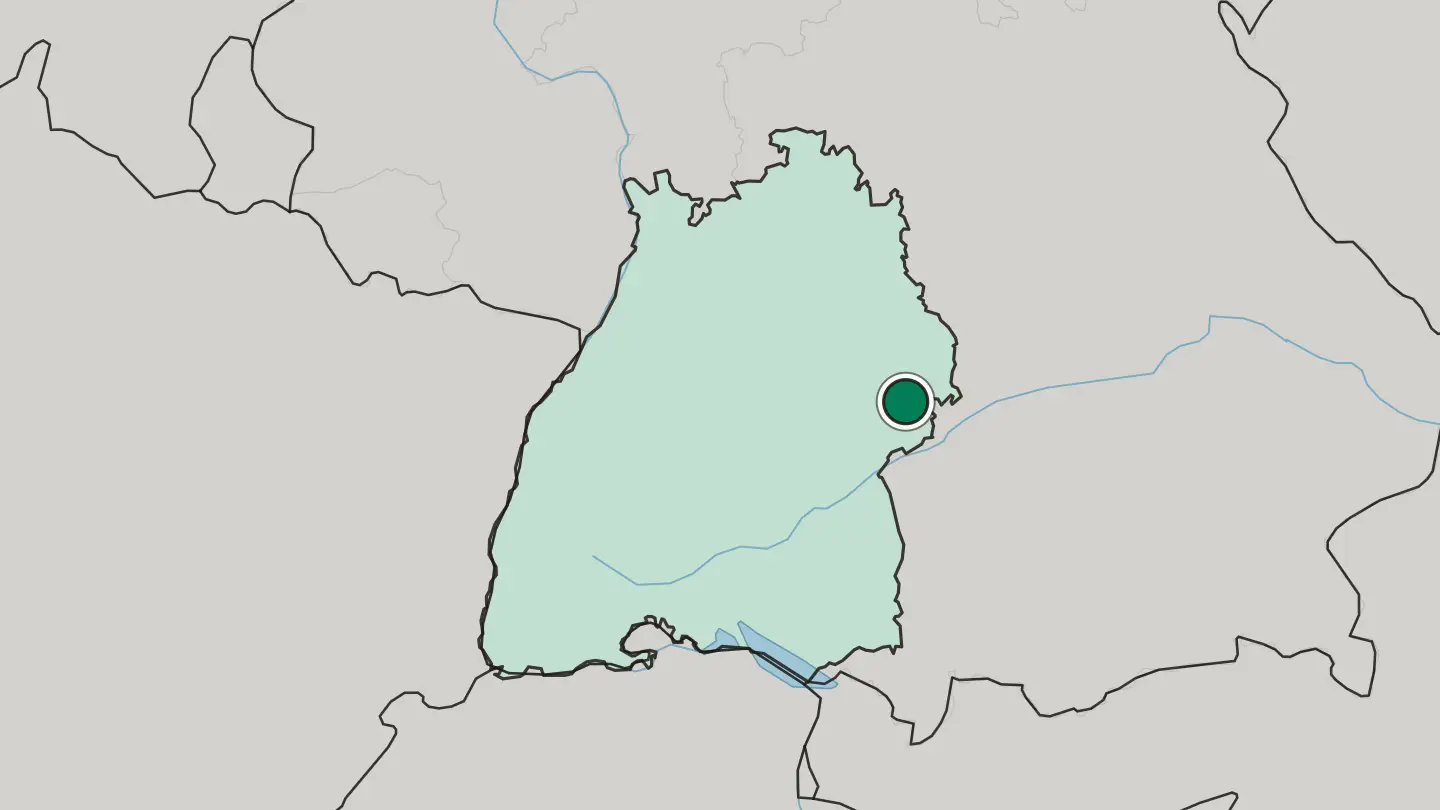 Germany
Rastatt
Rastatt is a Baroque residence town on the Murg in Baden-Württemberg, rebuilt around Schloss Rastatt after French troops burned it in 1689.Where to stay →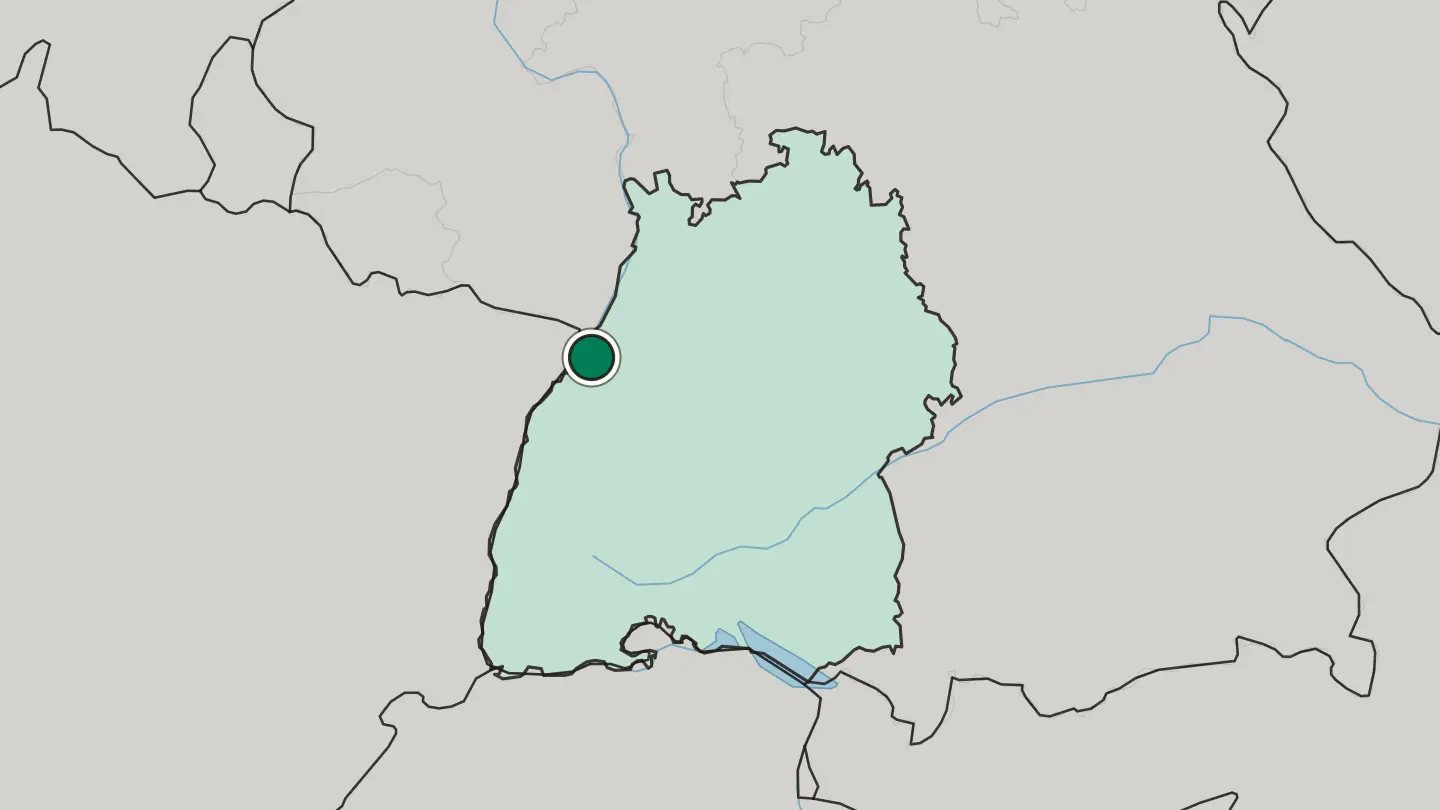
Hotel links are affiliate links: booking through them may earn us a commission, at no extra cost to you. It never affects how places are ranked. How this works
About Baden-Württemberg
Two names, one state.
What is Baden-Württemberg known for?
The Black Forest is the signature: Germany's largest continuous woodland, dark with fir and cut by deep valleys, and the source of both the Neckar and the Danube. Stuttgart, the capital, sits in a bowl of vineyards on the Neckar and builds the cars that carry the region's name abroad, Mercedes-Benz and Porsche among them. In the south the land drops to Lake Constance, the broad water Baden-Württemberg shares with Switzerland and Austria.
Wine, forest, and precision engineering define it.
Where is Baden-Württemberg?
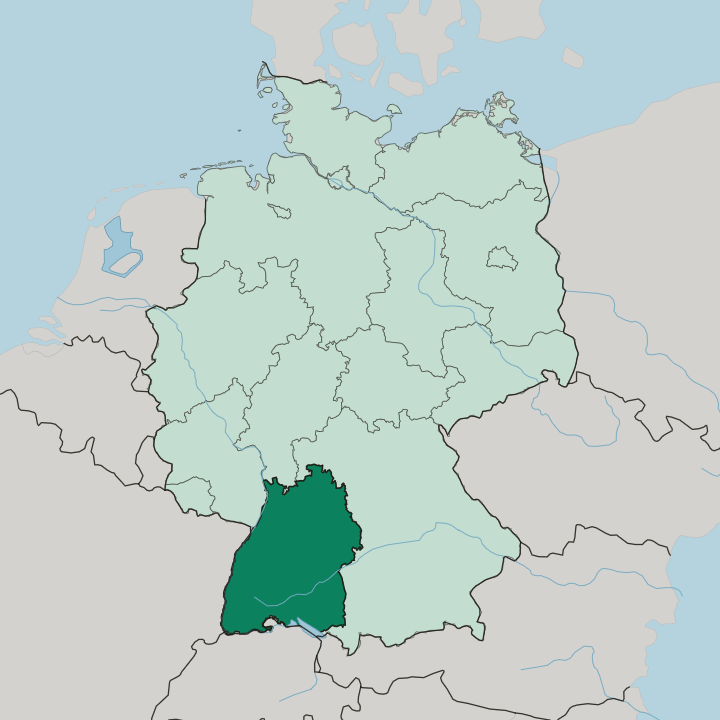
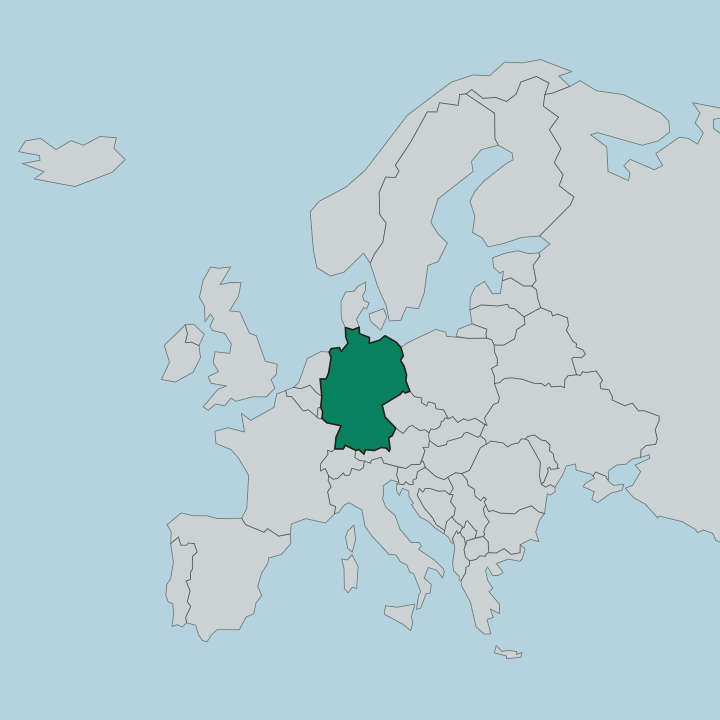
Baden-Württemberg is Germany's south-western state, wedged against France and Switzerland. The Rhine draws much of that frontier, running north along the western edge before bending away, with France on the far bank. Behind the river the Black Forest climbs steeply, a long forested range that shelters the Rhine plain from the west and holds the state's high ground.
Its summit is the Feldberg. No point in Germany outside the Alps and Bavaria stands higher. East of the forest the land is gentler.
The Neckar rises in the Black Forest, loops north through Stuttgart, Tübingen, and Heidelberg, and empties into the Rhine at the state's north-western shoulder. Between the Neckar and the Danube stretches the Swabian Jura, a limestone plateau that forms a watershed of Europe. The Danube is born here.
It gathers near Donaueschingen before turning east to cross the continent, and in the far south the ground falls away to Lake Constance, the broad Alpine lake the state shares with Switzerland and Austria. Bavaria lies east. The rest of Germany runs off to the north.
What is Baden-Württemberg like?
The state carries two old identities under one hyphenated name. Baden, along the Rhine, speaks an Alemannic tongue close to Swiss German and Alsatian; Swabian, spoken around Stuttgart and the Neckar, is the sound the wider world tends to associate with the region. The people have a reputation for thrift and diligence, and a proverb about their industry that they repeat with some pride.
That same instinct built the car. Engineering is the through-line. Mercedes-Benz and Porsche both grew up around Stuttgart, and the region spends more on research than any other German state.
Yet the culture is not only workshops and test tracks. Vineyards climb the Neckar and the Rems, planted with Trollinger and Riesling, and the wine is drunk locally more than it is exported. Learning runs deep as well: Heidelberg opened Germany's oldest university in 1386, and Tübingen has been a town of students and printers for centuries.
Half-timbered old towns, forest festivals, and cuckoo clocks belong to the picture as much as the assembly line. Work and pleasure sit side by side here.
What is the history of Baden-Württemberg?
The state is younger than its parts. For centuries this ground was split between the Grand Duchy of Baden along the Rhine and the Kingdom of Württemberg around Stuttgart, with the small Hohenzollern lands between them. After the Second World War the Allies redrew the map into occupation zones, and in a referendum held in 1951 the three successor territories voted on whether to merge or stand apart.
Baden was reluctant, but the combined vote carried it. Baden-Württemberg was created on 25 April 1952, joining South Baden, Württemberg-Baden, and Württemberg-Hohenzollern into a single state with Stuttgart as its capital.
What is the climate of Baden-Württemberg?
The south-west is Germany's warmest corner. Sheltered between the Black Forest and the hills across the Rhine, the Upper Rhine valley traps heat and sun, and the Baden vineyards ripen where little else in the country can. Winters there stay mild enough for orchards, and the Kaiserstuhl hills near the river are the warmest ground in Germany.
Higher up the story flips. The Black Forest and the Feldberg catch far more rain and snow, cold enough to keep ski lifts running through the winter.
How do you get to Baden-Württemberg?
Stuttgart runs the state's largest airport, and the S-Bahn drops flyers into the capital in under half an hour. Fast trains help too. Baden-Württemberg sits on the main rail spine between Frankfurt and Switzerland, so Karlsruhe, Mannheim, and Stuttgart are all quick hops from the wider German network.
The Rhine motorway and the French border put Strasbourg within easy reach of the western towns. For the Black Forest and Lake Constance, a car opens up the valleys and the lakeshore that trains only skirt.
Common questions
What is the best area to stay in Baden-Württemberg?
Stuttgart: a first base in the south-west. Heidelberg: castle-and-river town breaks. The Black Forest: walking, spa towns, and the Feldberg. Lake Constance: the southern lakeshore.
Good for
More regions in Germany
Updated October 2026