Germany · Baden-Württemberg
Where to Stay in Schwäbisch Gmünd, Baden-Württemberg
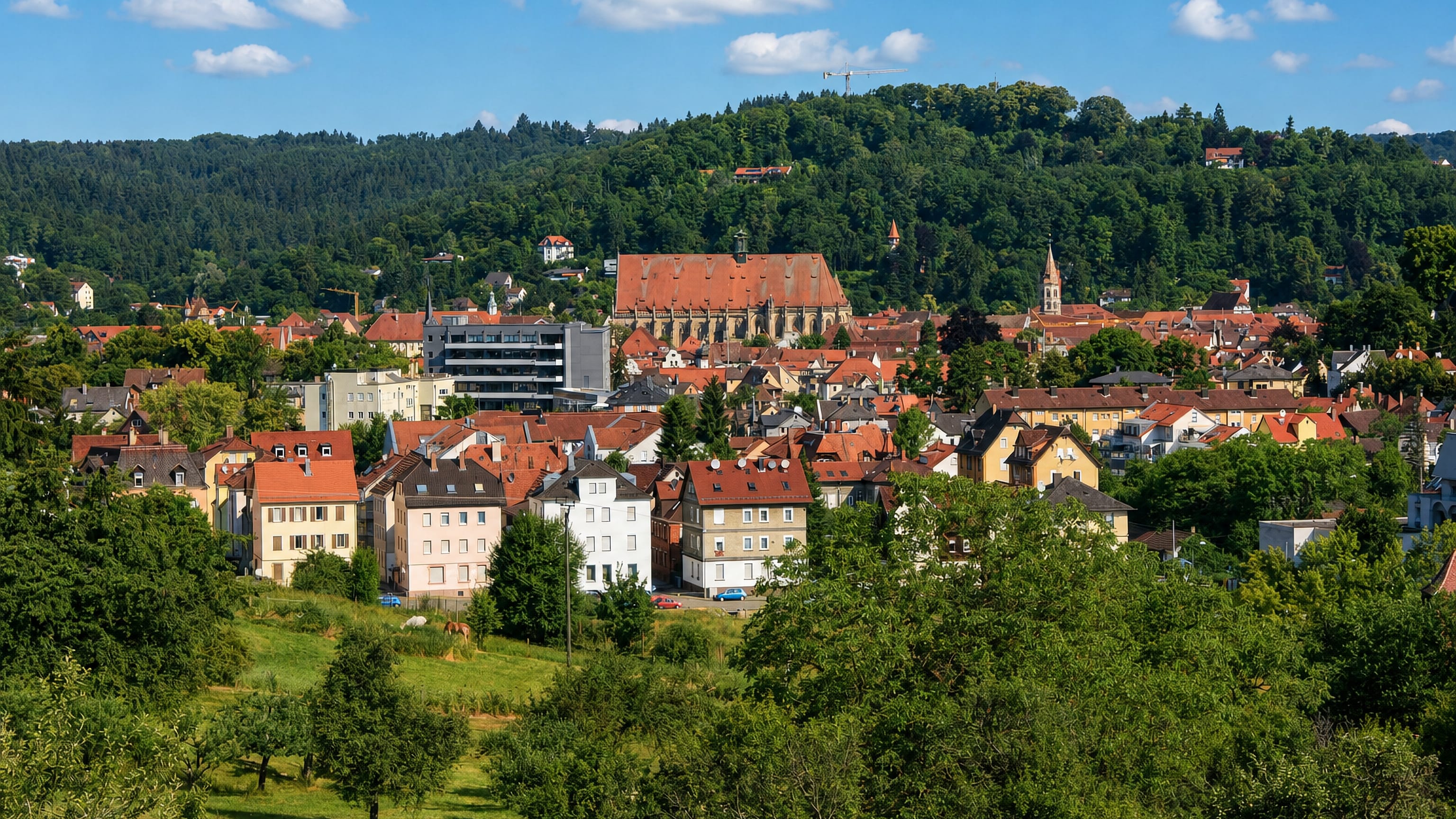
Schwäbisch Gmünd grew around the Holy Cross Minster in the Ostalb district of Baden-Württemberg, a church town with roots reaching back to 1200.
Hotel links are affiliate links: booking through them may earn us a commission, at no extra cost to you. It never affects how places are ranked. How this works


Where to stay in Schwäbisch Gmünd
The practical side of choosing where to sleep.
The minster decides most stays. Rooms in the streets below the Holy Cross Minster put St Salvator, the Klösterle and Museum im Prediger within a ten-minute walk, and the Himmelsstürmer stands close enough to pass on the way out to dinner. Other ground works too.
Beds nearer the Panoramamuseum Schwäbisch Gmünd give up the minster's doorstep for a shorter run at that museum, and the Marienkapelle and the Johanneskirche sit along the same stretch. Lindach and Herlikofen change the terms. Out there the built-up city gives way to older, separate settlements, and a base near Schloss Lindach or Burg Herlikofen buys parking and an early start at the cost of every evening walk back in.
Rooms are scarce that way. Straßdorf keeps its Alte Kirche and little else for a visitor. Chapels turn up everywhere in between: the Josefskapelle, the Dreifaltigkeitskapelle and the Rehnenhofkapelle stand on ordinary streets rather than at the sights.
For a single night, the ground under the Holy Cross Minster answers best, since St Salvator, Museum im Prediger and the Leonhardskapelle all fall within the same short circuit.
Find hotels in Schwäbisch Gmünd
Direct booking searches for these neighbourhoods.
Under the Holy Cross Minster
St Salvator, the Klösterle and the Leonhardskapelle all sit a few minutes from the Holy Cross Minster itself.Find hotels in Under the Holy Cross MinsterSlow mornings that begin with the painted panoramaBeside the Panoramamuseum
Rooms at this end reach the Panoramamuseum Schwäbisch Gmünd and the Marienkapelle without crossing the whole city.Find hotels in Beside the PanoramamuseumDrivers who want Schloss Lindach and Burg Herlikofen at the day's startOut at Lindach and Herlikofen
Past the built-up edge, Schloss Lindach and Burg Herlikofen replace the minster as the landmark you steer by. Rooms are few around here — worth securing early.Find hotels in Out at Lindach and HerlikofenHotel links are affiliate links: booking through them may earn us a commission, at no extra cost to you. It never affects how places are ranked. How this works
Things to do in Schwäbisch Gmünd
Ranked by global recognition; descriptions from Wikidata (CC0).
Museums & Galleries
2- Panoramamuseum Schwäbisch Gmünd
- Museum im Prediger
Churches & Religious Sites
8- Holy Cross Minster Heritage
- St. Salvator Schwäbisch Gmünd Heritage
- Protestant Augustine Church Heritage
- St. Franziskus Heritage
- Saint Michael Church Heritage
Show 3 more →
- St. Katharina Schwäbisch Gmünd Heritage
- Saint Cyriacus Church Heritage
- Straßdorf Alte Kirche Heritage
Castles & Historic Sites
3- Schloss Lindach Heritage
- Kleinkastell Freimühle Heritage
- Burg Herlikofen
worth knowingacross 3 categories in Schwäbisch Gmünd
About Schwäbisch Gmünd
What is Schwäbisch Gmünd known for?
The Holy Cross Minster sets the measure here, and the Johanneskirche, the Marienkapelle and St Salvator all stand in the shadow of that one building. Chapels multiply. Museum im Prediger holds the city's own record and its applied art, while the Panoramamuseum Schwäbisch Gmünd turns on a single large painted view.
The Himmelsstürmer marks the streets as a figure of newer date.
What are the main landmarks in Schwäbisch Gmünd?
Holy Cross Minster dominates, and nothing else in the city competes with its scale. St Salvator sits apart. Museum im Prediger and the Panoramamuseum Schwäbisch Gmünd carry the indoor half of a visit, while the Klösterle, the Marienkapelle and the Leonhardskapelle can be picked up on foot between them.
Burg Herlikofen and Schloss Lindach need wheels.
What is the history of Schwäbisch Gmünd?
Roman soldiers came first. Kleinkastell Freimühle is the remnant of that presence, a small fort left in the ground long before any town charter. Around 1200 the settlement took shape as a town, and the Holy Cross Minster became the work that generations of masons and their patrons poured money into.
St Salvator, the Klösterle and the Leonhardskapelle followed. Convent life ran alongside, and the Franziskanerinnen der ewigen Anbetung carried it into later centuries. St Katharina and St Coloman served their own corners of the parish map.
Church building never really stopped. The Protestant Augustine Church, the Evangelical Church and the Johanneskirche came out of the confessional split, and Saint Cyriacus Church, Saint Michael Church and St Franziskus fill out a list that runs to well over a dozen dedications. Castles held the country around, among them Burg Herlikofen and Schloss Lindach.
Administration shifted twice in the last century: the city became a Große Kreisstadt in 1956, then lost its own rural district in the reorganisation of 1 January 1973 and passed to the Ostalb district. The museums are the newest of those layers. Museum im Prediger and the Panoramamuseum Schwäbisch Gmünd gather what the churches do not, and the Himmelsstürmer answers them from open ground.
Where is Schwäbisch Gmünd?
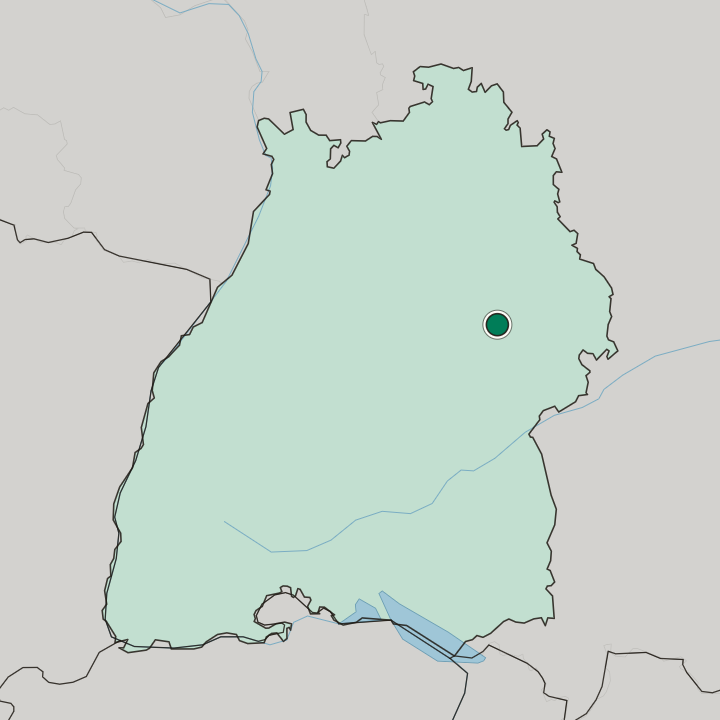
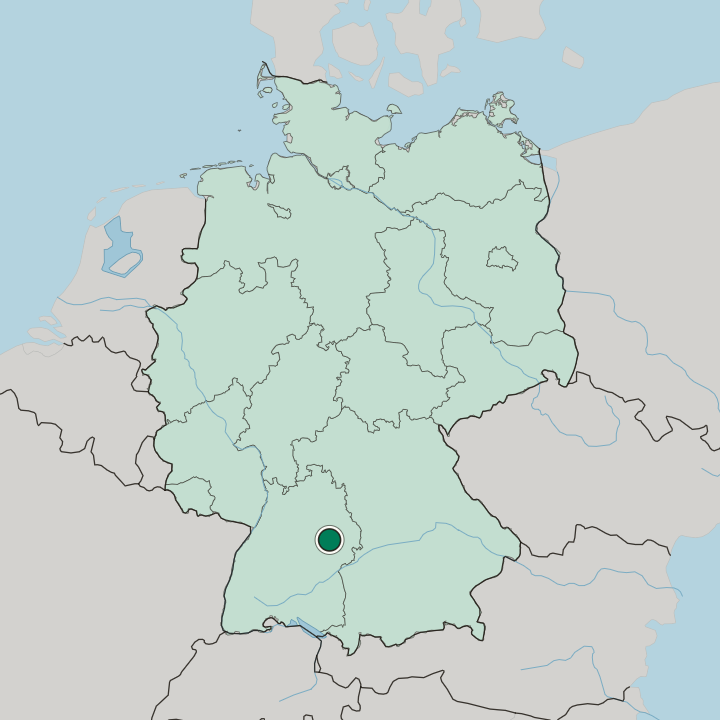
Baden-Württemberg holds the city, and the Ostalb district administers it, with Aalen the larger of the two towns in that district. Ground spreads wide. Some 114 square kilometres carry not just the old centre but outlying places such as Lindach, Straßdorf and Herlikofen, each with a church or a castle of its own to show for the arrangement.
Schloss Lindach, the Straßdorf Alte Kirche and Burg Herlikofen mark those edges.
What is the climate of Schwäbisch Gmünd?
Winters bite in the Ostalb district. Snow can sit on the roofs of the Holy Cross Minster and the Leonhardskapelle for weeks, while summer afternoons build heat in the closed streets until a thunderstorm clears them out. Rain comes through the year.
The Dreifaltigkeitskapelle and the Josefskapelle both offer shelter within a short walk when it does.
How do you get to Schwäbisch Gmünd?
Aalen is the larger town of the Ostalb district, and anyone crossing that district by road tends to pass it before turning in to Schwäbisch Gmünd. The centre then walks itself. Holy Cross Minster, St Salvator, the Klösterle and Museum im Prediger all fall within a few minutes of one another.
Herlikofen and Lindach lie further out, and Burg Herlikofen and Schloss Lindach need a car.
Common questions
What is the best area to stay in Schwäbisch Gmünd?
Under the Holy Cross Minster: Short stays built around the minster and Museum im Prediger. Beside the Panoramamuseum: Slow mornings that begin with the painted panorama. Out at Lindach and Herlikofen: Drivers who want Schloss Lindach and Burg Herlikofen at the day's start.
Good for
More cities in Baden-Württemberg
Updated October 2026