Germany · Baden-Württemberg
Where to Stay in Waiblingen, Baden-Württemberg
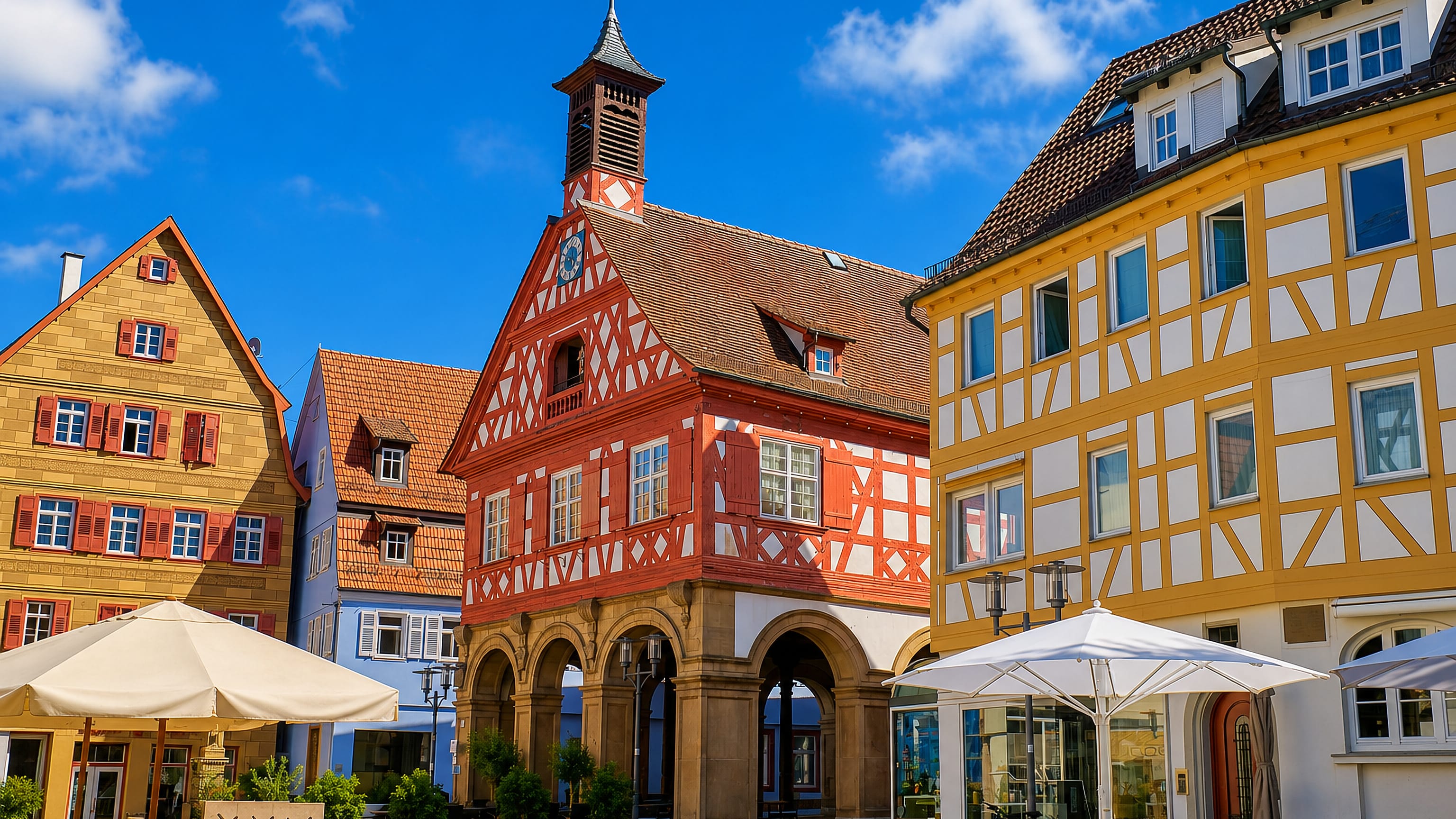
Waiblingen stands on the Rems in the Stuttgart region, a walled town whose Beinsteiner Torturm and Hochwachtturm still mark the old circuit.
Hotel links are affiliate links: booking through them may earn us a commission, at no extra cost to you. It never affects how places are ranked. How this works


Where to stay in Waiblingen
How the choice of base plays out on the ground.
The walled centre is the place to be. Rooms between the Beinsteiner Torturm and the Hochwachtturm put the Nonnenkirchle, the Michaelskirche and Galerie Stihl Waiblingen inside a few minutes on foot, with the Rems just beyond the old line. Evenings are quiet here.
The Städtisches Museum Waiblingen fills a wet hour, and the Rems gives somewhere to walk afterwards. The Rems-Murr district runs its offices from the same centre, which keeps the streets busy on weekdays and quieter once they empty. Stuttgart is near enough for a day out.
Fellbach is the other base. Beds there sit near the Stadtmuseum Fellbach, the Konstanzer Pfleghof and the Weingärtnerhaus, and the whole stretch runs closer to Stuttgart than the Waiblingen streets do. Parking gets easier the further out a room sits, and Fellbach and Korb both trade walking distance for it.
That suits work trips. Korb is quieter again, with the Evangelische Kirche Korb as its landmark and little else to keep an evening busy, so it works best for drivers with a route already planned. Beinstein sits out the same way.
For a single night, take the ground inside the old towers.
Find hotels in Waiblingen
Direct booking searches for these neighbourhoods.
Inside the old towers
The ground between the Beinsteiner Torturm and the Hochwachtturm keeps the whole old town within a few minutes.Find hotels in Inside the old towersWork trips that want the Stadtmuseum Fellbach and a shorter run to StuttgartFellbach
The Konstanzer Pfleghof and the Weingärtnerhaus give this neighbouring town a centre of its own.Find hotels in FellbachDrivers with a route planned past the Evangelische Kirche KorbKorb
Beds are few out here, where the Evangelische Kirche Korb is the one landmark to steer by. Few places to stay nearby — book ahead.Find hotels in KorbHotel links are affiliate links: booking through them may earn us a commission, at no extra cost to you. It never affects how places are ranked. How this works
Things to do in Waiblingen
Ranked by global recognition; descriptions from Wikidata (CC0).
Museums & Galleries
3- Beinsteiner Torturm Heritage
- Stadtmuseum Fellbach Heritage
- Städtisches Museum Waiblingen Heritage
Churches & Religious Sites
8- Lutherkirche Heritage
- Michaelskirche Heritage
- Nikolaus Church Heritage
- Protestant Church Heritage
- Saint Maurice Church Heritage
Show 3 more →
- Nonnenkirchle (Waiblingen) Heritage
- Evangelische Kirche Korb Heritage
- Nikolauskirche Heritage
Landmarks & Notable Places
7- Hochwachtturm Heritage
- Konstanzer Pfleghof, Fellbach Heritage
- Bürgerhaus, Vordere Straße 7, Fellbach Heritage
- Haus Schmerstr. 10 (Fellbach) Heritage
- Haus in Fellbach, Cannstatter Straße 9 (Bücher-Lack ) Heritage
Show 2 more →
- Haus Weimerstraße 1 (Fellbach) Heritage
- Weingärtnerhaus, Vordere Straße 1, Fellbach Heritage
worth knowingacross 3 categories in Waiblingen
About Waiblingen
The old town wall still shows.
What is Waiblingen known for?
Its Beinsteiner Torturm and Hochwachtturm rise above the streets, and the Nonnenkirchle sits inside the same circuit as one of the smaller buildings people stop for. Art has a house here: Galerie Stihl Waiblingen shows changing exhibitions. The Städtisches Museum Waiblingen holds the town's own record, and the Siechenhauskapelle stands as another survivor from the walled centuries.
The Rems runs past all of it.
What are the main landmarks in Waiblingen?
Two towers survive from the walls: the Beinsteiner Torturm and the Hochwachtturm. Galerie Stihl Waiblingen takes the exhibitions, and the Städtisches Museum Waiblingen covers the town itself, while the Nonnenkirchle and the Michaelskirche account for the older fabric in the same few streets. Fellbach adds another museum.
The Stadtmuseum Fellbach, the Konstanzer Pfleghof and the Glockenturm alter Friedhof are all within a short trip.
What is the history of Waiblingen?
Walls came first. The Beinsteiner Torturm and the Hochwachtturm are what survives of them, standing at either end of a centre that kept its medieval outline through everything built since. Michaelskirche served the town from inside those walls, and the Nonnenkirchle and the Siechenhauskapelle answered narrower needs, one for a religious house and one for the sick.
Churches multiplied outside them. The Erhartskirche, the Nikolauskirche and the Martinskirche each took a quarter or a village of their own as the town spread past its gates. Fellbach kept a separate record.
Its Konstanzer Pfleghof stands for an outside owner holding property here, and the Weingärtnerhaus and the Bürgerhaus on Vordere Straße show what ordinary building looked like in that town. The Glockenturm alter Friedhof marks its old burial ground, and the Stadtmuseum Fellbach gathers the rest. Confessional history left its own layer.
The Lutherkirche, the Pauluskirche and the Protestant Church belong to it, while St Maria, Saint Maurice Church and Nikolaus Church carry other dedications, and the Evangelische Kirche Korb stands in neighbouring Korb. Waiblingen ended up the seat of the Rems-Murr district, with the Städtisches Museum Waiblingen and Galerie Stihl Waiblingen added to a centre that had been walled long before.
Where is Waiblingen?
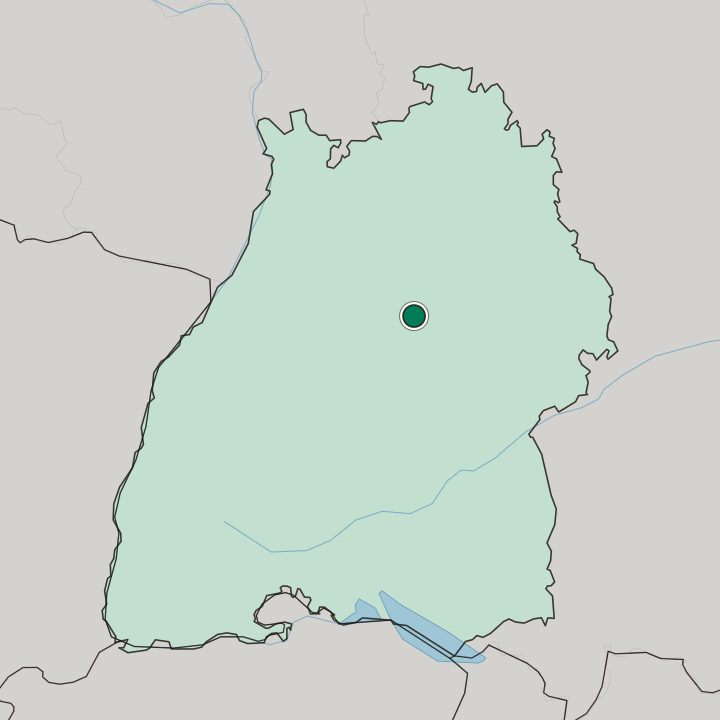
The Rems gives Waiblingen its line through the country. Some 43 square kilometres take in the old town and five outlying districts, with Korb and Beinstein among the names nearby and Fellbach adjoining on another side. Stuttgart is close.
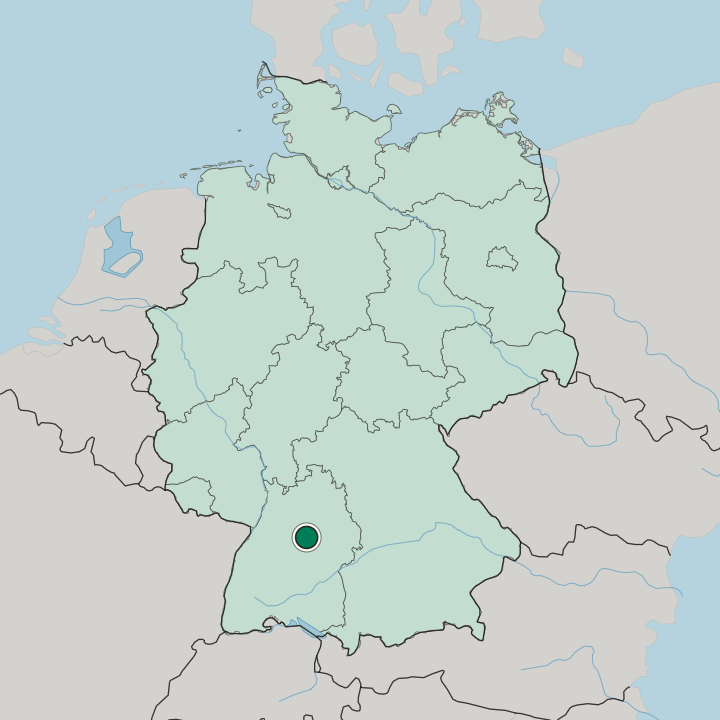
The Rems-Murr district runs its administration from here, and Baden-Württemberg holds the whole of it.
What is the climate of Waiblingen?
Mist gathers along the Rems on autumn mornings and burns off by the middle of the day, and the valley holds warmth in summer better than the higher ground around the Stuttgart region. Winters stay moderate. Rain falls through the year, so the Städtisches Museum Waiblingen and Galerie Stihl Waiblingen earn their keep.
Snow rarely settles for long.
How do you get to Waiblingen?
Stuttgart lies close enough to be the usual point of arrival, and Waiblingen sits along the Rems, a short run out from the city. The old centre is small. Once inside it, the Beinsteiner Torturm, the Hochwachtturm, the Nonnenkirchle and Galerie Stihl Waiblingen all stand within a few minutes of each other.
Korb and Beinstein need wheels.
Common questions
What is the best area to stay in Waiblingen?
Inside the old towers: Nights within reach of Galerie Stihl Waiblingen and the Nonnenkirchle. Fellbach: Work trips that want the Stadtmuseum Fellbach and a shorter run to Stuttgart. Korb: Drivers with a route planned past the Evangelische Kirche Korb.
Good for
More cities in Baden-Württemberg
Updated October 2026